Garden Strawberry
Fragaria ananassa
Family · Rosaceae
Garden strawberries are a hybrid with no wild range of their own: full sun, moist loam, correct crown depth and runner control decide the harvest.
Fragaria ananassa
Plant profile
- WateringHighWater every 3 days
- Light exposureFull sun
- Hardiness zoneUSDA 5–9
Growth
- Family
- Rosaceae
- Life cycle
- Perennial
- Growth speed
- 7/10
- Mature size
- 10–50 cm
- Spread
- 50–100 cm
- Propagation
- Seed
- Layering
- Division
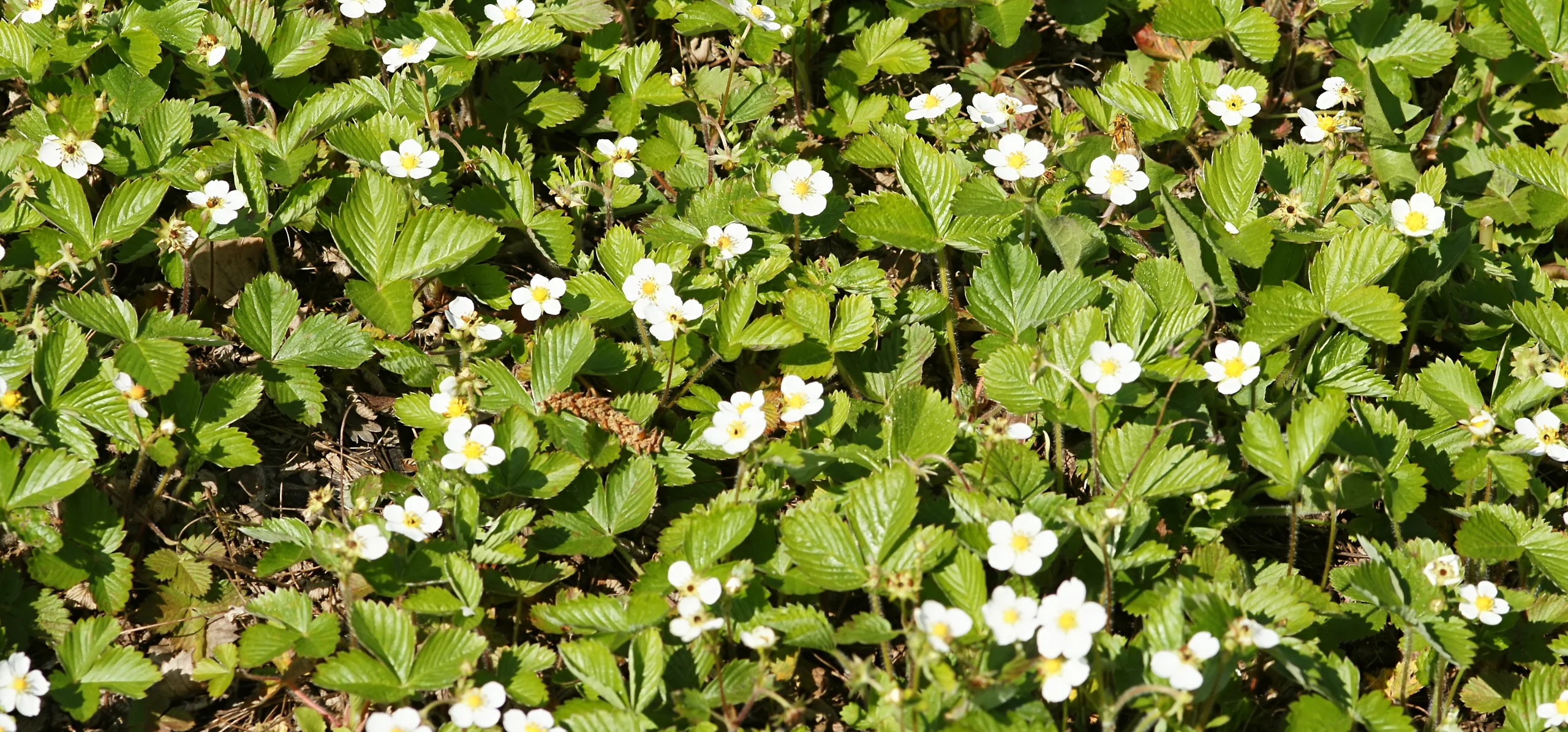
FloweringWhite to pink, five-petaled flowers in spring, followed by fruit through summer (NC State Extension)
DormancySemi-evergreen; may die back partly in cold winters and regrows from the crown in spring (RHS)
Time to maturityBegins fruiting within its first one to two years after planting (RHS)
Soil & climate
- Soil types
- loam, clay, high organic matter
- Drought tolerance
- No
Light & Placement
- Where to place it
- South-facing or west-facing bed, sheltered from wind (RHS)
- Raised bed or dedicated strawberry bed in full sun
- Sunny patio in a strawberry pot or hanging basket
- Strawberry pot or hanging basket filled with peat-free multi-purpose compost (RHS)
- Any container with generous drainage holes, kept in full sun
OriginGarden hybrid with no native range of its own; parents from coastal Chile/Argentina and eastern North America (POWO)
Safety
- Toxicity
- CatsSafe
- DogsSafe
- HorsesSafe
- HumansSafe
Data fromFragaria × ananassa (Weston) Rozier, GBIFragaria × ananassa (Duchesne ex Weston)RHS: Fragaria × ananassa (F) (garden strNC State Extension Gardener Plant ToolboASPCA: Toxic and Non-Toxic Plants, Straw
Where it grows
World distribution
Garden Strawberry is native to 2 countries: Canada and United States.GBIF records 21,208 documented identifications across 90 countries, with the largest concentrations in United Kingdom, Russia, and Sweden.
- Canada
- United States
Yellow to orange dots: concentration of documented identifications per country. Green countries: sourced native range. Source: GBIFNative range from POWO (Kew).
A Fragaria × ananassa plant bought as a young crown or grown from a rooted runner is built to fruit in its first season: unlike tree fruit, this hybrid strawberry flowers and sets berries on growth it makes the same year. It wants six or more hours of direct sun, a loam soil rich in organic matter that still drains well, and roots kept evenly moist since they stay close to the surface. Get the crown planted at soil level and keep the moisture steady through flowering, and that same plant keeps fruiting for several years while sending out its own free replacements on runners.
A Garden Hybrid With No Native Range of Its Own
GBIF's accepted name for the plant sold as garden strawberry is Fragaria × ananassa (Weston) Rozier, in the rose family Rosaceae alongside apples, cherries and roses. The multiplication sign in that name is not a typo: Plants of the World Online classifies it as a naturalised artificial hybrid rather than a wild species, and records no native range of its own, only the two parents behind it, Fragaria chiloensis, native to the coasts of Chile and southern Argentina, and Fragaria virginiana, native from eastern Canada down through the eastern United States. The two species had no natural contact until both were planted in the same European gardens in the eighteenth century, where they crossed by accident and produced fruit larger than either parent's small, tart berries. Nearly every strawberry sold or grown today descends from that one accidental cross rather than from a wild ancestor.
The smaller, intensely aromatic alpine strawberry sometimes grown alongside it, Fragaria vesca, is a true wild species rather than a hybrid, which is the main reason its berries stay tiny no matter how well it is fed.
June-Bearing, Everbearing or Day-Neutral: the Type Decides the Harvest
Strawberry cultivars fall into three groups, and the choice shapes the whole growing plan more than any other decision. June-bearing types put out one concentrated flush of fruit in early summer, which suits a grower who wants a large batch at once for jam or freezing. Everbearing types crop twice, once in early summer and again toward autumn. Day-neutral types keep flowering and fruiting through most of the growing season as long as temperatures stay moderate, trading one big harvest for a steady trickle that suits a container or a small bed better than a June-bearing type ever will.
Buying certified, disease-free crowns or runners from a nursery matters more with strawberries than with most fruit, since the crop is prone to soil-borne viruses that spread silently through infected stock.
Full Sun, an Organic Loam and a Sheltered Bed
The RHS recommends a full sun position, ideally south-facing or west-facing and sheltered from wind, for Fragaria × ananassa. NC State Extension puts a number on that preference: six or more hours of direct light a day for the best results, though the plant will still produce in two to six hours of partial shade. Soil matters just as much. The RHS lists loam, moist but well-drained, with an acid to neutral pH, while NC State Extension adds clay and soils high in organic matter to the list of textures it tolerates, always with good drainage. A bed that stays soggy through winter is the fastest way to lose a planting to root rot, so raised beds or ridged rows are worth the extra effort on heavy clay.


Watering Shallow, Thirsty Roots
Strawberry roots sit close to the surface and dry out fast, which is why the RHS pairs its full-sun recommendation with a firm note to keep the soil moist but never waterlogged. Containers and hanging baskets need checking daily in warm weather, since their compost dries out far quicker than a garden bed. Watering at the base rather than overhead matters for more than convenience: both the RHS and NC State Extension list grey mould, or botrytis fruit rot, among the main diseases affecting the crop, and damp foliage and fruit sitting in humid air is exactly the condition that disease needs to take hold.
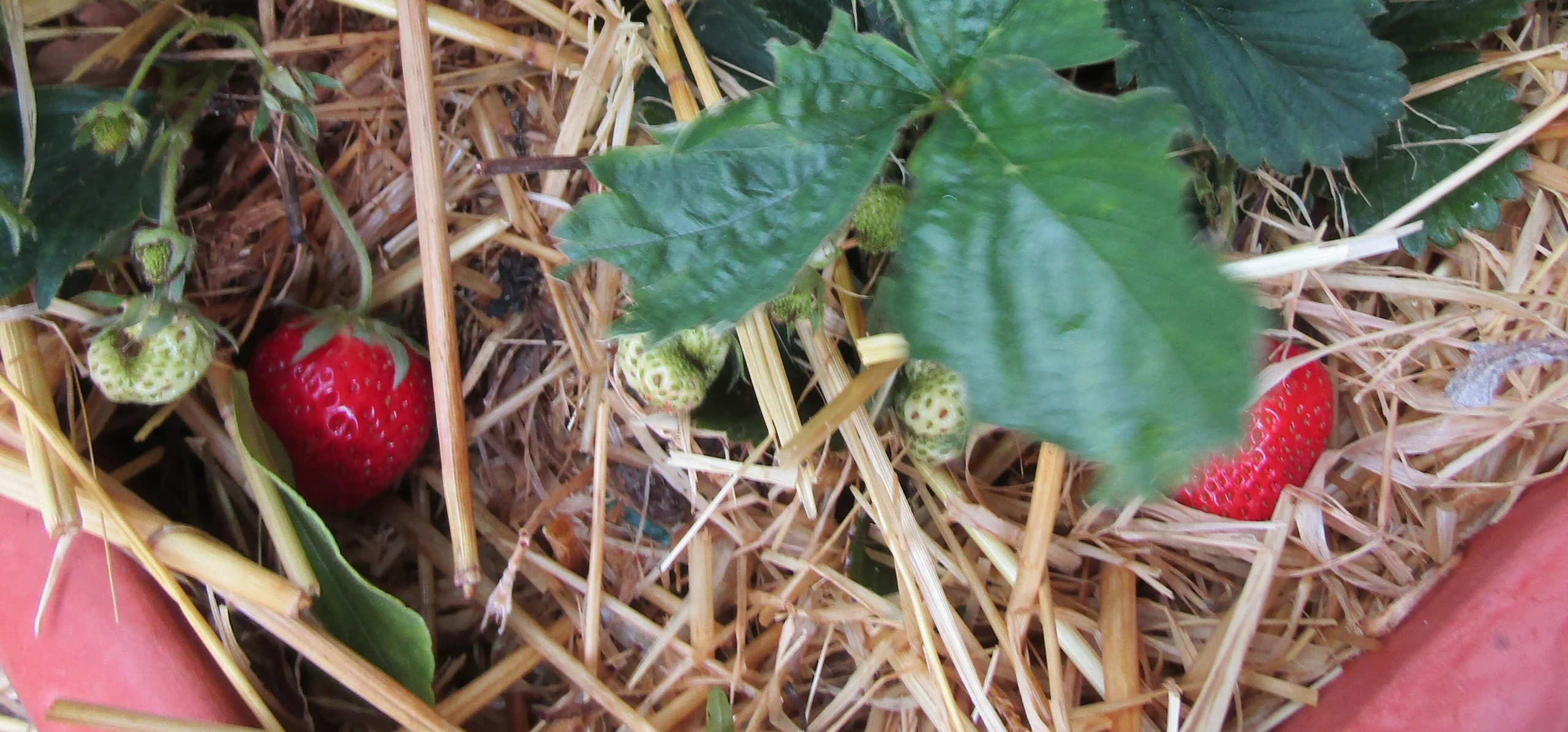
A layer of straw mulch under the plants keeps ripening berries off wet soil and away from splashing rain, which also helps keep the fruit itself dry.
Getting the Crown Depth Right at Planting
The single most common planting mistake with Fragaria × ananassa is burying or exposing the crown, the thick point where the leaves meet the roots. Set it too deep and it rots in damp soil; set it too high and the exposed roots dry out before they can establish. The target is simple to state and easy to get wrong by eye: the crown should sit exactly level with the surrounding soil surface, neither buried nor perched above it. Spacing the plants generously, with clear air movement between rows, also does real work against the same fungal diseases that damp, crowded foliage invites.
Runners: Free Plants, and When to Cut Them Off
NC State Extension describes the plant's own propagation method plainly: it reproduces by sending out runners that root easily wherever they touch soil. Left alone, a single strawberry crown can fill a bed with daughter plants within one growing season, but each runner draws energy away from the parent's own fruit. For the biggest berries, most runners are best snipped off as they appear; for expanding a bed at no cost, a few can be pegged into a small pot of compost, left to root, then cut free once established.
NC State Extension notes that plants generally need replacing every three to four years as fruit size and vigor decline, which makes a steady supply of rooted runners the simplest way to keep a bed productive without buying new stock.
Pests and the Diseases Specific to This Fruit
The RHS lists aphids, slugs, snails, spider mites and vine weevil as the main pests to watch for on Fragaria × ananassa, alongside strawberry viruses, root rot and grey mould on the fruit itself. NC State Extension's list overlaps and extends it: aphids, spider mites, thrips, whiteflies, cutworms, weevils and spotted wing drosophila among the insect pests, with botrytis fruit rot, anthracnose and leaf blotch as the main diseases. Spotted wing drosophila is worth watching closely on that list, since unlike most of the others it is a pest of the ripening fruit itself rather than the leaves. Good spacing, base watering and prompt removal of any damaged or overripe fruit address most of this list before it becomes a real problem.
Harvest and Replacing an Ageing Bed
Strawberries ripen from green to fully red over their final days on the plant, and NC State Extension places fruiting in summer following the spring bloom, with June-bearing, everbearing or day-neutral timing set by the cultivar chosen at planting. Picking every few days during the peak keeps ripe fruit from spoiling on the plant or drawing pests, and harvesting in the cool of the morning keeps the berries firmer for longer.
Because NC State Extension records a working lifespan of about three to four years before size and vigor decline, the runners a healthy plant throws off each summer are also its own succession plan: rooting a portion of them every year and retiring the oldest crowns keeps a strawberry bed cropping well long after the first plants would otherwise have given out.
Test your plant knowledge
Tap a card to flip it and reveal the answer.
Fragaria × ananassa is a true wild species rather than a hybrid. Tap to reveal ✕ False
Strawberries fruit best with six or more hours of direct sun a day. Tap to reveal ✓ True
Watering strawberry foliage and fruit overnight helps prevent disease. Tap to reveal ✕ False
Strawberry plants typically need replacing every three to four years. Tap to reveal ✓ True
The ASPCA lists strawberries as toxic to dogs and cats. Tap to reveal ✕ False
Sources
References consulted for this guide
- Fragaria × ananassa (Weston) Rozier, GBIF Backbone Taxonomygbif.org
- Fragaria × ananassa (Duchesne ex Weston) Duchesne ex Rozier, Plants of the World Onlinepowo.science.kew.org
- RHS: Fragaria × ananassa (F) (garden strawberry)rhs.org.uk
- NC State Extension Gardener Plant Toolbox: Fragaria x ananassa (Strawberries)plants.ces.ncsu.edu
- ASPCA: Toxic and Non-Toxic Plants, Strawberryaspca.org
- Reference entity : Wikipédiaen.wikipedia.org