Fiddle-Leaf Fig
Ficus lyrata
Family · Moraceae
Ficus lyrata drops leaves and gets brown spots fast when light or watering swing; here is the bright, steady routine NC State Extension and the RHS recommend.
Ficus lyrata
Plant profile
- WateringLittleWater every 7 days
- Light exposureIndirect light
- Hardiness zoneUSDA 10–12
Growth
- Family
- Moraceae
- Life cycle
- Perennial
- Growth speed
- 5/10
- Mature size
- 61–305 cm
- Flowering
- Rarely flowers or fruits as a houseplant (NC State Extension)
- Propagation
- Seed
- Cutting
DormancyMinimal indoors; growth slows in low winter light
Time to maturity10 to 20 years to full outdoor height (RHS)
Soil & climate
- Soil types
- loam
- Drought tolerance
- No
Light & Placement
- Origin
- Western and west-central tropical Africa (POWO)
- Where to place it
- A few feet back from an east- or south-facing window, out of direct afternoon sun (NC State Extension)
- Frost-free, partially shaded bed in USDA zones 10 to 12 (NC State Extension)
- Sturdy pot with drainage holes, sized to the root ball
Safety
- Toxicity
- HumansToxic
Data fromFicus lyrata Warb., GBIF Backbone TaxonoNC State Extension Gardener Plant ToolboRHS: Ficus lyrata (fiddle-leaf fig)ASPCA Toxic and Non-Toxic Plant List: Ca
Where it grows
World distribution
Fiddle-Leaf Fig is native to 11 countries: Benin, Cameroon, Côte d’Ivoire, Gabon, Ghana, Guinea, Guinea-Bissau, and Liberia….GBIF records 1,206 documented identifications across 84 countries, with the largest concentrations in Spain, Brazil, and United States.
- Benin
- Cameroon
- Côte d’Ivoire
- Gabon
- Ghana
- Guinea
- Guinea-Bissau
- Liberia
- Nigeria
- Sierra Leone
- Togo
Yellow to orange dots: concentration of documented identifications per country. Green countries: sourced native range. Source: GBIFNative range from POWO (Kew).
A fiddle-leaf fig that just came home from the nursery is usually still adjusting: a few dropped leaves in the first weeks are normal shock, not a diagnosis. What it needs immediately is a bright spot it will not be moved from again, a pot with real drainage, and a watering rhythm based on the soil rather than the calendar. Get those three things right and Ficus lyrata settles into slow, steady growth; get them wrong and it answers with brown spots, curling leaves, or leaves falling one by one.
A Rainforest Tree Grown as a Houseplant
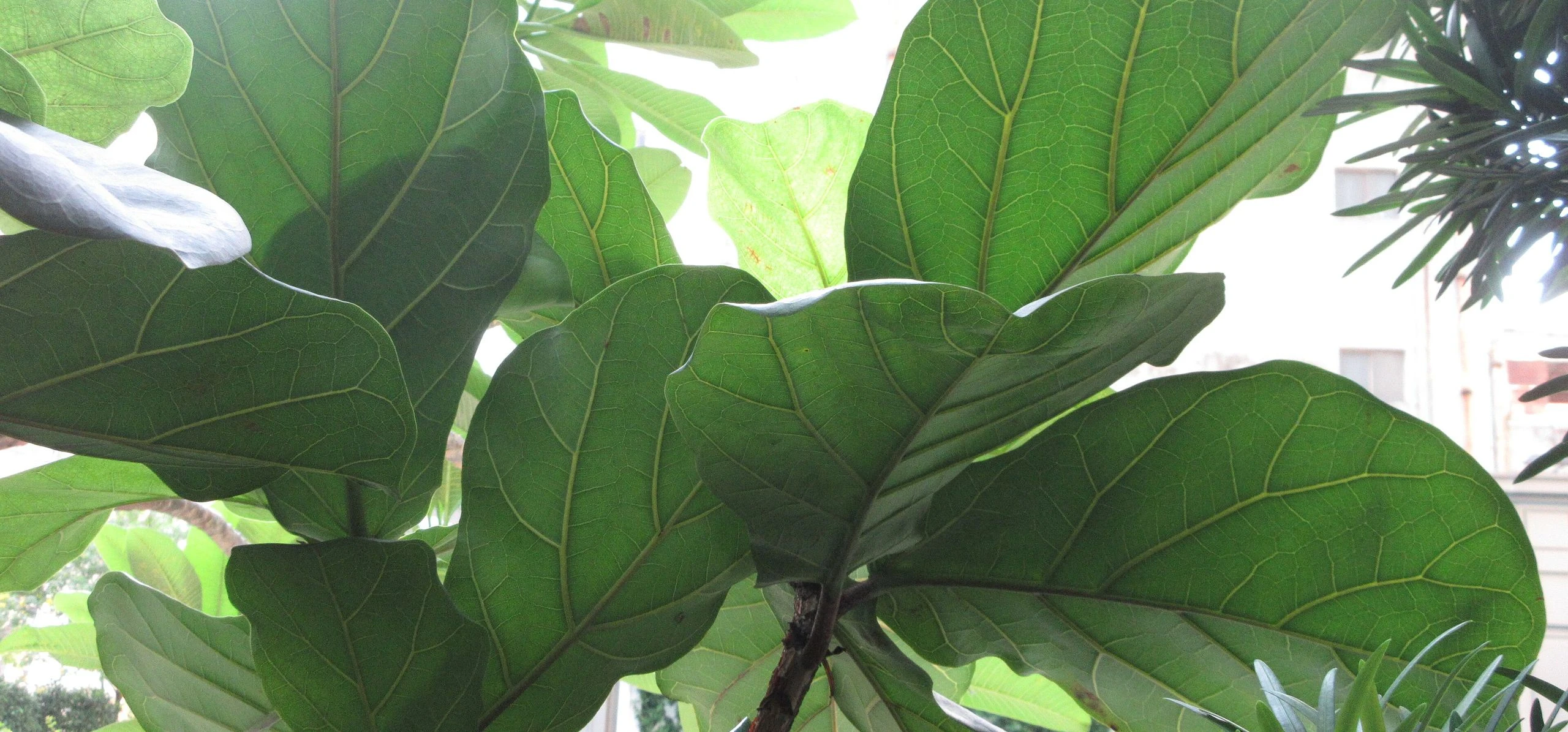
GBIF records the accepted name as Ficus lyrata Warb., in the fig and mulberry family Moraceae, and Plants of the World Online lists its native range as western and west-central tropical Africa, with NC State Extension naming Cameroon, Gabon, Ghana, Guinea, Ivory Coast, Liberia, Nigeria, Sierra Leone and Togo. In that habitat it is a forest tree reaching 60 to 100 feet, with an erect, vase-shaped crown; as a houseplant it stays far smaller, typically 2 to 10 feet, and almost never flowers or fruits indoors. The species name lyrata and the common names fiddle-leaf and banjo fig both point at the same thing: the broad, leathery leaves, up to 18 inches long, are lyre-shaped with a narrow waist and a wide top, and the prominent, slightly raised veins give the surface a bullate, textured look.
Light: Bright, Indirect and Unchanging
NC State Extension recommends bright indirect light or partial shade, with protection from direct afternoon sun, which scorches the leathery leaves into pale, crisp patches. A spot a few feet back from an east- or south-facing window, where the light is strong but filtered, works better than a windowsill in full glare. Once the plant is settled, resist the urge to keep shifting it toward slightly better light: fiddle-leaf figs read a change of position as a threat and often drop leaves in response, so a consistent spot matters as much as the light level itself. Turning the pot a quarter turn every couple of weeks keeps growth even without counting as a real move.
Watering Without Root Rot
This is the step where most fiddle-leaf figs actually fail. NC State Extension describes it as sensitive to overwatering and intolerant of wet soil, so the safest routine is to water thoroughly when the top of the soil has started to dry, let the excess drain fully away, and never leave the pot standing in a saucer of water. Leaf drop, per NC State Extension, traces straight back to improper watering in either direction: soil that stays soggy suffocates the roots, while soil that is allowed to dry out completely stresses the plant just as much. The two failure modes look different on the leaf itself. Dark, soft spots that start near the base or centre of a leaf usually mean the roots have been sitting wet; tan, crisp patches at the edges point the other way, toward underwatering or very dry air. Checking the soil with a finger before every watering catches both before they spread.


Soil, Humidity and Feeding
NC State Extension specifies moist, well-drained, loamy soil on the acidic side, with a pH under 6.0, which is easiest to achieve with a quality potting mix loosened with bark or perlite rather than a dense, moisture-retentive blend. The species does best in medium relative humidity, so a naturally humid bathroom or kitchen with enough light can suit it better than a dry, centrally heated living room in winter. Feed lightly during the growing season with a balanced houseplant fertiliser and hold off once growth slows in low winter light, since a plant that is not actively growing has little use for extra nutrients and excess salts can build up in the pot instead.
Pruning, Propagation and Size Indoors
The RHS lists stem propagation, by seed, leaf-bud or semi-hardwood cuttings, and places pruning in its lightest pruning group, meaning it tolerates only modest trimming rather than a hard cutback. In practice that means shaping is mostly about removing damaged or crossing growth and, on an older plant that has become a single bare stem, pinching out the topmost growing tip to push out side branches lower down. Indoors, a fiddle-leaf fig grown in a container rarely approaches the RHS's outdoor figures of 4 to 8 metres in height over 10 to 20 years; NC State Extension's more realistic indoor range of 2 to 10 feet is what to expect in a pot, with size governed mostly by pot size and how much light it gets.
Pests, Sap and Handling It Safely
Both the RHS and NC State Extension list a similar set of pests to watch for: scale insects, mealybugs, aphids, thrips and spider mites, along with the honey fungus the RHS flags as a risk for the outdoor, glasshouse-grown form. The milky sap is the other thing to know about: NC State Extension calls the plant toxic to humans, cats and dogs if ingested, through insoluble calcium oxalates that cause oral irritation, drooling and vomiting, and notes the sap itself can irritate skin, which is why the RHS recommends gloves when pruning or repotting. Worth a note on sourcing: the ASPCA's own toxic-plant lists do not carry an entry for Ficus lyrata by name, and its page titled "Fiddle-Leaf" is actually a different plant, Philodendron bipennifolium, so it should not be quoted as evidence either way for this species. That gap does not make the fiddle-leaf fig safe around pets; it means the ASPCA has not published a specific verdict on it, and the university extension evidence above is reason enough to keep it out of reach of cats, dogs and small children.
Test your plant knowledge
Tap a card to flip it and reveal the answer.
Ficus lyrata is native to western and west-central tropical Africa. Tap to reveal ✓ True
As a houseplant, a fiddle-leaf fig usually reaches only about 2 feet tall at full maturity. Tap to reveal ✕ False
The fiddle-leaf fig's sap can irritate skin, so gloves are worth wearing when pruning it. Tap to reveal ✓ True
The ASPCA publishes a plant-list entry specifically for Ficus lyrata. Tap to reveal ✕ False
Fiddle-leaf figs prefer moist, well-drained, slightly acidic soil, with a pH under 6.0. Tap to reveal ✓ True
Sources
References consulted for this guide
- Ficus lyrata Warb., GBIF Backbone Taxonomygbif.org
- NC State Extension Gardener Plant Toolbox: Ficus lyrataplants.ces.ncsu.edu
- RHS: Ficus lyrata (fiddle-leaf fig)rhs.org.uk
- ASPCA Toxic and Non-Toxic Plant List: Catsaspca.org
- Reference entity : Wikipédiaen.wikipedia.org