Weeping Fig
Ficus benjamina
Family · Moraceae
Weeping fig (Ficus benjamina) care: why it sheds leaves after every move, bright indirect light, watering, the latex sap and toxicity to cats and dogs.
Ficus benjamina
Plant profile
- WateringModerateWater every 7 days
- Light exposureIndirect light
- Ideal temperature16–30 °C
- Hardiness zoneUSDA 10–11
Growth
- Family
- Moraceae
- Life cycle
- Perennial
- Growth speed
- 6/10
- Mature size
- 90–1500 cm
- Spread
- 60–900 cm
- Flowering
- Inconspicuous figs; rarely fruits indoors
- Propagation
- Cutting
- Layering
DormancyGrowth slows in low winter light; no true dormancy indoors
Time to maturityReaches full houseplant size in 3-5 years; an outdoor tree takes decades to reach full size
Soil & climate
- Soil types
- Free-draining, peat-free potting mix, Loam-based compost with added perlite or grit
- Drought tolerance
- No
Light & Placement
- Origin
- Tropical and subtropical Asia to northern Australia
- Where to place it
- A settled spot a few steps back from an east or south window
- Near a window with a sheer curtain to filter direct summer sun
- Sheltered courtyard or patio in frost-free zone 10-11 climates
- Partial shade during the hottest part of the day
- Heavy container with drainage holes, sized to control eventual height
Safety
- Toxicity
- CatsToxic
- DogsToxic
- HorsesToxic
- HumansToxic
Invasive speciesAerial roots take hold wherever they touch soil outdoors in the tropics, cracking pavement, pool walls and drains near mature trees
Data fromFicus benjamina L., GBIF Backbone TaxonoFicus benjamina L., Plants of the World Weeping Fig (Ficus benjamina) toxicity, Ficus benjamina (weeping fig, Benjamin tFicus benjamina (Weeping Fig), Universit
Where it grows
World distribution
Weeping Fig is native to 17 countries: Australia, Bangladesh, Bhutan, Cambodia, China, India, Indonesia, and Laos….GBIF records 7,662 documented identifications across 122 countries, with the largest concentrations in Australia, Indonesia, and Philippines.
- Australia
- Bangladesh
- Bhutan
- Cambodia
- China
- India
- Indonesia
- Laos
- Malaysia
- Myanmar (Burma)
- Nepal
- Papua New Guinea
Show 5 more countriesShow fewer countries
- Philippines
- Solomon Islands
- Taiwan
- Thailand
- Vietnam
Yellow to orange dots: concentration of documented identifications per country. Green countries: sourced native range. Source: GBIFNative range from POWO (Kew).
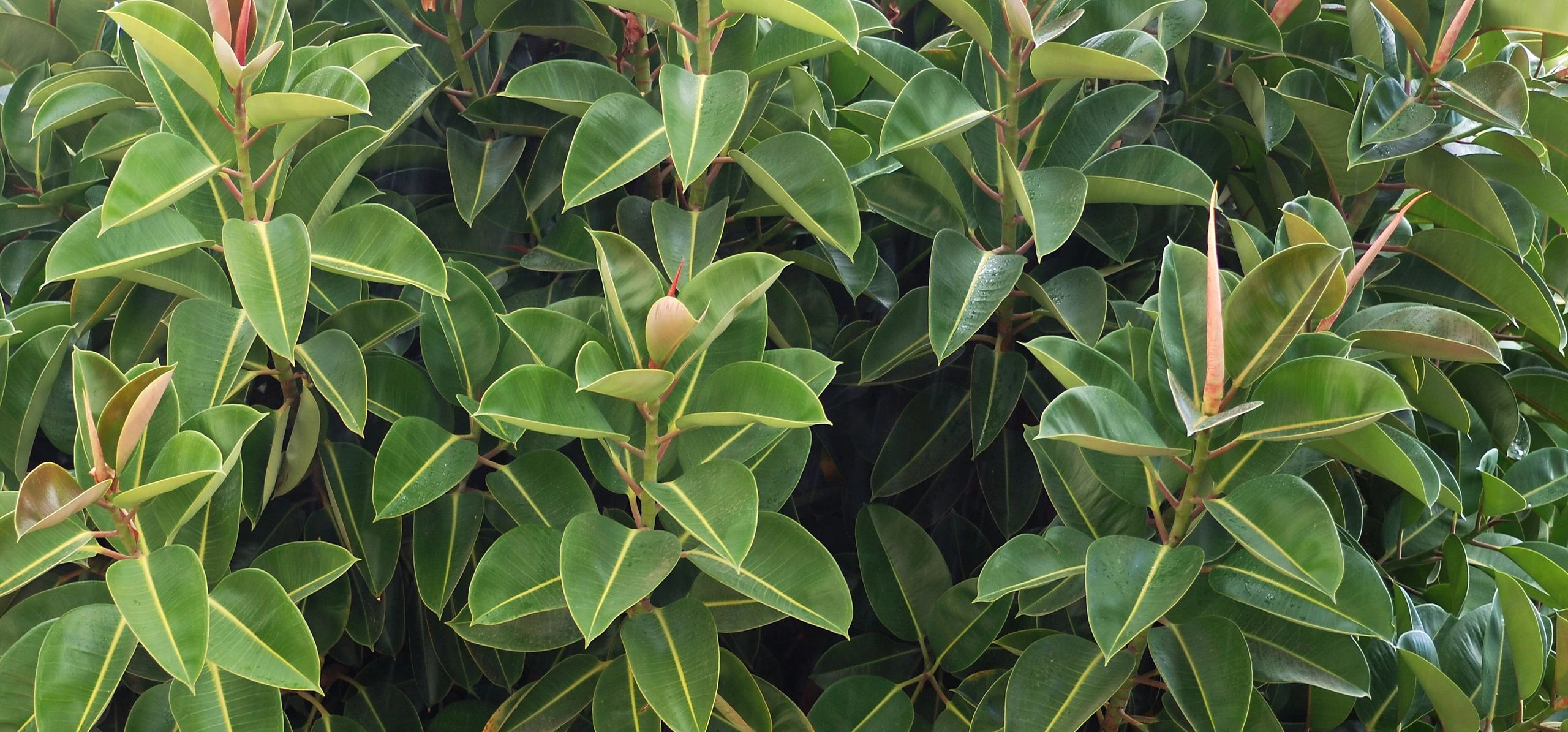
A weeping fig that drops a third of its leaves in the week after you bring it home is behaving normally, not dying. Ficus benjamina reacts to almost any change in light, temperature or draught by shedding the leaves that grew under the old conditions and replacing them with new ones suited to the new spot, which is the single most common reason people give up on the plant. The narrow, glossy, drip-tipped leaves and gently weeping branches come from a large evergreen tree native to tropical and subtropical Asia and northern Australia, sold almost everywhere as a compact, often braided houseplant. Settle it into one bright, steady spot, water only once the topsoil has dried, and keep it away from cats and dogs, since the ASPCA lists the species as toxic to both.
Why it drops leaves after every move
The trigger is rarely one dramatic thing: a plant carried home from a warm shop into a cold car, set near a draughty front door, rotated to face a different window, or moved from a nursery greenhouse into a dimmer living room all read to the plant as a change worth reacting to. Within a week or two, leaves that formed under the old light level yellow slightly at the base of the stem and drop, sometimes dozens at a time, while the growing tips keep pushing new foliage. Each new leaf unfurls pale and slightly rolled, then flattens and darkens to full glossy green over one to two weeks as it hardens off. The distinction that matters: shock-related drop sheds leaves that still look green and healthy, while drop from a genuine watering problem sheds leaves that are yellowed, wilted or crisp first. Once the plant has stayed in the same spot for a month or two, new growth stabilises and the shedding stops on its own.
Light and placement
Bright, indirect light close to an east or south-facing window keeps growth dense and the leaf drop episode short after a move. It also tolerates a couple of hours of direct morning sun, but hours of unfiltered afternoon sun through glass scorches the leaf tips into pale, papery patches, so a sheer curtain between the plant and a south or west window is worth adding in summer. Too little light produces the opposite problem: sparse, leggy stems with widely spaced leaves and a slow but steady thinning of the crown, particularly on variegated forms, which need more light than solid green ones to hold their pattern. Pick a spot it can stay in for good. Rotating the pot a quarter turn every few weeks keeps growth even, but repeatedly relocating it between rooms restarts the leaf drop cycle each time.
Watering without triggering more leaf drop
Water when the top two to three centimetres of potting mix have dried out, checking with a finger rather than by the calendar, then soak the pot thoroughly and let the excess drain away rather than sit in a saucer. Both extremes cause leaves to fall: chronic overwatering yellows and softens leaves before they drop and eventually rots the roots, while letting the plant dry out completely curls and browns leaves at the tips before they fall dry and brittle. Cut the frequency back in winter, when lower light slows growth and the mix stays damp for longer between waterings. A weeping fig recovering from a recent move is already shedding leaves for unrelated reasons, so resist the urge to compensate with extra water at exactly that moment.


'Danielle', 'Starlight' and braided trunks
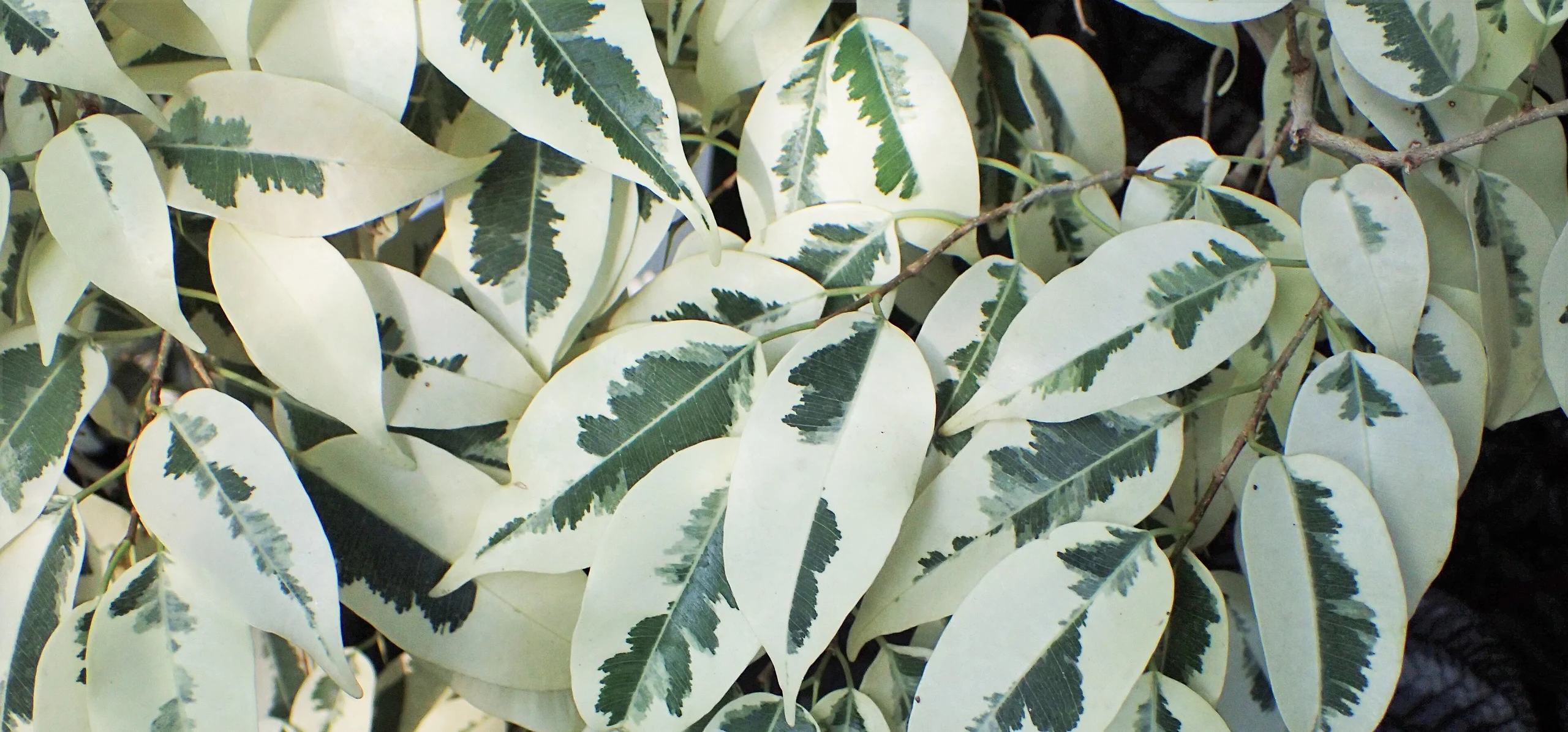
'Danielle' carries solid, dark green, glossy leaves and is usually sold as the most forgiving cultivar for a dim room, since it holds its foliage through lower light better than the variegated forms. 'Starlight' and 'Variegata' carry leaves marbled in cream to white around an irregular green centre, a striking look that needs noticeably brighter light to avoid reverting to plainer green growth over successive leaf flushes. Braided trunks are made from three to five young, still-flexible stems planted together and woven while pliable; over the following two or three years the stems thicken and fuse where they touch, producing what looks like a single sculpted trunk. Check the weave along its full length before buying: if one of the original stems has died back, the braid usually shows a permanent gap or an uneven bulge rather than growing solid.
Pruning and the latex sap
Prune during the growing season to control height, remove crossing branches or push back the crown after a leggy stretch, cutting just above a leaf node with a clean blade; the plant tolerates fairly hard cuts and resprouts readily from older wood. Every cut, and every leaf torn rather than snipped, weeps a sticky white latex that stains fabric and worktops if left to dry. That latex is worth taking seriously: it is a documented skin irritant, and people with a natural rubber latex allergy can react to it through contact or, less often, through airborne particles shed by a large specimen, a cross-reaction sometimes called latex-fruit syndrome. Wipe cut ends with a cloth, wear gloves if you prune it regularly, and wash your hands afterwards even if you don't consider yourself sensitive.
Scale and mealybugs
Brown scale shows up as small, immobile, dome-shaped bumps clustered along stems and the midribs of leaf undersides, usually with a sticky honeydew residue on the leaves below that then grows a black sooty mould. Mealybugs form white, cottony clusters tucked into leaf axils and along young stems, and both pests thrive on a weeping fig kept in a warm, still room with no airflow. Spider mites are the third regular visitor, appearing as fine webbing and a dull, stippled bronzing on leaves in dry, centrally heated air. Wipe the leaves down with a damp cloth periodically to catch light infestations early, then treat visible colonies with insecticidal soap or a cotton swab dipped in rubbing alcohol for scale and mealybugs specifically, repeating over several weeks since eggs hatch in waves.
Growing it outdoors: size and invasive roots in the tropics
In frost-free climates, roughly USDA zones 10 to 11, a weeping fig planted in the ground stops being a houseplant altogether and grows into a substantial tree, reaching 12 to 15 metres tall with a spread of 7.5 to 9 metres according to University of Florida extension figures. Mature trees send down aerial roots from the branches that root wherever they reach soil, gradually thickening into extra trunks and spreading laterally well beyond the canopy. That root system is documented to crack pavement and pool walls, buckle patios and invade drains and sewer lines in older plantings, so an in-ground specimen needs real distance from foundations, paths and pools, or a large, deep, root-barrier-lined bed. Grown in a container instead, the same species stays a manageable size indefinitely and never develops this kind of root spread.
Toxic to cats and dogs
The ASPCA lists the weeping fig as toxic to cats, dogs and horses, naming a proteolytic enzyme called ficin and a compound called ficusin among the toxic principles, which cause gastrointestinal upset and skin or mouth irritation on contact or ingestion. A cat or dog that chews a leaf typically drools, vomits or shows irritation around the mouth rather than anything more severe, but the reaction is unpleasant enough to be worth avoiding. Keep the plant on a stand or shelf out of casual reach, sweep up any dropped leaves promptly during a leaf-drop episode, and treat the sap with the same caution around pets as around your own skin.
Test your plant knowledge
Tap a card to flip it and reveal the answer.
A weeping fig that suddenly drops many leaves after being moved to a new room is usually reacting to the change, not dying. Tap to reveal ✓ True
You should water a weeping fig on a fixed weekly schedule regardless of how the potting mix feels. Tap to reveal ✕ False
'Danielle' and 'Starlight' are Ficus benjamina cultivars distinguished mainly by their leaf colour and variegation. Tap to reveal ✓ True
The white latex sap that leaks from a cut stem or torn leaf can irritate skin and trigger reactions in people with a latex allergy. Tap to reveal ✓ True
The ASPCA lists the weeping fig as non-toxic to cats and dogs. Tap to reveal ✕ False
Sources
References consulted for this guide
- Ficus benjamina L., GBIF Backbone Taxonomygbif.org
- Ficus benjamina L., Plants of the World Online (Kew)powo.science.kew.org
- Weeping Fig (Ficus benjamina) toxicity, ASPCA Animal Poison Controlaspca.org
- Ficus benjamina (weeping fig, Benjamin tree), RHSrhs.org.uk
- Ficus benjamina (Weeping Fig), University of Florida IFAS Extension Plant Directoryplant-directory.ifas.ufl.edu
- Reference entity : Wikipédiaen.wikipedia.org