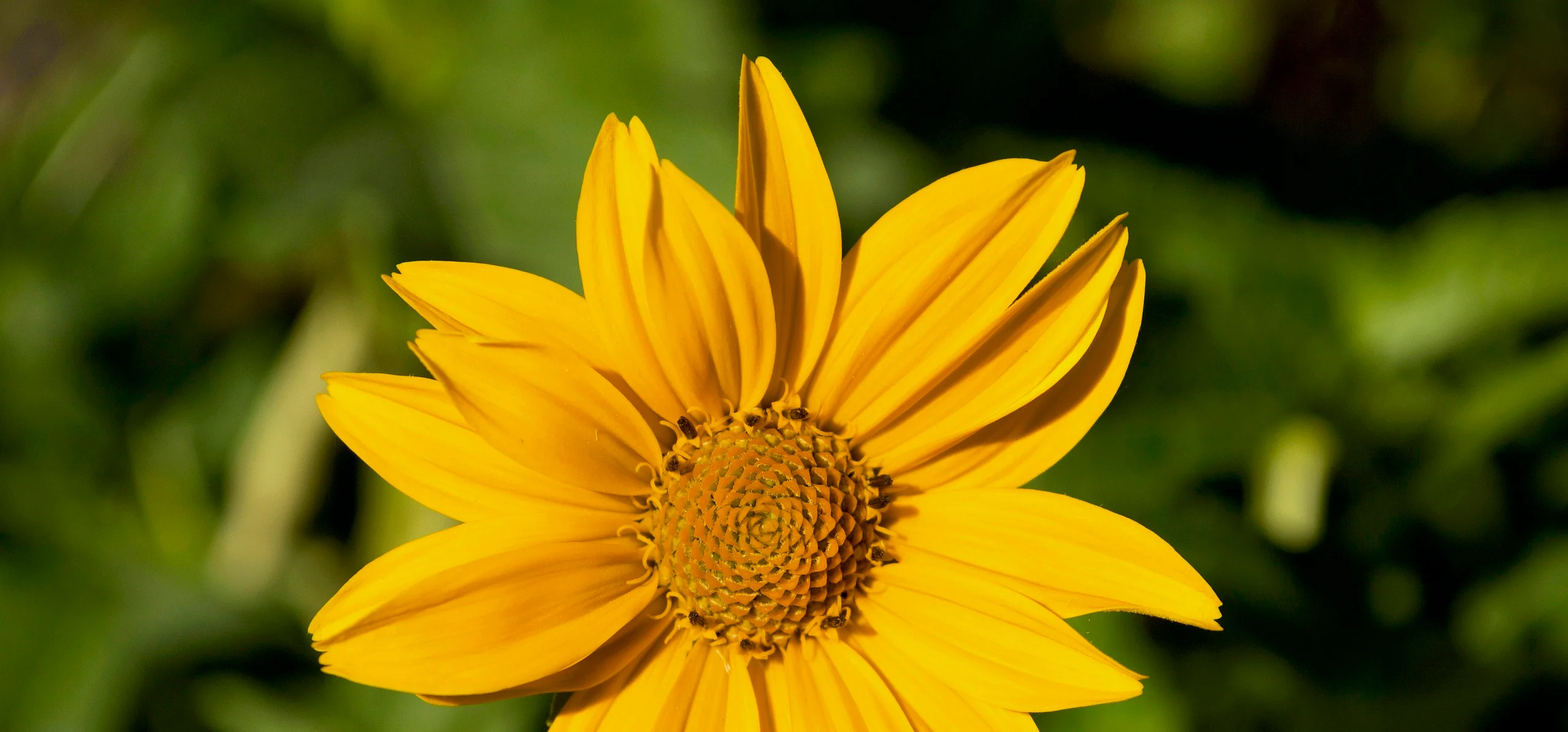
False Sunflower
Heliopsis helianthoides
Family · Asteraceae
Heliopsis helianthoides blooms June to frost in full sun and poor, dry or clay soil. Covers flopping, deadheading, red aphids, dark-leaved cultivars and.
Heliopsis helianthoides
Plant profile
- WateringLittleWater every 6 days
- Light exposureFull sun
- Hardiness zoneUSDA 3–9
Growth
- Family
- Asteraceae
- Life cycle
- Perennial
- Growth speed
- 7/10
- Mature size
- 90–180 cm
- Spread
- 60–120 cm
- Flowering
- June until the first hard frost, longer with regular deadheading
- Propagation
- Seed
- Division
- Cutting
Dormancydies back to a basal crown after the first hard frost; new stems resprout from the crown in spring
Time to maturityreaches flowering size and blooms in its first summer from an early start, forming a full clump by its second year
Soil & climate
- Soil pH
- pH 5.5–7.5
- Soil types
- clay, loam, sand
- Drought tolerance
- Yes
Light & Placement
- Origin
- Southeastern Canada to north-central and eastern United States
- Where to place it
- sunny border or bed with average to lean soil
- prairie or naturalized meadow planting
- cutting garden for repeat summer blooms
- clay-soil site where many perennials struggle
Safety
- Toxicity
- Not listed by the ASPCA on either its toxic or non-toxic plant lists
- Pet safe
- No
Invasive speciesself-sows readily into small colonies and can become weedy in a tended bed; not documented as a regulated or invasive species within its native North American range
Data fromHeliopsis helianthoides (L.) Sweet, GBIFPOWO: Heliopsis helianthoides (L.) SweetMissouri Botanical Garden Plant Finder: NC State Extension Gardener Plant ToolboRHS: Heliopsis helianthoides var. scabra
Where it grows
World distribution
False Sunflower is native to 2 countries: Canada and United States.GBIF records 22,694 documented identifications across 48 countries, with the largest concentrations in United States, Canada, and Germany.
- Canada
- United States
Yellow to orange dots: concentration of documented identifications per country. Green countries: sourced native range. Source: GBIFNative range from POWO (Kew).
Heliopsis helianthoides produces a small sun's worth of gold-orange daisies from early summer until the first hard frost, on a plant that shrugs off the poor, dry or clay soil most perennials refuse. Despite the common name false sunflower, it is not a Helianthus at all: it belongs to its own genus in the daisy family Asteraceae, distinguished by ray florets that actually set seed, something the true sunflower's sterile rays never do. Give it lean soil and a full day of sun and it stands upright on its own; give it rich ground or afternoon shade and the same plant will flop over by midsummer. That single trade-off, more than any pest or disease, decides how this perennial performs in a border.
Not a True Sunflower: Origin and Classification
The GBIF backbone accepts Heliopsis helianthoides (L.) Sweet as the current name, in the family Asteraceae, order Asterales, alongside ten recorded synonyms including the older Buphthalmum helianthoides. Plants of the World Online gives its native range as southeastern Canada to north-central and eastern United States, where it grows on prairies, open woodland edges, roadsides and streambanks. The genus name comes from the Greek helios, sun, and opsis, resembling, a nod to the family resemblance with Helianthus, the true sunflowers. The two are not close relatives beyond sharing the daisy family: Heliopsis carries fertile, seed-producing ray florets, while a true sunflower's showy outer rays are sterile and all the seed comes from the central disk. The common names oxeye sunflower, smooth oxeye and false sunflower all point at the same resemblance without the same botany.
Full Sun, Poor Soil and Clay: Where It Thrives
Give it six or more hours of direct sun and this plant tolerates soil that stops most border perennials cold: clay, sand, shallow rocky ground, average fertility, even routine dry spells once established. Missouri Botanical Garden lists it as easily grown in average, dry to medium, well-drained soil, and NC State Extension rates it tolerant of clay, drought and poor ground outright. It is not fussy about pH either, doing well anywhere from acid to neutral. The one thing it will not forgive is standing water around the crown, so a heavy clay site still needs to drain, even if it never gets amended.


Why It Flops: Rich Soil, Shade and How to Stop It
The trade-off for that toughness is a plant built by poor ground to grow lean, not lush. Plant it in rich, fertile, regularly fertilized soil and the stems shoot up soft and top-heavy; put it in partial shade and they stretch toward the light instead of standing straight. Either way the result is the same clump splayed open or lying in the path after a summer storm. Two techniques head this off. Pinch the growing tips back by a few inches in mid-spring, about two weeks after new growth is well underway, to force branching and shorter, sturdier stems. Or skip pinching and set stakes or grow-through supports early, before the clump reaches half its height, since staking a plant that has already flopped rarely straightens it back out. Full sun and unfertilized, average soil remain the simplest fix: the leaner the ground, the less staking this plant needs.
Deadheading and a Bloom Season That Runs June to Frost
Flowering starts in June and, with regular deadheading, keeps going until the first hard frost cuts it down, one of the longest bloom windows among prairie perennials. Snip spent flower stems back to the next set of leaves or buds rather than shearing the whole clump; each cut redirects energy into the next round of flowers instead of ripening seed. Left uncut, the plant still reblooms in flushes through the season, just with a shorter overall display. The two to three inch, orange-yellow daisies with a golden-brown center also hold up well as cut flowers, one more reason to keep cutting rather than letting them fade on the stem.
Dark-Leaved Cultivars: 'Summer Nights', 'Burning Hearts' and 'Bleeding Hearts'
Breeders have leaned into the species' toughness while reworking its foliage and flower color. 'Summer Nights' carries wine-purple stems and bronze-tinted leaves under golden-orange flowers with a red center, though its dark coloring comes with a catch: it needs open air movement, since crowding invites powdery mildew and rust. 'Burning Hearts', a selection of the variety scabra, pairs deep burgundy foliage with red-orange flowers on a plant that stays closer to three feet. 'Bleeding Hearts' goes further still, with purplish stems and leaves and spicy red blooms that age through mango orange to bronze, described as the first Heliopsis selection bred with no yellow in the flower at all. All three keep the species' tolerance for poor soil and drought; the trade-off is a mildew susceptibility that the plain green-leaved species mostly avoids.
Red Aphids on the Stems
Aside from the occasional mildew on dark-leaved cultivars, the species itself carries few insect or disease problems, but red aphids are the recurring exception. Gardeners regularly report stems visibly coated in red aphids clustered along the top third to half of every stalk within a few weeks in early summer, sucking sap and leaving blooms smaller and drooping. A strong jet of water knocks most colonies off, repeated every few days until numbers drop; insecticidal soap handles a heavier infestation. Because the aphids favor lush new growth, plants pushed with extra fertilizer tend to draw heavier infestations, one more reason to keep the soil on the lean side.
Self-Seeding and Division Every Few Years
Left to ripen, seed heads drop readily and the plant self-sows into small colonies, enough that NC State Extension flags it as prone to becoming weedy in a tended bed. Deadhead most flowers if that spread is unwanted, or leave a portion standing late in the season and thin volunteer seedlings the following spring. Clumps also expand outward from the crown and benefit from division every two to three years in spring or fall: lift the clump, discard the tired center, and replant vigorous sections from the outer edge. Division renews vigor, controls the plant's spread, and is the only way to keep a named cultivar like 'Burning Hearts' true, since its seedlings will not match the parent.
Pollinators, Goldfinches and Pet Safety
The open, fertile daisy flowers draw bees and butterflies over a long season, and NC State Extension notes the species also attracts hummingbirds. Left standing into fall instead of cut back, ripening seed heads feed goldfinches and other seed-eating songbirds, a good reason to leave the last flush of flowers unpicked. The species does not appear on the ASPCA's toxic or non-toxic plant lists, so no verified toxicity status exists for cats, dogs or horses; treat it with the same ordinary caution as any unlisted garden plant around pets. Deer and rabbits, for what it is worth, mostly leave it alone.
Test your plant knowledge
Tap a card to flip it and reveal the answer.
Heliopsis helianthoides is a true member of the sunflower genus Helianthus. Tap to reveal ✕ False
Rich, fertile soil or afternoon shade make the stems more likely to flop and need staking. Tap to reveal ✓ True
The species typically blooms from June until the first hard frost when deadheaded regularly. Tap to reveal ✓ True
The ASPCA lists Heliopsis helianthoides as toxic to cats and dogs. Tap to reveal ✕ False
Established clumps benefit from being divided every two to three years. Tap to reveal ✓ True
Sources
References consulted for this guide
- Heliopsis helianthoides (L.) Sweet, GBIF Backbone Taxonomygbif.org
- POWO: Heliopsis helianthoides (L.) Sweetpowo.science.kew.org
- Missouri Botanical Garden Plant Finder: Heliopsis helianthoidesmissouribotanicalgarden.org
- NC State Extension Gardener Plant Toolbox: Heliopsis helianthoidesplants.ces.ncsu.edu
- RHS: Heliopsis helianthoides var. scabra 'Bleeding Hearts'rhs.org.uk
- Reference entity : Wikipédiaen.wikipedia.org