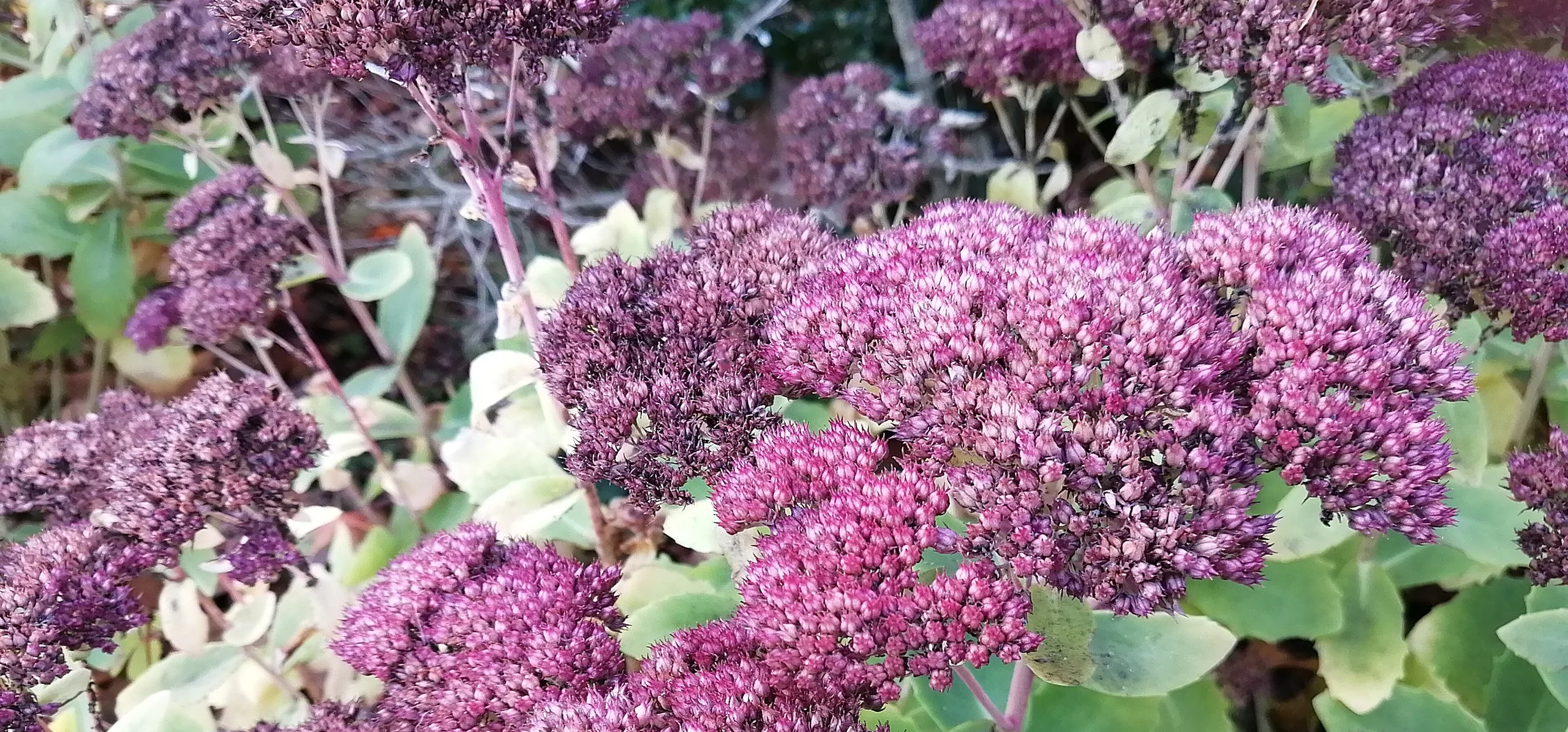
Showy Stonecrop
Hylotelephium spectabile
Family · Crassulaceae
Hylotelephium spectabile grows fleshy blue-green clumps topped with pink flower heads aging to rust, thriving in full sun and fast-draining, gritty soil.
Hylotelephium spectabile
Plant profile
- WateringLittleWater every 14 days
- Light exposureFull sun
- Hardiness zoneUSDA 4–9
Growth
- Family
- Crassulaceae
- Life cycle
- Perennial
- Growth speed
- 5/10
- Mature size
- 30–60 cm
- Spread
- 30–60 cm
- Flowering
- Flat pink flower heads from August through autumn, aging to rust
- Propagation
- Cutting
- Division
Dormancydies back to a basal crown after autumn frost, regrows in spring
Time to maturity2 to 5 years to full clump size
Soil & climate
- Soil types
- sandy, gravelly, loamy, clay, chalky
- Saline soil
- Tolerated
- Drought tolerance
- Yes
Light & Placement
- Origin
- Southwestern Primorye to northern and eastern central China and Korea
- Where to place it
- sunny border
- rock garden
- gravel garden
- large container
- raised bed
Safety
- Toxicity
- HumansToxic
Invasive speciesCan self-seed and naturalize outside gardens in parts of the eastern and central United States; not officially listed as invasive.
Data fromHylotelephium spectabile (Boreau) H.OhbaHylotelephium spectabile, ice plant, RHSHylotelephium spectabile, NC State ExtenHylotelephium spectabile, Missouri Botan
Where it grows
World distribution
Showy Stonecrop is native to 3 countries: China, Russia, and South Korea.GBIF records 4,939 documented identifications across 45 countries, with the largest concentrations in United Kingdom, Germany, and Sweden.
- China
- Russia
- South Korea
Yellow to orange dots: concentration of documented identifications per country. Green countries: sourced native range. Source: GBIFNative range from POWO (Kew).
A newly potted Showy Stonecrop looks unremarkable for most of the year, a low mound of fleshy, blue-green, paddle-shaped leaves on thick upright stems, easy to mistake for a young cabbage. That changes from August, when flat, dome-topped flower heads open in dusty pink and deepen toward rust as autumn advances, pulling in bees and the last butterflies of the season. Hylotelephium spectabile is one of the least demanding border perennials to keep alive: give it full sun and soil that drains fast, and the main task left is an annual cutback. Most plants sold in nurseries as 'Autumn Joy' are a related hybrid rather than the true species, but both are grown the same way.
Native Range and a Name Change from Sedum
Plants of the World Online places the native range of Hylotelephium spectabile from southwestern Primorye through northern and eastern central China and Korea, a cool temperate region with cold winters and warm, humid summers, which explains why the species tolerates hard frost so well once established. For decades it was sold and described as Sedum spectabile; taxonomists later split the taller, deciduous sedums with a winter-dormant crown into the genus Hylotelephium, while the low, evergreen, mat-forming species kept the Sedum name. The older name still turns up on plant tags and in older gardening books, and both refer to the same plant. GBIF's accepted name today is Hylotelephium spectabile (Boreau) H.Ohba, in the family Crassulaceae.
Light and Position
This is a full-sun plant first and a shade-tolerant one only as a compromise. The Royal Horticultural Society recommends a south- or east-facing spot in full sun; grown in too much shade, or in soil that is too rich, the stems stretch, weaken, and flop open in the middle before flowering, a problem gardeners commonly meet with plants crammed among taller shrubs. A little light afternoon shade in a hot summer climate is tolerated without much loss of flowering, but the compact, self-supporting habit that makes this plant useful in a border depends on as much direct sun as the site allows.
Soil and Drainage
Drainage matters more than fertility. The species grows naturally in sandy to gravelly ground of moderate to low fertility, and it tolerates chalk, loam, sand, and clay as long as water does not sit around the crown; overly moist or overly rich soil is the most common way to lose this plant, since it encourages the same floppy, weak growth as too much shade and opens the door to root and stem rot. Neutral to slightly alkaline soil is preferred, but strict pH tuning is rarely necessary. Where a bed drains poorly, raising it by 10 to 15 cm with grit worked into the top layer solves most problems without changing anything else about the site.


Watering
Established plants are drought and salt tolerant, drawing on the water stored in their fleshy leaves and stems through dry spells that would stress most border perennials. Water a newly planted crown while it settles in for the first few weeks, then step back: the soil should be allowed to dry between waterings, and in most temperate gardens rainfall alone covers an established clump for the whole growing season except in prolonged drought. Wet feet, not thirst, is what kills this plant, standing water around the crown over winter is far more dangerous than a summer without rain.
Pinching, Deadheading and Winter Seedheads
A mid-season pinch changes the shape of the whole clump. Cutting or pinching the stems back by a few centimetres in late spring, before flower buds form, delays bloom slightly but produces a shorter, bushier plant that needs no staking, a trick worth using on any clump that flopped the previous year. Pruning later in summer instead delays flowering without the same bushiness benefit, so timing matters. Once flowering finishes, the spent heads can be left standing through winter rather than cut back immediately: the dried, rust-brown flower heads hold their shape well into frost and snow, feed seed-eating birds, and only need clearing away in late winter or early spring as new growth starts at the base.
Dividing and Propagating
Division in spring is the fastest way to multiply an established clump and the method the RHS recommends: lift the whole crown as new shoots emerge and split it into rooted sections with a spade or knife. Stem cuttings taken in early summer root readily in free-draining compost, and even a single detached leaf pressed into gritty soil will often callus over and grow into a new plantlet, a reflection of how easily this succulent stores and redirects energy. Whichever method is used, keep new divisions and cuttings on the dry side until roots form; overwatering a rootless cutting invites the same rot that threatens mature plants in soggy soil.
Pests, Diseases and the Autumn Joy Hybrid
Few pests bother this plant seriously. Aphids, mealybugs, scale, slugs and weevils turn up occasionally on soft new growth, and deer will browse the foliage where they have access, but none of these are usually more than a cosmetic nuisance on an established clump. The two problems worth watching for are southern blight and root or stem rot, both tied to soil that stays wet, which is one more reason drainage is the single most important factor in growing this plant well. In the nursery trade, plants labelled 'Autumn Joy' or 'Herbstfreude' are usually not the pure species but a hybrid between Hylotelephium spectabile and the European Hylotelephium telephium, bred in the mid-twentieth century for a longer season of rust-red colour; care for the hybrid is essentially identical to the species. Toxicity is low: the ASPCA does not list this species among the plants it has evaluated for pets, and university extension sources describe only mild, low-severity gastrointestinal upset if the foliage is eaten in quantity, not a medical emergency for a curious cat or dog.
Test your plant knowledge
Tap a card to flip it and reveal the answer.
Hylotelephium spectabile needs consistently moist soil to thrive. Tap to reveal ✕ False
This plant produces its flower heads in early spring, before most perennials wake up. Tap to reveal ✕ False
Pinching back the stems in late spring produces a shorter, bushier plant that needs no staking. Tap to reveal ✓ True
The Royal Horticultural Society recommends dividing the crown in spring to propagate this plant. Tap to reveal ✓ True
The ASPCA lists Hylotelephium spectabile as toxic to cats and dogs. Tap to reveal ✕ False
Sources
References consulted for this guide
- Hylotelephium spectabile (Boreau) H.Ohba, GBIF Backbone Taxonomygbif.org
- Hylotelephium spectabile (Boreau) H.Ohba, Plants of the World Online (Kew)powo.science.kew.org
- Hylotelephium spectabile, ice plant, RHS Gardeningrhs.org.uk
- Hylotelephium spectabile, NC State Extension Gardener Plant Toolboxplants.ces.ncsu.edu
- Hylotelephium spectabile, Missouri Botanical Garden Plant Findermissouribotanicalgarden.org
- Reference entity : Wikipédiaen.wikipedia.org