Arabian Jasmine
Jasminum sambac
Family · Oleaceae
Jasminum sambac is a scrambling shrub, not a true vine: keep it above 13°C, water generously in summer, and feed to keep the intensely scented flowers coming.
Jasminum sambac
Plant profile
- WateringHighWater every 4 days
- Light exposurePartial sun
- Ideal temperature13–30 °C
- Humidity50–70 %
- Hardiness zoneUSDA 10–11
Growth
- Family
- Oleaceae
- Life cycle
- Perennial
- Growth speed
- 6/10
- Mature size
- 250–400 cm
- Spread
- 50–100 cm
- Flowering
- Intensely fragrant white flowers through the warm months
- Propagation
- Cutting
- Layering
DormancyEvergreen, semi-dormant below 15°C
Time to maturity5 to 10 years
Soil & climate
- Soil pH
- pH 6.5–7.5
- Soil types
- loam
- Drought tolerance
- No
Light & Placement
- Origin
- Bhutan to India; long cultivated across South and Southeast Asia
- Where to place it
- Bright spot near a south- or east-facing window, kept above 13°C
- Away from cold draughts
- Sheltered, sunny to partly shaded patio in summer
- Bring in before the first cool autumn night
- Container with a well-draining, humus-rich potting mix
Safety
- Toxicity
- CatsSafe
- DogsSafe
- HorsesSafe
Data fromGBIF Backbone Taxonomy: Jasminum sambac Plants of the World Online (Kew): JasminRHS: Jasminum sambacRHS: How to Grow Jasmine (growing guide)ASPCA: Toxic and Non-Toxic Plants, Jasmi
Where it grows
World distribution
Arabian Jasmine is native to 2 countries: Bhutan and India.GBIF records 2,120 documented identifications across 112 countries, with the largest concentrations in India, China, and United States.
- Bhutan
- India
Yellow to orange dots: concentration of documented identifications per country. Green countries: sourced native range. Source: GBIFNative range from POWO (Kew).
Arabian jasmine arrives in most homes as a small potted plant already carrying a few open flowers, and the scent is usually what prompts the purchase: a single spray of Jasminum sambac can fill a room, and it is this same species that scents jasmine tea and is threaded into the leis and garlands used across the Philippines and Southeast Asia. The plant itself is a scrambling shrub rather than a true climber, so it needs either a support to lean on or regular pruning to keep it bushy, and it wants far more warmth and light than most houseplants tolerate. Kept above 13°C, watered generously through summer, and fed while it is in growth, the same plant that arrived crowded with buds keeps producing new flushes of flowers for months rather than fading after the first flowers drop.
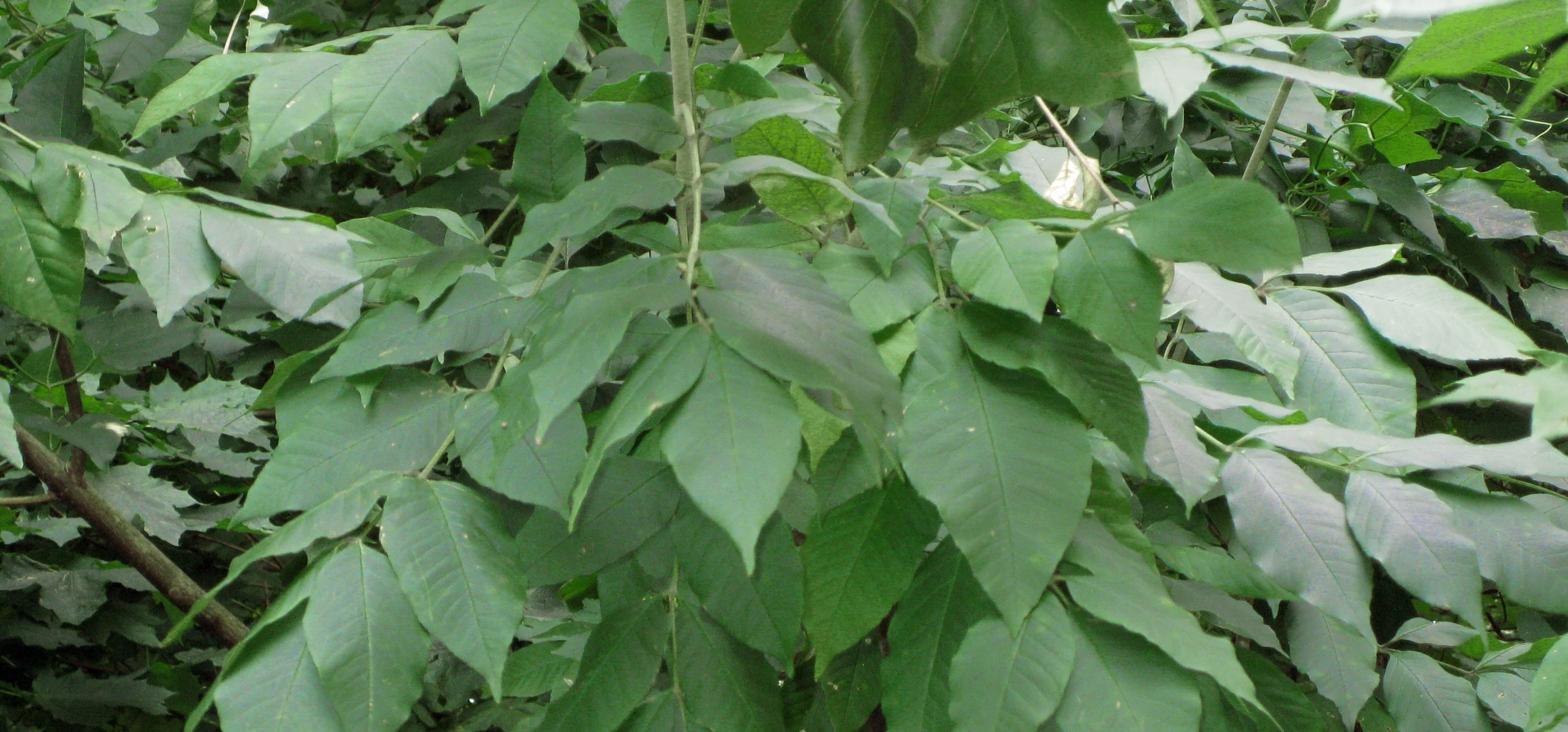
Origin and a Scrambling Habit
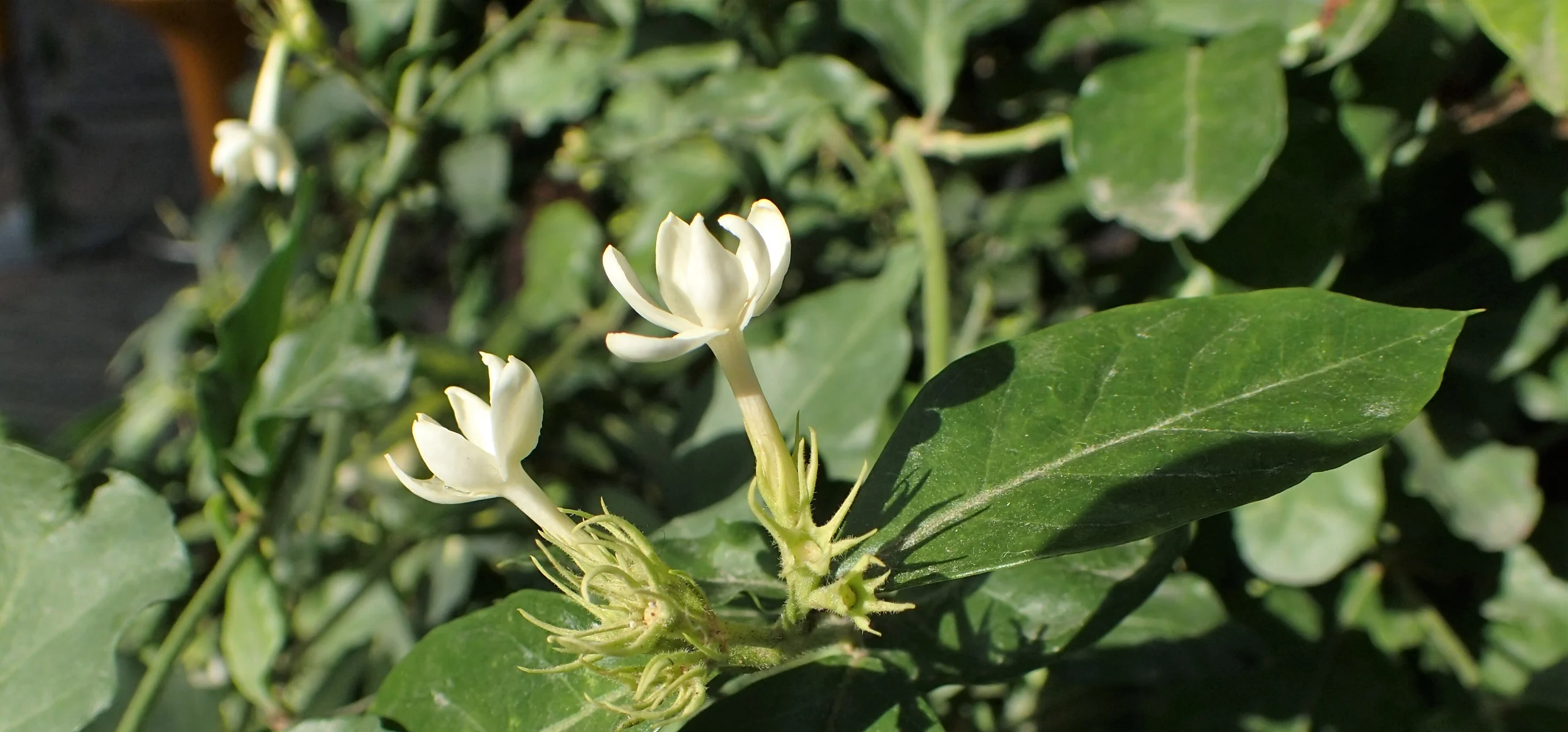
GBIF records the accepted name as Jasminum sambac (L.) Aiton, in the olive family Oleaceae, order Lamiales. Plants of the World Online gives its native range as Bhutan to India, though centuries of cultivation across South and Southeast Asia for tea, perfume, and religious garlands mean the species is now grown far beyond that original range and is the national flower of the Philippines, where it is known as sampaguita. Left unsupported, Jasminum sambac grows as a sprawling, downy-stemmed shrub with broad, glossy dark green leaves; given a trellis, cane, or wire hoop to lean on, the same lax stems drape loosely over it, which is why the plant is often sold as a climber even though it has no tendrils or true twining habit and simply scrambles over whatever it touches.
Light and Temperature
Outside the tropics, Jasminum sambac is a pot plant that spends its life indoors or in a heated conservatory: the RHS rates it H2, tolerant of low temperatures but not surviving being frozen, and its growing guide for tender jasmines is specific that plants need a minimum of 13 to 15°C to stay in active growth, in a warm, bright spot such as a south- or east-facing window. Below that range growth stalls and buds fail to open even once they have formed. In summer the plant is often moved outside to a sheltered, sunny patio, which thickens growth and encourages more flower buds, but it needs to come back indoors well before the first cool autumn night, since a sudden cold snap will drop both open flowers and unopened buds at once.
Watering Through the Seasons
Through spring and summer, while the plant is flowering and putting on new growth, water as soon as the top of the compost starts to dry, keeping the roots consistently moist without letting the pot sit in a saucer of water. As temperatures drop and growth slows in autumn and winter, cut back hard on watering and let the compost dry out further between waterings; a plant kept as wet in January as it was in July is far more likely to sulk, drop leaves, or develop root rot than one allowed to rest. The same seasonal swing applies to humidity: misting the foliage or standing the pot on a tray of damp gravel helps during hot, dry indoor heating seasons, but the compost itself should still be allowed to dry a little once flowering slows.


Feeding for Flowers
Jasminum sambac flowers on new growth, so feeding is really about keeping the plant producing fresh shoots through the warm months. The RHS recommends a high-potassium liquid feed, the kind sold as tomato fertiliser, applied to container plants through the growing season to encourage flowering rather than just leafy growth; follow the product's dilution instructions rather than feeding at full strength, since jasmine roots are easily scorched by a build-up of fertiliser salts in a small pot. Stop feeding once growth slows in autumn and hold off again until new shoots appear in spring.
Choosing a Variety
Most Jasminum sambac sold as houseplants are one of a handful of long-cultivated forms rather than the wild species. 'Maid of Orleans' carries single, star-shaped white flowers and is the most vigorous and free-flowering of the common forms, which is why it is often the one sold simply as "Arabian jasmine" and the one most likely to bloom reliably on a bright windowsill. 'Grand Duke of Tuscany' is slower and more compact, with fully double flowers so densely packed with petals that they are often compared to tiny gardenias or carnations; it is the showier plant but typically flowers less often than 'Maid of Orleans'. Both share the same intense, sweet scent, so the choice comes down to growth habit and how open or double the flower is, not fragrance.
Pruning After Flowering
Because flowers form on new wood, pruning is what keeps a Jasminum sambac shrubby and floriferous rather than leggy and bare at the base. Cut back flowered shoots once a flush of bloom fades, shortening the longest scrambling stems by around a third and removing any thin, weak growth from the centre of the plant to let light and air in. A light trim after each flush, rather than one hard annual cut, keeps the plant compact and encourages the branching new growth that carries the next round of flower buds; left unpruned for a year or more, the shrub grows tall and sparse with flowers only at the stem tips.
Propagation from Cuttings
Jasminum sambac roots readily from softwood or semi-ripe cuttings taken in spring or summer, cut just below a leaf node with the lower leaves stripped and the cutting inserted into a free-draining mix of cuttings compost and perlite. Kept warm, humid, and out of direct sun, most cuttings root within a few weeks; a plastic bag or propagator lid over the pot holds humidity high enough without daily misting. This is also how named cultivars like 'Grand Duke of Tuscany' and 'Maid of Orleans' are reproduced true to type, since seed-grown plants do not reliably repeat the parent's flower form.
Pests and Toxicity to Pets
Indoors, the two pests to watch for are spider mites and mealybugs, both listed by the RHS among the sap-feeding insects that trouble tender jasmines kept in the dry, warm air of a centrally heated room. Spider mites show up first as fine stippling on the leaves and, in a bad infestation, faint webbing between stems, and they thrive precisely in the low-humidity conditions that indoor Jasminum sambac is often grown in; raising humidity and rinsing the foliage regularly discourages them. Mealybugs cluster as small white, cottony patches in leaf axils and along stems; wipe them off with a cotton swab dipped in isopropyl alcohol and follow up with insecticidal soap if the colony returns. On the safety side, the ASPCA lists jasmine (Jasminum species) as non-toxic to cats, dogs, and horses, so an established plant is one of the few strongly scented flowering houseplants that does not need to be kept out of reach of curious pets.
Test your plant knowledge
Tap a card to flip it and reveal the answer.
Jasminum sambac is a true twining climber that winds itself around any support it touches. Tap to reveal ✕ False
The RHS growing guide for tender jasmines says Jasminum sambac needs a minimum of 13 to 15°C to stay in active growth. Tap to reveal ✓ True
'Grand Duke of Tuscany' has single flowers, while 'Maid of Orleans' has fully double flowers. Tap to reveal ✕ False
Because Jasminum sambac flowers on new growth, cutting back spent flowering shoots encourages more blooms. Tap to reveal ✓ True
According to the ASPCA, jasmine (Jasminum species) is toxic to cats, dogs, and horses. Tap to reveal ✕ False
Sources
References consulted for this guide
- GBIF Backbone Taxonomy: Jasminum sambac (L.) Aitongbif.org
- Plants of the World Online (Kew): Jasminum sambac (L.) Aitonpowo.science.kew.org
- RHS: Jasminum sambacrhs.org.uk
- RHS: How to Grow Jasmine (growing guide)rhs.org.uk
- ASPCA: Toxic and Non-Toxic Plants, Jasmineaspca.org
- Reference entity : Wikipédiaen.wikipedia.org