White Ash
Fraxinus americana
Family · Oleaceae
White ash grows into an 18 to 37 m shade tree with purple autumn colour, but emerald ash borer now kills most untreated trees within a few years.
Fraxinus americana
Plant profile
- WateringModerateWater every 10 days
- Light exposurePartial sun
- Hardiness zoneUSDA 3–9
Growth
- Family
- Oleaceae
- Life cycle
- Perennial
- Growth speed
- 7/10
- Mature size
- 1830–3660 cm
- Spread
- 1520–2290 cm
- Propagation
- Seed
- Cutting
- Grafting
FloweringInconspicuous, wind-pollinated flowers in spring before the leaves, on separate male and female trees; females bear winged samaras
Dormancydeciduous, dormant in winter
Time to maturityreaches full mature size over several decades
Soil
- Soil types
- clay, loam, sand
Light & Placement
- Origin
- Eastern Canada to the central and eastern United States
- Where to place it
- shade tree
- street tree
- lawn specimen
- parkland
Safety
- Toxicity
- Not listed by the ASPCA as toxic to cats, dogs or horses
- Pet safe
- Yes
Data fromGBIF Backbone Taxonomy: Fraxinus americaPlants of the World Online (Kew): FraxinNC State Extension Gardener Plant ToolboNC State Extension: Common Diseases of AIowa State University Extension: Emerald
Where it grows
World distribution
White Ash is native to 3 countries: Canada, Mexico, and United States.GBIF records 26,045 documented identifications across 50 countries, with the largest concentrations in United States, Canada, and Germany.
- Canada
- Mexico
- United States
Yellow to orange dots: concentration of documented identifications per country. Green countries: sourced native range. Source: GBIFNative range from POWO (Kew).
A young white ash sold today as Autumn Purple or another named selection is a grafted clone, chosen because it is male and will never drop the heavy litter of winged seed a female tree produces, and because it colours a dependable maroon to deep purple every October. Left to grow, it becomes the largest of the native ashes, capable of 18 to 37 metres with a crown nearly as wide. That same popularity, decades of use as a shade and street tree across eastern North America, is now the problem: emerald ash borer, first found near Detroit in 2002, has since killed ash trees across most of that range, and a nursery today is more likely to talk a buyer out of planting one than sell it.
Origin and Native Range
Fraxinus americana sits in the olive family, Oleaceae, order Lamiales, according to the GBIF Backbone Taxonomy, alongside lilac and privet rather than the beeches or maples it is usually planted next to. Plants of the World Online gives its native range as eastern Canada to the central and eastern United States, spanning from eastern Minnesota, southern Ontario, Quebec and Nova Scotia south to Texas and northern Florida. Older botanical literature sometimes files the species under Calycomelia or Aplilia, names that occasionally surface in nineteenth-century plant lists and herbarium sheets but that GBIF now treats as synonyms of a single accepted name.
Size, Form and Where the Roots Reach
Extension data from North Carolina State University put a mature white ash at 60 to 120 feet (18 to 37 m) tall with a 50 to 75 foot (15 to 23 m) spread, growing at a rapid rate and hardy from USDA zone 3a to 9b, tolerating winter lows down to around minus 40 degrees Celsius at the coldest end of its range. A young tree is narrowly pyramidal; by middle age the crown rounds out and the lower branches lift, which is part of why it reads as a shade tree rather than a specimen for a small garden. Give it the same clearance from foundations, drains and paved paths that you would give any large shade tree of similar eventual size, since the root system spreads well beyond the drip line long before the crown does.
Bark, Leaves and the Autumn Purple Selection
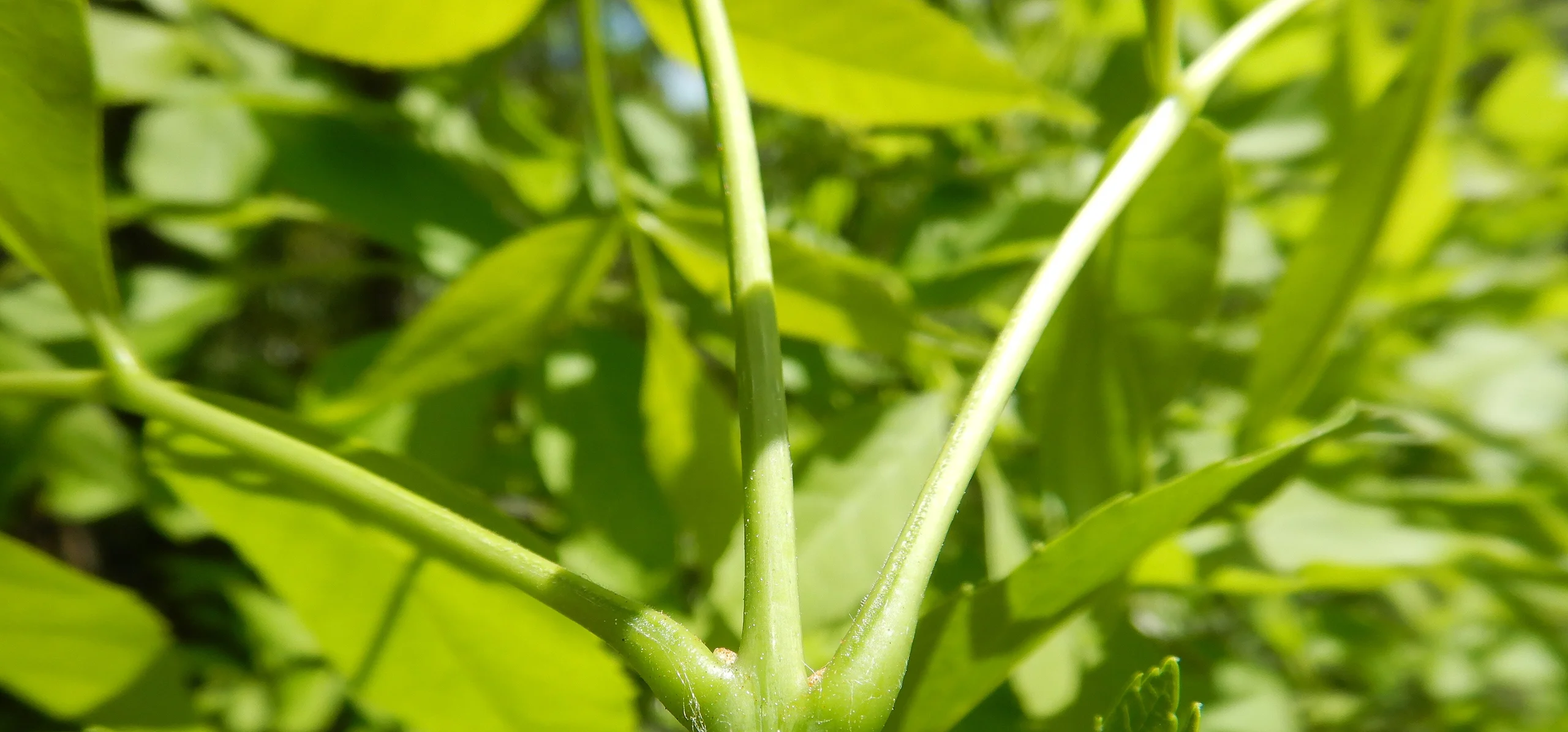
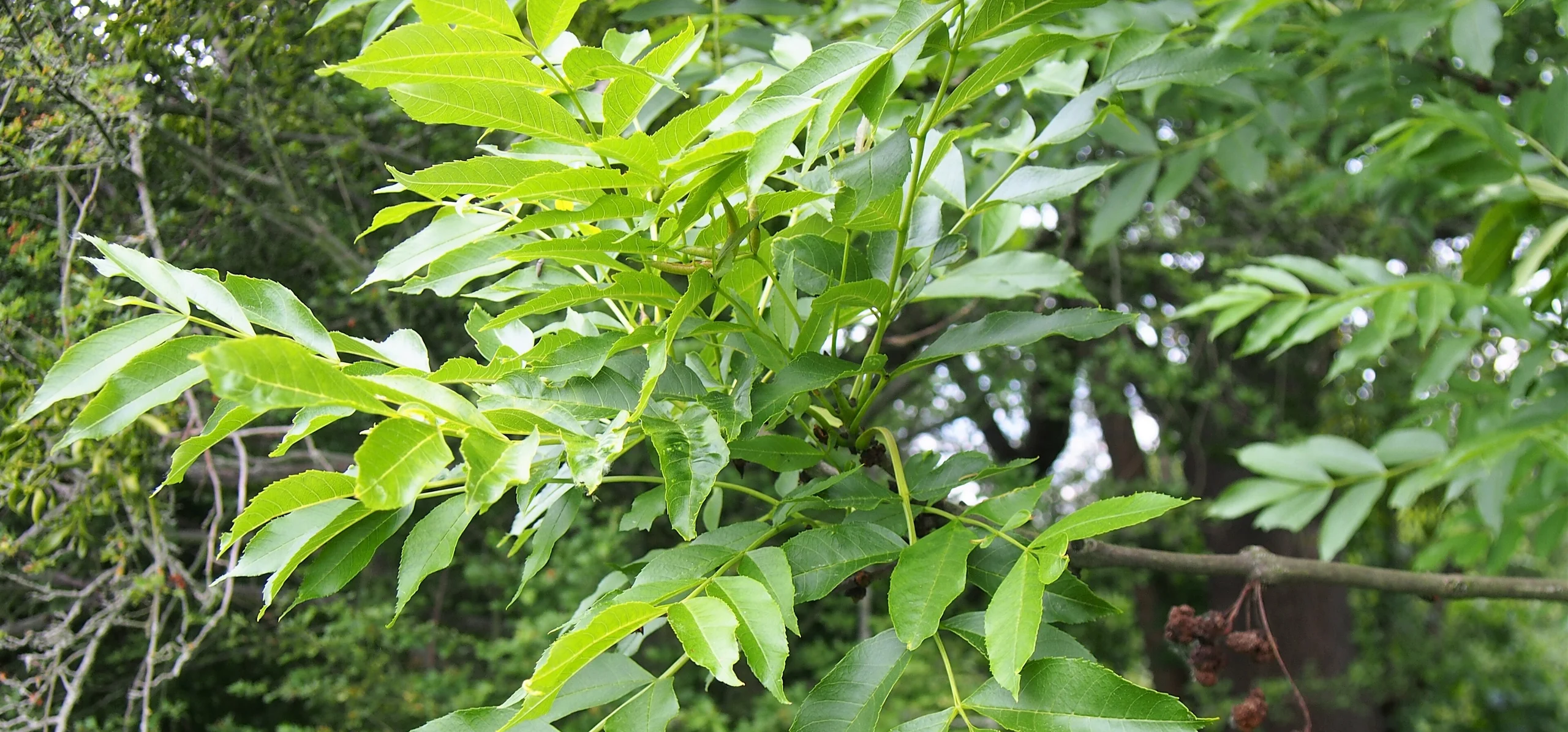
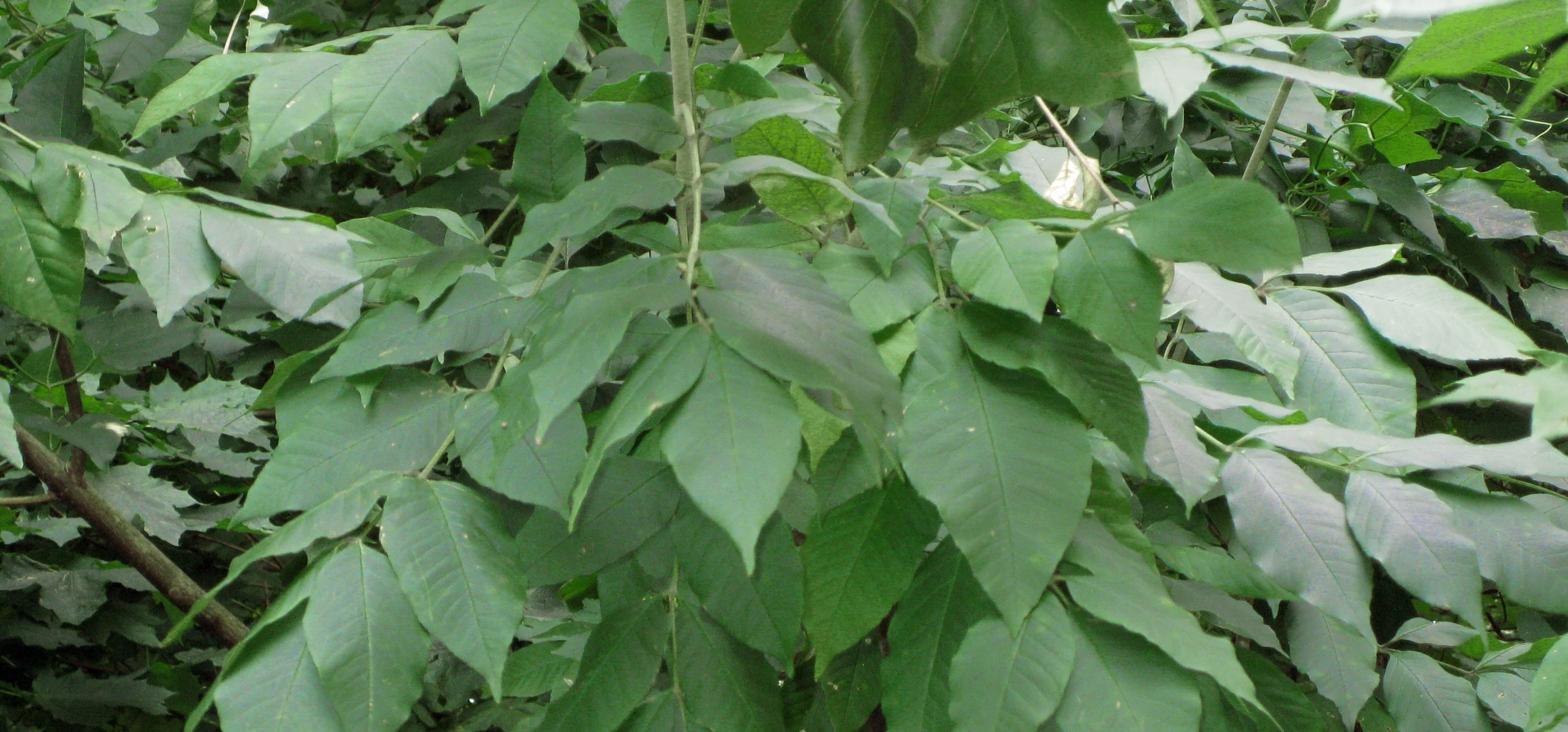
Mature bark is corky and deeply furrowed, described by Kew as forming a uniform, diamond-shaped ridge and furrow pattern, a texture that reads almost basket-woven up close and is one of the more reliable ways to identify a white ash once the diagnostic leaves are out of reach. Those leaves are odd-pinnate and compound, typically carrying seven leaflets, occasionally five or nine, each one 3 to 5 inches long, dark green above and noticeably pale to whitish underneath, with the whole leaf running 8 to 12 inches. Nearly every white ash sold in a nursery today is a named male clone rather than a seedling: Autumn Purple, the most widely planted, is seedless and was selected specifically for foliage that turns a dependable maroon to deep purple in autumn rather than the patchy yellow of a random seedling.


Why Ash Became the Baseball Bat Wood
White ash timber is hard, heavy and notably shock-resistant, qualities Kew's own description credits for its long use in tool handles, furniture, fuelwood and, most famously, baseball bats. Straight, tight grain and the wood's ability to absorb repeated, sudden impact without shattering are exactly what a bat needs, and for most of the sport's history ash was the default choice over the maple bats that have since become more common. That same density is also why a dead or dying ash left standing is not a tree to ignore: once emerald ash borer has hollowed the trunk's outer wood, branches and whole limbs can fail with little warning.
Emerald Ash Borer: Recognizing an Infestation
The clearest field signs, drawn from Iowa State University Extension's description of the pest, are D-shaped exit holes about an eighth of an inch across where adult beetles have chewed their way out through the bark, S-shaped feeding galleries visible if a section of bark splits or is peeled back, and increased woodpecker activity, flecking and small holes as birds dig for larvae underneath. Canopy dieback usually starts at the top and outer edges of the crown and progresses inward, with most trees declining over two to four years, though the range runs from as little as one year to five. Once that thinning passes roughly half the canopy, or a third of the branches are dead, treatment success drops sharply, so a systemic insecticide, applied as a trunk injection, soil drench or basal spray in mid-spring and repeated every one to two years for the rest of the tree's life, is a decision to make while a valued tree still looks largely healthy, not after it has visibly declined. Never move firewood between areas: the insect's spread across new territory has consistently followed people transporting infested ash logs and firewood rather than the beetle's own limited flight range.
Ash Yellows: A Second, Quieter Threat
Ash yellows, caused by a phloem-limited organism called Candidatus Phytoplasma fraxini and spread tree to tree by leafhoppers, most frequently affects white ash and green ash, according to North Carolina State University Extension. Infected trees show stunted growth and undersized, thinner leaves, and sometimes develop witches' brooms, dense tufts of small twiggy growth low on the trunk or along major branches. There is no cure once a tree is infected, and because symptoms can stay subtle for years before a tree declines outright, removing confirmed cases is the main way growers slow its spread to neighbouring ash.
Why Nurseries No Longer Recommend Planting It
North Carolina State University's own extension listing for the species now states plainly that new plantings are no longer recommended, a position echoed by extension services across the ash's former range: with emerald ash borer already established almost everywhere the tree grows well, a newly planted ash has a realistic chance of needing lifelong insecticide treatment or removal long before it reaches a useful size. Foresters and arborists tend to steer new shade tree planting toward species the borer does not touch, oaks, hackberry, honeylocust and disease-resistant elm cultivars among the commonly suggested substitutes, picked for the same open, tolerant growth habit that made ash popular in the first place. An existing, healthy, well-sited ash is usually still worth keeping and protecting; it is new plantings that extension guidance now discourages.
Toxicity to Pets
White ash does not appear on the ASPCA's toxic or non-toxic plant lists for cats, dogs or horses at all, unlike the unrelated Aralia spinosa, sometimes also called prickly ash, which the ASPCA does list as toxic. That absence is not a formal safety certification, but there is no documented toxic principle in Fraxinus americana foliage, bark or seed, and no ASPCA record treats it as a plant to keep pets away from.
Test your plant knowledge
Tap a card to flip it and reveal the answer.
Extension services now recommend white ash as a top choice for new shade tree plantings. Tap to reveal ✕ False
A D-shaped exit hole in the bark is a classic sign of emerald ash borer. Tap to reveal ✓ True
Systemic insecticide treatment works best after a tree has already lost most of its canopy. Tap to reveal ✕ False
White ash timber's shock resistance is why it has traditionally been used for baseball bats. Tap to reveal ✓ True
The ASPCA lists white ash as toxic to dogs and cats. Tap to reveal ✕ False
Sources
References consulted for this guide
- GBIF Backbone Taxonomy: Fraxinus americana L.gbif.org
- Plants of the World Online (Kew): Fraxinus americana L.powo.science.kew.org
- NC State Extension Gardener Plant Toolbox: Fraxinus americanaplants.ces.ncsu.edu
- NC State Extension: Common Diseases of Ash in North Carolinacontent.ces.ncsu.edu
- Iowa State University Extension: Emerald Ash Boreryardandgarden.extension.iastate.edu
- Reference entity : Wikipédiaen.wikipedia.org