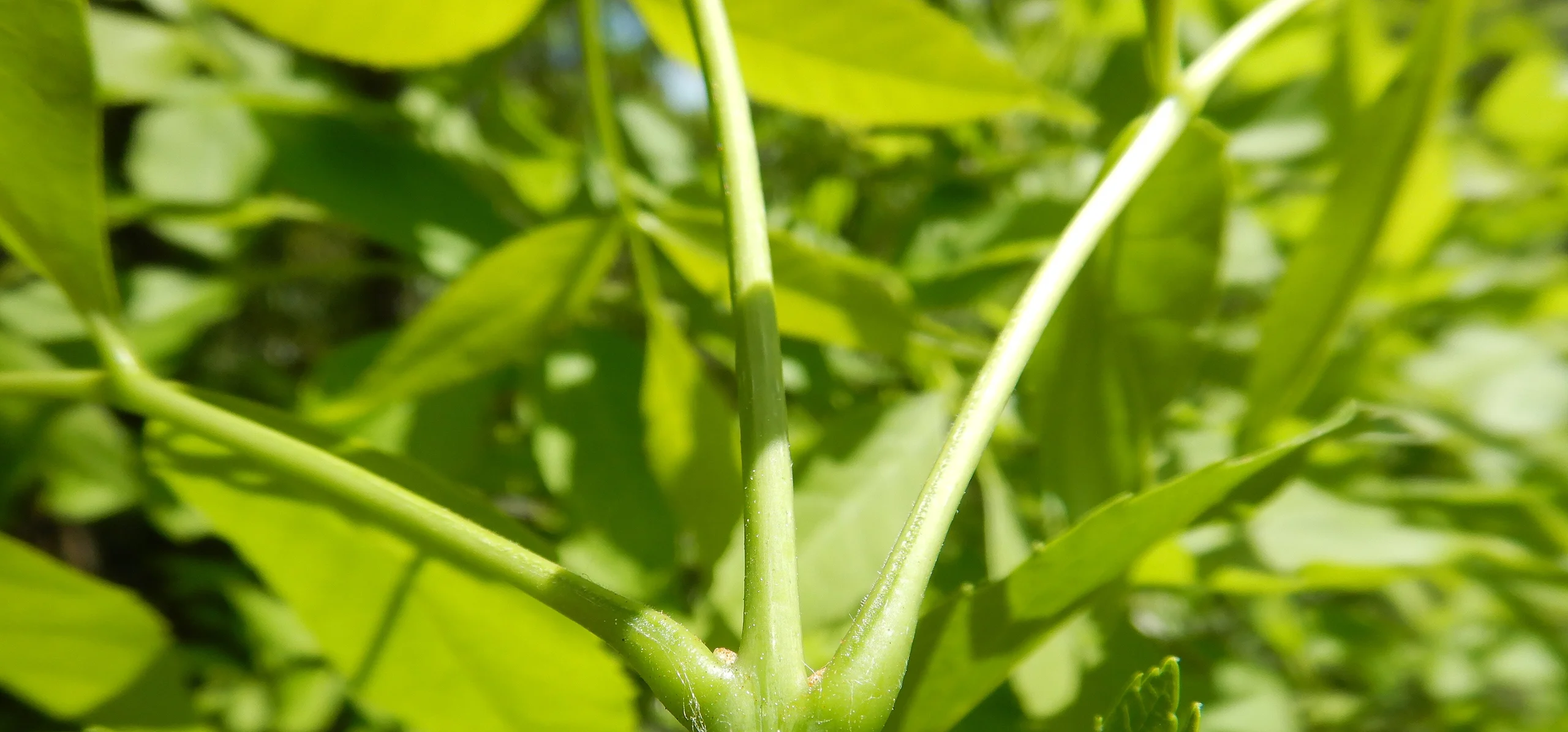
Green Ash
Fraxinus pennsylvanica
Family · Oleaceae
Green ash tolerates drought and flooding better than most shade trees, which is why it was planted everywhere, and why the emerald ash borer hit so hard.
Fraxinus pennsylvanica
Plant profile
- WateringModerateWater every 10 days
- Light exposurePartial sun
- Hardiness zoneUSDA 3–9
Growth
- Family
- Oleaceae
- Life cycle
- Perennial
- Growth speed
- 7/10
- Mature size
- 1500–2100 cm
- Spread
- 1050–1525 cm
- Propagation
- Seed
- Cutting
- Grafting
FloweringSmall wind-pollinated flowers in spring on separate male and female trees, winged samaras on female trees
Dormancydeciduous, dormant in winter
Soil & climate
- Soil pH
- pH 5–8
- Soil types
- clay, loam, sand
- Saline soil
- Tolerated
- Drought tolerance
- Yes
Light & Placement
- Origin
- Central and eastern Canada to west-central and eastern United States
- Where to place it
- street tree
- shade tree
- floodplain and wet sites
- shelterbelt
Safety
- Toxicity
- Not listed by the ASPCA as toxic to cats, dogs or horses
- Pet safe
- Yes
Invasive speciesLocally dominant in protected Danube floodplain forest in Austria and Ukraine, and classified as a controlled-use invasive species in Argentina, including the Parana Delta
Data fromGBIF Backbone Taxonomy: Fraxinus pennsylPlants of the World Online (Kew): FraxinUSDA PLANTS Database: Fraxinus pennsylvaNC State Extension Gardener Plant ToolboColorado State Forest Service: Insectici
Where it grows
World distribution
Green Ash is native to 2 countries: Canada and United States.GBIF records 92,462 documented identifications across 63 countries, with the largest concentrations in United States, Russia, and Canada.
- Canada
- United States
Yellow to orange dots: concentration of documented identifications per country. Green countries: sourced native range. Source: GBIFNative range from POWO (Kew).
A green ash planted as a bare-root whip in the 1970s could clear fifty feet within two decades, which is exactly why municipal foresters and nurseries leaned on Fraxinus pennsylvanica harder than almost any other North American tree for streets and new subdivisions. It tolerates compacted urban soil, a dry August and a flooded spring in the same year, asks for little beyond full sun and room to spread, and turns a clean butter yellow in autumn. That same ubiquity is why the emerald ash borer, arriving from Asia in the 2000s, turned into a continental die-off rather than a local outbreak: entire streets planted with a single grafted clone went from full canopy to standing deadwood within about five years of the first beetle sighting.
Origin and Native Range
Plants of the World Online (Kew) gives the native range of Fraxinus pennsylvanica as central and eastern Canada to west-central and eastern United States, and the USDA's own distribution data credits it with the widest native range of any American ash, running from Nova Scotia and Alberta south to Florida and Texas. In the wild it is a bottomland tree, occupying floodplains, riverbanks and swamp margins where it tolerates seasonal inundation that would kill most other trees, the same trait that later let it establish so readily wherever it escaped cultivation abroad. GBIF's Backbone Taxonomy places it in the olive family, Oleaceae, order Lamiales, alongside privet and lilac rather than with oaks or maples.
Telling Green Ash From White Ash
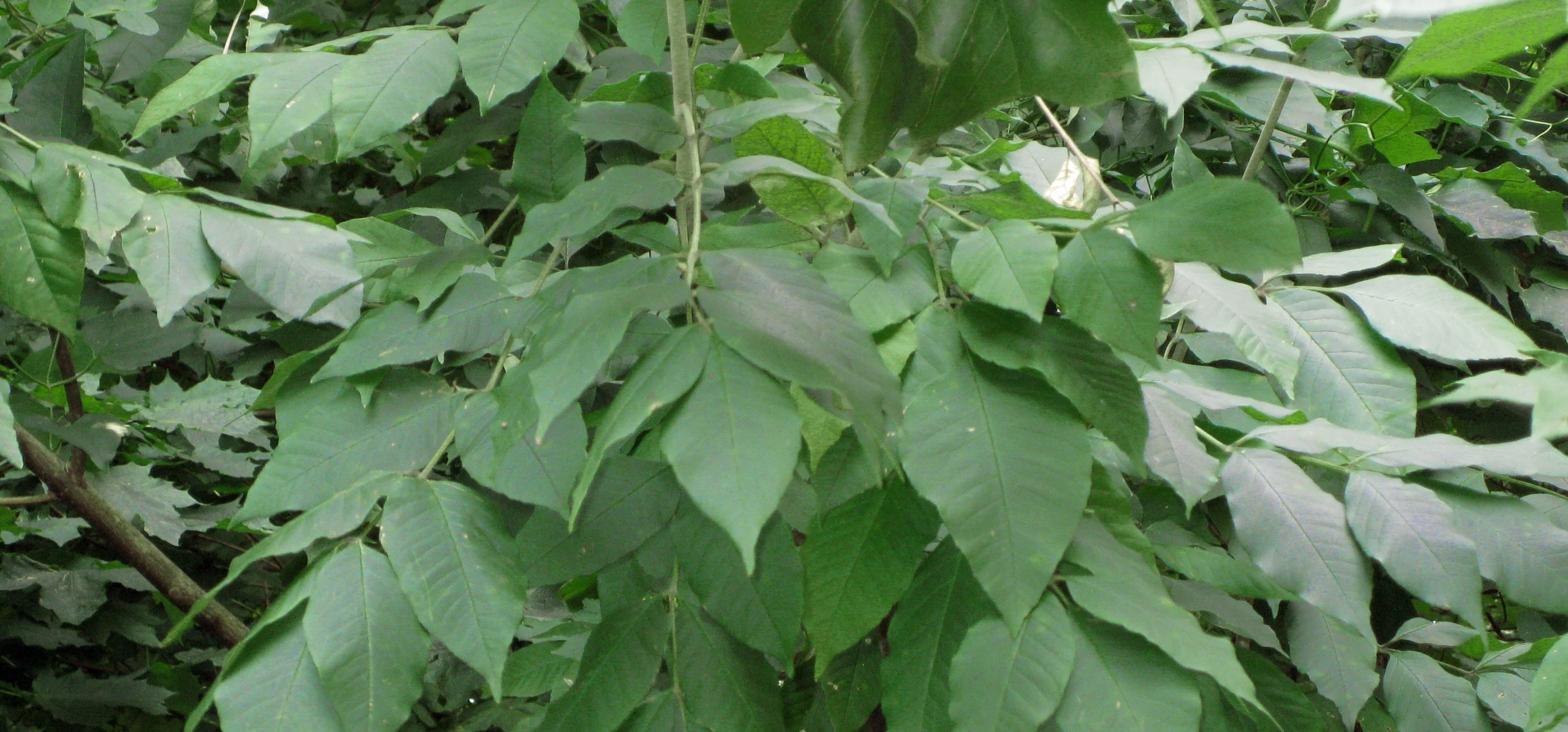
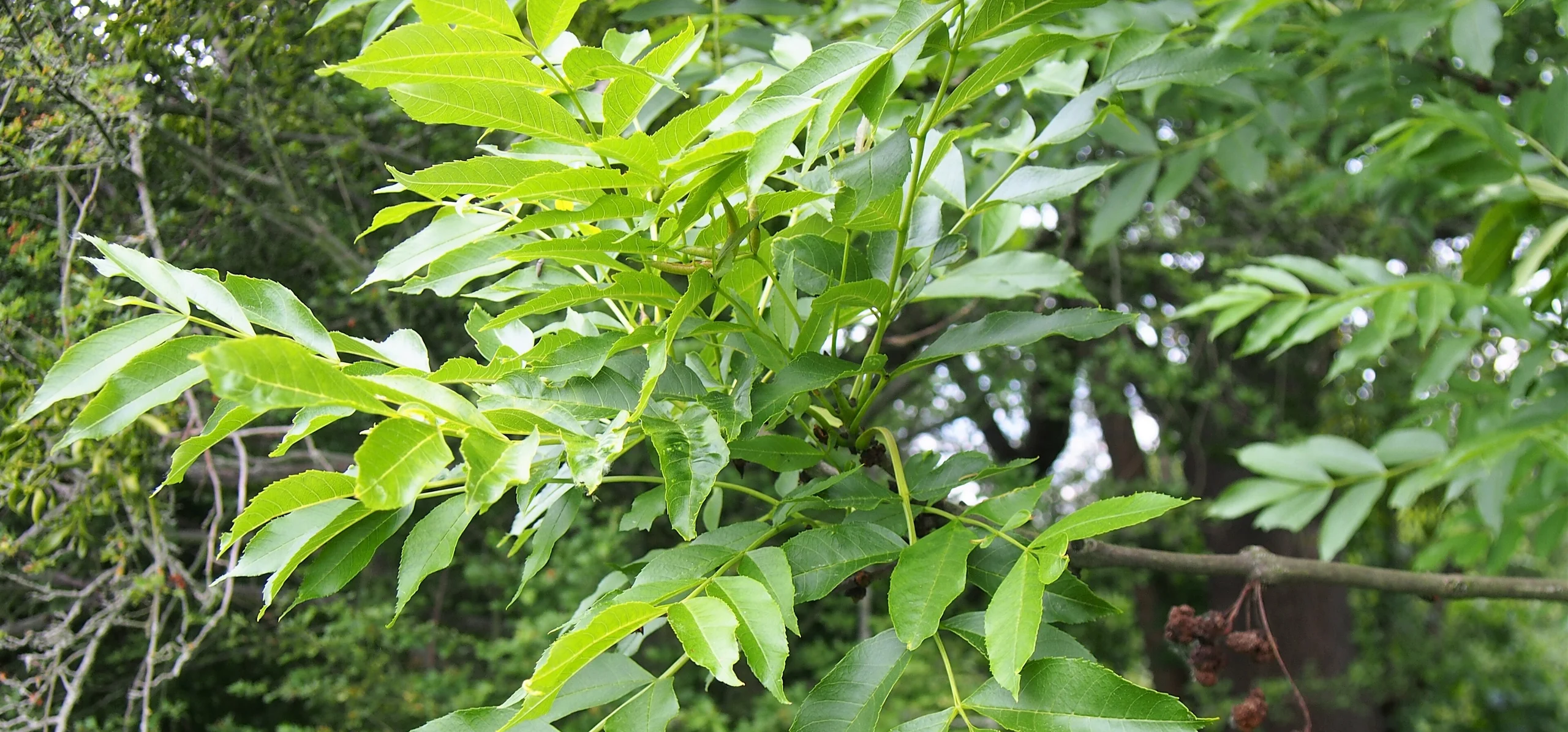
Green ash is routinely confused with white ash, Fraxinus americana, since both are pinnately compound with seven to nine leaflets and both were planted as street trees before the borer made the distinction largely academic. The reliable difference is on the twig, not the leaf: pull a leaf off and look at the scar it leaves. On green ash the leaf scar is shield-shaped, flat across the top with the lateral bud sitting just above it. On white ash the scar is notched into a U or horseshoe shape, with the bud recessed inside the notch rather than perched on top of it. Leaflet stalks are a secondary clue, green ash leaflets usually have a short stalk at the base while white ash leaflets sit almost flush against the rachis, but a vigorous shoot on either species can blur that difference, so the leaf scar is the check worth trusting.
Why It Became North America's Default Street Tree
Two things turned an ordinary floodplain tree into the standard choice for postwar suburbs and boulevards. First, it tolerates the compacted, poorly drained soil of a street verge better than almost any competing shade tree, growing fast in conditions that stunt oaks and maples. Then came the seedless male clones. Marshall's Seedless, selected and released in the 1950s, was propagated by the million because it skipped the litter of samaras a female tree drops every autumn, and Patmore, found as a seedling mutation near Vegreville, Alberta, in 1967, improved on it with a straighter trunk and tighter branch angles while staying just as seedless. Because both cultivars are clones grafted onto rootstock rather than grown from seed, entire subdivisions and city blocks ended up planted with genetically identical trees, a monoculture that looked deliberate and orderly right up until a single pest could exploit it street by street.


Site, Soil and Establishment
Green ash grows in clay, loam or sand from acid to neutral pH, and a mature tree shrugs off both a dry summer and a week of standing water in spring, a combination few shade trees offer. Full sun to light shade, a planting hole as wide as the root ball and no deeper, and two or three seasons of supplemental watering while the roots establish are the whole of what it needs; once rooted it is genuinely drought tolerant. The one place to think twice is exactly where it was planted for decades: a root system that spreads wide rather than deep will heave a sidewalk or shallow foundation given twenty or thirty years, so keep new stock well clear of pavement even though the young sapling looks harmless. It is also not listed by the ASPCA as toxic to cats, dogs or horses, so the main hazard it poses to a property is structural rather than chemical.
Emerald Ash Borer: Symptoms and Diagnosis
Emerald ash borer, Agrilus planipennis, is a wood-boring beetle native to Asia, first detected in Michigan in 2002, that has since spread across most of the range where green ash grows. Larvae tunnel S-shaped galleries through the phloem and cambium just under the bark, girdling the tree from the inside, and by the time the canopy shows dieback the vascular damage underneath is usually already extensive. Adults are metallic green and about the length of a grain of rice, and they leave a distinctive D-shaped exit hole roughly the width of a pencil when they emerge in early summer. Other tells are epicormic sprouting, thin shoots erupting straight from the trunk and main limbs below the dying canopy as the tree tries to compensate, vertical bark splits exposing the galleries underneath, and woodpecker damage from birds stripping bark to reach the larvae. Once a third to half of the canopy is gone, the tree is usually past saving.
Treating a High-Value Tree or Cutting Losses
University extension guidance is consistent on the tradeoff: chemical treatment is worth the cost for a tree with real landscape or shade value, not for every ash on a property. Trunk injection with emamectin benzoate, applied by a licensed applicator around the time leaves emerge in spring, gives reliable control for two to three years per treatment and needs repeating for as long as the tree is meant to survive, which in practice means a recurring cost for the rest of its life rather than a one-time fix. Extension entomologists generally recommend starting treatment once emerald ash borer is confirmed within about thirty miles, before the canopy shows any decline, since a tree treated after heavy dieback rarely recovers. For ash already in poor condition, structurally compromised, or not worth the recurring injection cost, removal before the trunk weakens further is the safer and cheaper long-term choice: a dead ash killed by the borer turns brittle quickly and is more dangerous to fell than a healthy one.
An American Street Tree Turned Invasive Abroad
The same flood tolerance and fast growth that made green ash useful on American floodplains has made it a management problem in the floodplain forests it was introduced to. Planted across Europe from the eighteenth century onward, it has become established and locally dominant along stretches of the Danube, including inside protected floodplain forest in Austria and Ukraine, where its wind- and water-dispersed samaras germinate readily on freshly flooded ground and crowd out native trees in the regenerating understorey. In Argentina it has followed a similar path: widely planted as a shade and windbreak tree across Buenos Aires, Santa Fe, Cordoba and Entre Rios provinces, it has naturalized in wetland systems such as the Parana Delta and is now classified as a controlled-use invasive species under national environmental regulation. Neither case is really surprising, a tree selected for tolerating the exact conditions of a natural floodplain will do the same thing wherever a floodplain exists.
Test your plant knowledge
Tap a card to flip it and reveal the answer.
Green ash was one of the most widely planted street trees in twentieth-century North America. Tap to reveal ✓ True
Green ash flowers are large, colorful and pollinated mainly by bees. Tap to reveal ✕ False
The clearest way to separate green ash from white ash is the shape of the leaf scar left on the twig. Tap to reveal ✓ True
An ash tree infested with emerald ash borer usually takes several decades to die. Tap to reveal ✕ False
Green ash is considered an invasive species in some Danube floodplain forests and in parts of Argentina. Tap to reveal ✓ True
Sources
References consulted for this guide
- GBIF Backbone Taxonomy: Fraxinus pennsylvanica Marshallgbif.org
- Plants of the World Online (Kew): Fraxinus pennsylvanica Marshallpowo.science.kew.org
- USDA PLANTS Database: Fraxinus pennsylvanica Marshall (Green Ash)plants.usda.gov
- NC State Extension Gardener Plant Toolbox: Fraxinus pennsylvanicaplants.ces.ncsu.edu
- Colorado State Forest Service: Insecticides Used to Control Emerald Ash Borercsfs.colostate.edu
- Reference entity : Wikipédiaen.wikipedia.org