European Ash
Fraxinus excelsior
Family · Oleaceae
European ash: black winter buds, ash dieback symptoms and what to do, coppicing, 'Jaspidea' and 'Pendula', and the emerald ash borer moving toward Europe.
Fraxinus excelsior
Plant profile
- WateringModerateWater every 10 days
- Light exposureFull sun
Growth
- Family
- Oleaceae
- Life cycle
- Perennial
- Growth speed
- 6/10
- Mature size
- 1200–3000 cm
- Spread
- 800–2000 cm
- Propagation
- Seed
- Grafting
FloweringSmall deep purple flowers before the leaves in spring, followed by hanging clusters of winged seeds in autumn
Dormancydeciduous, bare with black buds in winter
Time to maturityreaches much of its mature size in around 25 years; ultimate height and spread over 20 to 50 years (RHS)
Soil
- Soil types
- chalk, clay, loam, sand
Light & Placement
- Origin
- Europe to N. Iran (POWO)
- Where to place it
- large garden or parkland specimen
- wildlife garden or hedgerow
- coppice block or clipped hedge for smaller plots
- 'Pendula' as a weeping specimen
- 'Jaspidea' for winter twig colour
Safety
- Pet safe
- Yes
ToxicityNot listed by the ASPCA for cats, dogs or horses; Gardeners' World reports no known toxicity to people, pets or livestock
Invasive speciesSelf-seeds prolifically near mature trees; remove unwanted seedlings promptly (Gardeners' World)
Data fromGBIF Backbone Taxonomy: Fraxinus excelsiRHS: Ash DiebackRHS: Fraxinus excelsior (common ash)RHS: Fraxinus excelsior 'Jaspidea'RHS: Fraxinus excelsior 'Pendula' (weepiBBC Gardeners' World: Fraxinus excelsior
Where it grows
World distribution
European Ash is native to 28 countries: Austria, Belarus, Belgium, Bulgaria, Croatia, Czechia, Denmark, and Estonia….GBIF records 1,723,222 documented identifications across 77 countries, with the largest concentrations in United Kingdom, France, and Sweden.
- Austria
- Belarus
- Belgium
- Bulgaria
- Croatia
- Czechia
- Denmark
- Estonia
- France
- Georgia
- Germany
- Greece
Show 16 more countriesShow fewer countries
- Hungary
- Iran
- Ireland
- Italy
- Lebanon
- Netherlands
- Norway
- Poland
- Romania
- Russia
- Spain
- Sweden
- Switzerland
- Türkiye
- Ukraine
- United Kingdom
Yellow to orange dots: concentration of documented identifications per country. Green countries: sourced native range. Source: GBIFNative range from POWO (Kew).
Fraxinus excelsior is the ash native across almost all of Europe, and GBIF's Backbone Taxonomy accepts that name for a tree most nurseries stopped recommending within the space of about a decade. If a mature ash already grows in the garden or the hedgerow next to it, the two questions worth answering quickly are whether its canopy is thinning from the top down, an early sign of ash dieback, and how much room the tree still needs to reach its full size safely. If instead a seedling has come up on its own, and most gardens near a mature ash eventually get one, that self-seeding habit is itself part of why this species is now managed rather than planted from scratch.
Black Buds and a Late Leaf-Out
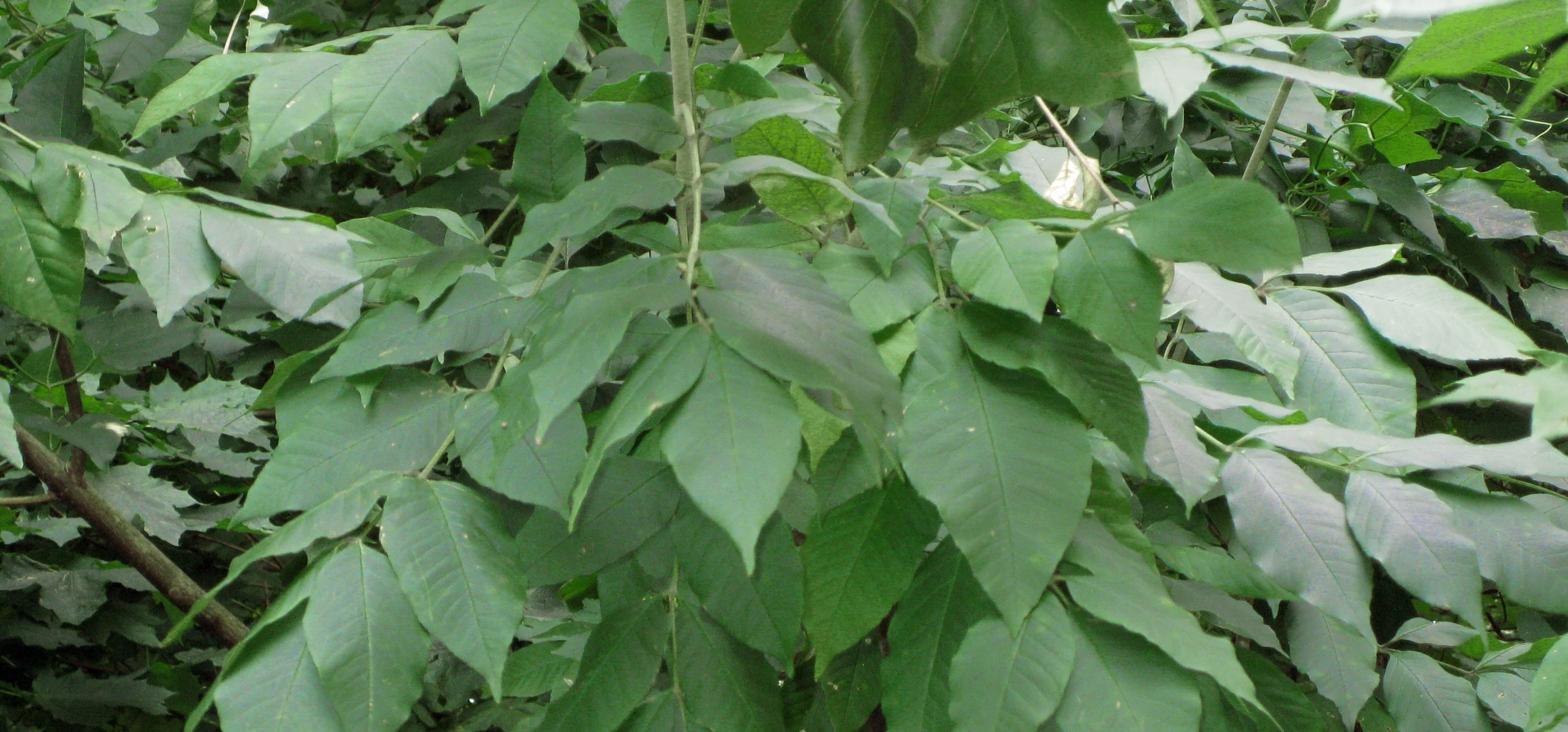
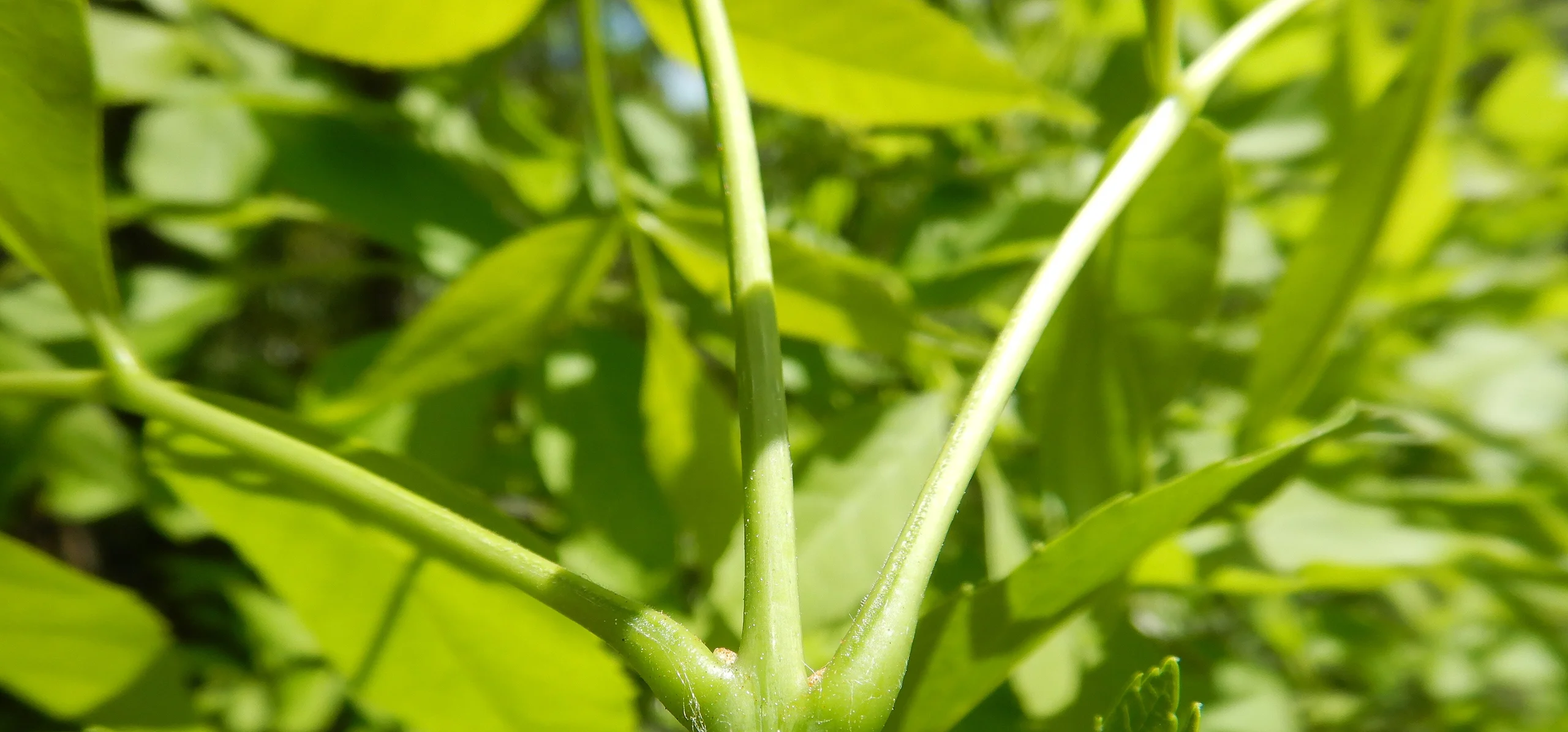
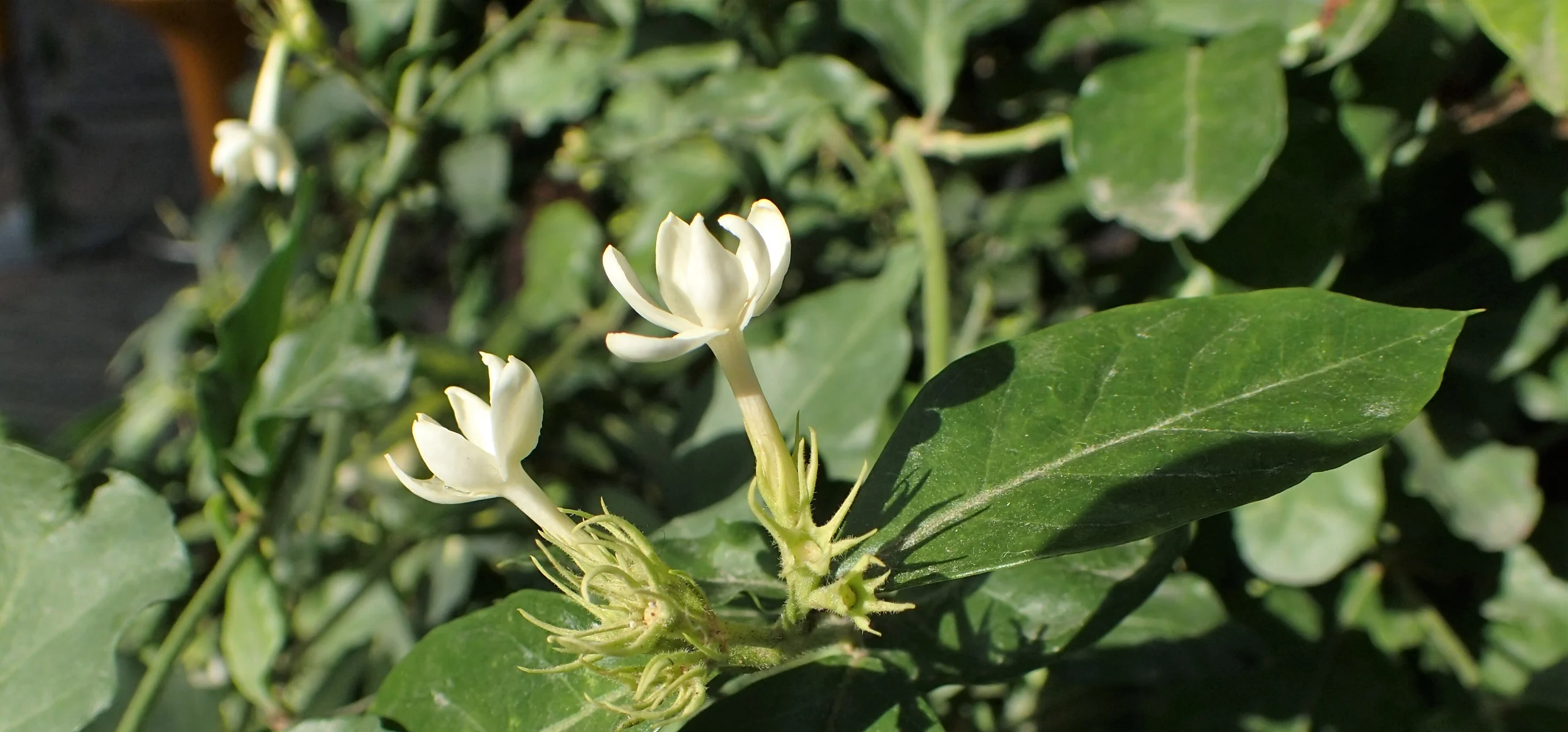
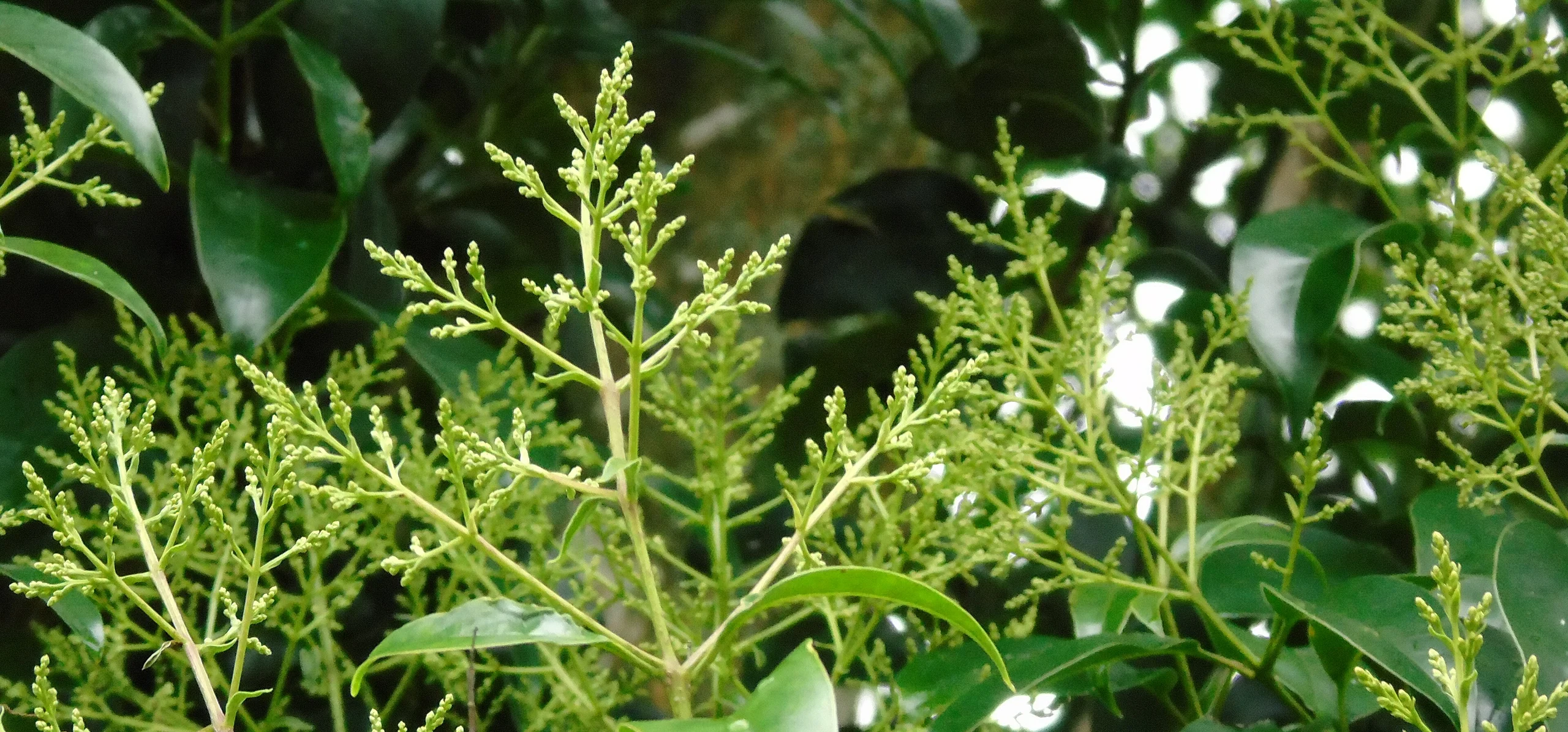
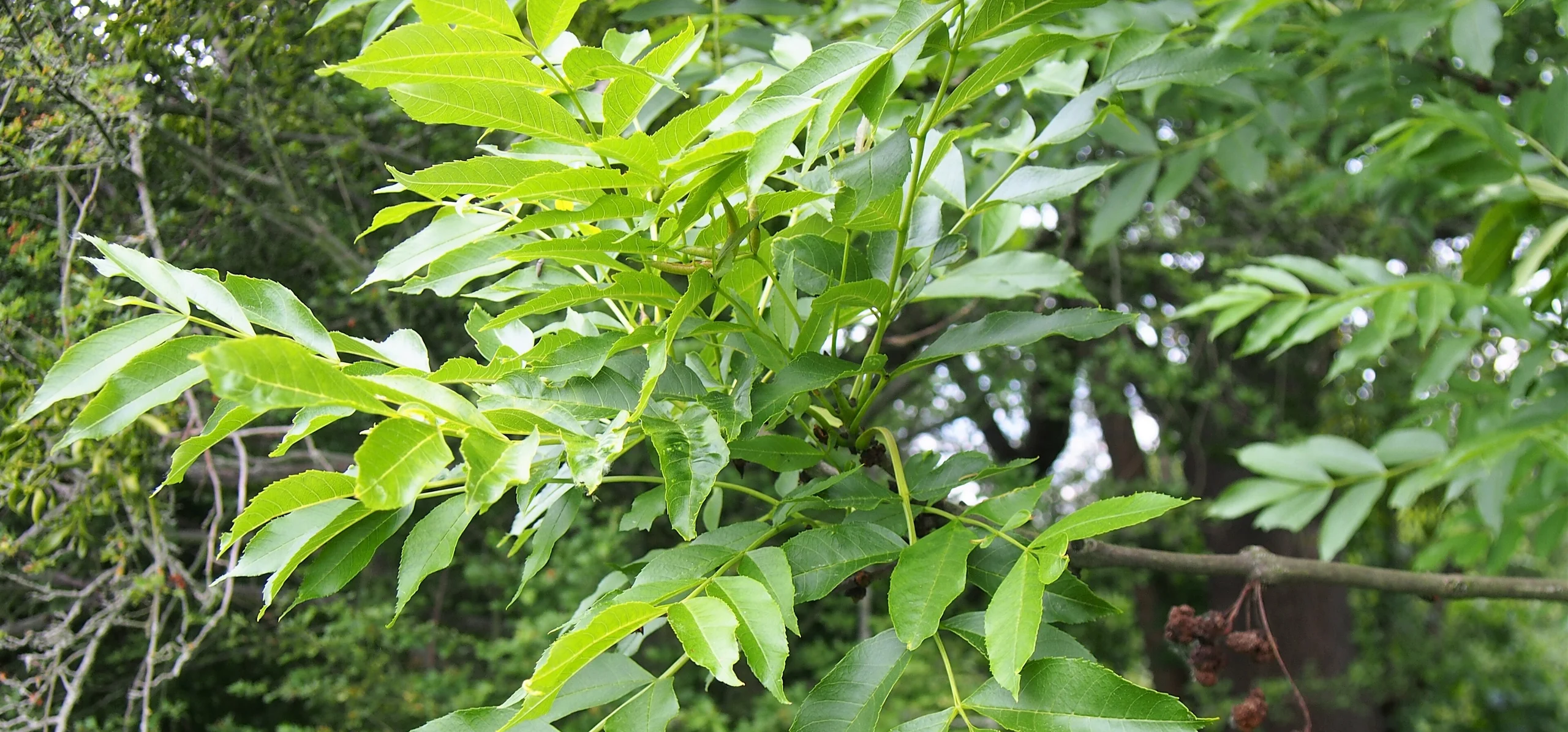
Ash is one of the easiest deciduous trees to identify with no leaves at all. Its buds sit in opposite pairs along the twig, blunt, matte and properly black rather than brown or grey, staying closed long after neighbouring trees have broken bud. The compound leaves, dark green and pinnate according to the RHS, open late in spring and are among the first to come down again in autumn, often while still green if an early frost catches them, so an ash can look bare for a stretch either side of summer while other trees nearby are already in leaf or already turning. Small deep purple flowers appear before the leaves, followed by the dense hanging bunches of single-winged seeds that give the tree its old country name of spinners.
Ash Dieback: Why This Tree Fell Out of Favor
The fungus Hymenoscyphus fraxineus, first described in 2006 and confirmed in the UK in 2012, causes ash dieback and is now, per the RHS, very widespread across the UK and much of continental Europe. Infected trees show dark blotches at the base of leaflets and along the midrib in summer, diamond-shaped lesions where side shoots meet a branch, and a crown that thins and dies back from the top and outer branches inward, with the wood beneath a lesion turning a distinctive brownish-grey. A young tree can die in a single season, while an older one more often declines over several years as repeated infections work down from the canopy. Because of how fast and how completely the disease has moved through the European ash population, few arborists or nurseries now recommend planting the species where another shade tree would do the same job.
Living With an Infected Ash in the Garden


An ash that already shows dieback symptoms is not automatically an emergency, but it is a liability question as much as a gardening one. The RHS advises reporting a suspected new case through TreeAlert, or TreeCheck in Northern Ireland, when the disease has not previously been recorded in the area, and it is explicit that tree owners carry responsibility for injury or damage if a dead or weakened branch fails near a path, a boundary or a neighbouring garden. In practice that means having a genuinely infected tree assessed for structural risk, removing dead wood annually back to sound timber with tools disinfected between cuts, and accepting that pollarding or felling becomes the safer option once decline reaches the lower crown, rather than waiting for the tree to make that decision on its own.
Size, Spread and Self-Seeding
Left alone, the RHS rates this species' ultimate height as higher than 12 metres, with old woodland trees recorded well beyond that, and its ultimate spread as wider than 8 metres, well past what most garden plots can carry as a lawn specimen. Seed production makes up for whatever space a garden lacks: a mature ash produces seed in large, uneven pulses, and the winged samaras are built to spin and travel well away from the parent tree. Gardeners' World is blunt about the result, watch for self-sown seedlings anywhere near an existing ash and pull them while small, because one left a few seasons is a tree, not a weed.
Coppicing and Growing Ash in a Smaller Space
Ash tolerates coppicing better than most native broadleaf trees, which is why it was traditionally cut on rotation for firewood and tool handles rather than grown only as single standards. Cutting the trunk back close to ground level in winter triggers a flush of vigorous new stems from the stool the following spring, and the cut can be repeated indefinitely on an established root system, effectively resetting the tree's size every few years instead of letting it reach full height. That makes coppicing, or clipping ash into a tall hedge, the realistic way to keep the species in a garden that cannot host a full-sized specimen, and it sidesteps some of the structural liability that comes with a mature standard showing dieback.
'Jaspidea' and 'Pendula': Two Distinct Garden Forms
Two named forms show how differently one species can be trained. 'Jaspidea' keeps the straight species' ultimate size, higher than 12 metres according to the RHS, but its young shoots and branches turn golden yellow, most conspicuous in winter once its own yellow-opening leaves have dropped. 'Pendula', the weeping ash, keeps a similar ultimate height but pulls its branches down into an umbrella-shaped crown arching to the ground, with a spread of about 4 to 8 metres, narrower than the wild type's. Both cultivars share the species' RHS H6 hardiness and broad soil tolerance, and both remain just as exposed to ash dieback as an ordinary seedling-grown tree.
Emerald Ash Borer: The Threat Moving West
Ash dieback is not the only pressure building on this species. The emerald ash borer, a wood-boring beetle native to East Asia, has already devastated ash populations across North America since the early 2000s, and separately reached the Moscow region of Russia around the same period before spreading west and south at a documented rate of tens of kilometres a year, crossing into Ukraine and Belarus and moving closer to the EU border. It has not been found breeding in the UK or Western Europe so far, but its advance means an ash population already reduced by dieback could face a second, unrelated pest within years rather than decades, one more reason foresters are diversifying away from ash-heavy plantings now.
Wildlife Value and a Toxicity Check
None of this makes an existing ash worthless. Its canopy lets in more light than a beech or an oak, and Gardeners' World credits the tree with supporting birds, butterflies and moths as both a caterpillar food plant and a nesting and shelter site, on top of a seed crop that feeds finches through winter. On safety, a search of the ASPCA's toxic and non-toxic plant database returns no entry at all for Fraxinus excelsior under ash or any synonym, so there is no ASPCA basis for calling it toxic or safe for cats, dogs or horses. Gardeners' World separately notes no reported toxicity to people, pets or livestock, consistent with the absence of any ASPCA warning rather than contradicting it.
Test your plant knowledge
Tap a card to flip it and reveal the answer.
Ash dieback, caused by the fungus Hymenoscyphus fraxineus, is now very widespread across the UK and continental Europe. Tap to reveal ✓ True
European ash is typically one of the first native trees to come into leaf in spring. Tap to reveal ✕ False
Coppicing or clipping ash into a hedge is a practical way to grow the species in a garden too small for a full-sized tree. Tap to reveal ✓ True
A mature ash tree can produce large numbers of wind-dispersed seeds, leading to self-sown seedlings nearby. Tap to reveal ✓ True
The ASPCA lists Fraxinus excelsior as toxic to dogs and cats. Tap to reveal ✕ False
Sources
References consulted for this guide
- GBIF Backbone Taxonomy: Fraxinus excelsior L.gbif.org
- RHS: Ash Diebackrhs.org.uk
- RHS: Fraxinus excelsior (common ash)rhs.org.uk
- RHS: Fraxinus excelsior 'Jaspidea'rhs.org.uk
- RHS: Fraxinus excelsior 'Pendula' (weeping ash)rhs.org.uk
- BBC Gardeners' World: Fraxinus excelsior (Ash Tree)gardenersworld.com
- Reference entity : Wikipédiaen.wikipedia.org