Sweet Alyssum
Lobularia maritima
Family · Brassicaceae
Sweet alyssum is a honey-scented edging and basket annual. Covers sowing, shearing back for a second flush, heat and flea beetle problems.
Lobularia maritima
Plant profile
- WateringLittleWater every 6 days
- Light exposurePartial sun
- Ideal temperature-5–1 °C
- Hardiness zoneUSDA 5–9
Growth
- Family
- Brassicaceae
- Life cycle
- Annual
- Growth speed
- 7/10
- Mature size
- 8–25 cm
- Spread
- 15–50 cm
- Flowering
- Spring through fall, pausing in peak summer heat
- Propagation
- Seed
Dormancynone, grown as annual
Time to maturityflowers within weeks of sowing
Soil & climate
- Soil types
- chalk, clay, loam, sand
- Drought tolerance
- Yes
Light & Placement
- Origin
- Western and central Mediterranean to Sinai (POWO); widely naturalized elsewhere
- Where to place it
- sunny edging
- hanging basket
- window box
- rock garden
- vegetable garden border
Safety
- Toxicity
- CatsSafe
- DogsSafe
- HorsesSafe
Invasive speciesSelf-seeds moderately in beds it likes; POWO describes the species as a cultivated ornamental that is widely naturalized outside its native Mediterranean range.
Data fromLobularia maritima (L.) Desv., GBIF BackPOWO: Lobularia maritima (L.) Desv.RHS: Lobularia maritima (sweet alyssum)ASPCA: Alyssum toxicity to cats, dogs anNC State Extension Gardener Plant Toolbo
Where it grows
World distribution
Sweet Alyssum is native to 10 countries: Algeria, Croatia, Egypt, France, Italy, Libya, Morocco, and Portugal….GBIF records 106,455 documented identifications across 127 countries, with the largest concentrations in France, Spain, and United Kingdom.
- Algeria
- Croatia
- Egypt
- France
- Italy
- Libya
- Morocco
- Portugal
- Spain
- Tunisia
Yellow to orange dots: concentration of documented identifications per country. Green countries: sourced native range. Source: GBIFNative range from POWO (Kew).
A Low Mound Bred for Edges and Baskets
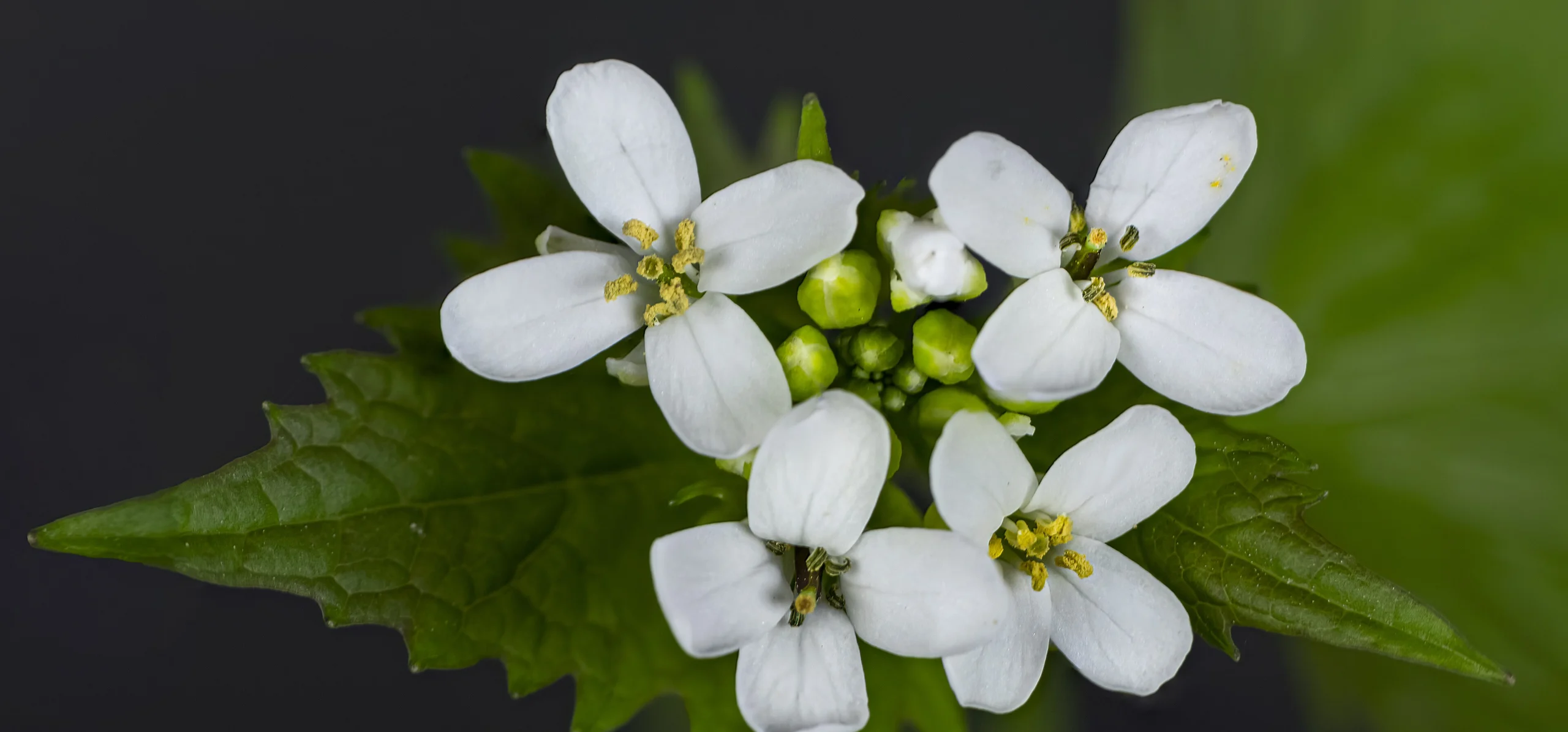
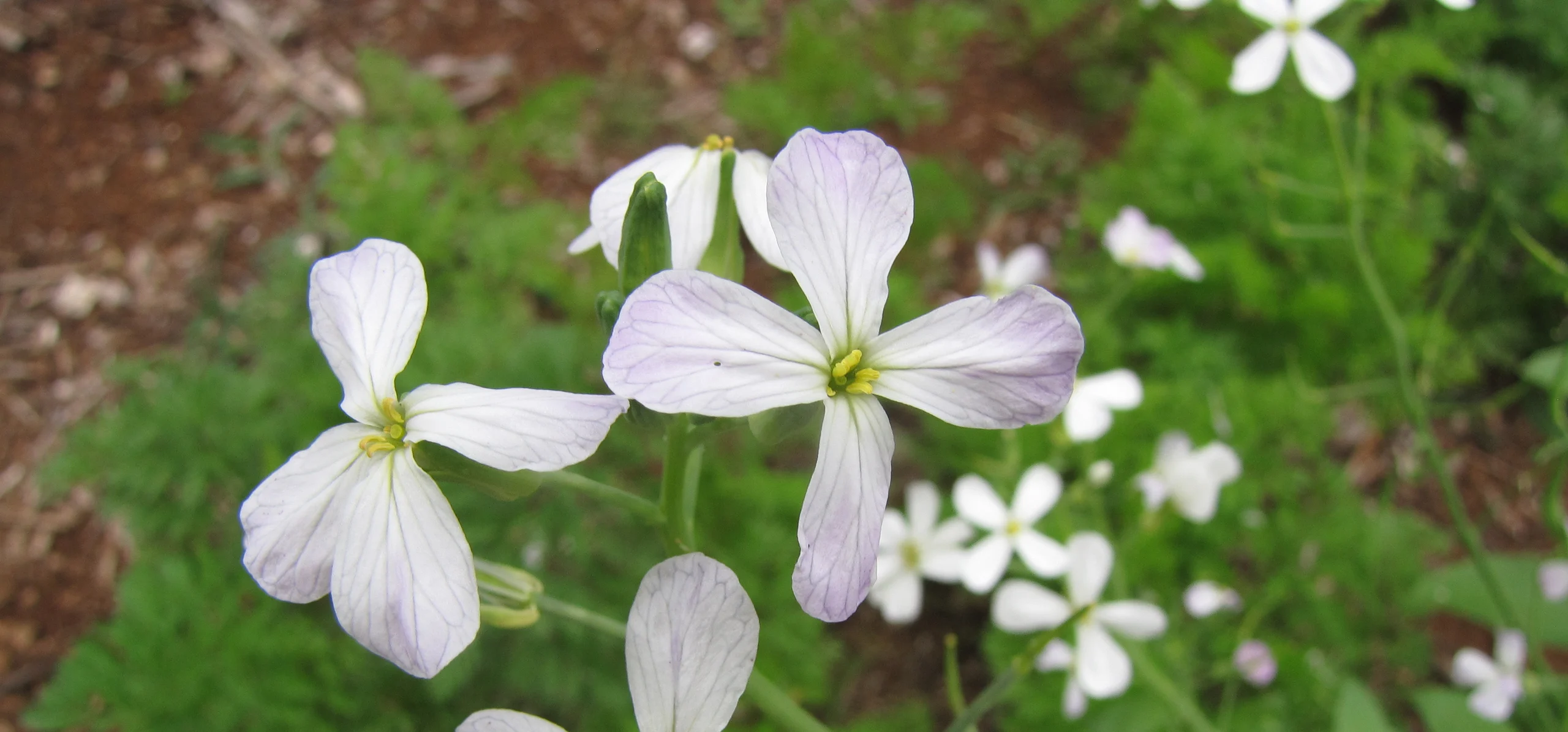
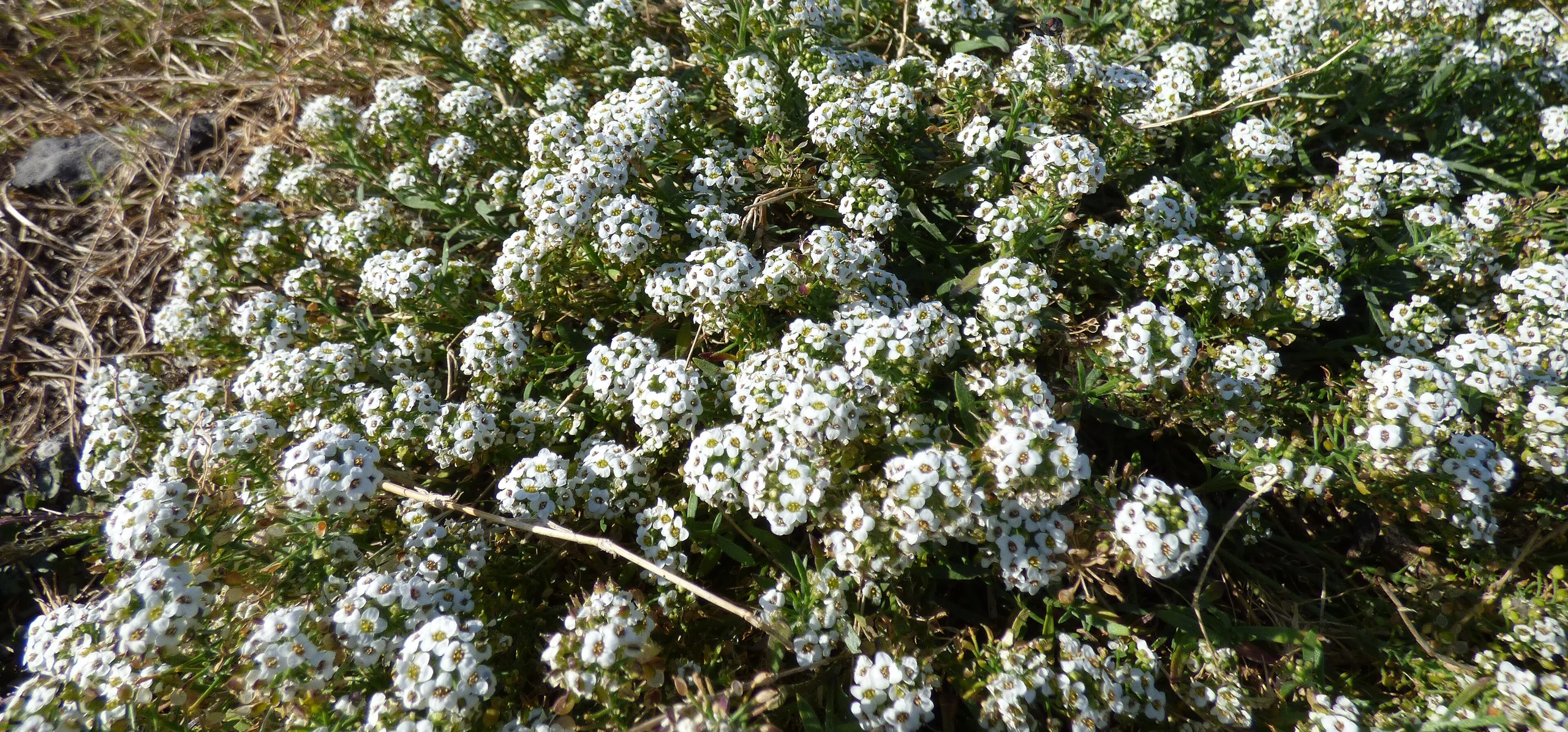
Lobularia maritima, sweet alyssum, is a low, mat-forming member of the mustard family native to the western and central Mediterranean as far east as Sinai, according to Kew's Plants of the World Online. Well-branched stems set with narrow, linear leaves stay under about 25 cm tall while spreading 15 to 50 cm wide, and from spring into fall they carry dense terminal clusters of tiny four-petaled flowers in white, pink or purple. The flowers are genuinely fragrant, the RHS lists Lobularia among its scented plants, and on a warm still afternoon a well-grown patch gives off a honey-like scent that carries a few steps away. That combination of low sprawling habit and scent is why it is sold almost everywhere as an edging plant along paths and borders and as a filler that spills over the rim of hanging baskets and window boxes.
Sowing Direct or Starting in Cells
NC State Extension's guidance is to start seed indoors five to six weeks before the last frost date, or to sow direct in the ground several weeks before that date once the soil has warmed. Direct sowing suits its habit well: scatter seed thinly on the surface and press it in rather than burying it, since it needs light to germinate, and thin seedlings once they are large enough to handle. Starting in cell trays or plug packs gives an earlier, more even display for edging a border or filling a basket on a set date, and because the young plants form a shallow, fibrous mat rather than a taproot, they transplant out of cells with little check to growth if moved before they are pot-bound.


Full Sun, Ordinary Soil, Water While It Settles In
Give sweet alyssum full sun for the densest flowering, though in hot summer climates a little afternoon shade keeps plants fresher; the RHS grows it in light, moderately fertile, well-drained soil and it tolerates chalk, clay, loam and sand as long as drainage is good. Keep new transplants evenly moist while roots spread, then let up: NC State Extension rates it resistant to drought and dry soil once established, and the same source flags stem and crown rots and downy mildew as its main problems in soil that stays wet, noting that very good drainage is a must. Skip a rich feeding regime too, soft, over-fertilized growth flowers less and flops more than a plant kept lean.
Shearing Back Mid-Summer for a Second Flush
Sweet alyssum blooms in a flush rather than a steady trickle, and by midsummer that first flush of flowers is usually tired, with browning heads, bare lower stems and a general leggy sprawl. The RHS advises clipping the whole mound over at that point, cutting it back by roughly a third to a half with shears rather than deadheading flower by flower, to encourage further flowering. New basal shoots come away within a couple of weeks and carry a fresh, tighter flush of bloom into late summer and fall. This one cut does double duty: it tidies a plant that heat has made ragged and it resets the flowering cycle, which is why sweet alyssum sold as seed-grown packs, rather than as a sterile hybrid, needs this mid-season haircut to keep earning its spot at the front of a border.
Heat Stress and Flea Beetles
Growth and flowering slow visibly once daytime heat climbs, plants can look sparse and ragged through the hottest weeks, then pick back up as temperatures cool in early fall, so a midsummer lull is normal rather than a sign of a dying plant. The RHS lists slugs and flea beetles as the pests most likely to trouble it; flea beetles riddle young leaves with small, shot-hole-like feeding marks, cosmetic on an established mat but capable of setting back seedlings, and a floating row cover over freshly sown or transplanted alyssum keeps the adults off while plants toughen up. Beyond that, problems are almost always drainage-related rather than pest-related.
'Snow Princess' and Other Sterile Hybrids
Standard seed-raised sweet alyssum puts a share of its energy into setting seed after each flush, which is part of why it needs that midsummer shearing to keep going. NC State Extension lists 'Snow Princess' as a heat- and cold-tolerant selection bred to flower continuously through summer without the same seasonal fade, alongside 'Giga White', another vigorous, fragrant white form, and 'Frosty Night', grown as much for its variegated foliage as its flowers. 'Snow Princess' is propagated vegetatively by growers rather than raised from seed, since it is a sterile hybrid; without seed to set, it channels its energy into a long, uninterrupted bloom that makes it a favorite for hanging baskets that need to look full from early summer to the first hard frost.
A Living Mulch and Hoverfly Magnet in the Vegetable Garden
Beyond ornamental beds, sweet alyssum earns a place tucked between rows of brassicas, lettuce or other vegetables, where its low, dense mat shades the soil surface like a living mulch while the plants above it keep growing. NC State Extension lists pollinators and predatory insects among what the flowers attract, and the small, shallow, nectar-rich blooms are particularly good at drawing in hoverflies and tiny parasitic wasps, whose larvae feed on aphids and other soft-bodied pests among the vegetables nearby. It asks little in return, tolerating the same ordinary, well-drained soil as the rest of the plot and needing only that midsummer shear to keep flowering through the growing season.
Self-Seeding and a Safety Check for Pets
Left to set seed after a flush, sweet alyssum drops enough of it to reappear as volunteer seedlings the following year in beds and gravel it likes, without usually turning into a nuisance in a border that gets weeded through the season. Kew's Plants of the World Online describes the species overall as a cultivated ornamental that is widely naturalized well beyond that native Mediterranean and Sinai range, the same easy self-sowing habit that fills a garden bed lets it persist outside cultivation in mild climates elsewhere. For anyone gardening with pets, the ASPCA's plant database lists alyssum, filed there under the older name Alyssum spp. that covers sweet alyssum, as non-toxic to dogs, cats and horses, one less thing to worry about with a plant low enough for a curious nose to reach.
Test your plant knowledge
Tap a card to flip it and reveal the answer.
Sweet alyssum's small white flowers are genuinely fragrant, not just pretty. Tap to reveal ✓ True
Shearing sweet alyssum back after its first flush of bloom encourages it to flower again. Tap to reveal ✓ True
Sweet alyssum grows best in soil that stays consistently wet or soggy. Tap to reveal ✕ False
The sterile hybrid 'Snow Princess' is grown from seed saved each year, just like standard sweet alyssum. Tap to reveal ✕ False
The ASPCA lists alyssum as non-toxic to cats, dogs and horses. Tap to reveal ✓ True
Sources
References consulted for this guide
- Lobularia maritima (L.) Desv., GBIF Backbone Taxonomygbif.org
- POWO: Lobularia maritima (L.) Desv.powo.science.kew.org
- RHS: Lobularia maritima (sweet alyssum)rhs.org.uk
- ASPCA: Alyssum toxicity to cats, dogs and horsesaspca.org
- NC State Extension Gardener Plant Toolbox: Lobularia maritimaplants.ces.ncsu.edu
- Reference entity : Wikipédiaen.wikipedia.org