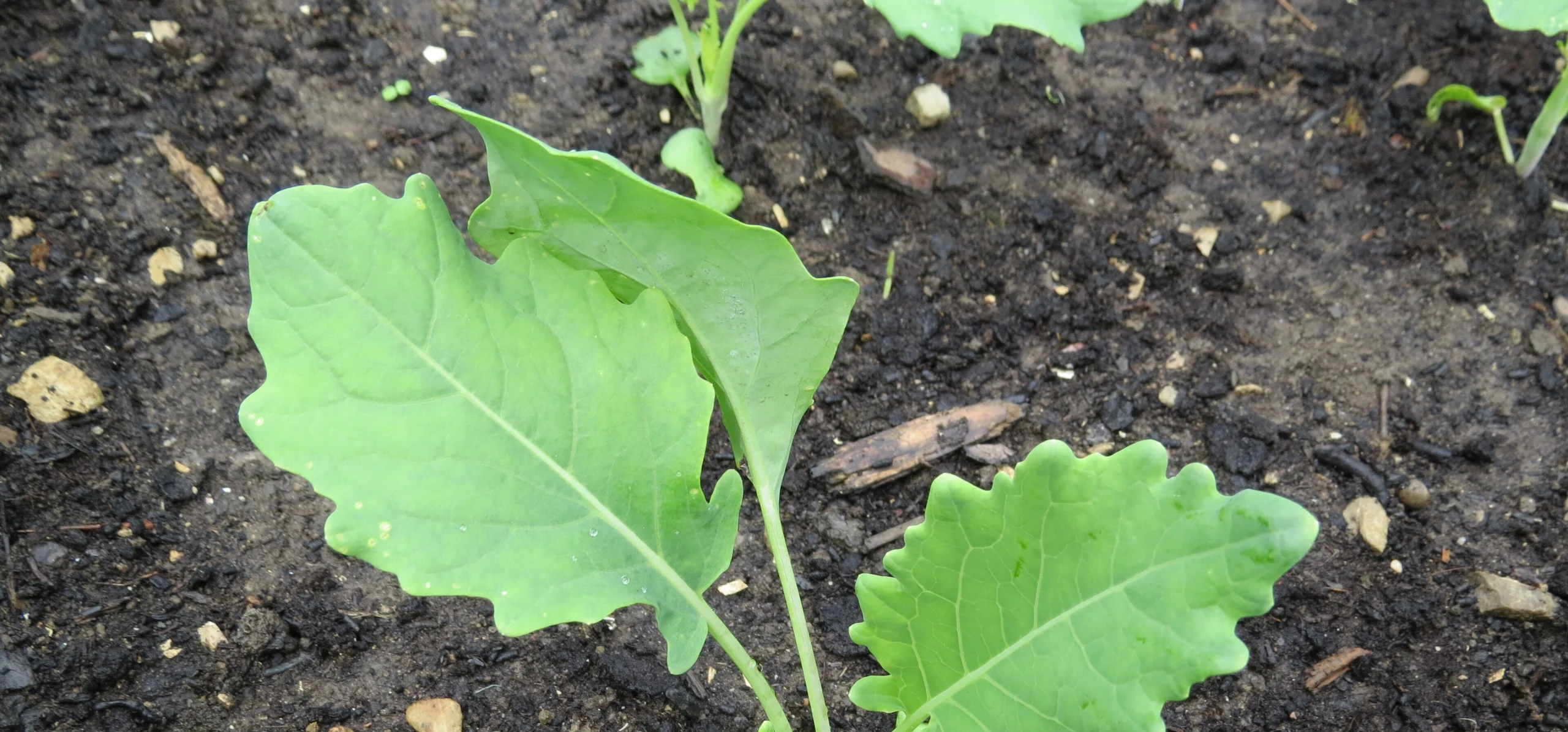
Cabbage
Brassica oleracea
Family · Brassicaceae
Cabbage, kale, broccoli, cauliflower, Brussels sprouts and kohlrabi are one species with one set of enemies: clubroot, caterpillars and pigeons.
Brassica oleracea
Plant profile
- WateringHighWater every 4 days
- Light exposurePartial sun
Growth
- Family
- Brassicaceae
- Life cycle
- Biennial
- Growth speed
- 4/10
- Mature size
- From a fist-sized kohlrabi bulb to a tall Brussels sprout stem
- Spread
- 30–80 cm
- Flowering
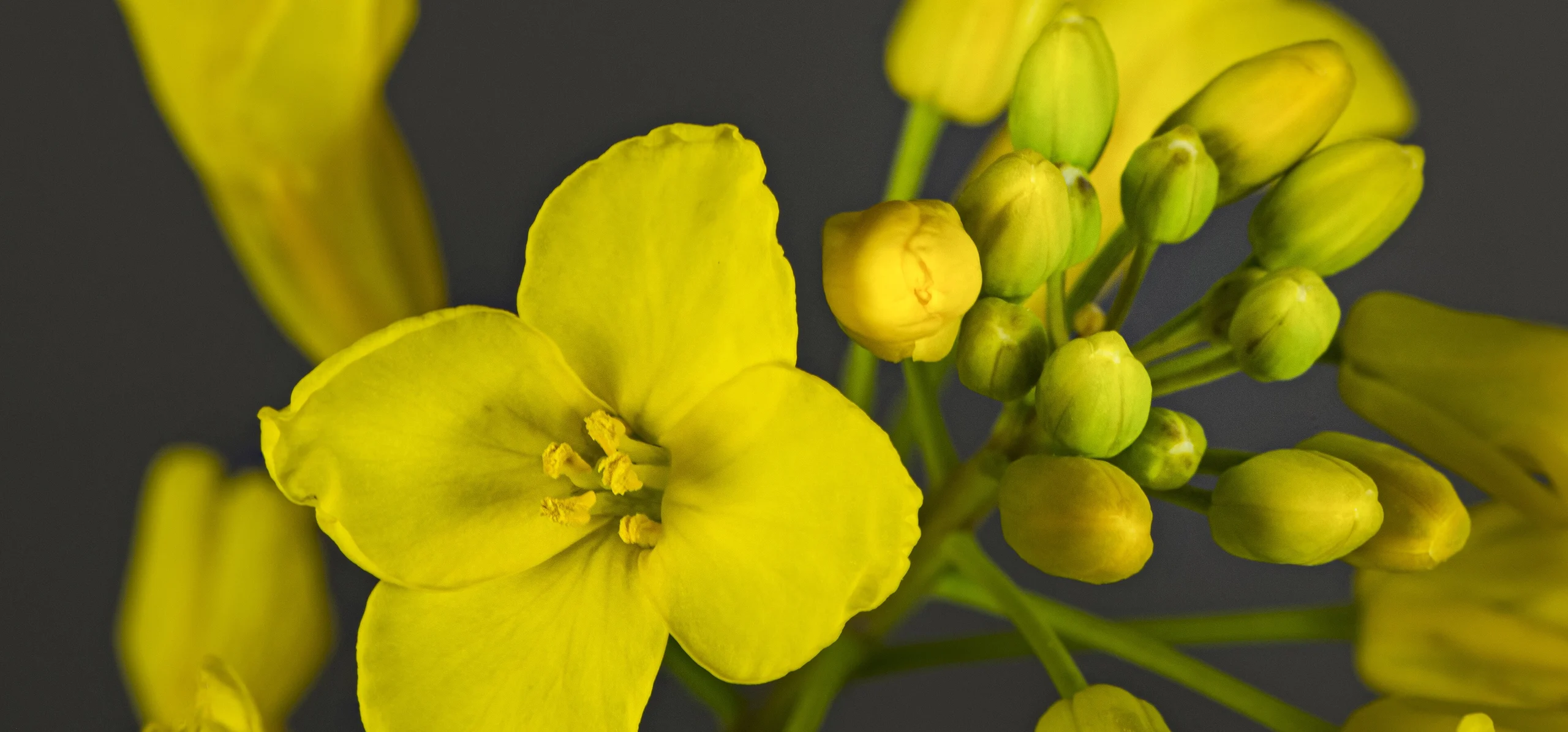
- Bolts to yellow flower spikes in year two if left unharvested
- Propagation
- Seed
DormancyOverwinters as a vegetative rosette or head before flowering in year two
Time to maturity6 weeks to 10 months depending on type
Soil & climate
- Soil pH
- pH 6.5–7.5
- Soil types
- firm, fertile, moisture-retentive
- Drought tolerance
- No
Light & Placement
- Origin
- Atlantic coasts of Great Britain, France and Spain
- Where to place it
- open vegetable bed
- allotment row
- raised bed
- 30cm+ wide container for kohlrabi or dwarf kale
Safety
- Toxicity
- Not listed by ASPCA; common pet-safe vegetable
- Pet safe
- Yes
Invasive speciesNot invasive; a cultivated vegetable that does not persist or spread outside beds.
Data fromGBIF: Brassica oleracea L.POWO: Brassica oleracea L.RHS: How to Grow CabbagesRHS: How to Grow BroccoliRHS: How to Grow Brussels SproutsRHS: How to Grow Kohl Rabi
Where it grows
World distribution
Cabbage is native to 3 countries: France, Spain, and United Kingdom.GBIF records 57,184 documented identifications across 151 countries, with the largest concentrations in United Kingdom, Germany, and France.
- France
- Spain
- United Kingdom
Yellow to orange dots: concentration of documented identifications per country. Green countries: sourced native range. Source: GBIFNative range from POWO (Kew).
Every cabbage, kale leaf, broccoli head, cauliflower curd, Brussels sprout and kohlrabi bulb in a vegetable bed is the same species, Brassica oleracea, pushed toward a different organ by centuries of selection: a swollen terminal bud in cabbage, an unopened flower cluster in broccoli and cauliflower, stacked side buds up a tall stem in Brussels sprouts, a stem fattened into a bulb just above the soil in kohlrabi. Sharing a species means sharing enemies too: all six lose seedlings to the same pigeons, all six lose leaves to the same caterpillars, and all six do best in the same firm, limed ground that keeps clubroot down. What actually differs from one to the next is mostly timing, how long each one sits in the ground before you cut it.
One Species, Six Vegetables
Kew's Plants of the World Online lists wild cabbage as a biennial or subshrub native to the Atlantic coasts of Great Britain, France and Spain, where it still grows on limestone sea cliffs; it never forms a head in the wild, that came later, from selection. Cabbage and its loose-leaved cousin kale are the Capitata and Acephala groups, Brussels sprouts the Gemmifera group with buds stacked in every leaf axil instead of one bud at the tip, broccoli the Italica group harvested as an unopened flower shoot, and kohlrabi the Gongylodes group, a stem swollen into a turnip-like bulb that POWO's own record for the group dates to 15th-century Europe. Cauliflower is bred the same way, for a tight white curd of aborted flower buds, though its exact place in the current POWO checklist has shifted with recent revisions, another reminder that garden brassicas are still a moving taxonomic target, not a fixed set of species.
Sowing and Transplanting
All six are started the same way, indoors in modules from late winter or direct-sown outdoors once the soil has warmed, and moved to their final spot once they reach 10 to 15cm tall with a handful of true leaves, per the RHS growing guides for cabbage, broccoli, Brussels sprouts and cauliflower. The planting detail that trips up new growers is depth: brassicas go in deeper than they sat in the pot or seed tray, with the lowest leaves close to the soil surface, so the stem roots down firmly instead of rocking loose in wind. Utah State University Extension is blunt about what happens if watering is inconsistent right after transplanting: water shortage during establishment stunts germination and early growth outright, and uneven moisture later at heading time is what produces misshapen broccoli and cauliflower heads or split, tip-burned cabbage.


Firm Ground and Lime
Loose, freshly dug soil is the wrong bed for any of these six: the RHS notes cabbages specifically prefer ground that has been consolidated over winter rather than dug and planted the same season, because a firm anchor is what stops a heavy, top-heavy plant from rocking in the wind and tearing its own roots. The other reason to prepare the ground ahead of planting is pH. The RHS lime guide puts 6.5 forward as the best all-round pH for most garden plants, and notes plainly that clubroot, the worst disease in this group, is associated with soils where lime is running low; testing pH before planting, then liming in winter if the soil reads acidic, is cheaper insurance than losing a bed to the disease later.
Clubroot: The Disease That Shapes the Rotation
Clubroot is caused by Plasmodiophora brassicae, a soil-dwelling slime-mould relative rather than a true fungus, and the RHS is explicit that there is no chemical gardeners can use to cure it once it is in a plant: the roots swell into distorted, hair-less galls, the plant wilts in any heat and the foliage turns purplish, and by then the crop for that bed is already lost. Prevention is what actually works: raising soil pH with lime (roughly 500g per square metre on badly acidic ground, less in following years, per RHS figures), improving drainage, buying certified clubroot-free transplants, growing seedlings on longer before planting out so they have more root mass to lose, and keeping down related weeds such as shepherd's purse that can host the organism between brassica crops. Because the resting spores persist in soil for years, the real long-term fix is rotation, never putting brassicas back on the same ground more than once every three or four years.
Cabbage White Caterpillars and Netting
The caterpillars stripping a brassica bed to its ribs by midsummer are the larvae of the large and small cabbage white butterflies, and the RHS is specific about what actually stops them: a fine mesh with holes no bigger than about 7mm, raised clear of the leaves on hoops rather than draped straight over the foliage, because a butterfly can still lay eggs through mesh that is resting against a leaf. The net has to go on as soon as plants are set out, not after the first caterpillar is spotted, and the edges need to be pegged or weighted down properly since a determined female will find any gap at soil level. Netted plants in RHS trials came through with no caterpillar damage at all, against crops losing the majority of their leaf area by late summer when left uncovered, which is the difference between a full-size cabbage and a skeleton of leaf veins.
Pigeons: The Other Threat
Even a well-netted crop against butterflies is not automatically safe from pigeons, which the RHS describes as particularly drawn to brassica leaves, pecking and tearing at them until only the stalks and thick central veins are left. Young transplants and overwintering crops such as kale and winter cabbage are most exposed, since pigeons work hardest when little other green growth is available. The RHS is direct that netting or a fruit cage is the only reliable protection, the same fine mesh used against caterpillars doubles as a pigeon barrier as long as it is kept taut and pegged down, since a loose edge a pigeon can walk under defeats the point of putting it up at all.
Harvest Windows by Type
The six vegetables share a genus but not a calendar, and knowing which window applies to what is grown avoids either an unpicked, split head or a crop pulled too early.
| Type | Time to harvest | Ready when |
|---|---|---|
| Kohlrabi | 6 to 12 weeks | Golf-ball to tennis-ball size, per RHS |
| Cabbage | 4 to 6 months | Head is firm and the size wanted |
| Cauliflower | 3 to 6 months | Curd firm and compact, before it separates or yellows |
| Broccoli | 4 to 10 months, then up to 2 months of picking | Central spear tight in bud, cut first to trigger side shoots |
| Brussels sprouts | 4 to 10 months | Lowest sprouts walnut-sized, firm and tightly closed |
| Kale | From about 8 weeks, cut-and-come-again | Plant 10 to 15cm tall, then pick leaves for months |
Kohlrabi and kale reward patience the least, both can be picked young and often, while broccoli and Brussels sprouts are the opposite case: a long wait rewarded with weeks of repeat picking once the first spear or sprout is ready, broccoli from the cut spear resprouting side shoots and Brussels sprouts working up the stalk from the bottom as the lower buds mature first.
Test your plant knowledge
Tap a card to flip it and reveal the answer.
Kale, broccoli, cauliflower, Brussels sprouts and kohlrabi are all the same species as cabbage, Brassica oleracea. Tap to reveal ✓ True
Clubroot can be cured with a fungicide spray once the swollen roots and wilting leaves appear. Tap to reveal ✕ False
Raising soil pH with lime before planting is one of the recommended ways to reduce clubroot risk. Tap to reveal ✓ True
A fine mesh net keeps cabbage white butterflies off a crop even when it rests directly on the leaves. Tap to reveal ✕ False
Kohlrabi is typically ready to harvest in weeks, while broccoli and Brussels sprouts can take several months. Tap to reveal ✓ True
Sources
References consulted for this guide
- GBIF: Brassica oleracea L.gbif.org
- POWO: Brassica oleracea L.powo.science.kew.org
- RHS: How to Grow Cabbagesrhs.org.uk
- RHS: How to Grow Broccolirhs.org.uk
- RHS: How to Grow Brussels Sproutsrhs.org.uk
- RHS: How to Grow Kohl Rabirhs.org.uk
- RHS: Club Rootrhs.org.uk
- RHS: Cabbage Caterpillarsrhs.org.uk
- RHS: Pigeons in Gardensrhs.org.uk
- Utah State University Extension: Brassica Irrigationextension.usu.edu
- Reference entity : Wikipédiaen.wikipedia.org