Rapeseed
Brassica napus
Family · Brassicaceae
Brassica napus is both oilseed rape and the swede. Sow and thin swedes, beat clubroot and flea beetle, then harvest after frost for the sweetest roots.
Brassica napus
Plant profile
- WateringModerateWater every 7 days
- Light exposureFull sun
Growth
- Family
- Brassicaceae
- Life cycle
- Biennial
- Growth speed
- 3/10
- Mature size
- 50–100 cm
- Spread
- 10–50 cm
- Flowering
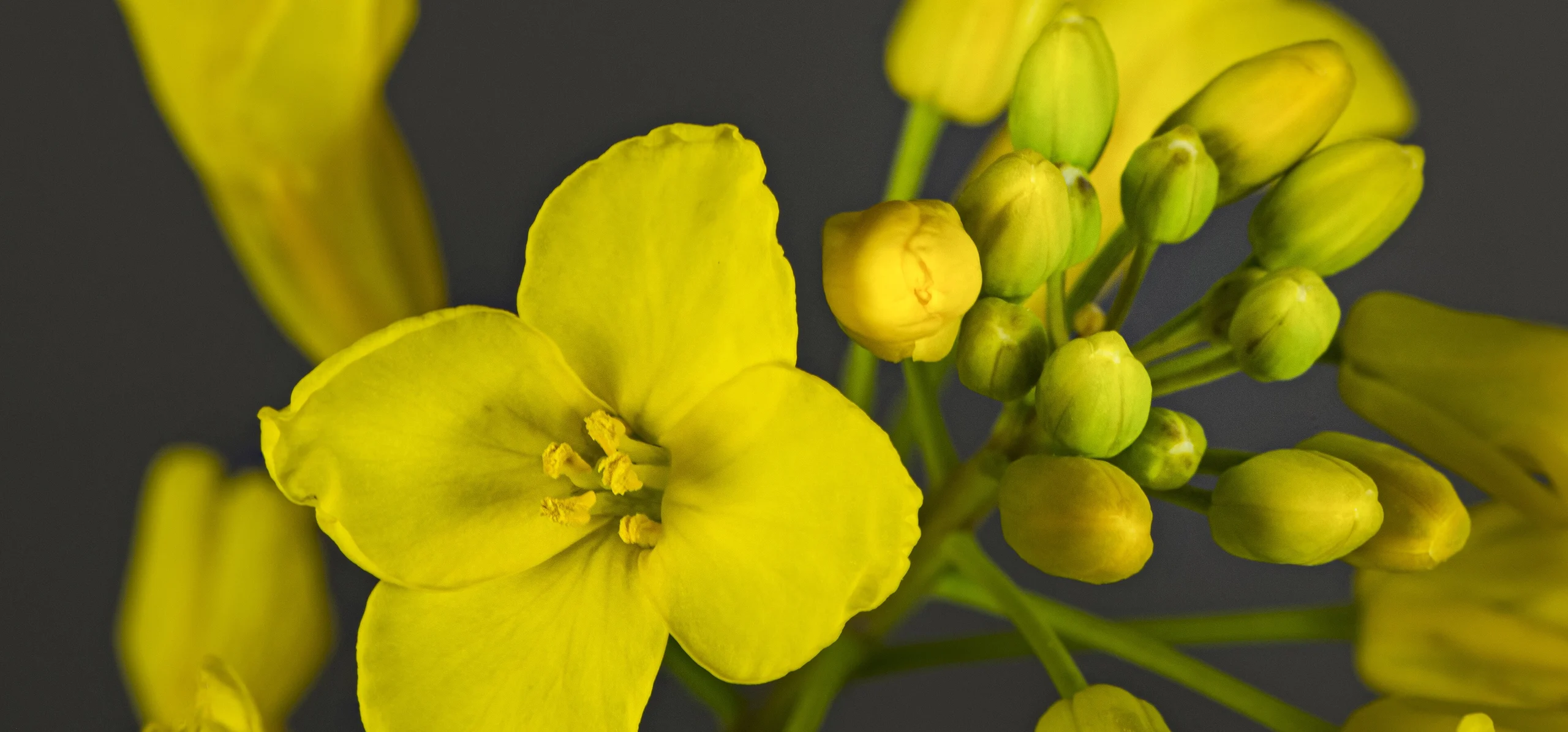
- Bright yellow flowers in spring and summer, loved by bees
- Propagation
- Seed
DormancyOverwinters as a leafy rosette before flowering the following spring
Time to maturity12 to 26 weeks for swedes; up to 2 years for rape to flower and set seed
Soil & climate
- Soil pH
- pH 6–8
- Soil types
- chalk, clay, loam, sand
- Drought tolerance
- No
Light & Placement
- Origin
- Cultigen from South Europe (hybrid of B. oleracea x B. rapa)
- Where to place it
- open vegetable bed
- allotment row
- field margin as a cover crop
Safety
- Toxicity
- Not listed by ASPCA; swede is a common livestock fodder crop
- Pet safe
- Yes
Invasive speciesNot invasive as a garden crop, but shattered seed from rape forms a persistent volunteer seed bank that can keep sprouting for a few seasons.
Data fromGBIF: Brassica napus L.POWO: Brassica napus L.RHS: How to Grow SwedesRHS: Flea Beetles on Brassicas and AllieRHS: Brassica napus (Oilseed Rape)NC State Extension: Brassica napus Napob
Where it grows
World distribution
Rapeseed is native to a single country: France.GBIF records 125,984 documented identifications across 115 countries, with the largest concentrations in United Kingdom, Germany, and France.
- France
Yellow to orange dots: concentration of documented identifications per country. Green countries: sourced native range. Source: GBIFNative range from POWO (Kew).
Brassica napus is one species doing two unrelated jobs in a vegetable garden: as oilseed rape (canola) it is the crop that turns spring fields yellow and doubles as a fast, cheap green manure, while as the Napobrassica group it is the swede (rutabaga), a root sown in late spring and pulled after the first frosts of autumn and winter. Kew's Plants of the World Online records it as a stabilized hybrid of Brassica oleracea and Brassica rapa, a cultigen native to South Europe that never existed before those two species crossed. That hybrid origin is why a swede tastes like a cross between cabbage and turnip: it genuinely is one. Whichever form ends up in a garden, both share the same brassica enemies, clubroot and flea beetle, and the same habit of reseeding itself long after the crop is gone.
One Species, Two Very Different Crops
GBIF lists the accepted name as Brassica napus L., family Brassicaceae, with vernacular names Rape, Oil-Seed Rape and Swedish turnip that hint at both forms in one line. The swede itself appears in GBIF's synonym list for the species as Brassica campestris subsp. napobrassica, the older name for the same root vegetable, now catalogued as the Brassica napus Napobrassica Group by North Carolina State University's plant database. Oilseed rape and swede start from the same genetics but are selected for opposite ends of the plant: rape for seed and oil, swede for a swollen root that is dug up long before it ever gets the chance to flower.
Sowing and Thinning Swedes
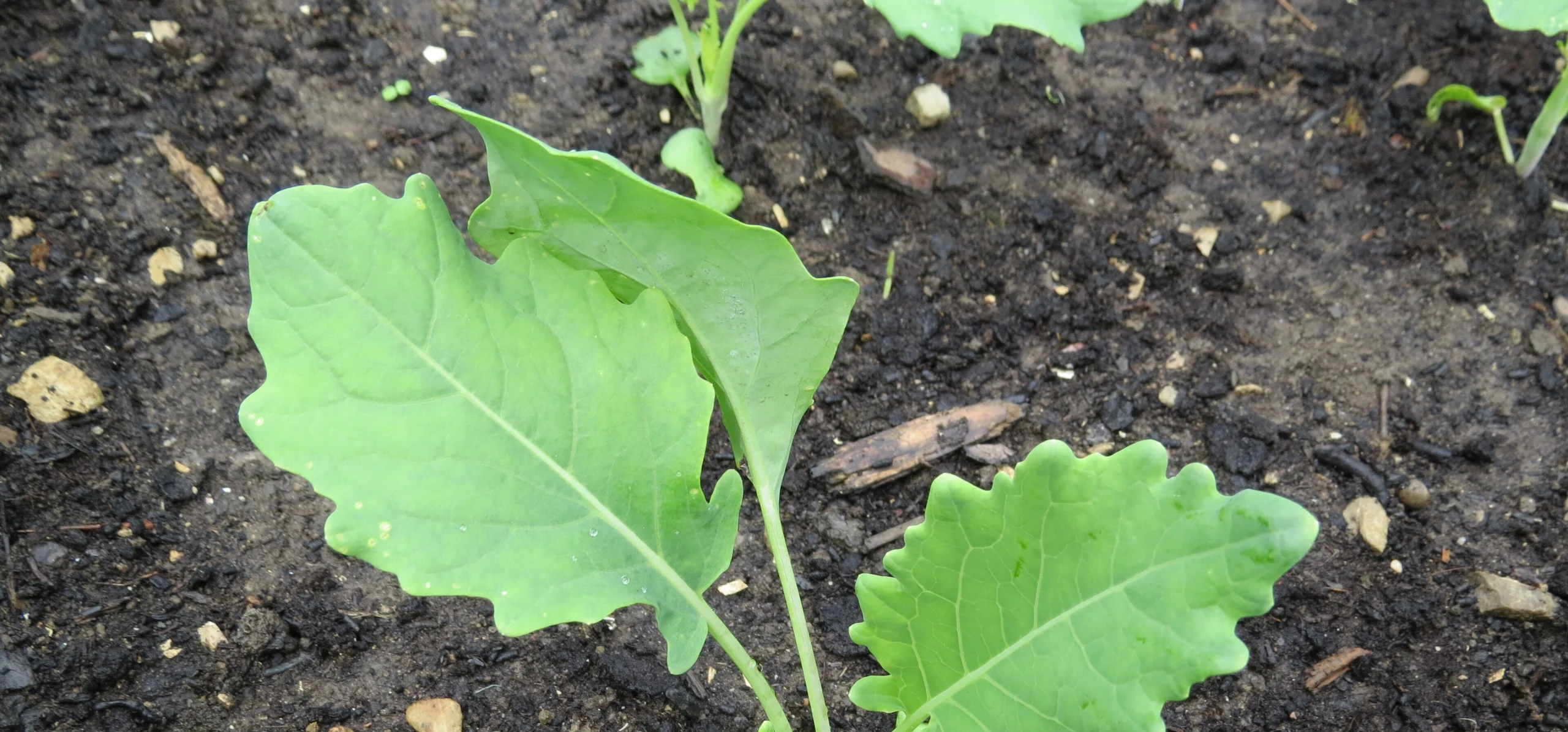
The RHS sows swede direct outdoors from late spring into early summer, about 2cm deep in rows 38cm apart; sowing earlier tends to push plants to bolt before the root has bulked up. Seedlings need thinning in stages as soon as they can be handled, first to around 10cm and finally to 20 to 25cm apart for full-size roots, or left at 8 to 10cm apart if the crop is wanted small as baby veg. Skipping the thin is the most common reason for a bed of thin, woody swedes instead of a few good ones: crowded roots compete for the same limited space and none of them bulk up properly.
Soil, Site and Feeding
An open, sunny site with moist but free-draining, fertile soil suits swede best, per the RHS, and acidic ground should be limed before sowing rather than after problems appear. North Carolina State University's profile for the Napobrassica Group gives a workable pH window of roughly 6.0 to 8.0, wider than most brassicas will tolerate, and warns that a week without about an inch of water leaves roots woody and bitter instead of crisp. Rich, freshly manured ground is best avoided at sowing time: like most brassicas, swede forks and splits its root in soil that is too loose or too high in fresh nitrogen.
Clubroot and Flea Beetle
The two brassica problems that follow swede and rape into almost every garden are clubroot and flea beetle. Clubroot swells and distorts roots into galls with no cure once a plant is infected, and North Carolina State University recommends a six-year gap before brassicas return to ground where it has appeared. Flea beetle is chiefly a seedling problem: adults chew small round holes in young leaves, and the RHS is clear that seedlings with fewer than four true leaves can be killed outright by heavy feeding. The reliable, pesticide-free fix for both crops is the same, insect-proof mesh over young plants plus consistent watering, since flea beetles favor dry soil and stressed seedlings over vigorously growing ones.


Harvesting Swedes After Frost
Swede takes around six months to mature and is usually ready from early autumn, but the roots left in the ground longest are the best ones. Iowa State University Extension is direct about why: light frosts convert some of the root's starch into sugar, so a swede lifted after a few hard frosts tastes noticeably sweeter and milder than one pulled in warm weather. Roots can stay in the ground through winter with some protection from hard freezing, or be lifted and stored around 32 to 35 degrees Fahrenheit at high humidity, where they keep for two to four months, longer than almost any other root crop from the same sowing.
Rapeseed as a Green Manure and Cover Crop
Sown for oil, rape is a field crop; sown in a vegetable bed with no intention of harvesting it, it is a green manure. University of Minnesota Extension lists rapeseed among the fast, cool-season options for a garden started late in summer, since it germinates and covers ground quickly once the weather turns cool and can survive a mild winter rather than dying back completely. The catch is the one that applies to any brassica green manure: the RHS warns that a bed of brassica green manure should not be followed directly by a brassica vegetable crop, since it builds up exactly the clubroot risk the rotation is meant to be managing.
Why Volunteer Rapeseed Keeps Coming Back
Anyone who has grown rape as a cover crop, or gardened near a field of it, will recognize the yellow seedlings that keep coming back years later uninvited. University of Minnesota Extension puts a number on why: a commercial rape crop loses an average of around 312 pounds of seed per acre to pod shatter at harvest, and every volunteer plant that escapes control can itself set 500 to 2,000 more seeds. Research from Saskatchewan cited in the same extension report found seed viability of 44, 1.4 and 0.2 percent after one, two and three winters buried in the soil, which is why volunteers dwindle but do not vanish in a single season, and why keeping a patch from reseeding for two consecutive years is what actually clears a seed bank rather than one year of vigilance.
Pollinators and the Hay Fever Myth
Rape's bright yellow flowers are, in the RHS's own description, much loved by bees, and a flowering bed or field pulls in far more pollinating insects than a stretch of bare or grassy ground would. That same insect pollination is the detail that undercuts rape's reputation as a hay fever trigger: it depends on bees and other insects to move its pollen, which is why the flowers are showy and the pollen grains are heavy and sticky, unlike the fine, wind-borne pollen that grasses and trees release by the billion specifically because they have no insect to carry it for them. Rape's flowering season overlaps with birch, oak and grass pollen at their worst, which is almost certainly why a plant most people can walk straight past without a sneeze gets blamed for symptoms actually caused by something less visible growing nearby.
Test your plant knowledge
Tap a card to flip it and reveal the answer.
Swede and oilseed rape are the same species, Brassica napus, just selected for different parts of the plant. Tap to reveal ✓ True
A fungicide can cure clubroot once a swede's roots have already swollen and distorted into galls. Tap to reveal ✕ False
Light frosts make swede roots taste sweeter by converting some of their starch into sugar. Tap to reveal ✓ True
A bed of rapeseed grown as a green manure should be dug in and followed immediately by cabbages or another brassica crop. Tap to reveal ✕ False
Rapeseed's sticky, insect-carried pollen is a major cause of wind-borne hay fever. Tap to reveal ✕ False
Sources
References consulted for this guide
- GBIF: Brassica napus L.gbif.org
- POWO: Brassica napus L.powo.science.kew.org
- RHS: How to Grow Swedesrhs.org.uk
- RHS: Flea Beetles on Brassicas and Allied Plantsrhs.org.uk
- RHS: Brassica napus (Oilseed Rape)rhs.org.uk
- NC State Extension: Brassica napus Napobrassica Groupplants.ces.ncsu.edu
- Iowa State University Extension: Growing Turnips and Rutabagas in the Home Gardenyardandgarden.extension.iastate.edu
- University of Minnesota Extension: Controlling Volunteer Canola in Soybeanblog-nwcrops.extension.umn.edu
- University of Minnesota Extension: Cover Crops and Green Manures in Home Gardensextension.umn.edu
- Reference entity : Wikipédiaen.wikipedia.org