Oleander
Nerium oleander
Family · Apocynaceae
Oleander shrugs off heat, drought and roadside pollution, but every part of it is severely toxic. Pruning, hardiness, cuttings and pest notes for growers.
Nerium oleander
Plant profile
- WateringLittleWater every 12 days
- Light exposureFull sun
- Ideal temperature-8–40 °C
- Hardiness zoneUSDA 8–11
Growth
- Family
- Apocynaceae
- Life cycle
- Perennial
- Growth speed
- 6/10
- Mature size
- 150–600 cm
- Spread
- 180–300 cm
- Flowering
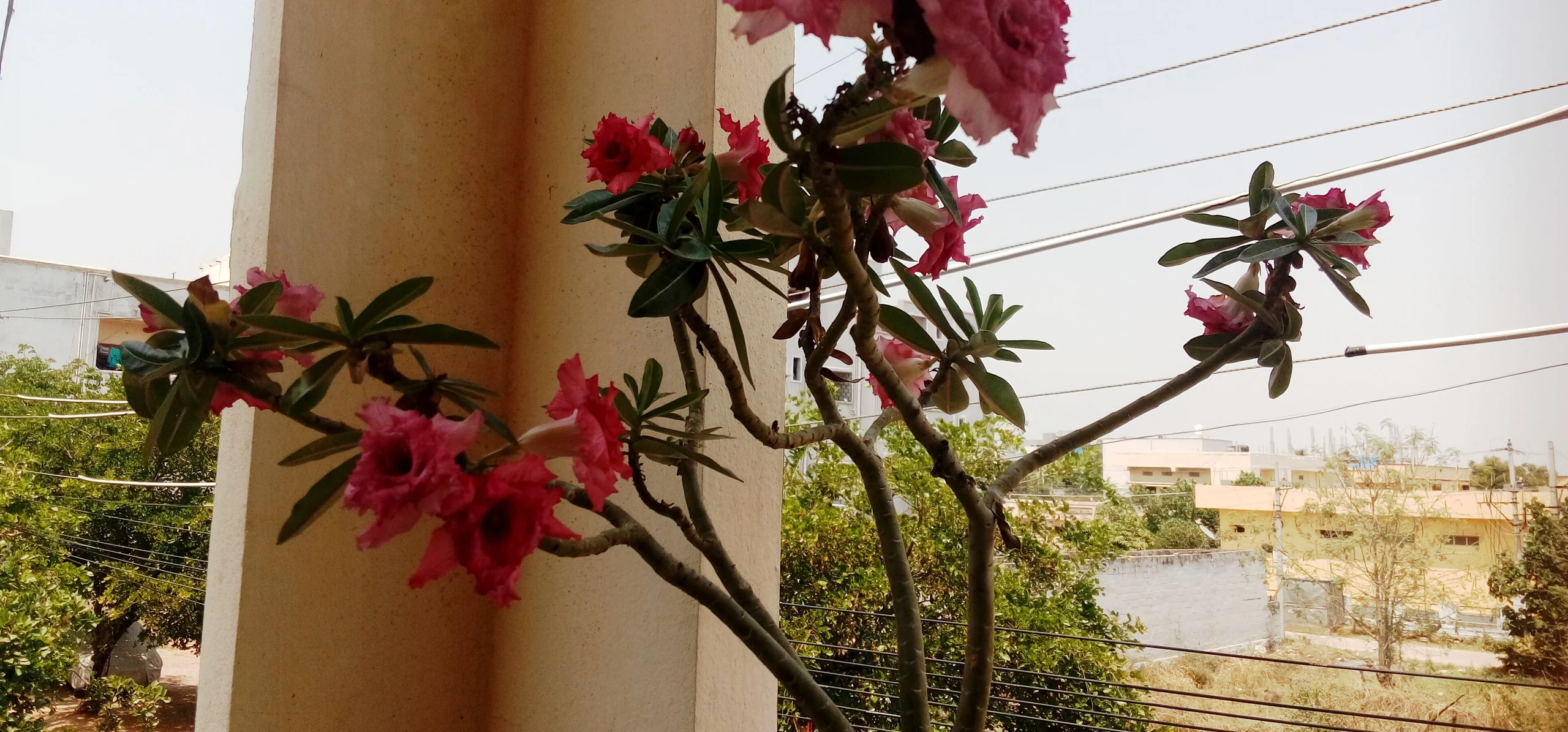
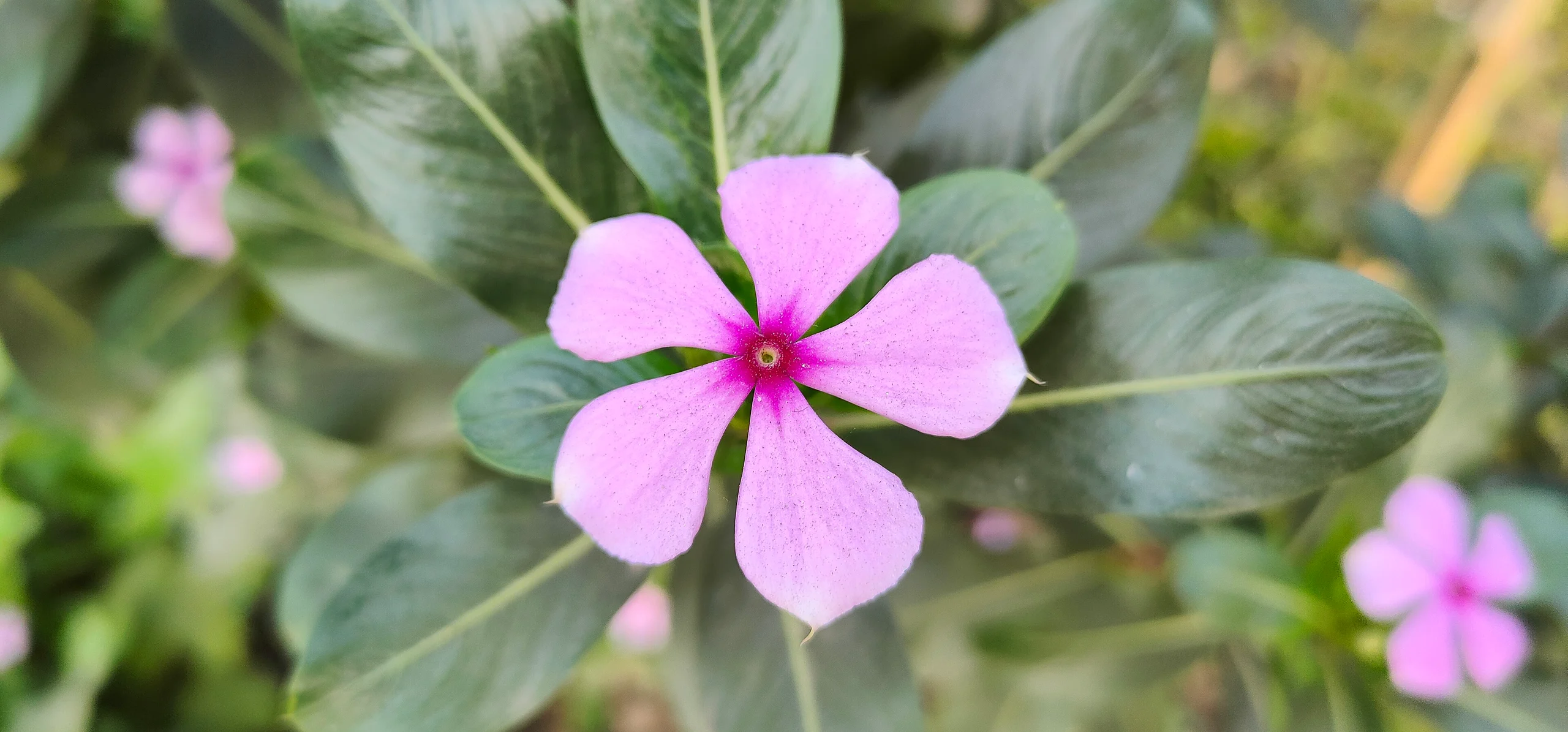
- Clusters of five-petaled flowers from late spring through summer, sometimes into fall
- Propagation
- Cutting
Dormancyevergreen; growth slows and the plant sits semi-dormant below about 10C
Time to maturityflowers within 1-2 years from a rooted cutting; reaches full size in 5-8 years
Soil & climate
- Soil types
- sand, loam, clay, saline soil, well-drained soil
- Saline soil
- Tolerated
- Drought tolerance
- Yes
Light & Placement
- Origin
- Mediterranean region to Myanmar
- Where to place it
- unheated greenhouse or bright frost-free room for winter storage in cold climates
- hot sunny border
- roadside or median planting
- coastal garden
- large patio container
- large container moved under cover for winter where frost is regular
Safety
- Toxicity
- CatsToxic
- DogsToxic
- HorsesToxic
- HumansToxic
Data fromGBIF Backbone Taxonomy: Nerium oleander Plants of the World Online (Kew): NeriumASPCA: Toxic and Non-toxic Plants, OleanNC State Extension Gardener Plant ToolboUC IPM (UC Statewide Integrated Pest Man
Where it grows
World distribution
Oleander is native to 25 countries: Afghanistan, Albania, Algeria, Croatia, Cyprus, France, Greece, and India….GBIF records 115,630 documented identifications across 207 countries, with the largest concentrations in Spain, France, and Italy.
- Afghanistan
- Albania
- Algeria
- Croatia
- Cyprus
- France
- Greece
- India
- Iran
- Iraq
- Italy
- Lebanon
Show 13 more countriesShow fewer countries
- Libya
- Morocco
- Myanmar (Burma)
- Niger
- Oman
- Pakistan
- Palestinian Territories
- Portugal
- Saudi Arabia
- Spain
- Tunisia
- Türkiye
- United Arab Emirates
Yellow to orange dots: concentration of documented identifications per country. Green countries: sourced native range. Source: GBIFNative range from POWO (Kew).
Oleander is the shrub that lines Mediterranean highways and gas station car parks precisely because almost nothing else tolerates that combination of full sun, reflected heat and total neglect. It survives long dry spells once established, but the display of flowers is noticeably better with regular water rather than none at all, which surprises people who bought it expecting a plant that wants to be ignored. The trade-off for that toughness is that Nerium oleander is one of the most consistently toxic ornamental shrubs sold at garden centers, and every part of it, roots to sap, carries that risk. Buy it for a hot, dry corner of the garden, keep it away from children and grazing animals, and handle the cut stems with gloves.
A Roadside Shrub Built for Heat
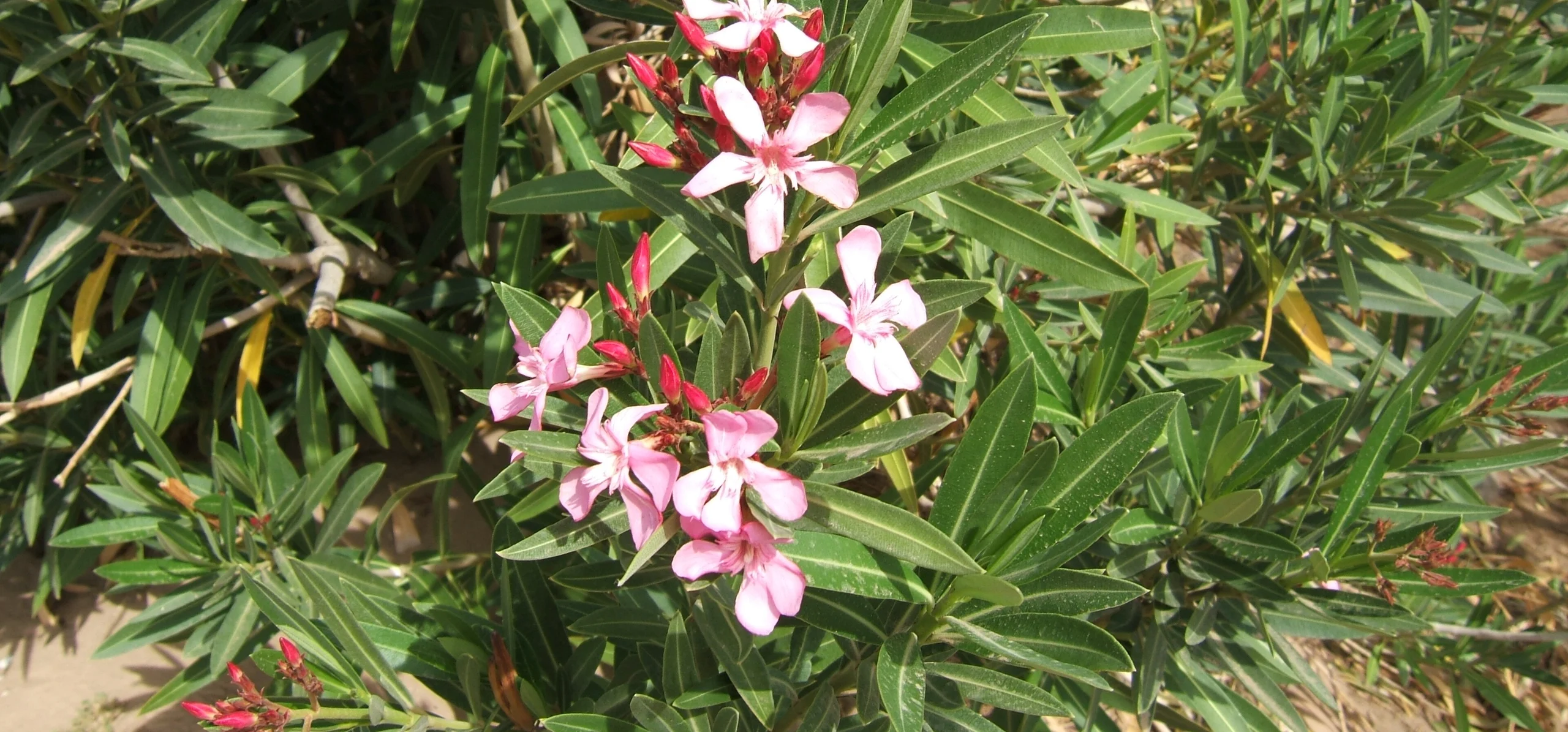
Oleander is native to the Mediterranean region east to Myanmar, and it shows in how the plant behaves: leathery, narrow leaves held upright to shed direct sun, a waxy cuticle that cuts water loss, and flowering that peaks exactly when most other shrubs are shutting down for summer. Full sun is not just tolerated, it is required for a dense, floriferous plant; in part shade oleander stretches, thins out and flowers sparsely. This is also why it is the default choice for highway medians and parking lot islands across the Mediterranean, the American Sunbelt and similar hot, dry climates: reflected heat and poor soil barely slow it down.
Choosing a Variety
The species itself has been in cultivation so long that named cultivars outnumber plain seedlings in nurseries. 'Album' is the classic single white, close to the wild form and often the hardiest of the named selections. Double-flowered cultivars pack extra petal whorls into each bloom for a fuller look but tend to hold their spent flowers longer, which can make the shrub look untidy after a bloom flush without deadheading. Dwarf cultivars, bred to stay under about 1.2 m, are the better pick for pots and small courtyards, since the species itself grows into a small tree if left alone for a decade.


Watering for Better Bloom, Not Survival
Established oleander in the ground can go through a rainless summer on stored soil moisture and come out the other side alive, but the flower count drops sharply when the plant is left completely dry through its bloom period. A deep soak every week or two in hot weather, letting the soil dry between waterings, produces a noticeably fuller shrub than one left to fend entirely for itself. Container plants dry out faster and need more frequent water than the same shrub in open ground, since the root run is smaller and pots heat up in direct sun.
Hardiness and Overwintering in Pots
Oleander tolerates short spells down to around -8C once established, tip dieback becomes likely below that, and a hard freeze can kill the plant to the ground or outright. Where winters regularly drop colder, the practical solution is a large container: grow it outdoors through the warm months and move it into an unheated greenhouse, bright garage or frost-free porch for winter, watering only enough to keep the rootball from drying out completely while the plant is semi-dormant. It does not need warmth over winter, only protection from hard frost.
Pruning After Flowering and Hard Renovation
Oleander flowers on new wood produced during the growing season, so the main prune happens right after the bloom flush finishes rather than in late winter as with many shrubs; cutting hard in winter removes stems that would have flowered that year. Routine pruning is about shape and air circulation: thin out crossing and overcrowded stems and take spent flower clusters off to keep the plant tidy. A shrub that has become leggy, bare at the base or storm-damaged tolerates hard renovation, cutting the whole plant back to knee height, and will regrow and flower again within a couple of seasons, since it buds readily from old wood at the base. Wear gloves and eye protection for any pruning; the sap is a skin and eye irritant on top of its toxicity, and never burn the prunings, since the smoke carries the same toxic compounds.
Propagation From Cuttings in Water
Oleander roots easily from semi-hardwood cuttings taken in summer, and it is one of the few woody shrubs that reliably strikes roots simply left standing in a jar of water on a windowsill, no rooting hormone or propagation mix required, though a mix does root faster and produces a sturdier root system. Change the water every few days to keep it from turning cloudy, and pot up once roots are a couple of centimeters long. Cuttings taken from named cultivars come true to the parent; seed-grown plants, where seed even sets, are unreliable and slow by comparison, so cuttings are the standard method.
Pests and Diseases: Scale, Oleander Aphid, and Leaf Scorch
Oleander scale shows up as small, flat, waxy bumps clustered along stems and the undersides of leaves, weakening growth and leaving yellow spotting where they feed; a horticultural oil spray timed to the crawler stage is the standard control. The oleander aphid, Aphis nerii, is the bright yellow-orange aphid that swarms new shoot tips and flower buds in dense clusters, a color that warns predators the insect has sequestered the plant's own toxins; a strong water spray or insecticidal soap knocks back light infestations. The more serious threat is oleander leaf scorch, caused by the bacterium Xylella fastidiosa and spread by the glassy-winged sharpshooter; it was first identified in oleander around Palm Springs and Orange County, California, in the early 1990s and has since spread through southern coastal California, and related Xylella strains affect oleander and other woody plants in parts of southern Europe. Infected plants show leaf yellowing and dieback starting at the branch tips and working inward, there is no cure, and affected shrubs typically decline and die within three to five years; remove and destroy confirmed infected plants rather than trying to prune the disease out.
Severely Toxic: Handle With Care
Every part of Nerium oleander, leaves, flowers, bark, sap and seeds, contains cardiac glycosides that disrupt heart rhythm, and the ASPCA lists it as toxic to dogs, cats and horses, with symptoms ranging from drooling and vomiting to irregular heartbeat. The same compounds affect people; a handful of leaves is enough to sicken a child, and there are documented deaths from mistaking the woody stems for skewers at a barbecue or from brewing the leaves as tea. Never burn oleander wood or yard waste in an open fire or chiminea, since the smoke carries the toxins and inhaling it has caused serious poisoning. Wear gloves when pruning or taking cuttings, keep fallen leaves raked up away from grazing animals, and site the plant where children will not be tempted to chew on a leaf or flower.
Test your plant knowledge
Tap a card to flip it and reveal the answer.
Oleander survives a dry summer once established, but it flowers noticeably better with regular water than with none at all. Tap to reveal ✓ True
The sap and smoke of Nerium oleander are safe to handle and burn without any precautions. Tap to reveal ✕ False
In climates where winters regularly drop below about -8C, oleander is usually grown in a container and moved somewhere frost-free for winter. Tap to reveal ✓ True
The bright yellow-orange aphids often seen clustering on oleander stems are the same species that infests roses. Tap to reveal ✕ False
Oleander leaf scorch, caused by the bacterium Xylella fastidiosa, can be cured by pruning out the infected branches. Tap to reveal ✕ False
Sources
References consulted for this guide
- GBIF Backbone Taxonomy: Nerium oleander L.gbif.org
- Plants of the World Online (Kew): Nerium oleander L.powo.science.kew.org
- ASPCA: Toxic and Non-toxic Plants, Oleanderaspca.org
- NC State Extension Gardener Plant Toolbox: Nerium oleanderplants.ces.ncsu.edu
- UC IPM (UC Statewide Integrated Pest Management Program): Oleander Leaf Scorchipm.ucanr.edu
- Reference entity : Wikipédiaen.wikipedia.org