Avocado
Persea americana
Family · Lauraceae
An avocado stone sprouts fast but rarely flowers indoors; here is what the RHS and university extensions confirm about light, water, soil and safety.
Persea americana
Plant profile
- WateringModerateWater every 6 days
- Light exposurePartial sun
- Ideal temperature13–18 °C
- Hardiness zoneUSDA 9–12
Growth
- Family
- Lauraceae
- Life cycle
- Perennial
- Growth speed
- 8/10
- Mature size
- 914–1829 cm
- Spread
- 610–914 cm
- Propagation
- Seed
- Grafting
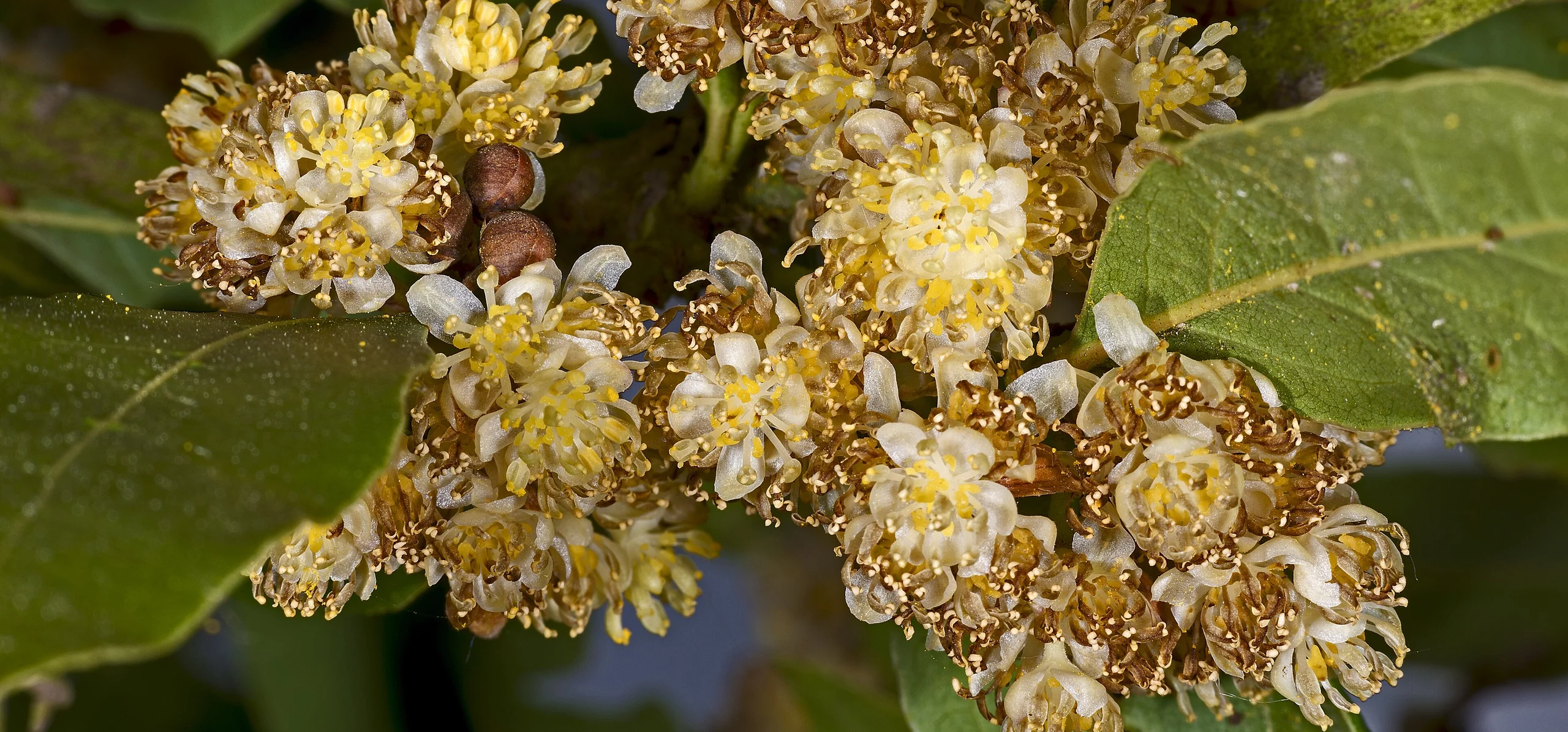
FloweringSmall greenish-yellow flowers on mature outdoor trees; seed-grown houseplants rarely flower at all (RHS)
DormancyEvergreen with no true winter dieback; watering and feeding are reduced through the darker months (RHS)
Time to maturitySeed-grown houseplants rarely flower or fruit at all; grafted orchard trees fruit within a few years (RHS)
Soil & climate
- Soil types
- clay, loam, sand
- Saline soil
- Partially tolerated
- Drought tolerance
- Yes
Light & Placement
- Origin
- Native from central Mexico to Costa Rica (POWO)
- Where to place it
- Bright, warm spot away from cold draughts (RHS)
- Near a humidity tray or regularly misted area (RHS)
- Full sun in frost-free ground, USDA zones 9a to 12b (NC State Extension)
- Sheltered, dappled shade for a summer move outdoors before frost (RHS)
- Container at least 30 cm (12 in) wide with free-draining, loam-based compost and sharp sand (RHS)
Safety
- Toxicity
- HorsesToxic
- HumansSafe
Data fromPersea americana Mill., GBIF Backbone TaRHS: How to grow avocadosNC State Extension Gardener Plant ToolboASPCA: Toxic and Non-Toxic Plants, AvocaUniversity of Florida IFAS Extension: Pe
Where it grows
World distribution
Avocado is native to 6 countries: Belize, Costa Rica, Guatemala, Honduras, Mexico, and Nicaragua.GBIF records 16,960 documented identifications across 160 countries, with the largest concentrations in Mexico, Colombia, and United States.
- Belize
- Costa Rica
- Guatemala
- Honduras
- Mexico
- Nicaragua
Yellow to orange dots: concentration of documented identifications per country. Green countries: sourced native range. Source: GBIFNative range from POWO (Kew).
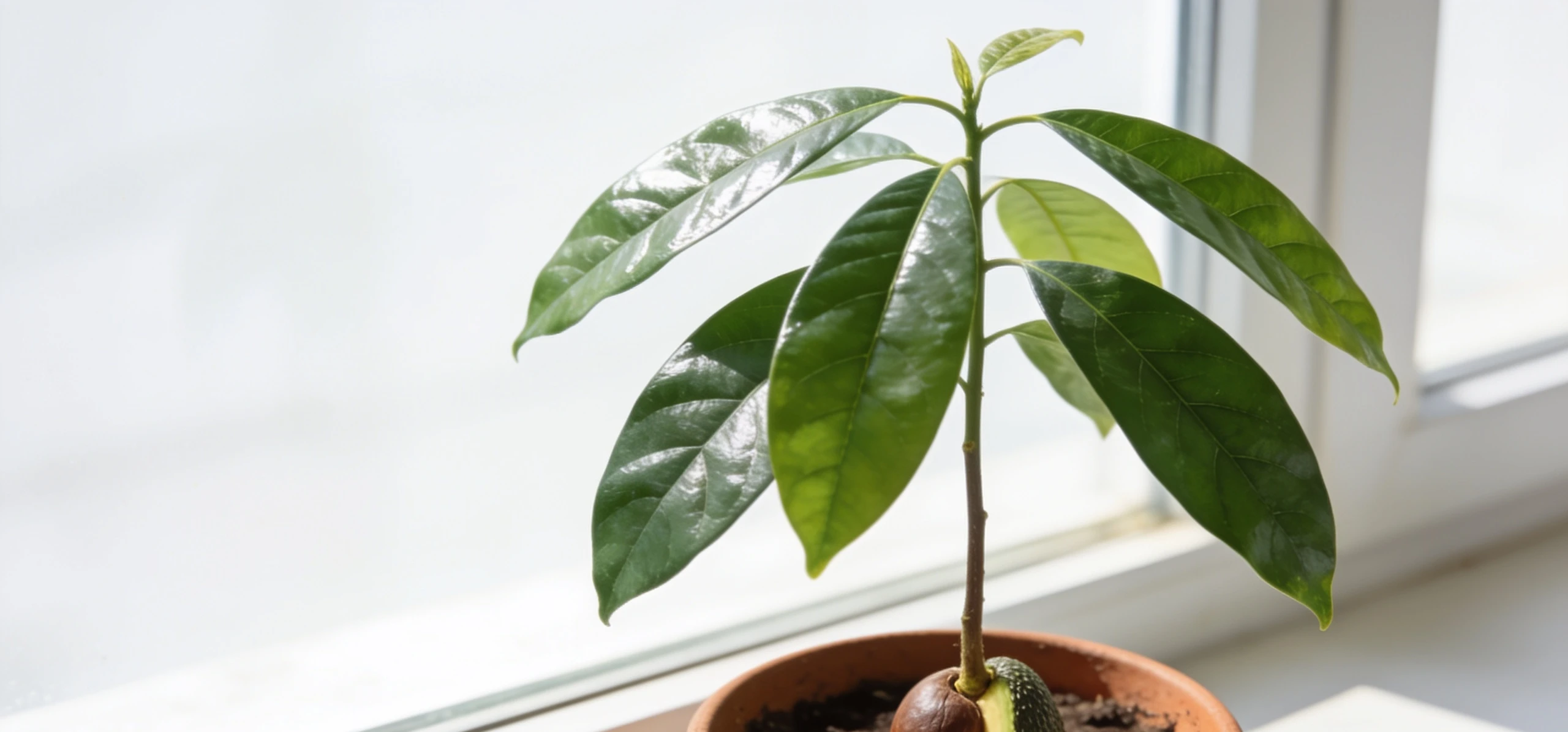
A pointed shoot pushing out of a cracked, half-submerged avocado stone is usually how Persea americana first arrives in a home, and it grows with real speed once it starts. GBIF records the accepted name as Persea americana Mill., in the laurel family Lauraceae, and NC State Extension's own profile confirms a rapid grower that reaches 30 to 60 feet in the wild with a 20 to 30 foot spread. None of that happens indoors: raised from a kitchen stone, the same species stays a slender, upright foliage plant that, per the RHS, rarely flowers or sets fruit at all.
A Laurel-Family Tree, Not a Typical Houseplant
Persea americana belongs to Lauraceae, the laurel family that also holds bay and cinnamon, in the order Laurales and class Magnoliopsida, and GBIF lists the accepted name as Persea americana Mill. POWO traces the species' native range to central Mexico south to Costa Rica, long before it became a global crop: the Missouri Botanical Garden notes that fruit only ripens once picked, never on the tree, and that Hass alone supplies roughly 80 percent of the nearly 95 percent of the United States' commercial crop grown in southern California. A stone saved from a supermarket Hass is a genetic mix of that same grafted lineage, not a wild seedling.
Starting a Plant From the Stone
Two methods work equally well, per the RHS: suspend the stone over water on three or four cocktail sticks with its base submerged, or sow it upright in seed compost with the top of the stone left showing. Kept at 20 to 25°C, the RHS notes seeds sprout in four to eight weeks; NC State Extension's own profile puts it faster still, describing the seed as germinating quickly and easily within two to six weeks. Either way, pot the sprouted stone up once roots are a few centimetres long, keeping the top third of the stone above the soil line.
Light, Warmth and Humidity
Give it the brightest, warmest spot available. The RHS recommends a warm, bright position indoors, with winter temperatures held between 13 and 18°C and the plant kept away from cold draughts near doors or single-glazed windows. Humidity matters almost as much as light: RHS advice is to mist the foliage regularly or stand the pot on a tray of damp gravel with the water level kept below the pot's base, rather than let dry, centrally heated air scorch the leaf edges. Outdoors, where climate allows, University of Florida IFAS Extension rates its light tolerance as full sun to partial shade, and the RHS allows a summer move outside into sheltered, dappled shade, provided the plant comes back in well before the first frost.


Watering Without Rotting the Roots
Water generously through spring and summer and taper off in winter, aiming for compost that stays consistently moist without turning waterlogged. The RHS is specific about reading the leaves: they curl if the plant has been overwatered, and turn brown and drop if it has dried out too far between waterings. That balance matters because University of Florida IFAS Extension lists root rot on poorly drained soils as a real problem for the species, which it also rates only moderately drought tolerant. A pot with a wide drainage hole, and a saucer that gets emptied rather than left standing, prevents most of the damage.
Soil, Potting and Repotting
The RHS recipe for potted avocados is a soil-based, free-draining compost such as peat-free John Innes No 3 with added sharp sand, in a container at least 30 cm (12 in) across to give the taproot room. Repot a young plant as soon as roots start showing through the drainage holes, and give an established one a fresh, slightly larger pot every spring. Planted outdoors in a frost-free climate, University of Florida IFAS Extension lists the tree as tolerant of clay, sand or loam and of acid, neutral or alkaline soil, with only moderate tolerance for aerosol salt, so a coastal spot needs some shelter from salt spray.
Feeding and Pruning for a Bushier Plant
Feed with a general-purpose houseplant fertiliser during spring and summer at the rate on the packet, and drop back to roughly every six to eight weeks for the rest of the year, per RHS guidance. Left alone, a seed-grown avocado shoots straight up as a single bare stem, so the RHS recommends cutting back the main stem by half once a seedling reaches about 15 cm tall, then pinching out the new shoot tips as it regrows to build a fuller, branching shape instead of a leggy pole.
Growing It Outdoors, and What Actually Threatens It
Outdoors, NC State Extension lists Persea americana as hardy in USDA zones 9a through 12b only, a tree with no real frost tolerance, where it can reach that 30 to 60 foot wild height. As a houseplant, the RHS's own pest list runs to aphids, mealybugs, whitefly, spider mites and thrips, alongside fungal leaf spots and the root rots already covered under watering. University of Florida IFAS Extension adds that commercial orchards face a far more serious threat in the redbay ambrosia beetle and the laurel wilt disease it spreads, though that risk is tied to outdoor plantings rather than a windowsill seedling. One fact worth keeping in mind around animals: the ASPCA's own plant page lists avocado as toxic to horses, with persin as the toxic principle and respiratory distress, heart failure and edema as the clinical signs; that same page does not classify the plant for cats or dogs, so a pet chewing on the leaves or stone is still a reason to call a vet rather than an assumption of safety.
Common Mistakes
The most common disappointment is expecting fruit: the RHS is blunt that avocado houseplants generally will not flower or fruit at all, and that even well-kept specimens tend to decline after two or three years as indoor light and humidity fall short of what the species needs long term. The most common way to lose a plant outright is overwatering rather than underwatering, since a soggy pot rots the roots faster than a dry spell scorches the leaves. Skipping the early pinch is the surest way to end up with a single bare, top-heavy stalk instead of the bushy small tree the same seed is capable of becoming.
Test your plant knowledge
Tap a card to flip it and reveal the answer.
An avocado stone typically takes only a few weeks to sprout roots and a shoot. Tap to reveal ✓ True
A seed-grown avocado houseplant reliably flowers and fruits within its first few years. Tap to reveal ✕ False
Overwatering is a more common way to kill an avocado plant than underwatering. Tap to reveal ✓ True
Cutting back the main stem when a seedling reaches about 15 cm tall encourages it to branch. Tap to reveal ✓ True
The ASPCA's avocado plant page classifies it as toxic to cats and dogs specifically. Tap to reveal ✕ False
Sources
References consulted for this guide
- Persea americana Mill., GBIF Backbone Taxonomygbif.org
- RHS: How to grow avocadosrhs.org.uk
- NC State Extension Gardener Plant Toolbox: Persea americanaplants.ces.ncsu.edu
- ASPCA: Toxic and Non-Toxic Plants, Avocadoaspca.org
- University of Florida IFAS Extension: Persea americana (Avocado)ask.ifas.ufl.edu
- Reference entity : Wikipédiaen.wikipedia.org