White Spruce
Picea glauca
Family · Pinaceae
White spruce (Picea glauca) survives USDA zone 2 winters but struggles in hot, humid summers south of zone 6: match the site, water moderately, prune little.
Picea glauca
Plant profile
- WateringModerateWater every 10 days
- Light exposurePartial sun
- Hardiness zoneUSDA 2–6
Growth
- Family
- Pinaceae
- Life cycle
- Perennial
- Growth speed
- 4/10
- Mature size
- 1200–1800 cm
- Spread
- 300–600 cm
- Flowering
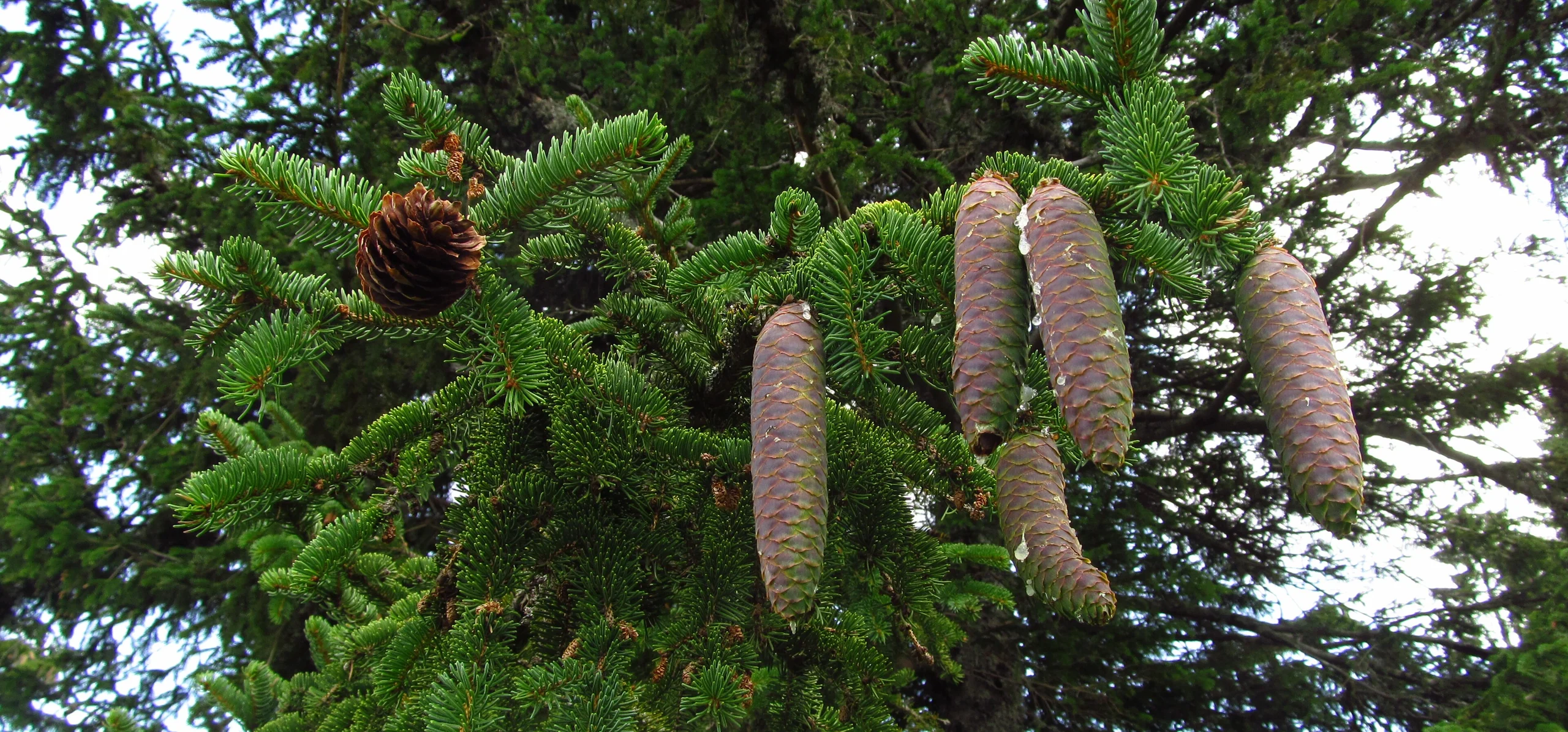
- Non-flowering conifer; cylindrical pale brown seed cones to 2.5 in (6 cm)
- Propagation
- Seed
- Cutting
- Grafting
Dormancyevergreen, minimal winter dormancy
Time to maturity20 to 50 years to ultimate size
Soil & climate
- Soil types
- clay, loam, sand
- Saline soil
- Not tolerated
- Drought tolerance
- No
Light & Placement
- Origin
- Alaska and boreal Canada, south to the northern U.S.
- Where to place it
- specimen tree in a cold-winter landscape
- windbreak or screening row
- boundary planting sheltered from salt spray
- large container for dwarf cultivars such as 'Conica' while young
Safety
- Toxicity
- Not listed by the ASPCA; toxicity undetermined
- Pet safe
- No
Data fromGBIF Backbone Taxonomy: Picea glauca (MoPlants of the World Online (Kew): Picea Missouri Botanical Garden Plant Finder: RHS: Picea glauca
Where it grows
World distribution
White Spruce is native to 2 countries: Canada and United States.GBIF records 30,288 documented identifications across 36 countries, with the largest concentrations in Canada, United States, and Denmark.
- Canada
- United States
Yellow to orange dots: concentration of documented identifications per country. Green countries: sourced native range. Source: GBIFNative range from POWO (Kew).
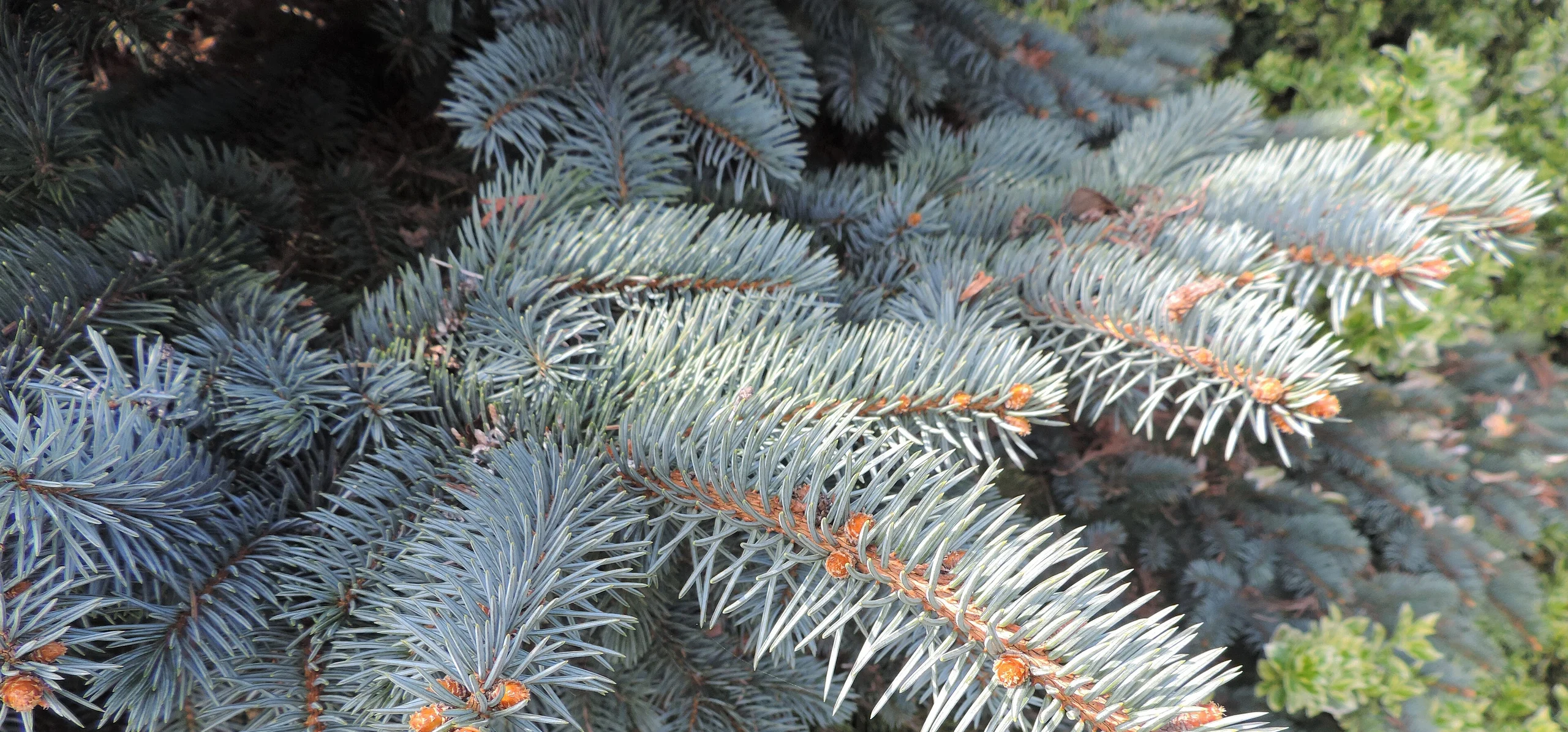
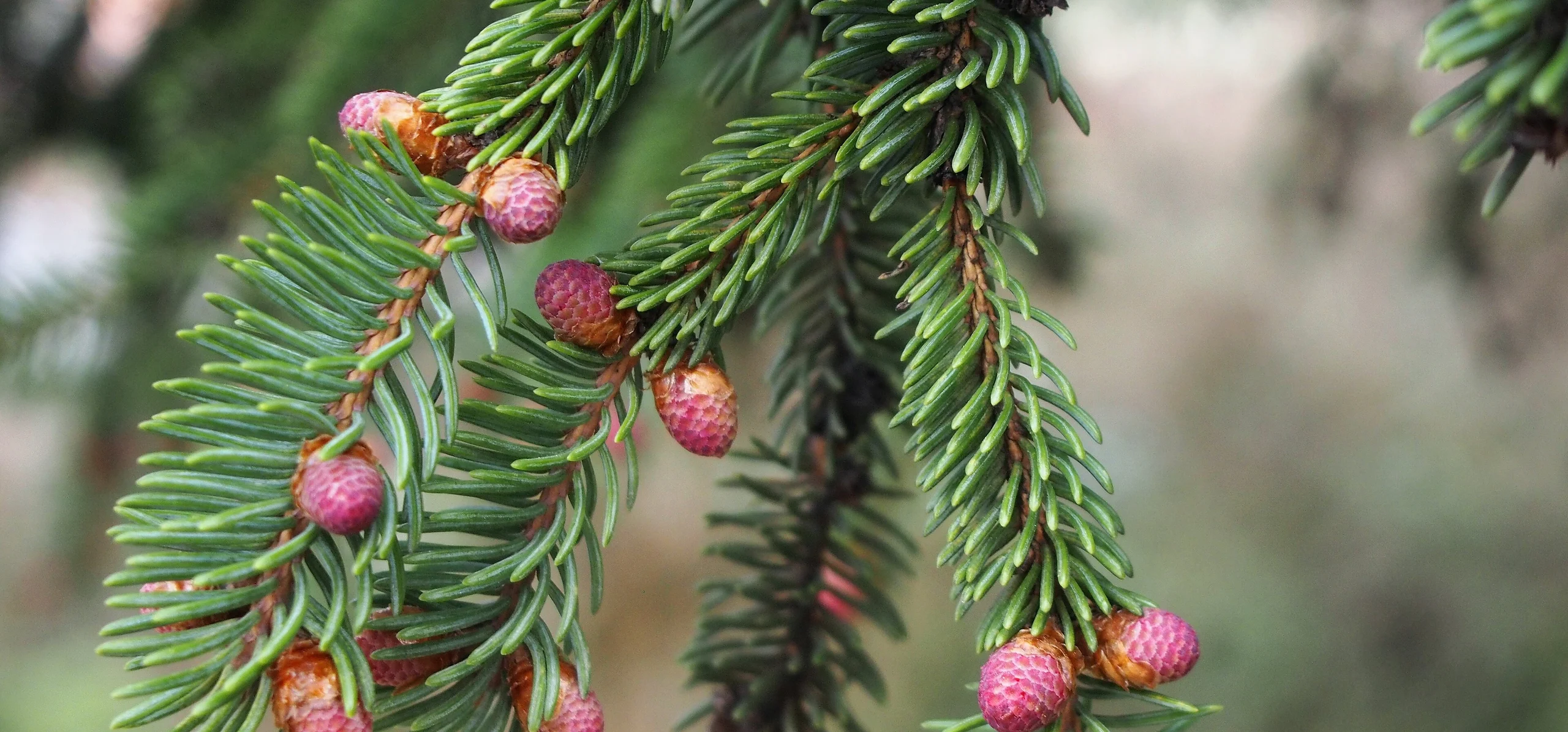
White spruce (Picea glauca) announces itself with a smell: crush a needle and it releases a sharp, resinous scent, one reason old field guides call it skunk spruce. The blue-green needles carry a waxy, glaucous bloom, the detail that gave the species its name, and sit stiffly on small woody pegs around every twig. This is a boreal tree built for cold, USDA zone 2 winters do not trouble it, but heat and humidity do, and where you plant it, species or dwarf cultivar, matters more than almost anything else you do afterward.
Choosing Between the Wild Species and Dwarf Cultivars
The straight species is a full-size forest tree. Missouri Botanical Garden's Plant Finder lists a landscape height of 40 to 60 ft (12 to 18 m) with a 10 to 20 ft spread, and notes that wild trees commonly reach 60 to 80 ft, occasionally to 140 ft. That scale rules it out for most home gardens, which is why nearly everything sold at nurseries is a cultivar bred for a smaller footprint. 'Conica', the dwarf Alberta spruce, keeps a dense, cone-shaped habit; its own dwarf sport grows only a couple of inches a year and stays under five feet after a decade. 'Densata', the Black Hills spruce, is a naturally compact, cold-hardy selection native to an isolated population around South Dakota's Black Hills, while 'Pendula' offers a narrow, weeping silhouette instead of the classic cone. Match the cultivar to the space rather than the other way around: an unlabeled seedling can eventually outgrow a foundation bed by several metres in every direction.
Native Range and Why It Explains the Care
White spruce is a transcontinental boreal species. Plants of the World Online and Missouri Botanical Garden both place its native range across Alaska and the boreal forest of Canada, from the west coast east to Newfoundland and Labrador, dipping south into Montana, Minnesota, Wisconsin, Michigan and New York. Everywhere in that range, winters are long and severe and summers are cool, the tree never evolved to cope with hot, humid conditions. Missouri Botanical Garden is blunt about the consequence: plants struggle in high heat and humidity and should not be grown in the eastern United States south of USDA zone 6. Gardening in a warm-summer climate is the one fact that should decide whether a white spruce belongs in your yard at all, no amount of good soil or careful watering compensates for a summer it was never built to survive.
Planting: Site, Soil and Spacing
Choose a full-sun position; the tree tolerates a little light shade but grows denser and holds its blue-green colour better with direct sun most of the day. The RHS lists clay, loam and sand as all acceptable, provided the soil stays moist but drains well and sits on the acid to neutral side. Because it dislikes urban stress, keep it away from streets and driveways that get de-icing salt in winter, and out of heavily polluted air where possible, both are noted weak points for this species. Give a full-size specimen the 10 to 20 ft of eventual spread it needs from day one; crowding it against a wall or another tree only guarantees a harder pruning job later. Dwarf cultivars can sit much closer to a path or foundation, but check the tag for mature width before assuming dwarf means small enough for anywhere.


Light and Watering
Once established, white spruce asks for medium water, not the deep drought tolerance of a pine, but not constant moisture either. Soak new plantings regularly through their first one to two growing seasons while roots spread, then settle into watering during dry spells rather than a fixed schedule. Good air circulation around the dense foliage matters almost as much as the water itself: a spruce planted in a tight, stagnant corner holds moisture on its needles longer after rain, exactly the condition that favours the rust and canker problems covered below.
Winter Hardiness and the Limits of Heat
This is one of the hardiest ornamental conifers available, rated for USDA zones 2 through 6 by Missouri Botanical Garden and H7 by the RHS, tolerant of winter minimums below -20°C without protection. Cold is never the risk with this species. Heat is: the tree is rated for cool summers, and in warm, humid regions it thins, yellows and declines regardless of how well it was planted. Where summers run hot and sticky, a different conifer is a better match than fighting this one's native range.
Pruning: Minimal Intervention Needed
Maintenance is rated low for a reason. The species naturally holds a tidy, cone-shaped crown with branchlets that do not droop, so structural pruning is rarely necessary on either the wild form or the popular dwarf cultivars. Remove dead, damaged or crossing branches as you find them, in dry weather, and leave the rest alone: like most conifers, white spruce does not reliably resprout from bare wood cut back past its green growth.
Pests and Diseases to Watch For
Missouri Botanical Garden reports no serious insect or disease problems as a rule, but lists several to watch for regionally: needle and stem rust, canker, and trunk or root rot, along with yellow-headed spruce sawfly, spruce budworm and eastern spruce beetle in some areas. Mites are the most consistent nuisance, common enough that repeated infestations can seriously injure an otherwise healthy tree; check the undersides of needles for fine webbing or stippling during hot, dry spells, when mite populations build fastest. Deer, by contrast, tend to leave it alone, it is one of the few landscape conifers rated tolerant of deer browsing.
Landscape Uses and a Note on Toxicity
White spruce earns its place as a specimen tree, windbreak or screening row, exactly the uses Missouri Botanical Garden lists for it, thanks to its dense evergreen habit and tolerance of severe cold. The ASPCA's toxic and non-toxic plant lists do not include an entry for Picea glauca, so its safety for cats, dogs or horses is undetermined rather than confirmed either way; treat the absence of a listing as a reason for caution around pets that chew on foliage or dropped cones, not as proof of safety.
Test your plant knowledge
Tap a card to flip it and reveal the answer.
White spruce is hardy down to USDA zone 2. Tap to reveal ✓ True
White spruce thrives in hot, humid summer climates. Tap to reveal ✕ False
This species needs full sun and cannot tolerate any shade. Tap to reveal ✕ False
Deer generally leave white spruce alone. Tap to reveal ✓ True
The ASPCA lists white spruce as toxic to cats and dogs. Tap to reveal ✕ False
Sources
References consulted for this guide
- GBIF Backbone Taxonomy: Picea glauca (Moench) Vossgbif.org
- Plants of the World Online (Kew): Picea glauca (Moench) Vosspowo.science.kew.org
- Missouri Botanical Garden Plant Finder: Picea glaucamissouribotanicalgarden.org
- RHS: Picea glaucarhs.org.uk
- Reference entity : Wikipédiaen.wikipedia.org