Norway Spruce
Picea abies
Family · Pinaceae
Norway spruce grows fast into a 40 to 60 foot conifer, hardy to USDA zone 2, and needs full sun with acidic, well-drained soil to thrive.
Picea abies
Plant profile
- WateringModerateWater every 10 days
- Light exposureFull sun
- Hardiness zoneUSDA 2–7
Growth
- Family
- Pinaceae
- Life cycle
- Perennial
- Growth speed
- 8/10
- Mature size
- 1200–1800 cm
- Spread
- 750–900 cm
- Flowering
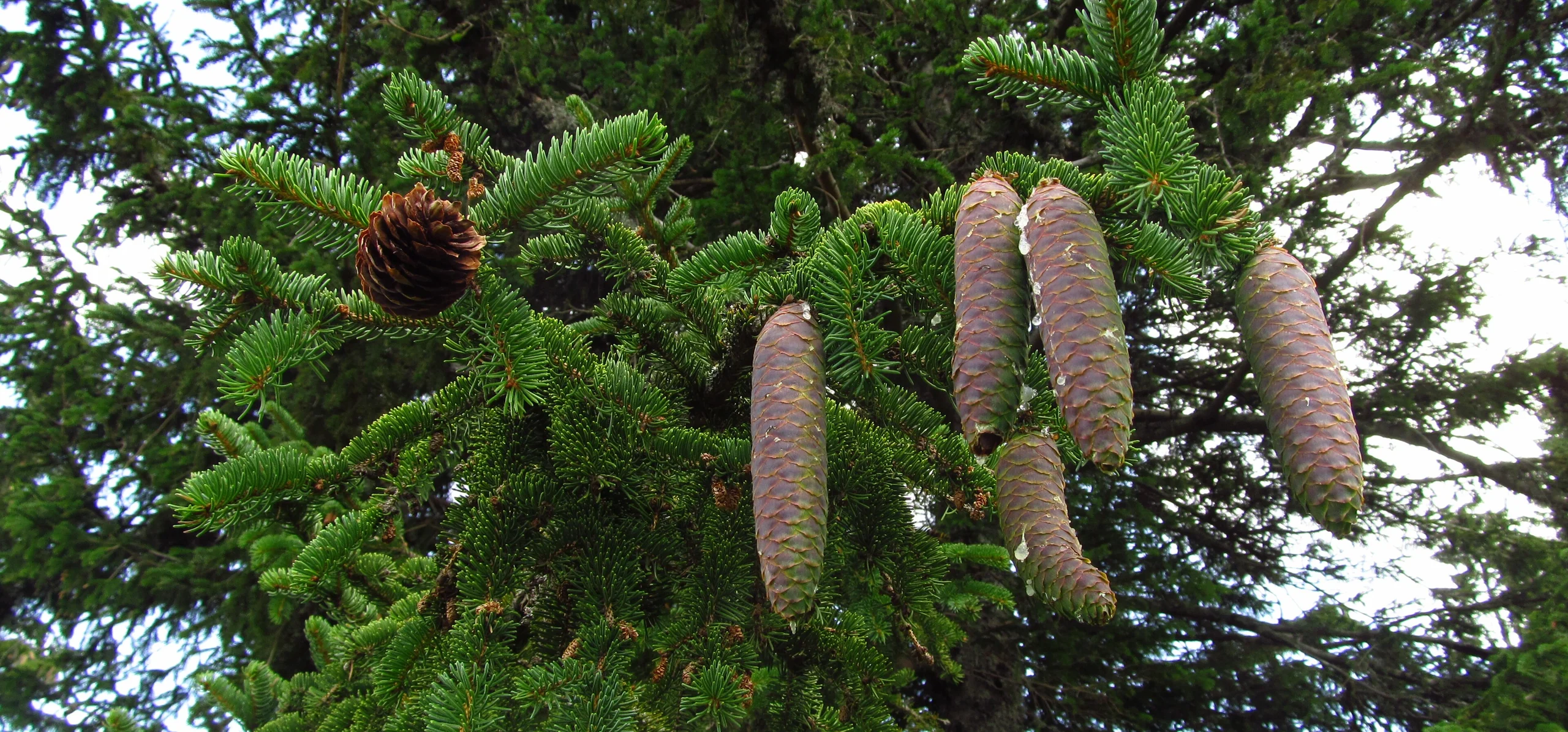
- Non-flowering conifer; pendulous cones up to 15 cm form on mature trees
- Propagation
- Seed
- Cutting
- Grafting
Dormancyevergreen; growth slows in winter
Time to maturity20 to 50 years to reach ultimate height
Soil & climate
- Soil types
- clay, loam, sand
- Drought tolerance
- No
Light & Placement
- Origin
- Mountains and lowlands of northern and central Europe
- Where to place it
- open lawn or parkland
- windbreak or screen planting
- woodland edge
- rock garden (dwarf cultivars)
- large container for a young tree before permanent planting
Safety
- Toxicity
- Not evaluated by the ASPCA; toxicity undetermined
- Pet safe
- No
Data fromGBIF Backbone Taxonomy: Picea abies (L.)Plants of the World Online (Kew): Picea RHS: Picea abies (Norway spruce)Missouri Botanical Garden Plant Finder: NC State Extension Gardener Plant Toolbo
Where it grows
World distribution
Norway Spruce is native to 21 countries: Albania, Austria, Belarus, Bulgaria, Croatia, Czechia, Estonia, and Finland….GBIF records 1,022,545 documented identifications across 69 countries, with the largest concentrations in Sweden, Finland, and France.
- Albania
- Austria
- Belarus
- Bulgaria
- Croatia
- Czechia
- Estonia
- Finland
- France
- Germany
- Greece
- Hungary
Show 9 more countriesShow fewer countries
- Italy
- Norway
- Poland
- Romania
- Russia
- Sweden
- Switzerland
- Türkiye
- Ukraine
Yellow to orange dots: concentration of documented identifications per country. Green countries: sourced native range. Source: GBIFNative range from POWO (Kew).
A Norway spruce bought as a two foot potted tree or a bare root seedling gives almost no clue to what it becomes. The Missouri Botanical Garden records this conifer reaching 40 to 60 feet in North American gardens and, in its native mountain forests, 100 to 150 feet, occasionally 200. It grows fast for a conifer and keeps a dense, narrowly conical shape while young before broadening with age, according to the RHS, so the tight little pyramid on the nursery bench is a stage, not the finished plant. What matters before planting one is deciding which spruce you actually have: the full-size species tree, or one of the more than 150 named dwarf and slow cultivars bred specifically to stay small.
From Nursery Pot to Forest Giant: Sizing It Up Before You Plant
The RHS lists the ultimate height of the species as higher than 12 metres, with specimens reaching 30 metres, and a spread wider than 8 metres, reached over 20 to 50 years. The Missouri Botanical Garden and North Carolina State Extension both put the more practical North American range at 40 to 60 feet tall by 25 to 30 feet wide. A common mistake is planting a nursery specimen, often bought small as a living Christmas tree, close to a house foundation, patio or overhead line: at even the low end of that range it will eventually shade a two-story roofline and its spread will crowd a path or driveway planted within about 12 feet. Give it open ground, or choose a dwarf cultivar instead.
Native Range and Cold Hardiness
Plants of the World Online lists the native range of Picea abies as the mountains and lowlands of northern and central Europe, spanning countries from Norway, Sweden and Finland through the Baltic states, Germany, Poland, the Alps and the Carpathians into European Russia. That continental winter climate explains why the species is so cold hardy: the RHS gives it its top hardiness rating, H7, meaning it survives the severest European winters below minus 20 degrees Celsius, and both the Missouri Botanical Garden and North Carolina State Extension place it in USDA zones 2 to 7. The same native range also explains its one real limitation outside cold climates: the Missouri Botanical Garden notes it prefers cool summers and often performs poorly south of zone 7, where summer heat rather than winter cold is the problem.


Species Tree or Dwarf Cultivar: Choosing the Right Form
Over 150 cultivars of Norway spruce have been named, the great majority of them dwarf forms bred for gardens too small for the species tree. 'Nidiformis', the bird's nest spruce, forms a flattened, broad-rounded mound with a natural depression at the crown, reaching only 1 to 2 feet tall and 3 to 4 feet wide over its first decade, according to the Missouri Botanical Garden. 'Little Gem' grows even slower, about 3 inches a year, into a dense cushion 12 inches tall and 18 to 24 inches wide. 'Pendula', a weeping form, stays irregular and low unless it is trained upward on a stake while young, since its habit depends heavily on early training. None of these dwarf forms come true from seed; they are propagated by grafting or cuttings, which is also why they cost more per plant than a seedling of the species.
Light, Soil and Planting
Norway spruce wants full sun and, per the RHS, tolerates any aspect, north, south, east or west facing, as long as the site is not deeply shaded. North Carolina State Extension records the preferred soil as acidic, below pH 6, and the RHS lists clay, loam and sand as all workable soil types provided drainage is good; the Missouri Botanical Garden adds that it performs particularly well in rich, sandy soil. The trait that matters most at planting time is drainage: the RHS specifies moist but well-drained ground, and a spot that puddles after rain or sits in a low, waterlogged corner of the garden is the wrong choice for this species regardless of how acidic or fertile the soil otherwise is.
Watering and Establishment
The Missouri Botanical Garden rates Norway spruce's water need as medium, consistent with the RHS description of moist but well-drained soil as the target condition. A newly planted tree needs regular watering through its first one to two growing seasons while the root system establishes; skipping this is one of the more common reasons a young spruce fails even though the species is broadly easy to grow. Once established, the Missouri Botanical Garden notes some tolerance for dryish soil, though this tolerance is limited compared with a genuinely drought-adapted conifer, and prolonged dry spells in a hot summer, particularly outside its preferred cool-summer range, will still stress the tree.
Growth Habit and Why It Rarely Needs Pruning
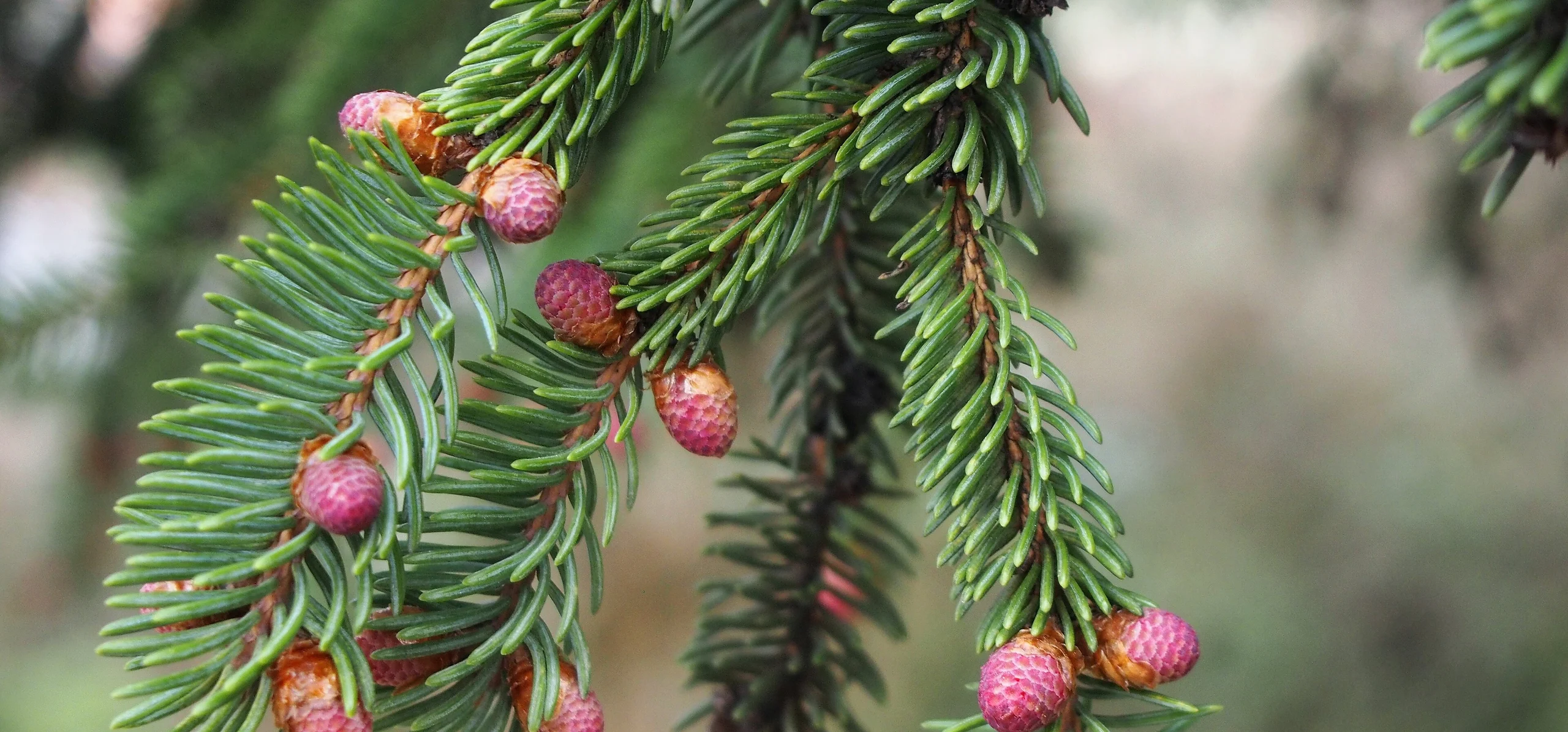
Left alone, Norway spruce naturally forms a dense, narrowly conical outline that broadens only as the tree matures, according to the RHS. The Missouri Botanical Garden describes the primary branches as slightly upturned while the secondary branches become pendulous with age, a two-tier branching pattern that gives older trees their distinctive drooping, almost shaggy silhouette quite unlike the stiffer look of a young tree. Because the species holds this shape on its own and grows rapidly, it is planted less often as a single specimen requiring formative pruning and more often as a screen or windbreak in cold northern climates, where a row of trees spaced according to their eventual spread will close into a dense barrier faster than most other conifers.
Pests and Diseases to Watch
The Missouri Botanical Garden lists cytospora canker, wood decay and needle cast as the diseases most likely to affect Norway spruce, along with occasional rust; cytospora canker in particular tends to show up on older, stressed trees as branches die back from the bottom of the crown upward. On the insect side, the same source flags aphids, bagworms, budworms and borers as occasional problems, with red spider mites singled out as the pest most likely to become genuinely troublesome, especially during hot, dry weather when mite populations build quickly on stressed foliage. None of these problems is usually serious on a healthy, well-sited tree, but a spruce planted in poor drainage or outside its preferred cool-summer range is more likely to show several of them at once.
Toxicity and Pets
The ASPCA's toxic and non-toxic plant lists do not include an entry for Picea abies or for the genus Picea, so no official determination of toxicity to cats, dogs or horses exists from that source. That absence is not the same as a confirmed clean bill of health, and resin from broken needles or bark can still cause mild skin or mouth irritation in a curious pet the way many conifer saps do, so it is worth keeping puppies and kittens from chewing on fallen needles or cones out of general caution rather than any documented poisoning risk.
Test your plant knowledge
Tap a card to flip it and reveal the answer.
A Norway spruce bought as a small potted tree will typically stay under 10 feet tall for its entire life. Tap to reveal ✕ False
Norway spruce is rated USDA zones 2 to 7 and tolerates severe continental winters. Tap to reveal ✓ True
Waterlogged, poorly drained soil is the ideal planting site for this species. Tap to reveal ✕ False
Over 150 named cultivars exist, most of them dwarf forms bred for small gardens. Tap to reveal ✓ True
The ASPCA lists Norway spruce as toxic to cats, dogs and horses. Tap to reveal ✕ False
Sources
References consulted for this guide
- GBIF Backbone Taxonomy: Picea abies (L.) H.Karst.gbif.org
- Plants of the World Online (Kew): Picea abies (L.) H.Karst.powo.science.kew.org
- RHS: Picea abies (Norway spruce)rhs.org.uk
- Missouri Botanical Garden Plant Finder: Picea abiesmissouribotanicalgarden.org
- NC State Extension Gardener Plant Toolbox: Picea abiesplants.ces.ncsu.edu
- Reference entity : Wikipédiaen.wikipedia.org