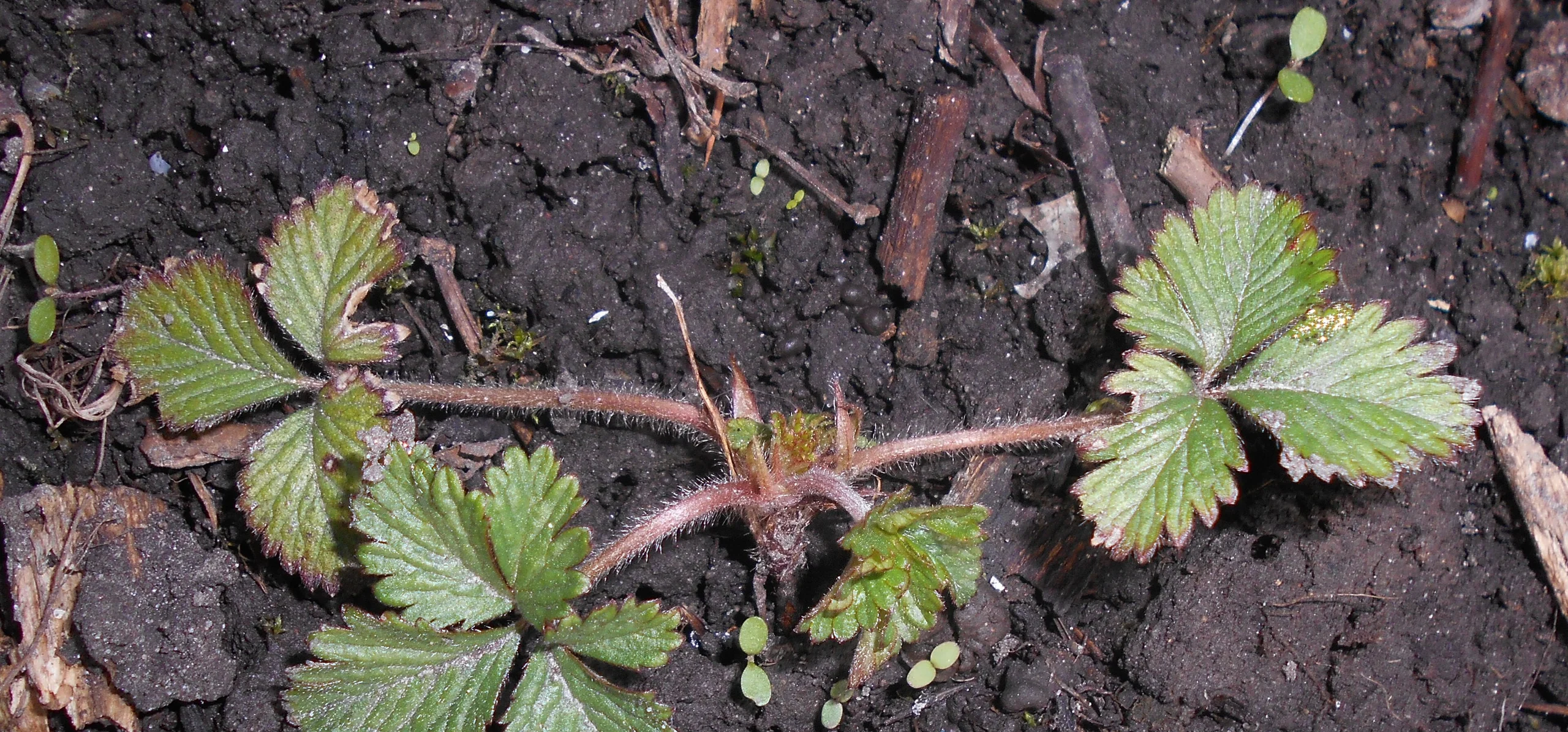
Mock Strawberry
Potentilla indica
Family · Rosaceae
Mock strawberry mimics true strawberry but flowers yellow and holds its fruit upright. Identification, edibility, and removing its rooting runners.
Potentilla indica
Plant profile
- WateringModerateWater every 10 days
- Light exposurePartial sun
- Hardiness zoneUSDA 5–9
Growth
- Family
- Rosaceae
- Life cycle
- Perennial
- Growth speed
- 7/10
- Mature size
- 8–20 cm
- Spread
- 30–60 cm
- Flowering
- Solitary yellow, five-petaled flowers about 3/4 inch across, spring into summer
- Propagation
- Seed
- Layering
DormancySemi-evergreen; University of Minnesota Extension notes the leaves may persist through a mild winter
Soil & climate
- Soil types
- Adapts to most garden soils; colonizes moist, disturbed ground fastest
- Drought tolerance
- No
Light & Placement
- Origin
- Native from Afghanistan to the Russian Far East and Malesia (POWO)
- Where to place it
- lawns and turf edges
- shaded beds under trees
- woodland-edge groundcover
- path borders and slopes
Safety
- Toxicity
- Not listed by the ASPCA for cats, dogs or horses
- Pet safe
- No
Invasive speciesNC State Extension lists it as a non-native lawn and garden weed of moist, disturbed ground; its habit of rooting at every runner node lets a few plants cover a bed or lawn patch within a season
Data fromGBIF: Potentilla indica (Andrews) Th.WolPlants of the World Online (Kew): PotentNC State Extension Gardener Plant ToolboNC State Extension Publications: Indian University of Minnesota Extension: Mock
Where it grows
World distribution
Mock Strawberry is native to 17 countries: Afghanistan, Bhutan, China, India, Indonesia, Japan, Laos, and Myanmar (Burma)….GBIF records 160,182 documented identifications across 94 countries, with the largest concentrations in United States, Netherlands, and Belgium.
- Afghanistan
- Bhutan
- China
- India
- Indonesia
- Japan
- Laos
- Myanmar (Burma)
- Nepal
- Pakistan
- Philippines
- Russia
Show 5 more countriesShow fewer countries
- South Korea
- Sri Lanka
- Taiwan
- Thailand
- Vietnam
Yellow to orange dots: concentration of documented identifications per country. Green countries: sourced native range. Source: GBIFNative range from POWO (Kew).
A Yellow-Flowered Impostor in the Strawberry Patch
A low mat of three-part, toothed leaves throwing up small yellow flowers and then round red berries is almost never a real strawberry: it is Potentilla indica, mock strawberry, still sold and labeled in some catalogs under its older name Duchesnea indica. GBIF records the accepted name as Potentilla indica (Andrews) Th.Wolf, in the rose family Rosaceae, and NC State Extension's Gardener Plant Toolbox lists it as a low, spreading ground cover only 3 to 8 inches tall that colonizes lawns, path edges and shaded beds across USDA zones 5a to 9b. Most people meet it the way they meet any lawn weed, uninvited, and only start asking what it actually is once the fruit shows up looking convincingly like a tiny strawberry.
Reading the Flower, the Bracts and the Upright Fruit
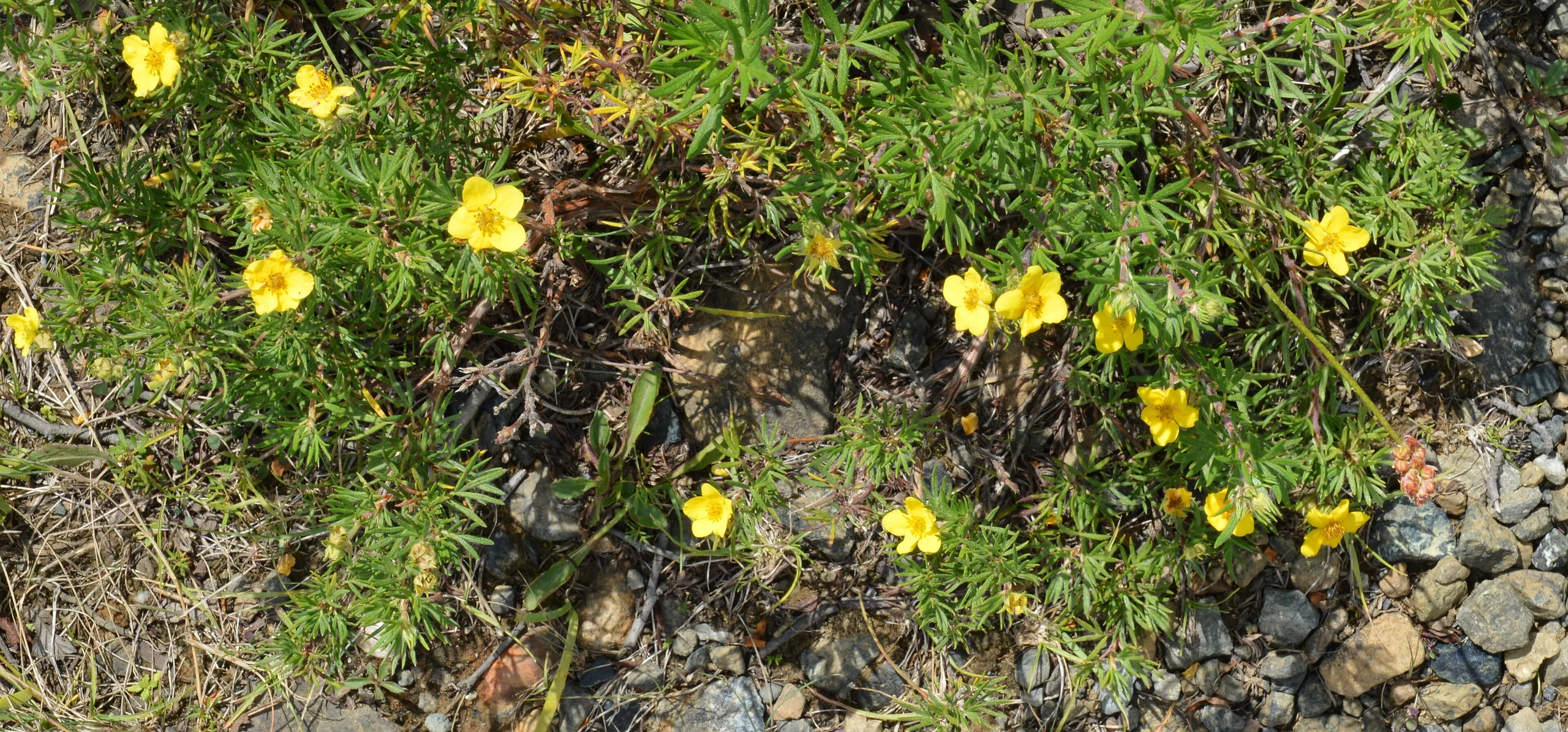
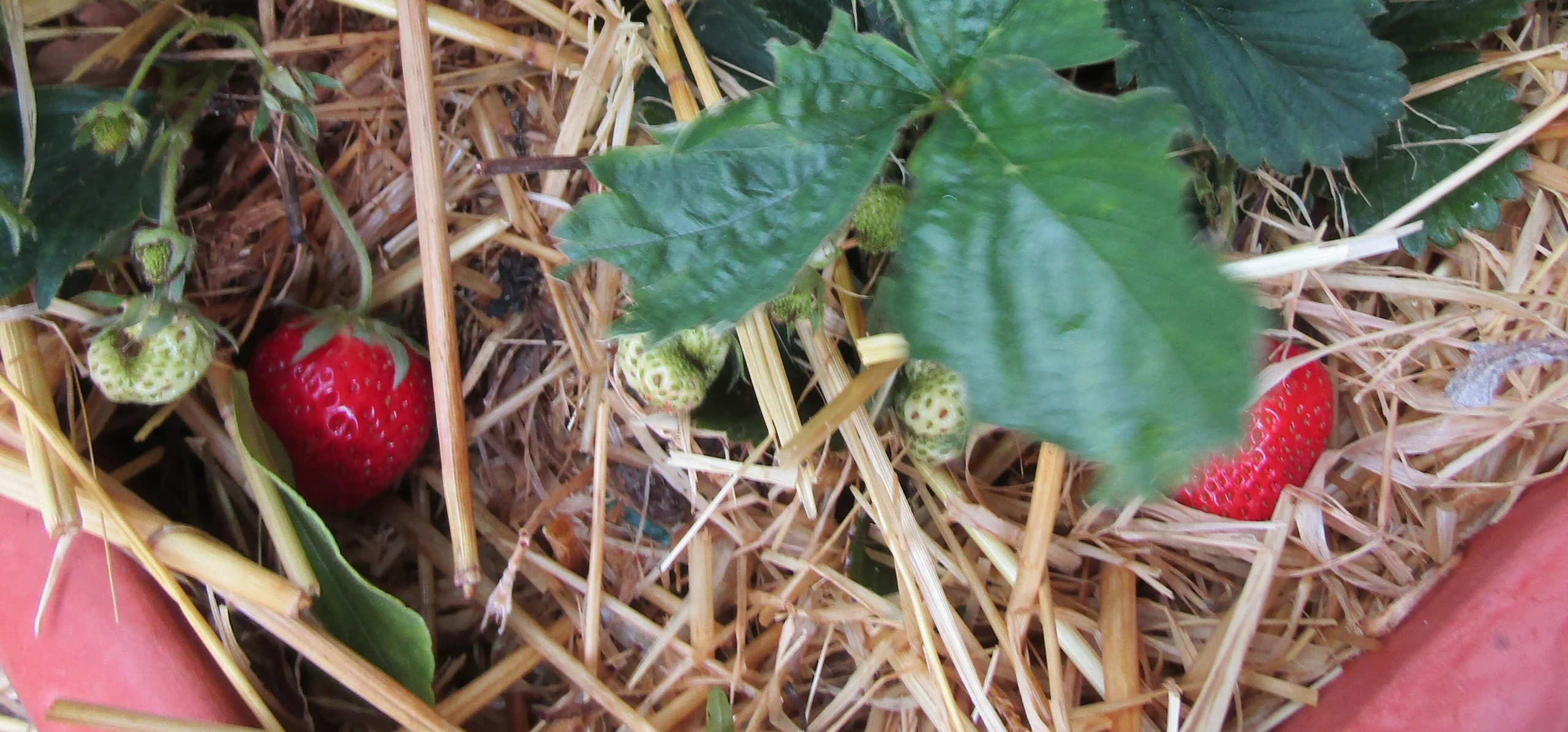
Three details confirm the identification without needing a hand lens. First, the flower: NC State Extension describes it as a solitary gold or yellow bloom about 3/4 inch across with five petals, five green sepals and numerous yellow-anthered stamens, all held face-up on a long stalk from the leaf axil, a stark contrast to a true wild strawberry's white flower. Second, a ring of small leafy bracts sits just beneath those sepals, each tipped with a few short teeth, a detail botanists once used to place this plant in its own genus. Third, the fruit itself grows upright on its stalk rather than nodding or hiding under the foliage the way a true strawberry's ripening fruit does, so it stays conspicuous, bright red and roughly 1/2 inch across, with small seeds scattered over a bumpy, dry surface rather than the juicy, glossy skin of a real strawberry.


Edible, Technically
Mock strawberry is not on any list of toxic plants and its fruit is genuinely edible, but NC State Extension is blunt about the eating experience: bland flavor and dry texture. There is no bitterness or unpleasant aftertaste to warn a curious child or a foraging dog away from it, which is worth knowing precisely because the berries look tempting and appear right at ground level in places children play. The safest way to describe it to a worried caller is that the fruit disappoints rather than harms.
Why a Few Plants Become a Lawn Full of Them
NC State Extension classifies mock strawberry as a stoloniferous perennial, meaning it spreads primarily by long, hairy runners that root and form a new rosette wherever a node touches soil, then send out further runners of their own from that new point. University of Minnesota Extension records the same habit and adds that the leaves may persist through a mild winter, so a colony rarely starts from bare ground again each spring the way an annual weed does. One plant left alone through a single growing season can radiate several rooted daughter plants in every direction, which is how a single missed patch along a border becomes a solid mat covering a bed or a stretch of lawn edge by the following year.
Taking It Out Without Reaching for Herbicide
Because the whole plant depends on those shallow, rooting runners rather than one deep taproot, mechanical removal works well without chemicals. Rake or hand-pull along each runner back to its parent crown rather than snapping off the visible rosettes, since any rooted node left behind will simply start a new patch. NC State Extension Publications add a preventive angle worth pairing with pulling: improving surface drainage, aerating compacted turf, and watering less often, since the plant colonizes moist, disturbed ground fastest and struggles to gain a foothold once conditions dry out somewhat between waterings. In beds rather than lawn, a dense layer of mulch laid over cleared, weeded soil denies new runners the bare ground they need to root into, which is usually enough to keep a bed clear without any herbicide at all.
The Case for Leaving It as Groundcover
The same traits that make mock strawberry hard to eradicate make it a workable, low-maintenance groundcover in the one place most plants struggle: dry shade under trees, where turf grass thins out and bare soil erodes. It tolerates the partial shade and root competition of a woodland edge, holds a slope with its rooting runners better than bare mulch alone, and keeps some green cover through a mild winter thanks to that semi-evergreen habit. Gardeners who choose it on purpose usually do so along a shaded path border or a bank too awkward to mow, accepting the yellow flowers and dry berries as a reasonable trade for a living mat that needs no seeding, no fertilizer and almost no attention once established.
From Duchesnea to Potentilla: Why the Name Changed
Older field guides and seed catalogs still call this plant Duchesnea indica, and GBIF lists that name, along with Fragaria indica and several regional varieties, among its recorded synonyms. Genetic studies of the strawberry relatives eventually showed that the small, separate genus Duchesnea sat nested inside Potentilla rather than beside it, so taxonomists folded it back into that larger genus and the accepted name became Potentilla indica (Andrews) Th.Wolf. The plant itself has not changed at all: the same yellow flowers, the same upright dry fruit and the same rooting runners, just filed under a different genus than the one printed on an older plant tag.
Is It Safe Around Pets?
A search of the ASPCA's toxic and non-toxic plant lists turns up no entry at all for Potentilla indica or its older name Duchesnea indica, so this guide records its status as not-listed rather than claiming a confirmed safe or toxic verdict either way. In practice the fruit itself is documented elsewhere as edible though bland, and nothing about the plant's mechanical removal or its use as groundcover calls for special precautions around cats, dogs or grazing animals, but the absence of an ASPCA listing means no official source has evaluated it either way.
Test your plant knowledge
Tap a card to flip it and reveal the answer.
Mock strawberry produces yellow flowers, unlike the white flowers of a true wild strawberry. Tap to reveal ✓ True
The red fruit of mock strawberry hangs down and hides under the leaves, just like a true strawberry. Tap to reveal ✕ False
Mock strawberry spreads mainly through runners that root wherever they touch soil. Tap to reveal ✓ True
Removing mock strawberry from a lawn or bed always requires an herbicide. Tap to reveal ✕ False
Mock strawberry appears on the ASPCA's list of plants toxic to cats, dogs or horses. Tap to reveal ✕ False
Sources
References consulted for this guide
- GBIF: Potentilla indica (Andrews) Th.Wolfgbif.org
- Plants of the World Online (Kew): Potentilla indicapowo.science.kew.org
- NC State Extension Gardener Plant Toolbox: Potentilla indicaplants.ces.ncsu.edu
- NC State Extension Publications: Indian Mock-strawberrycontent.ces.ncsu.edu
- University of Minnesota Extension: Mock strawberryextension.umn.edu
- Reference entity : Wikipédiaen.wikipedia.org