Mealy Blue Sage
Salvia farinacea
Family · Lamiaceae
Salvia farinacea wants full sun, fast-draining soil and little water once established, with regular deadheading to keep it blooming until frost.
Salvia farinacea
Plant profile
- WateringLittleWater every 7 days
- Light exposurePartial sun
- Hardiness zoneUSDA 8–10
Growth
- Family
- Lamiaceae
- Life cycle
- Perennial
- Growth speed
- 6/10
- Mature size
- 45–90 cm
- Spread
- 30–60 cm
- Flowering
- Spring to first frost (April to October)
- Propagation
- Seed
- Cutting
- Division
Dormancydies back after the first hard frost where grown as an annual
Time to maturityblooms in its first year from seed or cuttings
Soil & climate
- Soil types
- clay, loam, sand
- Drought tolerance
- Yes
Light & Placement
- Origin
- South-central United States to northeastern Mexico (Oklahoma, Texas)
- Where to place it
- sunny border
- bedding scheme
- pollinator garden
- patio container
- medium to large container with well-drained potting mix
Safety
- Toxicity
- Not evaluated by the ASPCA; toxicity undetermined
- Pet safe
- No
Data fromGBIF Backbone Taxonomy: Salvia farinaceaPlants of the World Online (Kew): SalviaNC State Extension Gardener Plant ToolboRHS: Salvia farinacea (mealy sage)
Where it grows
World distribution
Mealy Blue Sage is native to 2 countries: Mexico and United States.GBIF records 12,274 documented identifications across 50 countries, with the largest concentrations in United States, Mexico, and Sweden.
- Mexico
- United States
Yellow to orange dots: concentration of documented identifications per country. Green countries: sourced native range. Source: GBIFNative range from POWO (Kew).
What You're Growing
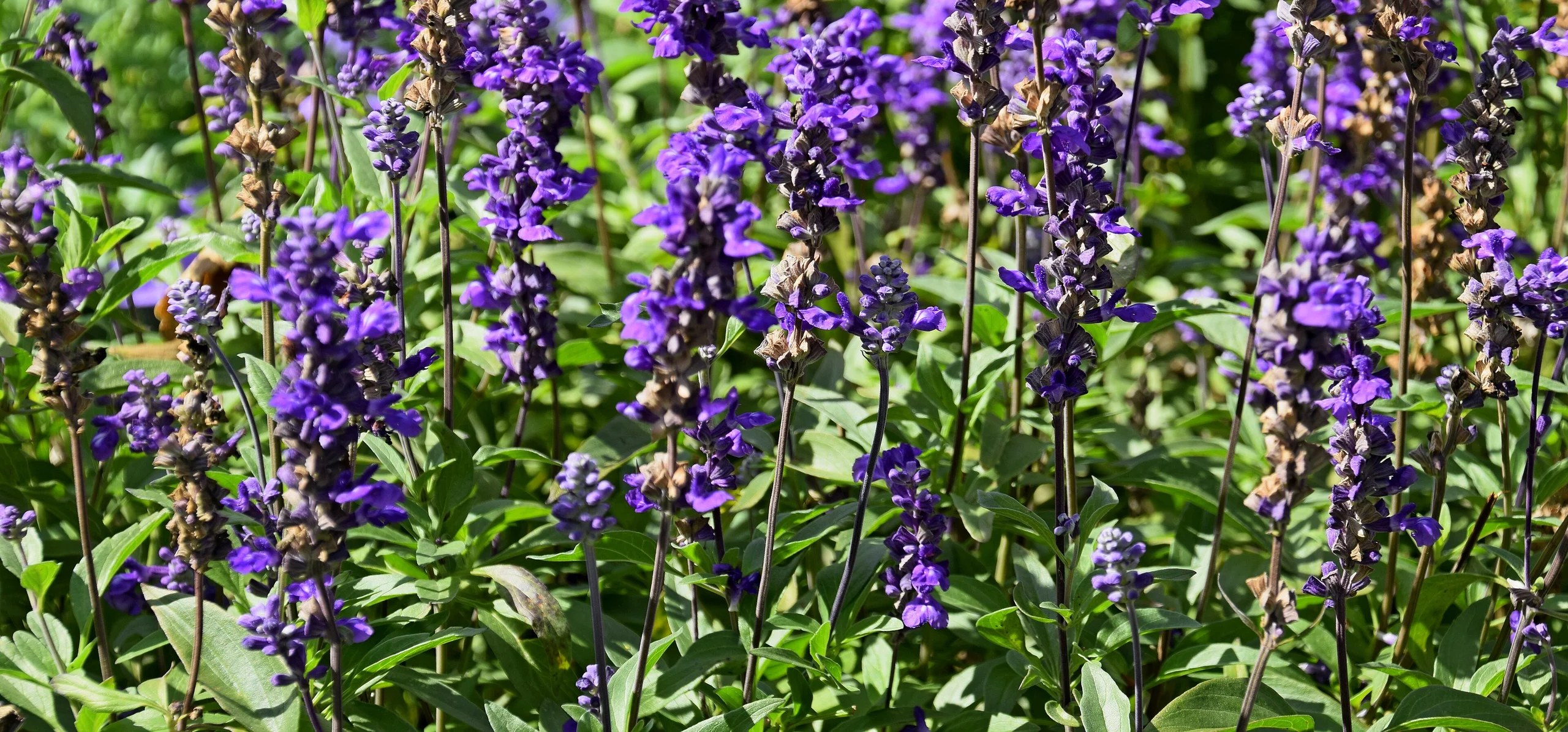
Salvia farinacea takes its species name from farina, Latin for flour, a nod to the fine white meal dusted over its young stems and the cup-shaped calyces that cradle each flower, which is also where the common names mealy blue sage and mealycup sage come from. What you are holding is a stiff, upright herbaceous perennial, grown as an annual outside its hardy zones, that forms a rounded clump of narrow, grey-green leaves and sends up slim flower spikes carrying violet-blue, two-lipped blooms in whorls up the stem. New spikes keep forming from spring through the first hard frost rather than flowering all at once, so a single plant reads as continuously in bloom for months. It belongs to the mint family, Lamiaceae, alongside garden sage and lavender, and shares their square stems and aromatic foliage, though the scent here is mild rather than pungent.
Native Range and How Hardy It Is
Salvia farinacea is native to the south-central United States and northeastern Mexico, specifically Oklahoma, Texas and adjacent parts of Mexico, where it grows on dry prairie and scrubland. That origin explains its behaviour in the garden: it wants heat, sun and soil that drains fast, and it shrugs off drought once its roots are established. It is reliably perennial only in USDA hardiness zones 8a to 10b, the outer coastal plain and similar mild-winter regions; in cooler zones the crown does not survive a hard freeze, and gardeners there grow it as a bedding annual instead, restarting from seed or nursery plants each spring. In the UK, the RHS rates it H3, hardy only in coastal or otherwise mild gardens, which is the same practical limit under a different scale.
Light and Placement
Give it full sun, six or more hours of direct light a day, and stems stay compact and self-supporting with the densest flower spikes. It will tolerate partial shade, and the RHS lists that as acceptable, but expect fewer flowers and a looser, slightly leggier habit as the plant reaches for light. East-, south- or west-facing beds all work; what matters more than compass direction is that the spot gets unobstructed sun for most of the day. In hot inland climates a little afternoon shade takes the edge off summer stress without costing much bloom, but on its home ground of Texas prairie it grows in open, unshaded soil as a matter of course.


Soil and Planting
Mealy blue sage is not particular about soil texture, it grows in clay, loam or sand, but it insists on drainage: moist but well-drained ground suits it best, and standing water at the roots is the fastest way to lose the plant. It tends toward mildly acidic soil and also tolerates neutral to alkaline ground, so there is little need to adjust pH before planting in an average garden bed. Set plants at the same depth they sat in the nursery pot, space them 30 to 45 cm apart to let air move through the clump, and work compost into heavy clay to open it up rather than trying to fertilise your way around poor drainage. In containers, use a potting mix cut with grit and a pot with a real drainage hole; mealy sage handles a dry spell far better than a waterlogged saucer.
Watering
Water new plants regularly through their first few weeks while roots spread into the surrounding soil. After that, mealy blue sage needs less watering than most bedding plants: established clumps tolerate dry spells and even dry clay, and the RHS specifically notes reduced water needs once the plant is settled in. Check the top few centimetres of soil before watering rather than working to a fixed schedule; if it is still damp, wait. Containers dry out faster than open ground and need more frequent water through summer heat, but even there it is easier to underwater this plant than to overwater it, root and crown rot follow soil that stays wet, not soil that goes briefly dry.
Deadheading to Keep It Blooming
Individual flower spikes fade from the base upward and eventually stop producing new blooms. Cutting the spent spikes back to a lower set of leaves, rather than leaving them to go to seed, prolongs flowering and pushes the plant to send up fresh spikes through summer and into autumn, a technique the RHS recommends directly. This single habit is the difference between a plant that blooms in two short flushes and one that stays in flower almost continuously from spring to the first frost. On a large clump, running over the whole plant with shears every few weeks once the first flush fades is faster than deadheading spike by spike and gets much the same result.
Propagation
Grow new plants from seed, from stem cuttings, or by dividing an established clump. Seed started indoors in late winter reaches flowering size the same year, which is how most bedding-plant mealy sage is produced commercially. Semi-ripe stem cuttings taken in summer root readily and let you keep a specific cultivar's flower colour true, since seed-grown plants can vary. Where the plant survives as a perennial, division in spring is the quickest way to multiply an existing clump and to rejuvenate one that has grown woody and sparse at the centre after a few seasons.
Pests, Diseases and Common Mistakes
Mealy blue sage is largely untroubled by insect pests; its main vulnerabilities are fungal. Powdery mildew and downy mildew show up in humid weather or crowded plantings with poor airflow, and root and crown rot follow soil that never dries between waterings; NC State's extension service also lists damping-off, Southern bacterial wilt, Southern blight and Verticillium wilt as occasional problems. Damping-off in particular takes seedlings started too wet or too cool. The most common mistake is planting it in a low, damp corner of the garden and then watering on a fixed schedule regardless of the soil; both replicate the wet conditions this prairie native is least equipped to handle. The second most common mistake is skipping deadheading and then wondering why flowering trails off by midsummer instead of running to frost.
Test your plant knowledge
Tap a card to flip it and reveal the answer.
Salvia farinacea gets its species name from a mealy white coating on its stems and flower calyces. Tap to reveal ✓ True
Mealy blue sage needs daily watering to keep blooming well. Tap to reveal ✕ False
Cutting back spent flower spikes helps prolong the blooming season. Tap to reveal ✓ True
Mealy blue sage survives freezing winters as a perennial everywhere it is grown. Tap to reveal ✕ False
This species is native to the south-central United States and northeastern Mexico. Tap to reveal ✓ True
Sources
References consulted for this guide
- GBIF Backbone Taxonomy: Salvia farinacea Benth.gbif.org
- Plants of the World Online (Kew): Salvia farinaceapowo.science.kew.org
- NC State Extension Gardener Plant Toolbox: Salvia farinaceaplants.ces.ncsu.edu
- RHS: Salvia farinacea (mealy sage)rhs.org.uk
- Reference entity : Wikipédiaen.wikipedia.org