American Elderberry
Sambucus canadensis
Family · Viburnaceae
Sambucus canadensis, the American elderberry, wants damp, sunny ground, suckers into colonies if unpruned, and its berries are only safe once cooked.
Sambucus canadensis
Plant profile
- WateringHighWater every 6 days
- Light exposurePartial sun
- Hardiness zoneUSDA 3–9
Growth
- Family
- Viburnaceae
- Life cycle
- Perennial
- Growth speed
- 7/10
- Mature size
- 150–370 cm
- Spread
- 150–370 cm
- Flowering
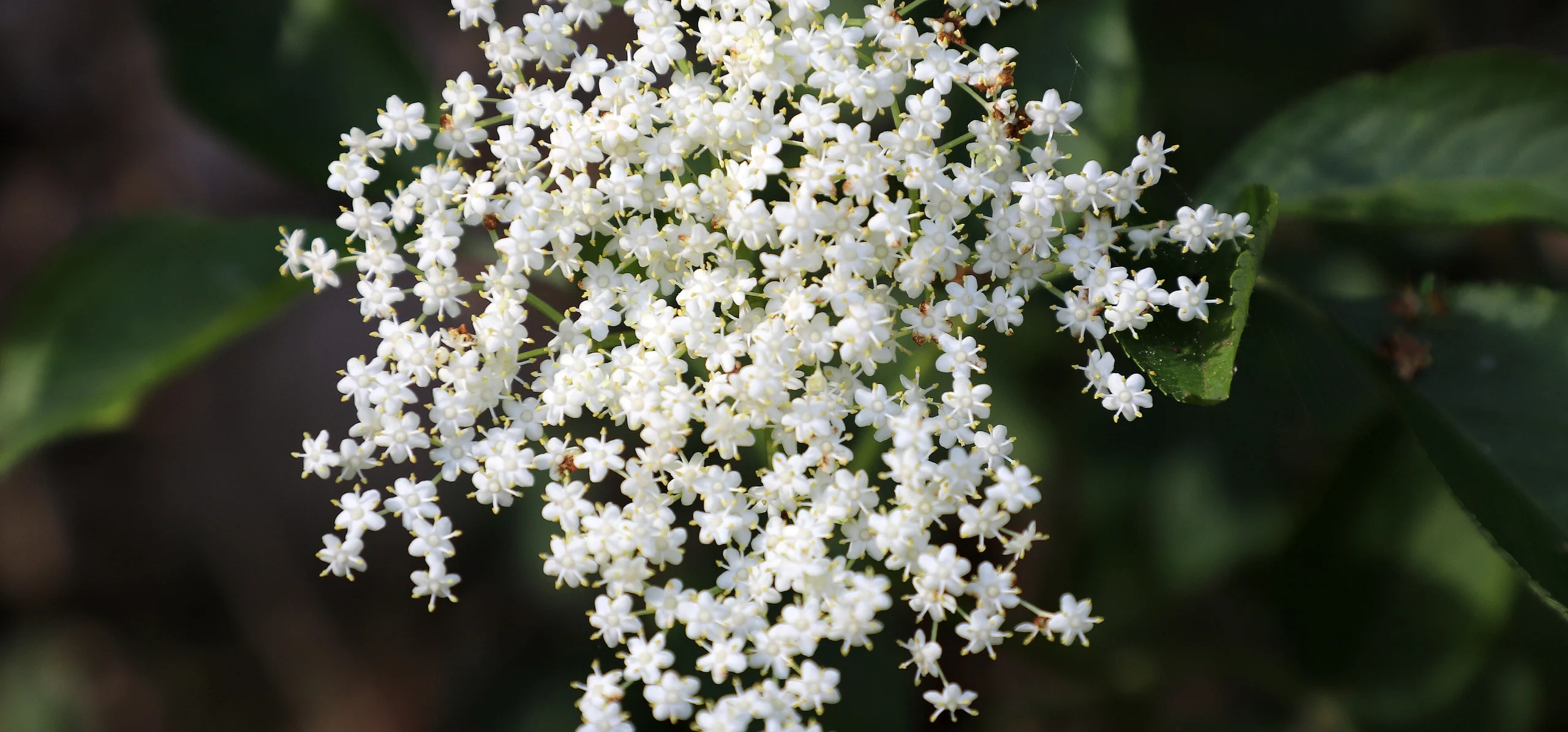
- Creamy white flower clusters in June and July, black berries by late summer
- Propagation
- Seed
- Cutting
- Division
Dormancydeciduous, winter dormant
Time to maturityFlowers and fruits within 2 to 3 years
Soil & climate
- Soil types
- clay, loam, sand
- Drought tolerance
- No
Light & Placement
- Origin
- North America south to Venezuela and Bolivia
- Where to place it
- streambank or rain garden
- hedgerow or informal screen
- damp fence line or ditch edge
Safety
- Toxicity
- HumansToxic
Invasive speciesSpreads by root suckers into loose colonies if left unpruned
Data fromGBIF Backbone Taxonomy: Sambucus canadenPlants of the World Online (Kew): SambucUSDA NRCS Plant Guide: Common ElderberryNC State Extension Gardener Plant ToolboMissouri Botanical Garden Plant Finder:
Where it grows
World distribution
American Elderberry is native to 14 countries: Belize, Bolivia, Canada, Colombia, Costa Rica, Ecuador, El Salvador, and Guatemala….GBIF records 59,821 documented identifications across 85 countries, with the largest concentrations in United States, Canada, and Mexico.
- Belize
- Bolivia
- Canada
- Colombia
- Costa Rica
- Ecuador
- El Salvador
- Guatemala
- Honduras
- Mexico
- Panama
- Peru
- United States
- Venezuela
Yellow to orange dots: concentration of documented identifications per country. Green countries: sourced native range. Source: GBIFNative range from POWO (Kew).
A one-gallon Sambucus canadensis picked up at a native plant sale in spring will be a knee-high shrub with soft, pinnate leaves by midsummer and, by its second or third year, flat-topped clusters of cream flowers. It wants full sun to part shade and soil that never fully dries out, the kind of ground found along a ditch bank or the low corner of a yard. Left alone it spreads hard by root suckers, so decide on day one whether you want a single specimen or are happy to let it colonize a wet corner. The payoff is heavy, dusty black fruit clusters by late summer, good for wine, jelly and pie once cooked.
One Shrub, Several Names
Sambucus canadensis is the name GBIF's backbone taxonomy accepts for this species, and it is the one used throughout this guide and in its file name. Look at an older reference or a nursery tag, though, and the same plant is just as likely to appear as Sambucus nigra subsp. canadensis or Sambucus nigra var. canadensis: Kew's Plants of the World Online lists both of those as separate accepted names, and the USDA's own plant guide for this species files it under Sambucus nigra L. ssp. canadensis (L.) R. Bolli, plant symbol SANIC4. The disagreement is whether American elderberry differs enough from the European Sambucus nigra to stand as its own species, or is a regional form of one wider Eurasian-American complex; botanists have gone back and forth on this for decades. The family placement has shifted too: elderberry sat in the honeysuckle family, Caprifoliaceae, through most of the twentieth century, Missouri Botanical Garden currently places it in Adoxaceae, and GBIF's backbone files it under Viburnaceae. None of this changes how the shrub behaves in a yard, but it explains the different names found on nursery tags and in older references.
Native Range and Habitat
American elderberry's native range runs from North America south to Venezuela and Bolivia, per Plants of the World Online. Within that range it is a plant of damp edges: streambanks, ditches, low woodland margins, fence rows and roadside seeps, rarely far from moving or standing water. The USDA plant guide notes it growing from near sea level up to 3,000 m where climate allows, and that it tends to dominate the shrub layer of riparian woodland rather than sit quietly in the understory of a closed canopy. That habitat preference is the single most useful fact for a home gardener: if a corner of the yard stays damp after everywhere else has dried out, that is where this shrub will be happiest.
Site, Soil and Water
Give it full sun for the heaviest flowering and fruit set, though it also takes part shade and simply blooms a little less. Missouri Botanical Garden rates its water need as medium to wet and lists it as tolerant of clay and occasionally wet soil outright, unusual for a shrub sold at general nurseries. NC State Extension lists acceptable soil across acidic to neutral pH and clay, loam or sandy textures as long as organic matter is present; what it will not forgive is a spot that bakes dry every summer. Mulch out to the drip line to hold moisture through the first two seasons, and skip elderberry if the only open ground is a sun-baked, fast-draining bank.


Planting and Spacing
Set new plants at the depth they were growing in the pot, in fall or early spring while the ground is workable and moist. Because the shrub reaches 5 to 12 ft (roughly 1.5 to 3.7 m) tall with a similar spread once mature, give it that much clearance from paths, foundations and smaller shrubs from the outset rather than fighting it back every year. Fruiting cultivars are only partly self-fertile, so growers after a heavy berry crop rather than just flowers commonly plant two different named selections within a few metres of each other to improve pollination.
Pruning a Suckering Shrub
Left unpruned, American elderberry spreads by root suckers into a loose colony, exactly the point in a hedgerow or streambank planting and exactly the problem in a border. Missouri Botanical Garden recommends removing dead or weakened stems in late winter or early spring, shortening one-year-old stems to control size, or cutting the whole plant back to the ground every few years to rejuvenate it, since it resprouts vigorously from the base. For a tidy specimen rather than a thicket, walk the base every few weeks through the growing season and pull new suckers while they are still soft; leave them and it becomes a stand within two or three seasons. The wood itself is brittle where an unpruned branch catches high wind or a heavy snow load, so thinning crowded stems each year also cuts down on storm breakage.
Flowers, Fruit and Harvest
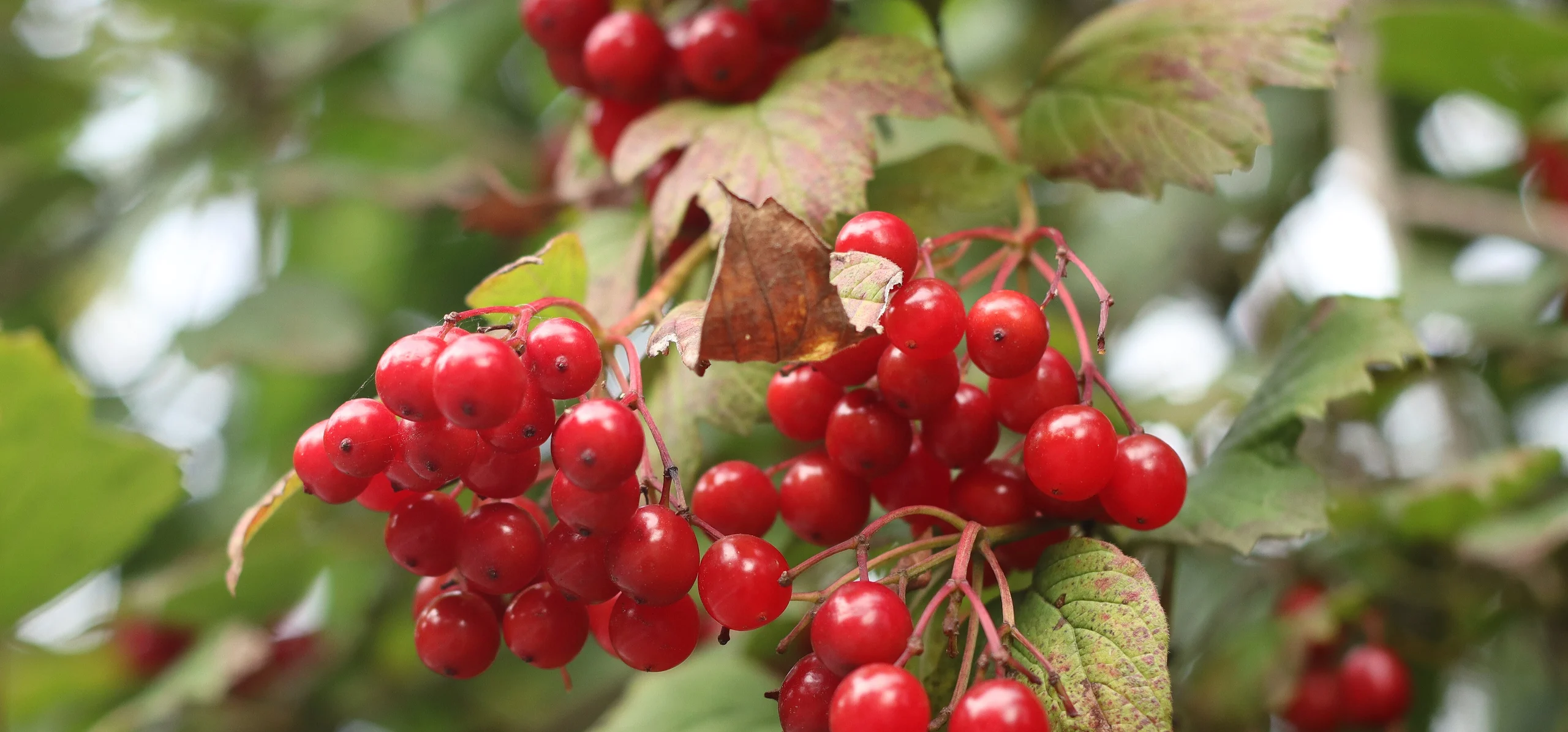
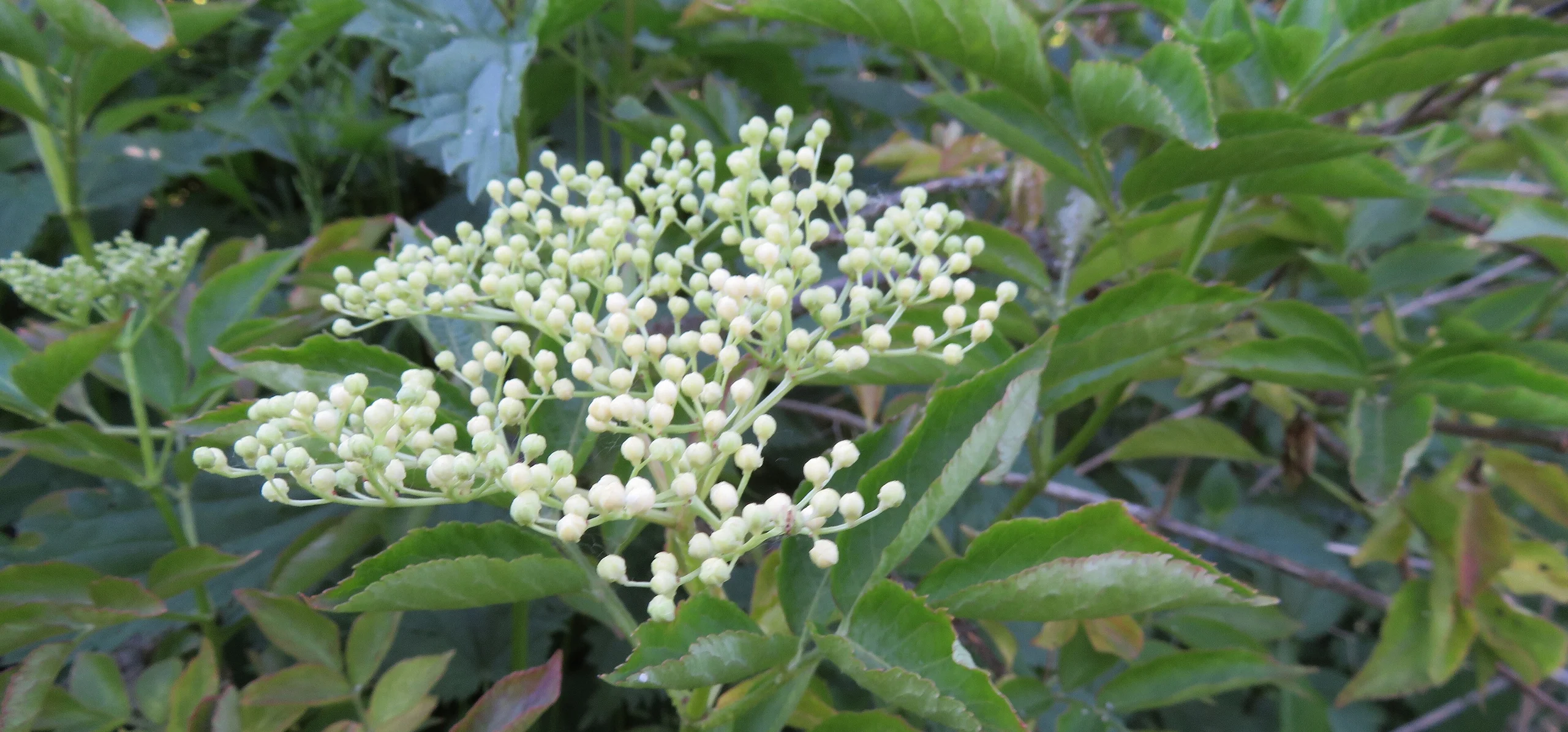
Flat-topped clusters of small, lemon-scented white flowers, up to about 25 cm (10 in) across per Missouri Botanical Garden, open in June and into July. They give way to heavy, dusty blue-black to purple-black drupes that ripen from midsummer into October depending on climate, per the USDA plant guide. Pick whole clusters once the berries are uniformly dark and slightly soft, then strip them from the stems with a fork; birds and other wildlife will take any fruit left past that point. Only the ripe, cooked berries go into wine, jelly, syrup and pie filling; the flowers themselves are traditionally battered and fried or steeped for tea.
Propagation
Seed is the most reliable method but the slowest: elderberry seed has a hard coat and embryo dormancy, and without pretreatment germination can lag two to five years behind sowing, according to the USDA plant guide. Warm-stratifying the seed for about two months before sowing shortens that considerably. Hardwood heel cuttings taken from the previous season's growth root faster and flower and fruit sooner, though the USDA notes the resulting root system is fragile and needs gentle handling at transplant. The simplest route for a home gardener is to dig a rooted sucker from the edge of an established colony during dormant season and move it, since the plant is already doing this kind of vegetative spreading on its own.
Pests, Toxicity and Common Mistakes
American elderberry has no serious insect or disease problems, but it is not immune: expect occasional canker, powdery mildew, leaf spot, borers, spider mites and aphids, per Missouri Botanical Garden, none of which normally need more than watching. Every part of the raw plant, leaves, bark, roots, stems and unripe berries, contains the cyanogenic compounds that the USDA plant guide names as hydrocyanic acid and sambucine, and eating them raw causes nausea; cooking the ripe berries breaks those compounds down, which is why every traditional use calls for heat first. The ASPCA's toxic and non-toxic plant list carries no dedicated entry for this species, so there is no cat-, dog- or horse-specific rating to cite here, but the same caution that applies to people is worth extending to a pet that chews on stems or raw fruit. The most common mistake is treating this shrub like a tidy foundation plant: set in a dry bed with no room to sucker, it sulks and fruits poorly, then gets blamed for being difficult when the real issue is the site.
Test your plant knowledge
Tap a card to flip it and reveal the answer.
Sambucus canadensis is sometimes classified as a subspecies of Sambucus nigra rather than a separate species. Tap to reveal ✓ True
Elderberries should always be cooked before eating. Tap to reveal ✓ True
This shrub thrives in dry, fast-draining sandy soil and dislikes moisture. Tap to reveal ✕ False
Left unpruned, root suckers can turn a single elderberry shrub into a spreading colony. Tap to reveal ✓ True
The ASPCA lists American elderberry as toxic to cats, dogs and horses. Tap to reveal ✕ False
Sources
References consulted for this guide
- GBIF Backbone Taxonomy: Sambucus canadensis L.gbif.org
- Plants of the World Online (Kew): Sambucus canadensis L.powo.science.kew.org
- USDA NRCS Plant Guide: Common Elderberry (Sambucus nigra ssp. canadensis, SANIC4)plants.usda.gov
- NC State Extension Gardener Plant Toolbox: Sambucus canadensisplants.ces.ncsu.edu
- Missouri Botanical Garden Plant Finder: Sambucus canadensismissouribotanicalgarden.org
- Reference entity : Wikipédiaen.wikipedia.org