African Spear
Dracaena angolensis
Family · Asparagaceae
Caring for Sansevieria cylindrica (Dracaena angolensis): why the name changed, how often to water its round leaves, and how to propagate by division.
Dracaena angolensis
Plant profile
- WateringVery littleWater every 24 days
- Light exposurePartial sun
Growth
- Family
- Asparagaceae
- Life cycle
- Perennial
- Growth speed
- 2/10
- Mature size
- 100–150 cm
- Spread
- 10–50 cm
- Flowering
- Occasional fragrant flowers on mature clumps, rare indoors
- Propagation
- Cutting
- Division
DormancyNo true dormancy; growth slows in cool, low light
Time to maturityReaches full height in about 5 to 10 years
Soil & climate
- Drought tolerance
- Yes
Soil typesSandy, fast-draining succulent or cactus mix, Standard potting compost cut with extra perlite or grit
Light & Placement
- Origin
- Southern tropical Africa (Angola)
- Where to place it
- Sunny south-facing windowsill
- Bright room a few steps back from a window
- Sheltered, frost-free spot in full sun over summer (RHS)
- Unglazed terracotta pot with a drainage hole
Safety
- Toxicity
- CatsToxic
- DogsToxic
Data fromDracaena angolensis (Welw. ex Carrière) Sansevieria cylindrica (African spear), Snake Plant, Toxic and Non-Toxic Plants,Sansevieria cylindrica, Plant Finder, Mi
Where it grows
World distribution
African Spear is native to 3 countries: Angola, Zambia, and Zimbabwe.GBIF records 451 documented identifications across 58 countries, with the largest concentrations in United States, Brazil, and Kenya.
- Angola
- Zambia
- Zimbabwe
Yellow to orange dots: concentration of documented identifications per country. Green countries: sourced native range. Source: GBIFNative range from POWO (Kew).
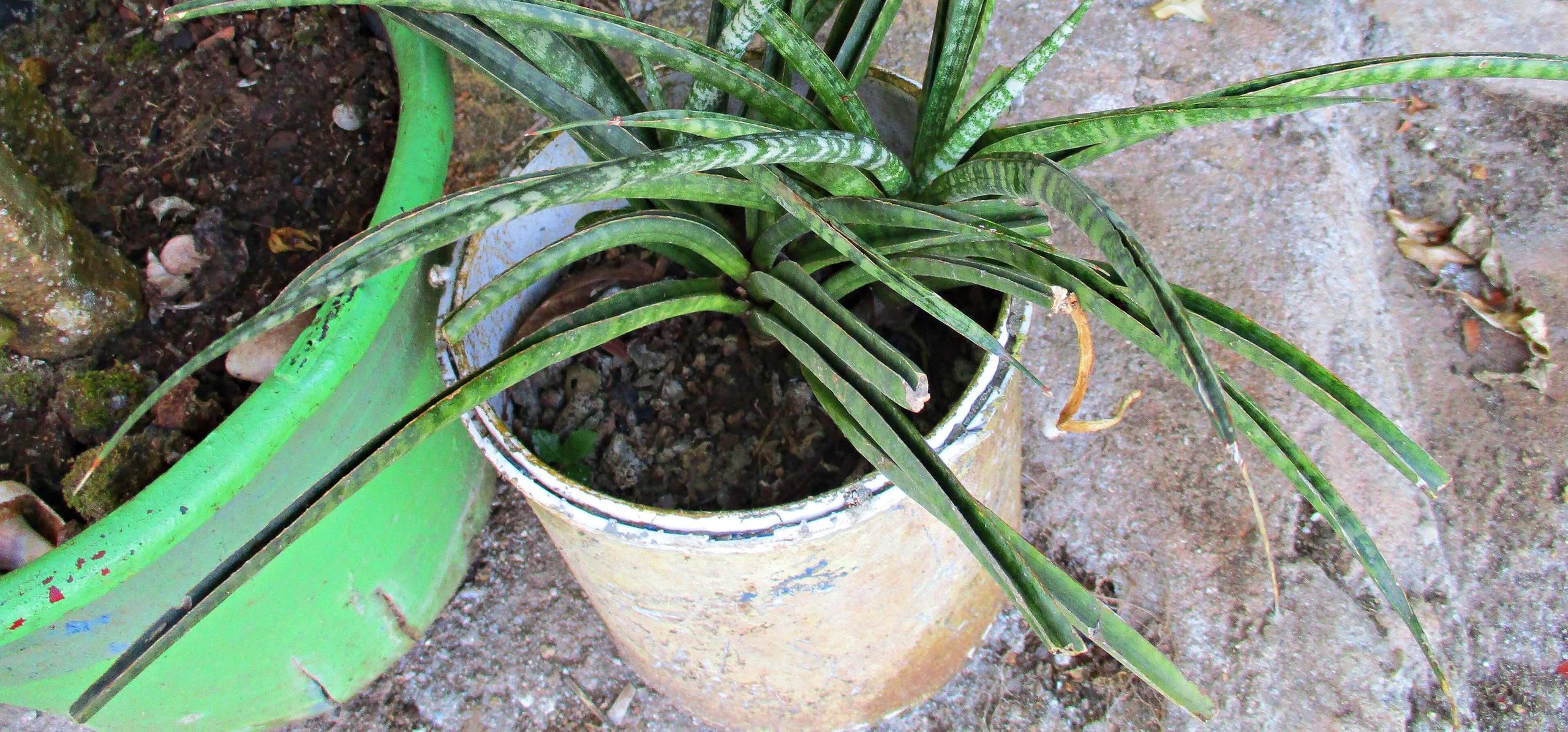
The plant sold everywhere as Sansevieria cylindrica, its cylindrical leaves often braided or fanned out in a nursery pot, was reclassified years ago, and its accepted botanical name is now Dracaena angolensis. That change has not touched how the plant is grown: it is still native to dry scrubland in Angola, it still stores water in thick round leaves instead of flat ones, and it still shrugs off the kind of neglect that kills most houseplants. If you just brought one home, the short version is full sun to bright light, water only once the pot has dried out completely, and leave it alone in the same pot for years. The rest of this guide covers why the name changed, what the plant actually needs, and the mistakes that finish it off.
Why it is now Dracaena angolensis, not Sansevieria cylindrica
In 2018, botanists Byng and Christenhusz formally folded the genus Sansevieria into Dracaena after DNA and morphological work found the two were not distinct enough to keep separate. Kew's Plants of the World Online and GBIF, the two taxonomic references this guide checks its facts against, both list Dracaena angolensis as the accepted name, with Sansevieria cylindrica, Sansevieria angolensis and Acyntha cylindrica recorded as synonyms of the same plant. None of this changes care: nurseries, plant tags and most growers still call it Sansevieria cylindrica or African spear, and that is the name worth searching for. Use Dracaena angolensis when you want the current scientific record; everywhere else, cylindrica is fine.
Origin: dry scrubland in Angola
Plants of the World Online lists the native range as southern tropical Africa, centred on Angola, where the species grows as a rhizomatous geophyte in seasonally dry, scrubby ground. The leaves are round in cross-section rather than flat for exactly that reason: less exposed surface means less water lost to evaporation through a long dry season, and a rigid tube resists grazing far better than a soft blade. The same shape explains why the plant tolerates being forgotten in a hot, dry room for weeks: it evolved to survive worse.
Light and placement
The RHS rates this species for full sun or partial shade, and in practice it takes almost any aspect a home can offer. Give it the brightest spot available, ideally a south-facing sill or a few hours of direct sun a day, and it will hold a tighter, more upright fan of leaves. Set further back in an east or west window it still grows, just more slowly and with a looser, more open shape. Outdoors it can take full sun once hardened off gradually over a couple of weeks, but bring it inside or under cover before nights drop below about 10°C, the minimum the RHS lists for this species without protection. If the light comes mostly from one side, turn the pot every few weeks so the fan of leaves does not lean permanently toward the window.


Watering: the biggest killer is not neglect
Far more of these plants die from watering too often than too rarely. Let the pot dry out completely, then water it thoroughly until it runs from the drainage hole, and tip away anything left in the saucer. In a warm, bright room that usually works out to roughly once every three to four weeks, stretching to once a month or longer in winter. A quick way to check: squeeze a leaf gently near the base. Firm and round means it still has reserves; slightly soft or faintly ridged means it is finally ready for a drink. The RHS specifically warns against winter wet, meaning water pooling among the leaf bases or sitting in a saucer, which rots the rhizome faster than dry soil ever will.
Soil and potting
The RHS recommends sandy, free-draining soil with a neutral to alkaline pH. A ready-made cactus or succulent mix works well, or cut ordinary potting compost with plenty of perlite or coarse grit until water runs through it quickly. An unglazed terracotta pot with a drainage hole helps the mix dry between waterings, which matters more here than the soil recipe itself. Growth is slow, reaching its full height of roughly 1 to 1.5 metres over five to ten years according to the RHS, so the plant is happy to stay in the same pot for a long time; only move it up a size once roots fill the container or start cracking a plastic one.
Propagation: leaf cuttings vs. division
The RHS lists two propagation methods for this species: leaf cuttings and division of the rhizome. For leaf cuttings, slice a healthy leaf into sections a few centimetres long, let the cut ends callus for a couple of days, then stand them upright in gritty mix; roots eventually form, but it is a slow process that can take months and sometimes fails outright. Division is far more reliable: tip the clump out of its pot, separate an offset that has grown its own roots along a section of rhizome, and pot it up in fresh gritty soil. Division also guarantees the new plant matches the parent exactly, which matters if you are growing a named cultivar for its particular leaf pattern.
Common problems and mistakes
New growers often panic when the tight, upright cluster of leaves starts to splay and fan open with age, mistaking it for damage. On this species it is normal growth, not a symptom, and pruning it back rarely helps. What is a real problem: leaves that turn soft, mushy or yellow near the base, almost always a sign of root rot from watering on a schedule instead of by feel. If you catch it early, stop watering, unpot the plant, cut away any rotten rhizome with a clean blade, and repot into dry gritty mix. Brown, crisping tips usually point the other way, toward underwatering, dry heating vents, or mineral buildup from tap water, which can be eased with an occasional deep watering using filtered or rain water. Check where the leaves meet the base of the pot from time to time, since mealybugs like to hide in that tight join.
Toxicity and pet safety
The ASPCA lists snake plant as toxic to both cats and dogs, with saponins as the toxic principle; chewing the leaves can cause drooling, vomiting and diarrhoea, so keep the pot out of reach of pets that like to chew foliage. Separately, the RHS notes the plant is harmful if eaten and recommends wearing gloves when handling or cutting it, since the sap can irritate skin. Neither source lists a specific effect on horses for this species, so treat that as unconfirmed rather than assume either way.
Test your plant knowledge
Tap a card to flip it and reveal the answer.
Sansevieria cylindrica's accepted botanical name is now Dracaena angolensis. Tap to reveal ✓ True
This plant needs watering at least once a week to stay healthy. Tap to reveal ✕ False
It is normal for the leaf cluster to splay open and fan out as the plant matures. Tap to reveal ✓ True
Sansevieria cylindrica is safe for cats and dogs to chew on. Tap to reveal ✕ False
The plant needs protection once temperatures drop below about 10°C (50°F). Tap to reveal ✓ True
Sources
References consulted for this guide
- Dracaena angolensis (Welw. ex Carrière) Byng & Christenh., GBIF Backbone Taxonomygbif.org
- Dracaena angolensis (Welw. ex Carrière) Byng & Christenh., Plants of the World Online (Kew)powo.science.kew.org
- Sansevieria cylindrica (African spear), RHS Plantsrhs.org.uk
- Snake Plant, Toxic and Non-Toxic Plants, ASPCA Animal Poison Controlaspca.org
- Sansevieria cylindrica, Plant Finder, Missouri Botanical Gardenmissouribotanicalgarden.org
- Reference entity : Wikidatawikidata.org