Canada Goldenrod
Solidago canadensis
Family · Asteraceae
Canada goldenrod spreads fast by rhizome and self-seeds freely. Here is how to site, water and contain Solidago canadensis before it takes over the bed.
Solidago canadensis
Plant profile
- WateringModerateWater every 6 days
- Light exposureFull sun
- Hardiness zoneUSDA 5–9
Growth
- Family
- Asteraceae
- Life cycle
- Perennial
- Growth speed
- 6/10
- Mature size
- 60–183 cm
- Spread
- 122–183 cm
- Flowering
- Late summer into early autumn, broadly conical plumes of small yellow flowers
- Propagation
- Seed
- Division
Dormancydies back to overwintering rhizomes each autumn and resprouts from the crown in spring
Time to maturity2-5 years to reach full clump size
Soil & climate
- Soil types
- clay, loam, sand, silt
- Drought tolerance
- No
Light & Placement
- Where to place it
- sunny meadow or prairie planting
- pollinator or wildlife garden
- roadside or slope restoration
- cut-flower row
- large, deep container to contain spreading rhizomes
OriginSubarctic America to the U.S.A. (POWO); introduced and invasive in parts of Europe and Asia
Safety
- Pet safe
- No
ToxicityNot ASPCA-listed for pets; often wrongly blamed for hay fever, though its pollen is carried by insects, not wind
Invasive speciesCABI lists it as invasive outside North America, notably in parts of Europe and Asia, where it spreads aggressively by rhizome and can crowd out native meadow plants
Data fromGBIF: Solidago canadensis L.RHS: Solidago canadensis (Canadian goldeNC State Extension Gardener Plant ToolboCABI Compendium: Solidago canadensis (CaUniversity of Illinois Extension: Autumn
Where it grows
World distribution
Canada Goldenrod is native to 2 countries: Canada and United States.GBIF records 280,400 documented identifications across 68 countries, with the largest concentrations in Switzerland, Sweden, and Norway.
- Canada
- United States
Yellow to orange dots: concentration of documented identifications per country. Green countries: sourced native range. Source: GBIFNative range from POWO (Kew).
Origin, Growth Habit and What You're Growing
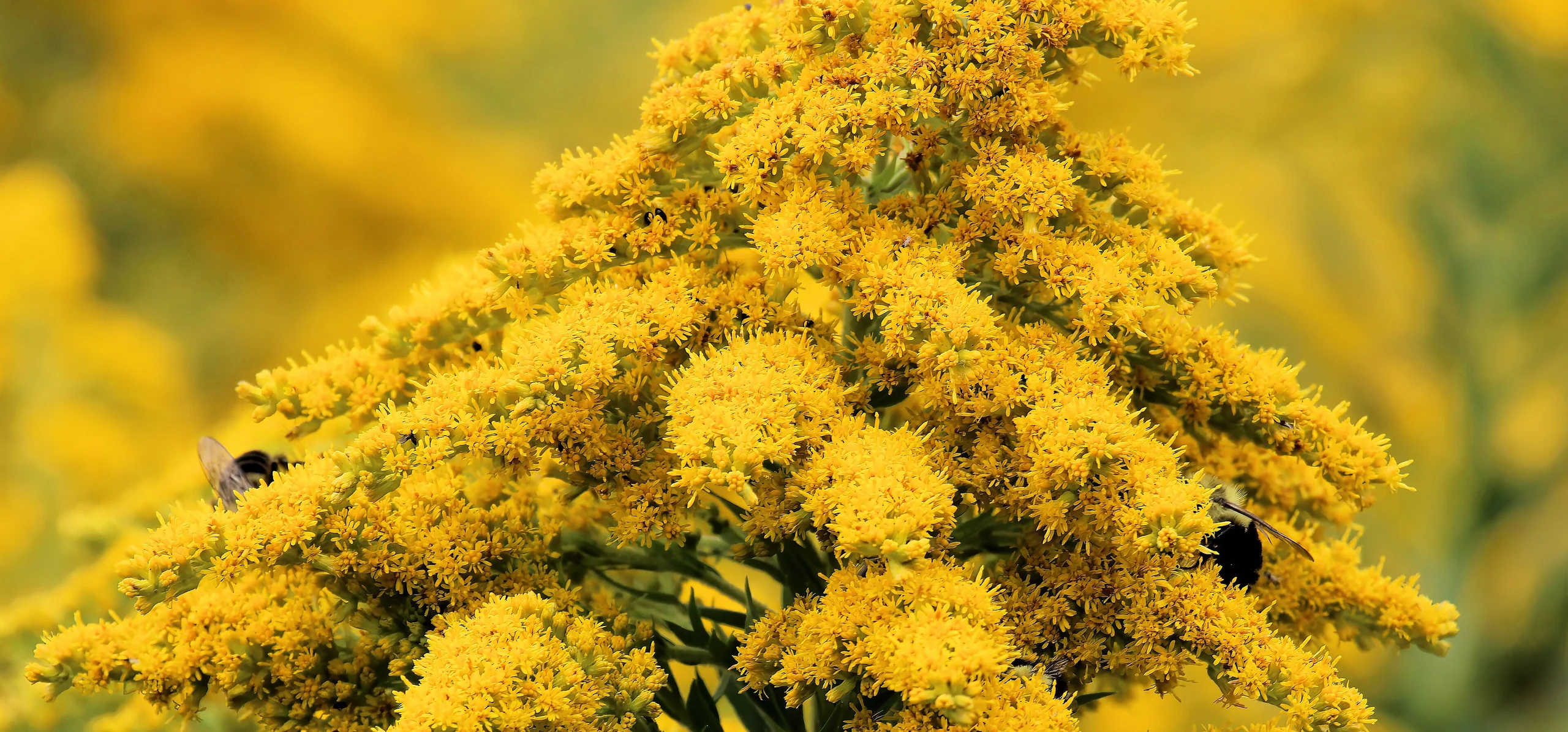
Canada goldenrod, Solidago canadensis, is a rhizomatous perennial native to a broad swathe of North America, from subarctic Canada down into the United States, according to Kew's Plants of the World Online. It is not the plant to blame for your late-summer sniffles; more on that further down. What you are looking at is a clump-forming member of the daisy family that sends up clusters of upright, downy stems each spring from an expanding mat of underground rhizomes, topped from late summer into early autumn by broadly conical, arching plumes of densely packed, tiny yellow flowers on one-sided branches. NC State Extension lists it growing 2 to 6 ft tall (60 to 183 cm) with a similar spread in typical conditions, while the RHS records UK garden clumps reaching 1.5 to 2.5 m in rich, well-tended borders, taking two to five years to fill out to full size. The genus is notoriously difficult to key out in the field; GBIF's record for this species alone carries ten historical synonyms, a reminder that goldenrods hybridize and vary enough that even botanists argue over where one species ends and the next begins.
Light and Site Selection
This is a full-sun plant, full stop. NC State Extension calls for 6 or more hours of direct light a day, and the RHS recommends a south- or west-facing, exposed position; the sturdy, hairy stems shrug off open, windy sites that would flatten softer perennials. Skimp on light and you get the classic goldenrod failure: stems that stretch toward the nearest gap in the canopy, then flop under the weight of their own flower plumes once they open. Give it the open ground it wants, at the back of a border, along a fence line, or scattered through a meadow planting, and the stems stay upright without staking.
Soil and Planting
Canada goldenrod is not fussy about soil type. Between the RHS and NC State Extension, it is documented growing well in clay, loam, sand and silt, tolerating acid, neutral and alkaline pH, provided drainage is reasonable. What it will not forgive for long is deep shade or a site that stays waterlogged through winter. Because the mature spread runs 120 to 183 cm, give new plants at least a metre of clearance from anything you do not want engulfed within a couple of seasons, or plan from day one to grow it inside a sunken barrier (see below). Set new divisions or nursery plants at the same depth they were growing, water in well, and expect visible new shoots within the first few weeks of a spring planting.


Watering
Despite its reputation as a tough roadside weed, this is a medium-water plant rather than a drought specialist: NC State Extension describes its preferred soil moisture as consistently moist but not wet. New plantings need regular water through their first season while the rhizome network establishes; once a clump is settled in, it copes with the odd dry spell but slows down and drops lower leaves if the ground stays parched for weeks. The plants you see thriving on dry verges are usually old, deeply rooted colonies rather than proof that the species likes to go thirsty.
Controlling Its Spread
This is the section most gardeners outside North America actually need. The RHS states plainly that Canada goldenrod has the potential to become a nuisance if not managed well, and CABI's compendium lists it as invasive outside its native range, particularly across parts of Europe and Asia, where escaped garden plants have spread by rhizome into meadows and roadsides and crowded out native vegetation. In the ground, sink a solid barrier, a bottomless pot or a strip of edging at least 20 to 25 cm deep, around the planting to stop rhizomes wandering. In a border without a barrier, expect to dig out the advancing edge of the clump every year or two. Deadhead or cut the flower plumes before the seed fluff disperses if you are anywhere near wild land, self-seeding is the second route this plant uses to escape a garden.
Deadheading, Cutting Back and Propagation
The RHS specifically recommends cutting the plant back after flowering to prevent self-seeding, and it is a useful habit even where seeding is not a concern, tidy stems overwinter better than ones left to collapse under autumn rain. Cut spent stems down to a few centimetres above the crown once the flowers have browned off. To make more plants deliberately, lift and divide a clump in spring, each rooted rhizome section with a shoot or two will re-establish quickly, this is also the only propagation method that keeps the spread genuinely under your control, since seed-grown plants turn up wherever the fluff lands.
Pollinators, Wildlife and the Ragweed Myth
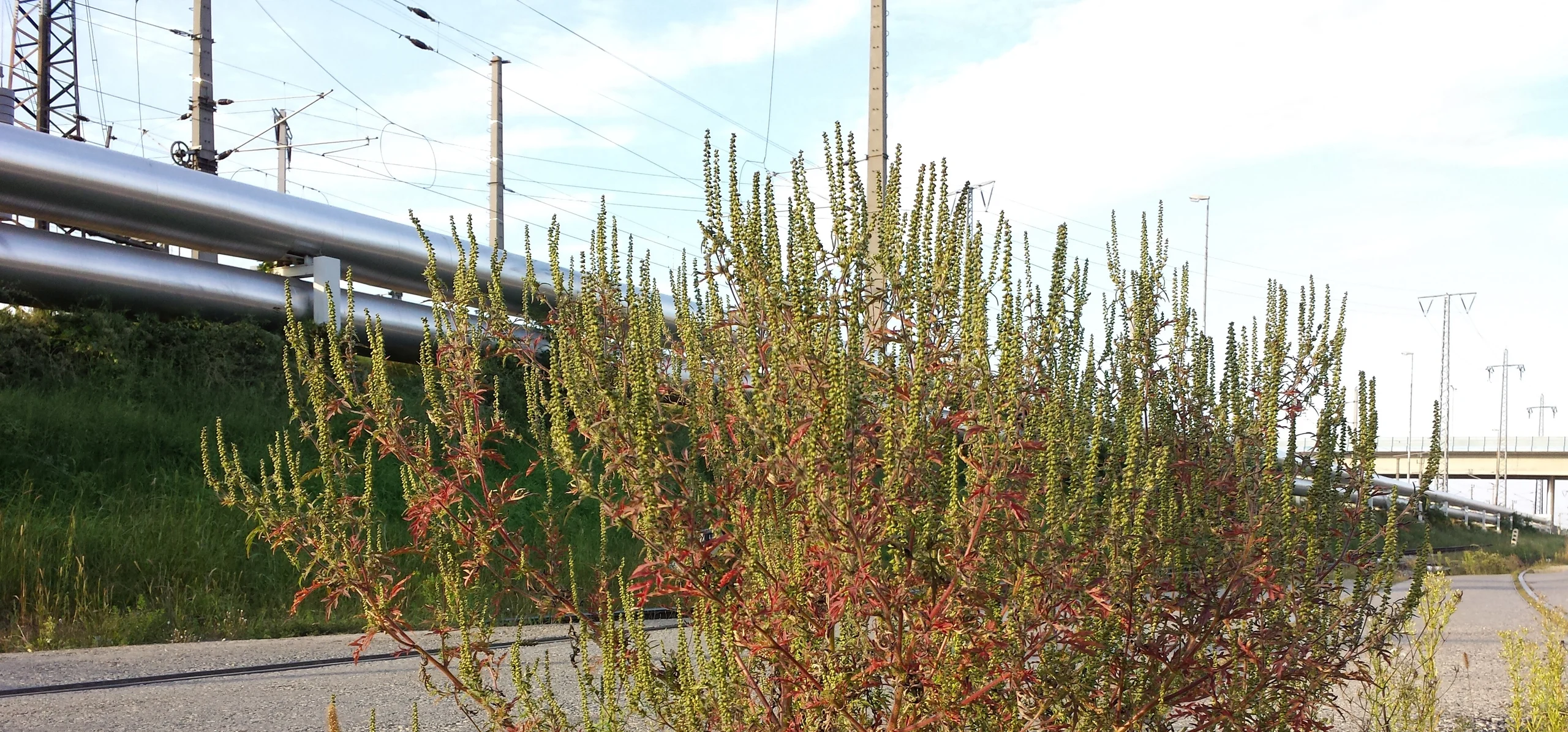
NC State Extension notes the pollen and nectar draw in a wide range of pollinators, including monarch butterflies, that the foliage supports Wavy-lined Emerald moth larvae, and that deer browse the leaves and flowers while birds take the seed later in the season. This wildlife value is the strongest argument for growing it in a dedicated meadow patch rather than ripping it out on sight. It is also, ironically, the plant most commonly and wrongly blamed for autumn hay fever. University of Illinois Extension is direct about the mechanism: goldenrod is insect-pollinated and produces pollen grains too heavy to travel on the wind, while ragweed, which flowers at the same time, is wind-pollinated and releases millions of lightweight grains that do the actual damage to allergy sufferers. If goldenrod is blooming in a vase on your table, it is there because someone cut it, not because it is drifting through the air toward your sinuses.
Pests, Disease and Pet Safety
Established plants are largely trouble-free; the main disease risk noted by the RHS is powdery mildew, more likely on crowded stems with poor air circulation than on an open, well-spaced clump. A search of aspca.org turns up no dedicated entry for Canada goldenrod, so no toxicity claim, safe or unsafe, can be made on ASPCA's authority; treat it with the same caution you would any unlisted plant around pets that like to chew on greenery.
Test your plant knowledge
Tap a card to flip it and reveal the answer.
Canada goldenrod causes seasonal hay fever in people who touch or brush past it. Tap to reveal ✕ False
Left undivided, a clump of Canada goldenrod will stay the same size for years. Tap to reveal ✕ False
It needs full sun to flower and stand upright well. Tap to reveal ✓ True
The ASPCA lists Canada goldenrod as toxic to cats and dogs. Tap to reveal ✕ False
Cutting the flower heads back after bloom helps stop it self-seeding into nearby beds. Tap to reveal ✓ True
Sources
References consulted for this guide
- GBIF: Solidago canadensis L.gbif.org
- RHS: Solidago canadensis (Canadian goldenrod)rhs.org.uk
- NC State Extension Gardener Plant Toolbox: Solidago canadensisplants.ces.ncsu.edu
- CABI Compendium: Solidago canadensis (Canadian goldenrod) datasheetcabi.org
- University of Illinois Extension: Autumn allergies, don't blame goldenrodextension.illinois.edu
- Reference entity : Wikipédiaen.wikipedia.org