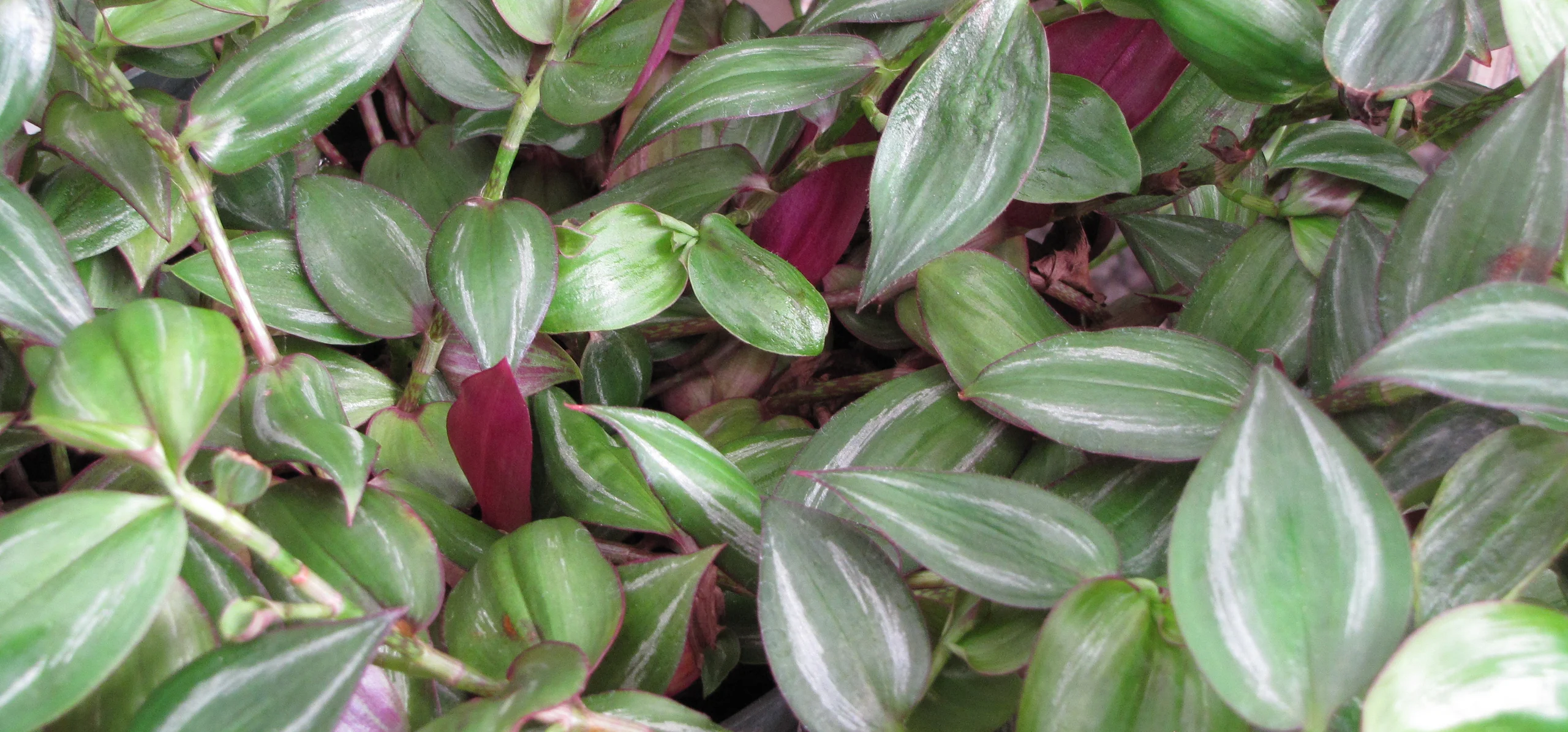
Inch Plant
Tradescantia zebrina
Family · Commelinaceae
Tradescantia zebrina colors best under strong light, roots from almost any cut node, and rots fast in soggy soil. Here is the full care routine.
Tradescantia zebrina
Plant profile
- WateringModerateWater every 7 days
- Light exposurePartial sun
- Humidity40–70 %
- Hardiness zoneUSDA 8–12
Growth
- Family
- Commelinaceae
- Life cycle
- Perennial
- Growth speed
- 8/10
- Mature size
- 15–23 cm
- Spread
- 30–61 cm
- Flowering
- Small three-petaled pink-lavender flowers, sporadic and rare on indoor plants
- Propagation
- Cutting
DormancyNo true dormancy; growth slows indoors in winter with lower light and cooler temperatures
Time to maturityFills a hanging basket within a single growing season
Soil & climate
- Soil types
- Loam, Sand, Well-drained potting mix
- Drought tolerance
- No
Light & Placement
- Origin
- Mexico to Colombia (POWO)
- Where to place it
- Bright east- or west-facing window
- Hanging basket set back from a south-facing window
- Under a grow light in rooms without direct sun
- Filtered sun to partial shade bed in USDA zones 8-12 (MOBOT)
- Bright porch or patio out of the hottest afternoon sun
- Hanging basket to let the stems trail
Safety
- Toxicity
- HumansToxic
Invasive speciesNaturalized outside its native range in parts of Australia, the Pacific and other warm, humid regions, where it forms dense mats along disturbed forest edges and waterways (CABI)
Data fromTradescantia zebrina Bosse, GBIF BackbonTradescantia zebrina Bosse, Plants of thTradescantia zebrina, Missouri BotanicalTradescantia zebrina, North Carolina StaTradescantia zebrina (wandering jew), CA
Where it grows
World distribution
Inch Plant is native to 9 countries: Belize, Colombia, Costa Rica, El Salvador, Guatemala, Honduras, Mexico, and Nicaragua….GBIF records 8,666 documented identifications across 135 countries, with the largest concentrations in Brazil, Taiwan, and Mexico.
- Belize
- Colombia
- Costa Rica
- El Salvador
- Guatemala
- Honduras
- Mexico
- Nicaragua
- Panama
Yellow to orange dots: concentration of documented identifications per country. Green countries: sourced native range. Source: GBIFNative range from POWO (Kew).
Identifying Tradescantia Zebrina and Its Varieties
If you just brought home a hanging basket of glossy, striped leaves that trail over the pot's edge, you are almost certainly looking at Tradescantia zebrina, sold as inch plant or silver inch plant. The leaves are fleshy and pointed, blue-green above with two broad silvery bands running the length of each leaf and a solid deep purple underside that shows whenever a stem twists or curls. The common name comes from how closely the leaf nodes sit along the stem, often close to an inch apart, which is also why the plant roots and fills a container so fast.
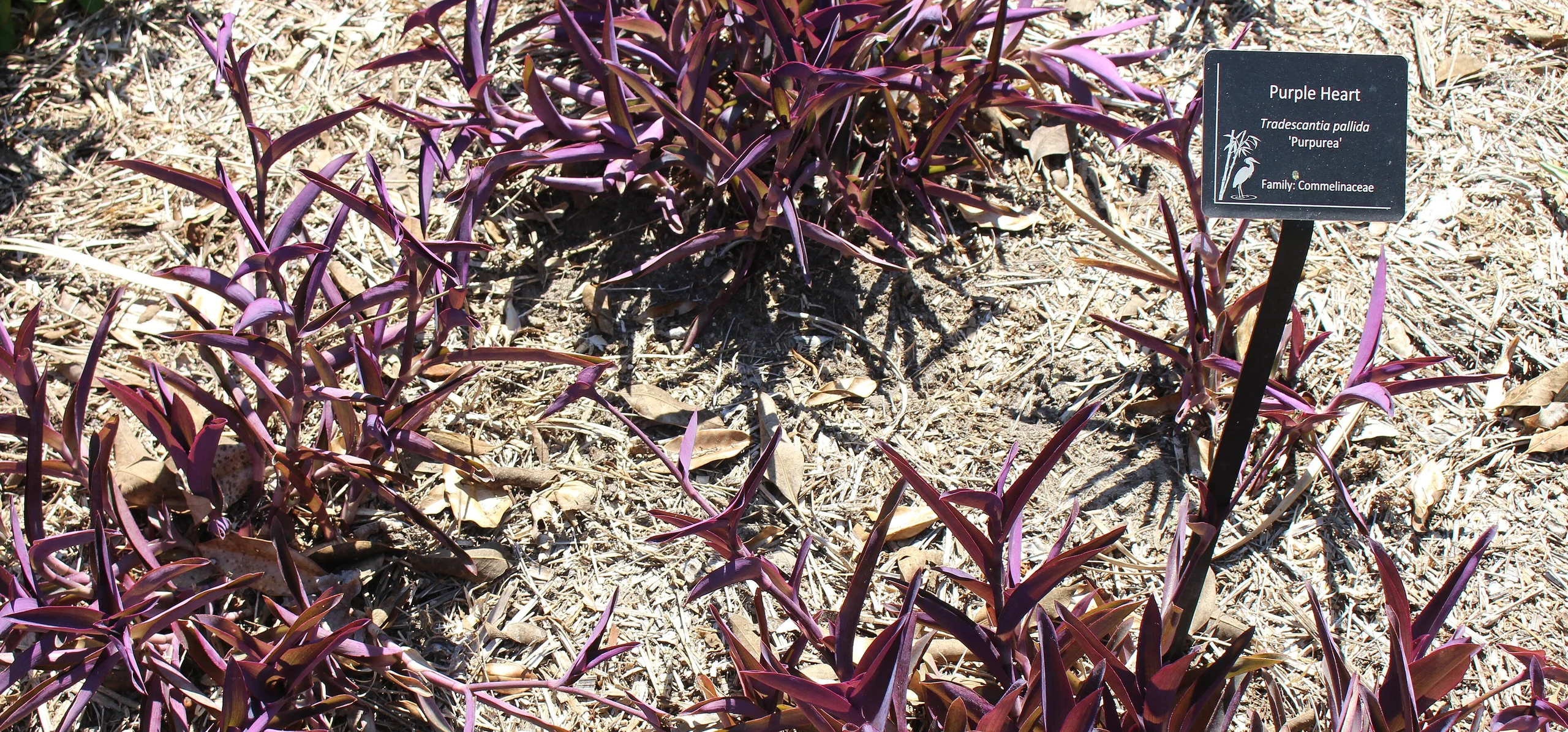
Three varieties are recognized in the wild (var. zebrina, var. flocculosa, var. mollipila), and nurseries sell several selected forms with pink, cream or deeper purple striping. It is easy to confuse with two relatives sold under similar names: Tradescantia pallida has solid purple, unstriped leaves and thicker, more succulent stems, while Tradescantia fluminensis has plain green leaves with no silver pattern at all. Checking for the striped, two-tone leaf is the fastest way to confirm you have zebrina rather than one of its cousins.
Light and Leaf Color
Leaf color in this plant tracks light almost directly. Filtered or bright indirect light keeps the silver stripes crisp and the undersides a deep magenta-purple; a few hours of direct morning or evening sun intensifies the contrast further. Move a plant into a dim corner, though, and new growth stretches toward the light source, internodes lengthen, and the pattern washes out toward plain green within a few weeks. An east- or west-facing window is close to ideal indoors; a south-facing window works too, but plants set right against the glass in summer can scorch, so pull the basket back half a metre or filter the light with a sheer curtain.
Watering
Water when the top inch (about 2.5 cm) of soil has dried out, then water thoroughly until it runs from the drainage holes. The trailing stems go visibly limp when the plant is thirsty and firm back up within a few hours of a good soak, which makes it one of the easier houseplants to read. Cut back noticeably from fall through late winter, when growth slows with the shorter days; soil that stays wet in this cooler period is the most common way to lose stems to rot at the base. A pot without drainage holes is asking for trouble with a plant this eager to sit in a puddle.


Soil and Potting
Tradescantia zebrina is not fussy about soil texture, growing well in loam or sandier mixes across a wide pH range from acid to alkaline, but drainage matters more than composition. A standard peat- or coir-based potting mix loosened with a handful of perlite or coarse sand per pot drains fast enough to keep the shallow root system from sitting wet. Because the plant is a trailer rather than a deep grower, a shallow, wide pot or a hanging basket suits it better than a tall one, and repotting is rarely urgent since the roots stay compact even as the top growth spreads.
Propagation from Cuttings
Few houseplants root as willingly as this one. Snip a stem tip just below a leaf node, strip the bottom leaf, and set the cut end in a glass of water or directly into moist potting mix; no rooting hormone is needed, and new roots typically appear within one to two weeks. The same trick works by layering: press a length of stem against moist soil in the same pot or a neighbouring one, and roots form wherever a node touches the surface. This is the standard way to renew an aging plant, since cuttings from healthy tip growth root and fill out faster than trying to revive old, leggy stems.
Pruning and Renewing Leggy Growth
Stems that trail too long tend to thin out near the base, with color and leaf size dropping off toward the older growth. The plant tolerates heavy cutting back without complaint, and pinching the growing tips regularly encourages branching, so a basket stays fuller for longer if you prune before it gets straggly rather than after. Many growers simply replace a tired plant every year or two: take a generous handful of tip cuttings, root them together in the same pot, and let the new growth take over as the old stems are cut away.
Pests, Diseases and Common Problems
Aphids, mealybugs, scale, whiteflies and spider mites can all turn up on this plant, particularly on stressed specimens kept too dry or too dim; check the undersides of leaves and the leaf axils where pests hide. Wipe or spray infestations off promptly, since the soft, fast-growing stems can decline quickly under a heavy pest load. On the disease side, root and stem rot follow soggy soil, and fungal leaf spot shows up where plants are crowded together or where water sits on the foliage overnight, so water at the base rather than misting the leaves and give plants enough space for air to move between them.
Toxicity, Pet Safety and Growing Outdoors
The watery sap causes skin irritation in sensitive people and mouth or stomach upset if chewed, so keep cuttings away from children and curious pets during propagation. The ASPCA database does not carry an entry for Tradescantia zebrina by name; it does list the closely related Tradescantia fluminensis, sold under the same common names of wandering jew and inch plant, as toxic to dogs, cats and horses with dermatitis as the main sign. Given how often these two species get mixed up on nursery tags, treating zebrina with the same caution is the sensible approach even though it is not individually listed.
Outdoors, the plant survives winters only in USDA zones 8 to 12, according to the Missouri Botanical Garden; everywhere colder it is grown strictly as a houseplant or a seasonal hanging basket. In warm, humid climates outside its native range from Mexico to Colombia, discarded cuttings root wherever they land, and the species has naturalized in parts of Australia and the Pacific, forming dense mats along disturbed forest edges and waterways. Compost spent stems rather than tossing them over a garden fence in a mild climate.
Test your plant knowledge
Tap a card to flip it and reveal the answer.
Tradescantia zebrina needs strong light to keep its silver-striped, purple-backed leaf pattern. Tap to reveal ✓ True
The ASPCA lists Tradescantia zebrina by its own name as toxic to cats and dogs. Tap to reveal ✕ False
A cut stem with a leaf node will root simply by sitting in a glass of water. Tap to reveal ✓ True
Tradescantia zebrina should be watered on a fixed daily schedule year-round. Tap to reveal ✕ False
In warm, humid climates outside its native range, Tradescantia zebrina can escape gardens and spread into wild areas. Tap to reveal ✓ True
Sources
References consulted for this guide
- Tradescantia zebrina Bosse, GBIF Backbone Taxonomygbif.org
- Tradescantia zebrina Bosse, Plants of the World Online (Kew)powo.science.kew.org
- Tradescantia zebrina, Missouri Botanical Garden Plant Findermissouribotanicalgarden.org
- Tradescantia zebrina, North Carolina State Extension Gardener Plant Toolboxplants.ces.ncsu.edu
- Tradescantia zebrina (wandering jew), CABI Compendiumcabi.org
- Reference entity : Wikipédiaen.wikipedia.org