Creeping Inchplant
Callisia repens
Family · Commelinaceae
Callisia repens roots at every node as it trails; here is how much light the Pink Lady form needs to hold its color, and when to pinch it back.
Callisia repens
Plant profile
- WateringLittleWater every 9 days
- Light exposureIndirect light
- Ideal temperature16–27 °C
- Hardiness zoneUSDA 9–11
Growth
- Family
- Commelinaceae
- Life cycle
- Perennial
- Growth speed
- 8/10
- Mature size
- 10–15 cm
- Spread
- 60–120 cm
- Flowering
- Small white three-petaled flowers, sporadic and inconspicuous
- Propagation
- Cutting
- Offsets
DormancyNo true dormancy; growth slows in cool, low-light winters
Time to maturityFills a hanging basket within one growing season
Soil & climate
- Soil pH
- pH 5–6.5
- Soil types
- Free-draining potting mix with added perlite, Light, peat-free mix
- Drought tolerance
- Yes
Light & Placement
- Origin
- SE. Texas to tropical America
- Where to place it
- A few feet back from a bright south or west window
- Under a grow light for around 12 hours to hold Pink Lady color
- Partial shade with 2 to 6 hours of gentle morning sun (USDA zones 9 to 11)
- Shallow, wide pot or hanging basket to let the stems trail
- Terracotta for extra drainage
Safety
- Toxicity
- No ASPCA listing; sap and leaves contain calcium oxalate (NC State Extension)
- Pet safe
- No
Invasive speciesNaturalized and considered invasive in parts of South Africa, China and Cuba (NC State Extension)
Data fromCallisia repens (Jacq.) L., GBIF BackbonCallisia repens (Jacq.) L., Plants of thCallisia repens (Turtle Vine), NC State
Where it grows
World distribution
Creeping Inchplant is native to 29 countries: Antigua & Barbuda, Argentina, Aruba, Belize, Bolivia, Brazil, Cayman Islands, and Colombia….GBIF records 4,191 documented identifications across 87 countries, with the largest concentrations in Australia, Brazil, and Taiwan.
- Antigua & Barbuda
- Argentina
- Aruba
- Belize
- Bolivia
- Brazil
- Cayman Islands
- Colombia
- Costa Rica
- Cuba
- Curaçao
- Dominican Republic
Show 17 more countriesShow fewer countries
- Ecuador
- El Salvador
- French Guiana
- Guatemala
- Haiti
- Honduras
- Jamaica
- Mexico
- Nicaragua
- Panama
- Paraguay
- Peru
- Puerto Rico
- St. Lucia
- Trinidad & Tobago
- United States
- Venezuela
Yellow to orange dots: concentration of documented identifications per country. Green countries: sourced native range. Source: GBIFNative range from POWO (Kew).
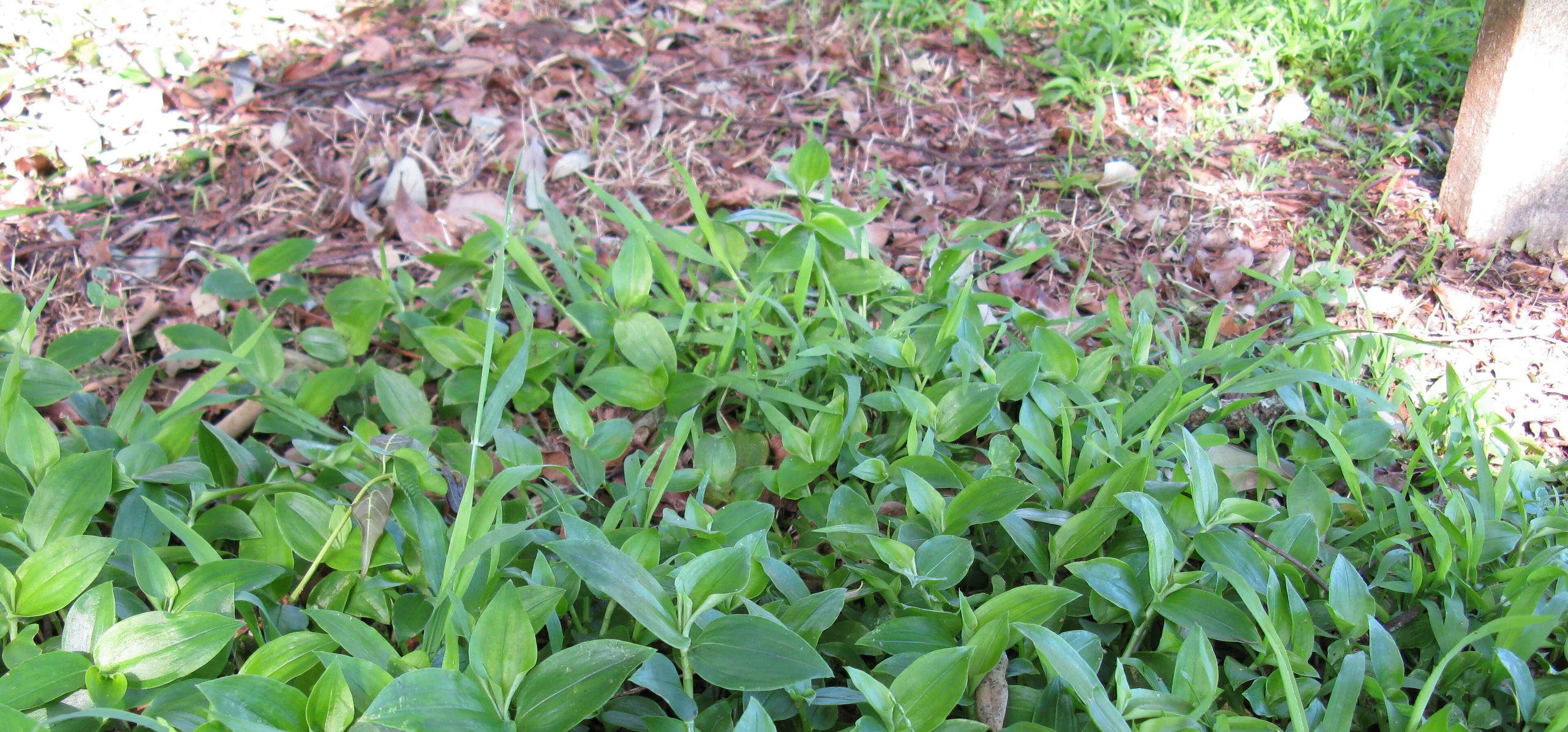
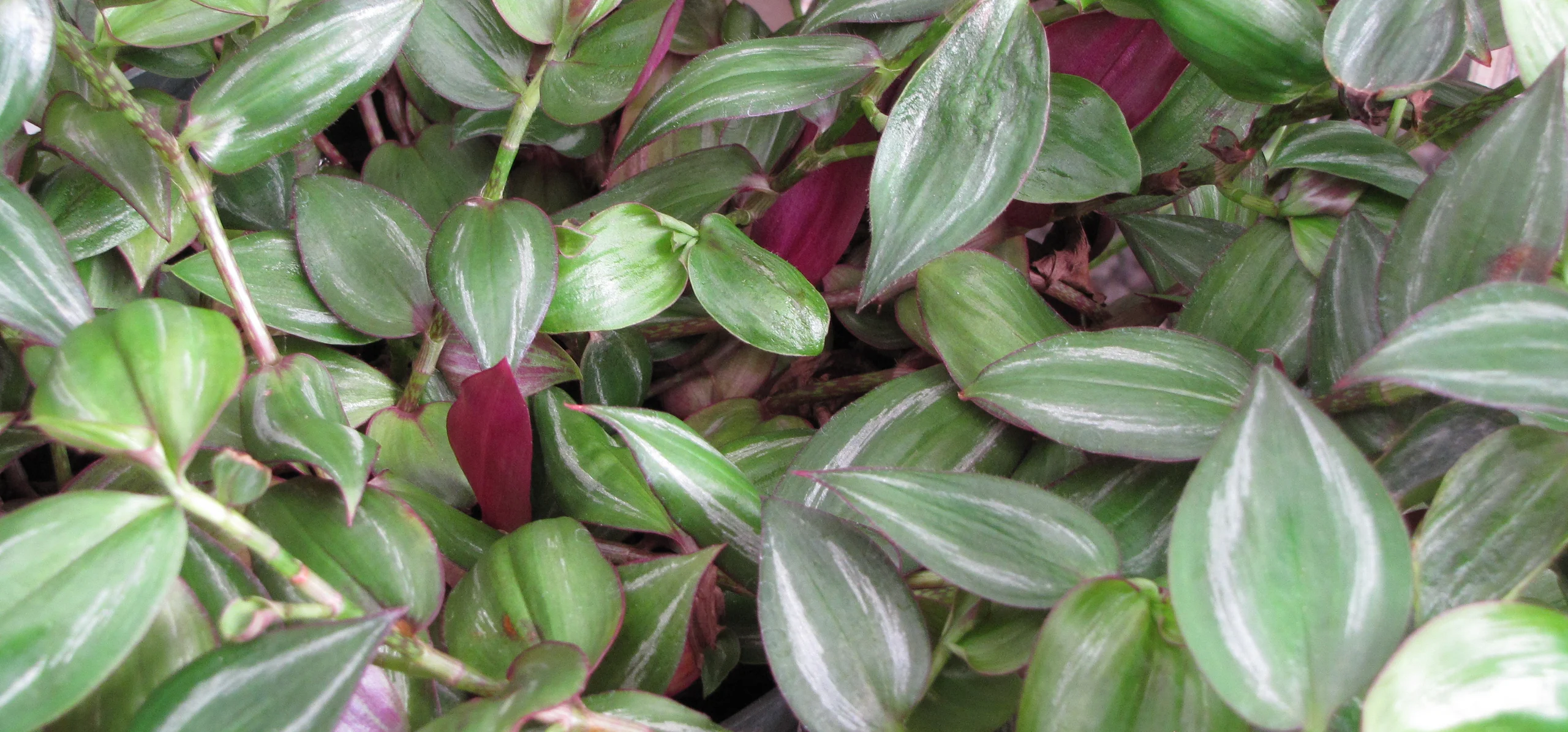
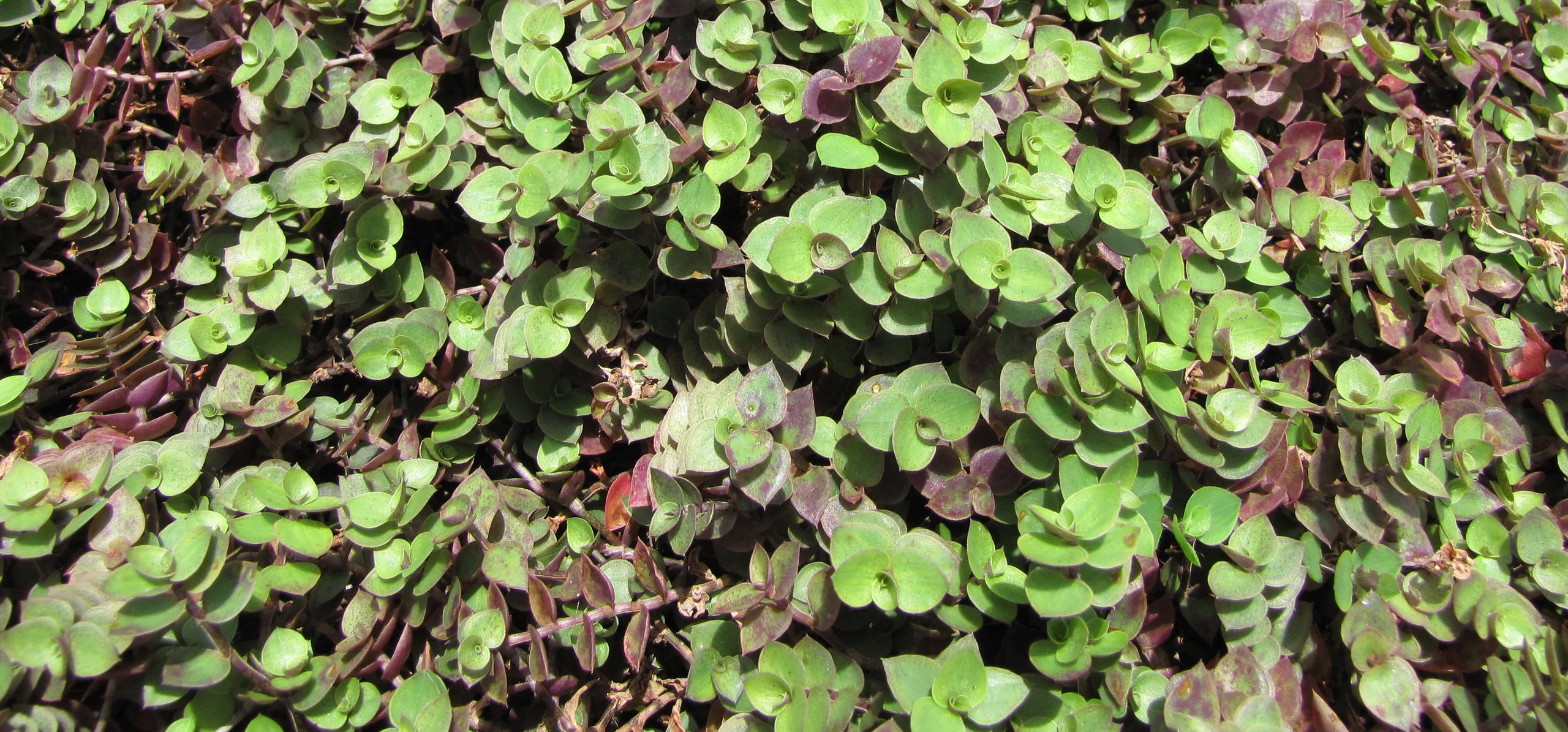
Callisia repens, sold as turtle vine or creeping inchplant, is a low, mat-forming trailer that roots at almost every leaf node as it grows, so a small starter pot can fill out a hanging basket within a single growing season. The plain green form carries small, rounded, fleshy leaves with a faint purple flush underneath; the popular 'Pink Lady' cultivar layers in cream and pink streaks that only hold their color under strong light. It is often mixed up with the plant most nurseries actually label "inch plant", Tradescantia fluminensis, because the common names overlap even though the two sit in different genera of the same family. Give it bright light, let the topsoil dry before watering again, and pinch the trailing stems back every few weeks, and it stays dense and cushion-like; skip the pinching and it thins into long, bare runners with leaves only at the tips.
A Commelinaceae trailer from tropical America, not the true inch plant
Plants of the World Online records the native range of Callisia repens as southeastern Texas down through tropical America, where it grows as a low annual or subshrub in seasonally dry tropical habitat, often as a groundcover under other vegetation. Outdoors it survives year-round only in USDA hardiness zones 9a to 11b, according to North Carolina State University's Extension Gardener Plant Toolbox; anywhere colder it has to come inside before the first frost, since it has no tolerance for freezing. The ASPCA's "Inch Plant" listing, worth knowing since the two plants share a nickname, actually names Tradescantia fluminensis, a different genus in the same Commelinaceae family; Callisia repens itself has no dedicated ASPCA entry.
Pink Lady variegation and why it reverts to green
The cream-and-pink 'Pink Lady' form carries its color only in the newest growth, and that pigment is light-dependent: a stem that trails into shade, behind furniture or deep inside a hanging basket, pushes out plain green leaves instead, a process growers call reversion. Once a stem has reverted it stays green; the pigment does not return on its own, so the only fix is to trace that runner back to where the color was still present and snip it off, freeing the plant's energy for stems that are still variegated. Because reverted growth is also usually more vigorous than the variegated kind, left unchecked it will gradually take over the whole pot, which is why pinching out plain green stems as soon as they appear matters more with this cultivar than with the plain species.
Light and placement
Outdoors this species takes partial shade, tolerating direct sun for roughly two to six hours a day before the foliage scorches, per the same NC State reference; indoors that translates to a spot a few feet back from a bright south or west window, or a few hours of gentle morning sun on an east sill. Too little light shows up fast: internodes stretch, the mat thins into loose trailing threads instead of a dense cushion, and on 'Pink Lady' the new leaves come in plain green rather than streaked. A shallow, wide pot or hanging basket on a bright windowsill, or under a grow light run for around twelve hours a day, keeps growth compact and keeps the variegation from fading.


Watering
Water when the top of the mix has dried, then soak thoroughly and let it drain; the fleshy, water-storing leaves cope with a missed watering far better than with soil that stays wet, and the extension guidance is explicit that overwatering is what leads to root and stem rot in this species. Because the stems root wherever they touch damp soil, a pot that is kept too wet often shows soft, blackened patches low on the mat before the leaves themselves show any stress, so it is worth parting the foliage occasionally to check the stems at soil level. Cut back on watering further once light and temperatures drop in winter, since growth slows and the roots take up far less.
Soil, potting and feeding
NC State's guidance calls for an acid mix, below pH 6.0 and ideally between 5.0 and 6.5, that drains freely; a standard peat-free potting mix loosened with extra perlite or coarse sand gives the fast drainage the roots need while still holding some moisture between waterings. Because the plant spreads sideways rather than digging deep, a shallow, wide container suits it better than a tall one, and it is happy to be slightly pot-bound for a season before it needs moving up a size. Feed with a balanced liquid fertiliser diluted to about half strength every three to four weeks through spring and summer, and stop once growth slows in autumn; a plant fed year-round tends to push soft, pale growth that flops rather than trails cleanly.
Pinching for a dense trailing mat
Left alone, the stems keep extending from the tips without branching much, so a pot that starts full soon opens up into bare runners with a tuft of leaves only at the very end. Pinching off the growing tip of each stem, just above a leaf pair, forces two new shoots to break from the nodes below it, and repeating this every few weeks through the growing season is what keeps the classic dense, cushion-like mound rather than a handful of long trailing strings. The pinched tips are not waste: each one roots easily and can go straight back into the same pot to thicken it further, or into a fresh one to start a new plant.
Propagating from stem cuttings
This is one of the easiest houseplants to multiply, since any stem segment with a node roots on its own wherever it touches moist soil or sits in water. A two to three inch tip cutting, with the lowest leaf or two removed, pushed a node deep into the same free-draining mix as the parent plant and kept lightly moist, typically shows new roots within one to two weeks; cuttings started in a glass of water root just as readily and can be potted on once the roots reach an inch or so. Several cuttings pressed into one pot, rather than a single stem, is the fastest way to grow a full, dense mat instead of waiting for one plant to branch out on its own.
Common mistakes, pests and pet safety
The most frequent problem is not disease but neglect of shape: an unpinched plant left to trail for a year or two ends up bald in the center with growth only at the pot's edge, and the fix is the hard pinch described above rather than more fertiliser or water. Mealybugs, which lodge in the tight leaf axils along the stems, are the pest most likely to turn up, showing as small cottony tufts that are easiest to remove with a cotton swab dipped in rubbing alcohol before they spread through the whole mat. On safety, Callisia repens has no specific ASPCA listing, unlike its Tradescantia lookalike, but NC State's extension notes that its leaves and sap contain calcium oxalate crystals of medium toxicity, capable of causing mouth irritation and vomiting if chewed and skin irritation from contact with the sap; the same source lists it as naturalized and considered invasive in parts of South Africa, China and Cuba, so spent cuttings are best composted rather than tossed outdoors in warm climates. Treat it with the same caution as its Tradescantia relative and keep the trailing stems out of reach of a cat or dog that likes to chew foliage.
Test your plant knowledge
Tap a card to flip it and reveal the answer.
'Pink Lady' foliage that grows in low light fades back to plain green. Tap to reveal ✓ True
The ASPCA's 'Inch Plant' toxicity listing refers to Callisia repens. Tap to reveal ✕ False
Regularly pinching the growing tips keeps the plant dense instead of leggy. Tap to reveal ✓ True
Stem cuttings with a node root readily in soil or water. Tap to reveal ✓ True
Callisia repens survives outdoor winters with hard frost in any climate. Tap to reveal ✕ False
Sources
References consulted for this guide
- Callisia repens (Jacq.) L., GBIF Backbone Taxonomygbif.org
- Callisia repens (Jacq.) L., Plants of the World Online (Kew)powo.science.kew.org
- Callisia repens (Turtle Vine), NC State Extension Gardener Plant Toolboxplants.ces.ncsu.edu
- Reference entity : Wikipédiaen.wikipedia.org