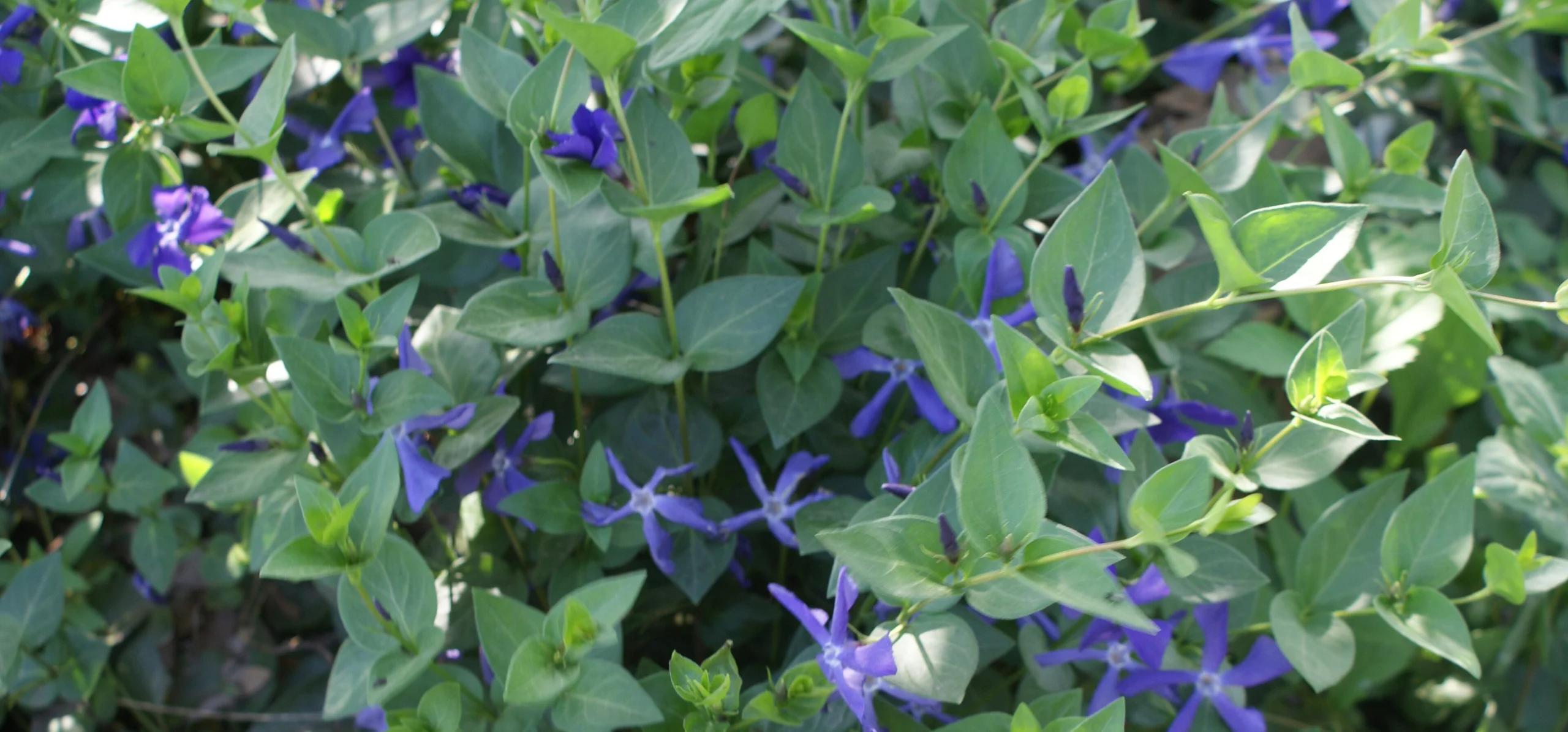
Greater Periwinkle
Vinca major
Family · Apocynaceae
Vinca major roots wherever a stem tip touches soil, outruns the neater Vinca minor, and turns invasive on stream banks in California, Australia and New Zealand.
Vinca major
Plant profile
- WateringLittleWater every 12 days
- Light exposurePartial shade
- Hardiness zoneUSDA 7–9
Growth
- Family
- Apocynaceae
- Life cycle
- Perennial
- Growth speed
- 8/10
- Mature size
- 15–45 cm
- Spread
- 60–500 cm
- Propagation
- Cutting
- Division
- Layering
FloweringViolet-blue, five-petaled flowers from spring into summer, heaviest on stems with some direct sun
DormancyEvergreen; foliage persists year-round though it can scorch in hard freezes at the cold end of its range
Time to maturityFull groundcover mat within one to two seasons
Soil & climate
- Soil types
- clay, loam, sand
- Drought tolerance
- Yes
Light & Placement
- Where to place it
- dry shade groundcover under deciduous trees where grass fails
- bank or slope to hold soil
- shady border edge, kept clear of watercourses and wild land
OriginNative to southern Europe through to the Caucasus (POWO); naturalized across much of the temperate world
Safety
- Toxicity
- CatsToxic
- DogsToxic
- HorsesToxic
Invasive speciesUC Davis's invasive plant listing rates it a severe ecological threat spreading through California's coastal counties, foothills and Central Valley; CABI records it as an invasive weed of stream banks and woodland understorey in New Zealand, where it smothers native vegetation and blocks tree regeneration, and as a listed environmental weed in southern Australia
Data fromGBIF: Vinca major L.POWO: Vinca major L.ASPCA: Toxic and Non-Toxic Plants, PeriwMissouri Botanical Garden Plant Finder: NC State Extension Gardener Plant ToolboCABI Compendium: Vinca major (Big periwi
Where it grows
World distribution
Greater Periwinkle is native to 10 countries: Albania, Bulgaria, Croatia, France, Georgia, Greece, Italy, and Lebanon….GBIF records 159,478 documented identifications across 102 countries, with the largest concentrations in United Kingdom, France, and United States.
- Albania
- Bulgaria
- Croatia
- France
- Georgia
- Greece
- Italy
- Lebanon
- Russia
- Türkiye
Yellow to orange dots: concentration of documented identifications per country. Green countries: sourced native range. Source: GBIFNative range from POWO (Kew).
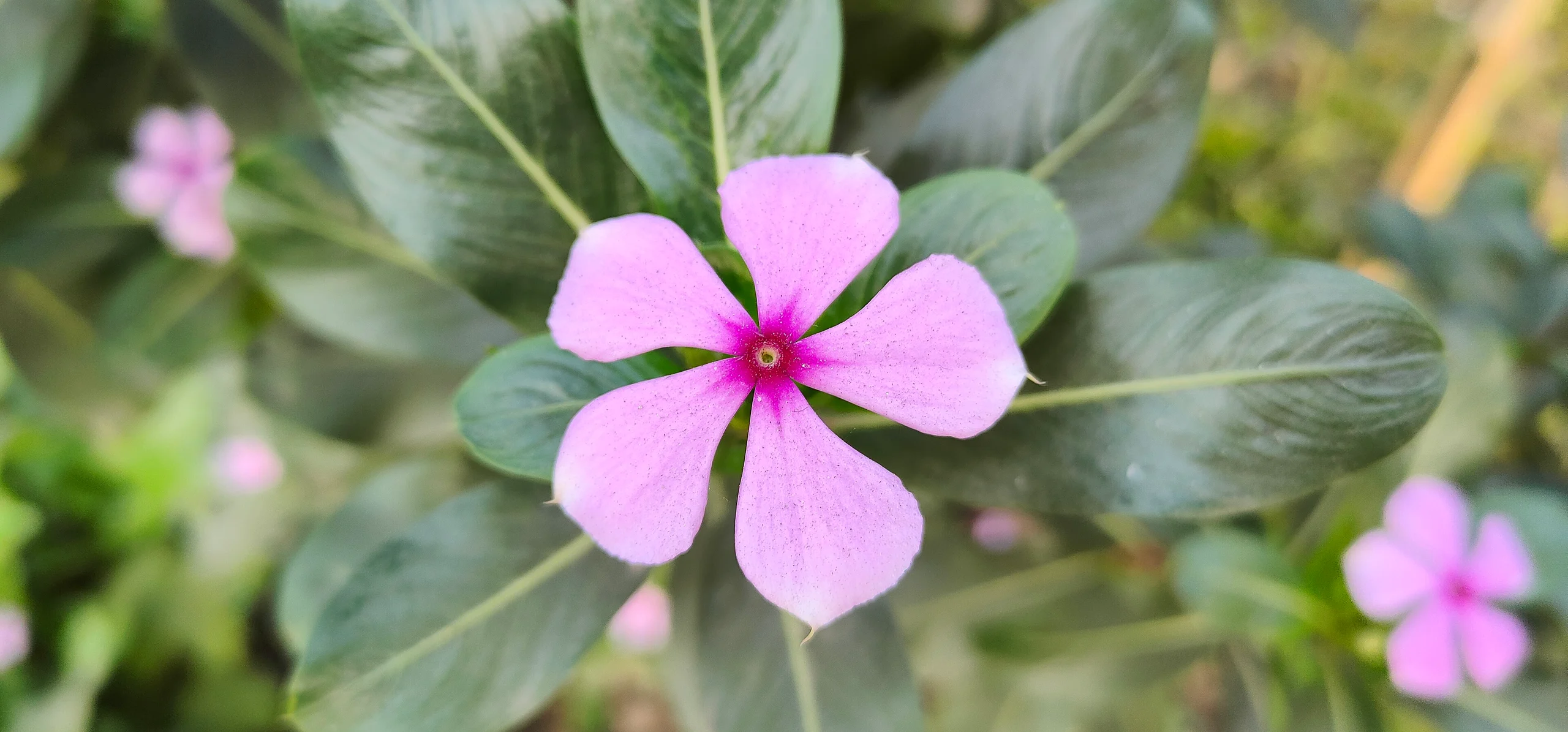
Greater periwinkle (Vinca major) is the taller, coarser relative of the two periwinkles sold as groundcover. GBIF records it as Vinca major L. in the milky-sapped dogbane family Apocynaceae, and it earns its keep in exactly the spot most flowering plants refuse: dry shade under a mature tree, where grass thins to bare dirt and few groundcovers hold on. Glossy oval leaves carry violet-blue, five-petaled flowers from spring into summer, and an established planting shrugs off drought, root competition and an annual haircut to the ground. That same toughness is a warning too: this is a species that has jumped garden walls to become a listed invasive weed on three continents, and every part of it is toxic to pets.
Origin and the Case for Dry Shade
POWO lists the native range of Vinca major as southern Europe through to the Caucasus, and the species has been carried into gardens well beyond that range for centuries. Its usual job in a modern garden is filling the ring of dry, root-filled shade under an oak, beech or conifer, ground that starves grass and most bedding plants of light and water at once. Missouri Botanical Garden rates it easily grown in average, dry to medium, well-drained soil, tolerant of a wide pH range, and content anywhere from full sun to full shade, though it flowers best with some direct light.
'Variegata' and the Plain Species
The species itself runs plain matte to glossy green, but the cultivar most sold in nurseries is 'Variegata', leaves edged cream to pale yellow around a green centre; the RHS has given it an Award of Garden Merit and lists it as an evergreen sub-shrub to about 45cm, a mix of upright flowering stems and long trailing rooting ones. Cream margins read brighter in a shaded corner than plain green, which is most of why 'Variegata' outsells the species for underplanting shrub borders. As with most variegated groundcovers, an occasional shoot reverts to solid green; green tissue grows faster than variegated tissue, so a reverted stem left in place will eventually swamp the patterned growth around it and should be cut out at its base, not just pinched at the tip.
Rooting at Every Stem Tip: How Far It Runs, and Where Vinca minor Stops
Vinca major spreads two ways at once: long, arching, non-flowering stems that root wherever a tip touches soil, plus a slower creep from the base. NC State Extension records its growth rate as rapid, with an ability to root at nodes that lets it form a dense mat over a wide area within a couple of seasons. Missouri Botanical Garden describes established patches spreading indefinitely, reaching 2 to 5 metres across, well beyond the plant's own 15 to 45cm height, which is why one unclipped clump can smother neighbouring perennials in a single season. Vinca minor, the smaller periwinkle it is often confused with, is the neater relative: shorter leaves, a lower and denser mat, and creeping stems that root along their length rather than sending out long runners, so it stays close to where it was planted instead of colonizing the bed next door.


Cutting Back Hard in Spring
The trade-off for that speed is a planting that gets leggy, with bare woody centres under a tangle of overlapping runners by the second or third year. Clemson Cooperative Extension's guide to growing periwinkle recommends shearing it close to the ground occasionally to bring on fresh growth, and notes the technique applies particularly to Vinca major rather than to the shorter Vinca minor. The best window is late winter to very early spring, before new growth starts: cut the planting back to 5 to 10cm with a string trimmer or hedge shears, rake off the old foliage, and it answers with a flush of new leaves within weeks, denser than growth left to run untouched for years. Skipping this for several seasons running is the most common reason a planting looks thin and woody instead of the tight, glossy mat it can be.
Soil, Light and Watering
Missouri Botanical Garden lists it for clay, loam or sandy soil across a wide pH range, the one firm exclusion being ground that stays wet, where the crown and roots rot. New plantings need regular water through their first growing season while roots establish; after that, established Vinca major is genuinely drought tolerant and looks for supplemental water only in extended dry spells. Light tolerance runs from full sun to full shade, wider than almost any other flowering groundcover, but full sun with average water pushes the most flowers, while deep shade favors leaf cover over bloom, the trade most gardeners planting it under a tree are happy to make.
Rust and Other Problems
The disease most specific to this genus is vinca rust, caused by the fungus Puccinia vincae: infected leaves turn chlorotic with faint spotting on the upper surface while the underside develops dark, powdery uredinia, heavily infected leaves curl upward, and affected shoots typically stop flowering. A documented outbreak in a California planting spread from a handful of symptomatic plants to 80 to 90 percent of the bed within about a year, and the fungus needs no alternate host to persist season to season. There is no fungicide cure once leaves show symptoms; the practical response is to remove infected foliage, avoid overhead watering that keeps leaves wet, and lean on the annual hard cutback above, which strips out infected growth before the fungus spreads further. Root rot and leaf spot from wet soil are the other recurring complaints, both traced to the same cause: ground that does not drain.
An Invasive Plant in California, Australia and New Zealand, and How to Remove It
Vinca major has escaped cultivation on at least three continents. The University of California's invasive plant listing records it spreading through most of the state's coastal counties, foothill woodlands, the Central Valley and even desert counties, rating its ecological impact severe for how it lowers plant diversity once it displaces native ground cover. CABI's compendium entry lists it as an environmental weed of southern Australia and records it forming dense mats on stream banks that smother the native vegetation of riverine understorey and block young trees and shrubs from regenerating, the same streambank behavior that has put it on New Zealand's environmental weed lists. The mechanism behind all three listings is the one already described above: any rooted stem fragment left in the ground restarts the patch. Removing an established planting means digging out the whole root mat rather than cutting the top growth, tracing runners to their rooted tips, and bagging every fragment for disposal rather than composting it or leaving cut stems on damp soil nearby, where they will simply root again.
Toxic to Pets, and Some Use to Early Bees
The ASPCA lists periwinkle as toxic to dogs, cats and horses, with vinca alkaloids as the toxic principle and vomiting, diarrhea, low blood pressure, tremors and, in severe cases, seizures among the reported signs, reason enough to keep trimmings away from pets after a cutback. The violet-blue flowers do draw honeybees and bumblebees in spring, useful as one of the earlier nectar sources in a shaded bed before most perennials open, though vinca is not a heavy bloomer once summer heat arrives. It is a plant better valued for covering difficult ground reliably than for feeding a pollinator garden, a secondary benefit rather than a reason to plant it.
Test your plant knowledge
Tap a card to flip it and reveal the answer.
Vinca major spreads mainly by rooting at the tip of long arching stems wherever they touch the ground. Tap to reveal ✓ True
Vinca minor is the larger, more vigorous periwinkle, and it spreads faster than Vinca major. Tap to reveal ✕ False
The ASPCA lists periwinkle as toxic to dogs, cats and horses because of vinca alkaloids. Tap to reveal ✓ True
Vinca major is considered invasive only in California, not in Australia or New Zealand. Tap to reveal ✕ False
Shearing Vinca major back close to the ground in late winter or early spring is a standard way to renew the foliage. Tap to reveal ✓ True
Sources
References consulted for this guide
- GBIF: Vinca major L.gbif.org
- POWO: Vinca major L.powo.science.kew.org
- ASPCA: Toxic and Non-Toxic Plants, Periwinkleaspca.org
- Missouri Botanical Garden Plant Finder: Vinca majormissouribotanicalgarden.org
- NC State Extension Gardener Plant Toolbox: Vinca majorplants.ces.ncsu.edu
- CABI Compendium: Vinca major (Big periwinkle)cabi.org
- Clemson Cooperative Extension HGIC: How to Grow Periwinkle (Vinca spp.) in South Carolinahgic.clemson.edu
- Reference entity : Wikipédiaen.wikipedia.org