Spotted Calla Lily
Zantedeschia albomaculata
Family · Araceae
Spotted calla lily care: RHS full sun and H1c protection, moist but well-drained soil in growth, then a dry winter rest to avoid tuber rot.
Zantedeschia albomaculata
Plant profile
- WateringModerateWater every 6 days
- Light exposureFull sun
- Ideal temperature5–10 °C
Growth
- Family
- Araceae
- Life cycle
- Perennial
- Mature size
- 10–50 cm
- Spread
- 10–50 cm
- Flowering
- Summer
- Propagation
- Seed
- Division
Dormancydeciduous, dry winter dormancy after flowering
Time to maturity2-5 years to ultimate size
Soil & climate
- Soil types
- loam, sand
- Drought tolerance
- No
Light & Placement
- Origin
- Nigeria to Tanzania and South Africa
- Where to place it
- sunny windowsill
- conservatory or greenhouse
- sunny mixed border
- cutting garden
- large container, full sun
Safety
- Toxicity
- HumansToxic
Data fromZantedeschia albomaculata (Hook.) Baill.RHS: Zantedeschia albomaculata (spotted RHS: How to grow zantedeschia
Where it grows
World distribution
Spotted Calla Lily is native to 11 countries: Angola, Cameroon, Congo - Kinshasa, Eswatini, Lesotho, Malawi, Nigeria, and South Africa….GBIF records 1,176 documented identifications across 32 countries, with the largest concentrations in South Africa, Malawi, and Sweden.
- Angola
- Cameroon
- Congo - Kinshasa
- Eswatini
- Lesotho
- Malawi
- Nigeria
- South Africa
- Tanzania
- Zambia
- Zimbabwe
Yellow to orange dots: concentration of documented identifications per country. Green countries: sourced native range. Source: GBIFNative range from POWO (Kew).
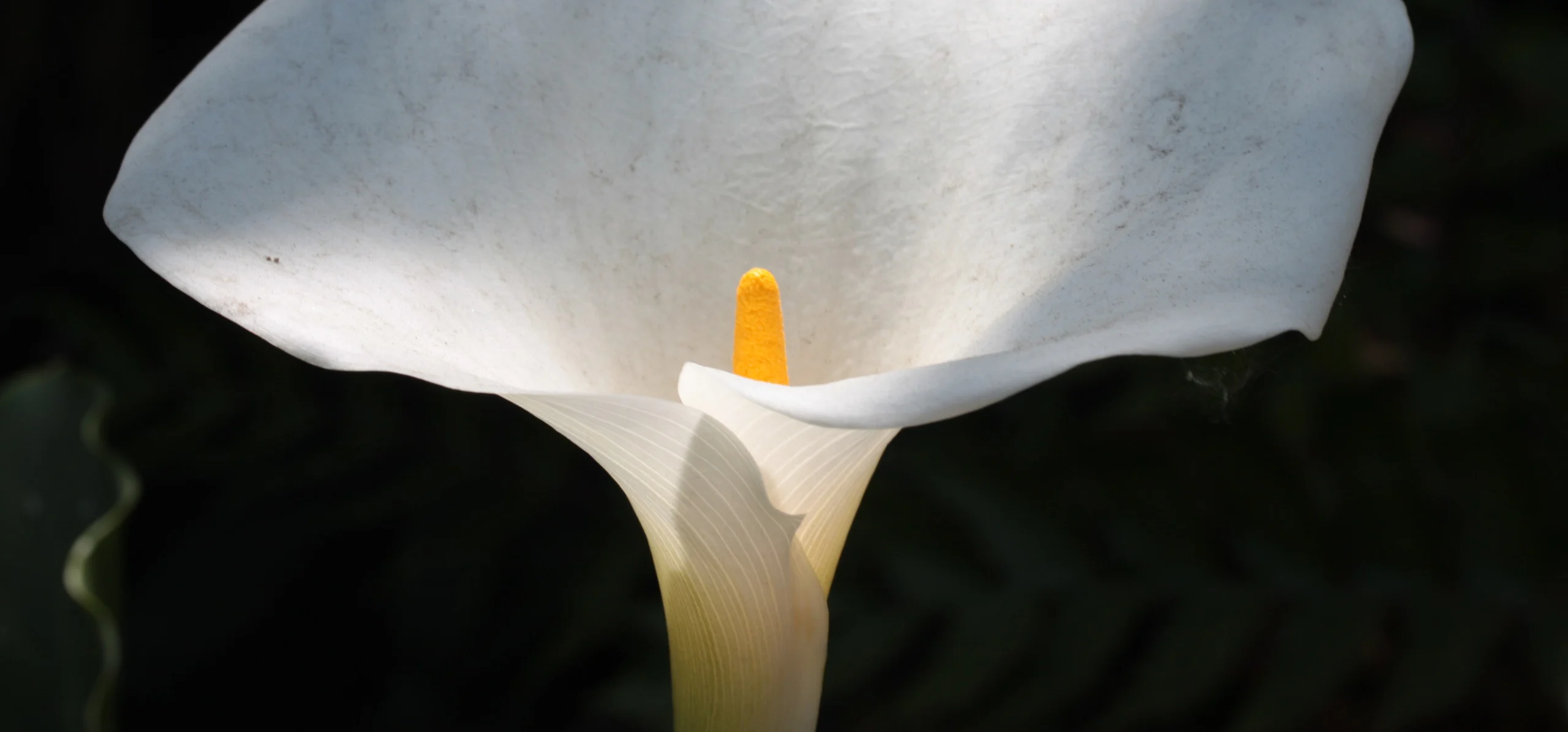
Zantedeschia albomaculata arrives with leaves that do most of the identification work: semi-erect, lance to arrow-shaped blades speckled with translucent white spots, unlike the plain green foliage of pink calla (Zantedeschia rehmannii) or the solid green leaves of white arum lily (Zantedeschia aethiopica). The funnel-shaped spathe that follows in summer opens white, cream, pale yellow or pale pink, up to 12cm across, with a small purple mark at the throat and a yellow spadix at the centre, according to the RHS. Treat it as a summer-growing, winter-dormant tuberous plant rather than a bog plant or a year-round houseplant, and most of the care questions answer themselves.
Native Range and Two Subspecies
Plants of the World Online lists the native range of Zantedeschia albomaculata as Nigeria to Tanzania and South Africa, spanning countries from Angola and Cameroon in the west to Tanzania in the east and down through Zimbabwe, Zambia, Malawi and several South African provinces including KwaZulu-Natal and the Free State. POWO recognises two accepted subspecies: subsp. albomaculata across that wider tropical and southern African range, and subsp. macrocarpa restricted to South Africa. Nurseries rarely separate the two by name, so a plant simply labelled Zantedeschia albomaculata in a garden centre is almost always the more widespread subsp. albomaculata.
Reading the White Spotted Leaves
The species name albomaculata means white spotted, and the leaves live up to it, reaching around 45cm long with speckling that ranges from a light dusting to dense white blotches depending on the individual plant. That spotting is the fastest way to tell it apart from Zantedeschia rehmannii, whose leaves stay plain green, and it persists through the growing season before the foliage dies back for winter dormancy, since this is a deciduous geophyte rather than an evergreen houseplant.
Light and a Sheltered, Sunny Spot
RHS growing notes call for full sun and a south or west facing position, with shelter from wind since the flower stems are slender relative to the size of the spathe. In the UK and similarly cool summer climates, that usually means a sunny patio container or a glasshouse rather than an open, exposed bed. Where summers run hot, some afternoon shade helps prevent the leaf tips scorching, though the species still flowers best with a strong dose of direct sun through the morning and midday hours.
Watering Through Growth and Dormancy
RHS describes the preferred soil moisture as moist but well drained, which in practice means watering generously while the plant is in leaf and flower through summer, then cutting back hard as the foliage starts to yellow. Once the leaves have died down completely, water only sparingly, just enough to keep the tuber from shrivelling, until new growth resumes in spring. This dry rest is not optional: a tuber kept damp all winter is one of the most common ways growers lose this species to rot.


Soil and Potting
A loam or sand based, peat free potting compost suits it well, and RHS notes the species tolerates acid, neutral or alkaline soil, so pH is rarely the limiting factor. Drainage matters more: a container with a generous drainage hole, or a bed amended with grit where the natural soil is heavy clay, keeps the tuber from sitting in water during the growing season and especially during the dry winter rest. Refresh the top layer of compost each spring as new growth begins, and size containers up gradually rather than jumping straight to an oversized pot that stays wet for too long after each watering.
Propagation by Division and Seed
RHS lists division of the rhizome and sowing seed as the two propagation routes for Zantedeschia albomaculata. Division is the faster, more reliable method: once the foliage has died back, lift the tuber, separate offsets that carry their own growing point, and let the cut surfaces dry and callus for a day before potting them up, which reduces the risk of rot at the wound. Seed takes longer to reach flowering size and, because named colour forms are usually clones, seed grown plants can also vary in spathe colour compared with the parent.
Common Mistakes and Pests
The most frequent mistake is watering through winter as if the plant were still in growth, which rots the tuber before spring arrives; a close second is potting it in a heavy, waterlogged mix that never drains fast enough even in summer. Indoors or under glass, RHS flags aphids, red spider mite and whitefly as the pests most likely to appear, usually on soft new growth in a warm, still glasshouse; outdoors in a sunny, airy spot the plant is otherwise fairly trouble free.
Toxicity and Handling
RHS lists Zantedeschia albomaculata as harmful if eaten and a skin and eye irritant on contact with the sap, and recommends gloves when handling or dividing the tuber. ASPCA's plant database does not carry a listing under this species name or its common name, spotted calla lily; its calla and arum lily entries are all filed under the related species Zantedeschia aethiopica. Given that both species belong to the arum family and share the insoluble calcium oxalate crystals responsible for that irritation, treat cut stems, sap and tuber divisions of Zantedeschia albomaculata with the same caution around pets and children as any other calla lily.
Test your plant knowledge
Tap a card to flip it and reveal the answer.
Zantedeschia albomaculata can stay outdoors year-round without protection in most of the UK. Tap to reveal ✕ False
The white spotting on the leaves is the easiest way to tell this species apart from the plain-leaved Zantedeschia rehmannii. Tap to reveal ✓ True
The tuber should be kept consistently moist all through winter dormancy. Tap to reveal ✕ False
Plants of the World Online recognises two subspecies of Zantedeschia albomaculata. Tap to reveal ✓ True
ASPCA's database lists Zantedeschia albomaculata by name as toxic to pets. Tap to reveal ✕ False
Sources
References consulted for this guide
- Zantedeschia albomaculata (Hook.) Baill., GBIF Backbone Taxonomygbif.org
- Zantedeschia albomaculata (Hook.) Baill., Plants of the World Online (Kew)powo.science.kew.org
- RHS: Zantedeschia albomaculata (spotted arum lily)rhs.org.uk
- RHS: How to grow zantedeschiarhs.org.uk
- Reference entity : Wikipédiaen.wikipedia.org