Norway Maple
Acer platanoides
Family · Sapindaceae
Norway maple spreads fast by seed and is invasive in parts of the US: identify it by its milky sap, then site, water and prune it correctly.
Acer platanoides
Plant profile
- WateringLittleWater every 10 days
- Light exposurePartial sun
- Hardiness zoneUSDA 3–7
Growth
- Family
- Sapindaceae
- Life cycle
- Perennial
- Growth speed
- 6/10
- Mature size
- 1220–1520 cm
- Spread
- 910–1520 cm
- Flowering
- Small yellow-green flowers in spring, before or as leaves open
- Propagation
- Seed
- Grafting
Dormancywinter deciduous, bare branches
Time to maturity20 to 50 years to full size
Soil & climate
- Soil types
- clay, loam, sand, chalk
- Drought tolerance
- Yes
Light & Placement
- Origin
- Europe to Central Asia and Pakistan
- Where to place it
- spacious lawn or park as a shade tree
- street tree tolerant of urban soil and pollution
- avoid small garden beds close to the trunk
Safety
- Toxicity
- Not evaluated by the ASPCA; toxicity undetermined
- Pet safe
- No
Invasive speciesClassed as invasive in parts of the northeastern US; sale regulated in Maryland
Data fromGBIF Backbone Taxonomy: Acer platanoidesPlants of the World Online (Kew): Acer pRHS: Acer platanoidesNC State Extension Gardener Plant ToolboUniversity of Maryland Extension: Norway
Where it grows
World distribution
Norway Maple is native to 30 countries: Afghanistan, Albania, Austria, Belarus, Belgium, Bulgaria, Croatia, and Czechia….GBIF records 1,046,115 documented identifications across 70 countries, with the largest concentrations in Germany, United States, and Sweden.
- Afghanistan
- Albania
- Austria
- Belarus
- Belgium
- Bulgaria
- Croatia
- Czechia
- Estonia
- Finland
- France
- Georgia
Show 18 more countriesShow fewer countries
- Germany
- Greece
- Hungary
- Iran
- Italy
- Kyrgyzstan
- Norway
- Pakistan
- Poland
- Romania
- Russia
- Spain
- Sweden
- Switzerland
- Tajikistan
- Türkiye
- Ukraine
- Uzbekistan
Yellow to orange dots: concentration of documented identifications per country. Green countries: sourced native range. Source: GBIFNative range from POWO (Kew).
A Norway maple (Acer platanoides) that has just gone into the ground, or a volunteer seedling that showed up in a border, is first and foremost a fast, tough shade tree built to survive traffic exhaust, road salt and compacted soil better than almost anything else you could plant. That toughness is also why it has become a management problem in parts of North America: its winged seeds travel on the wind and germinate under closed forest canopy where few native trees can, and several northeastern and Mid-Atlantic states now regulate its sale or list it as invasive. Snap a leaf stalk from the twig and you get an instant identification test that settles any doubt about what tree you are looking at, before you decide whether to nurture it or remove it.
Identifying a Norway Maple
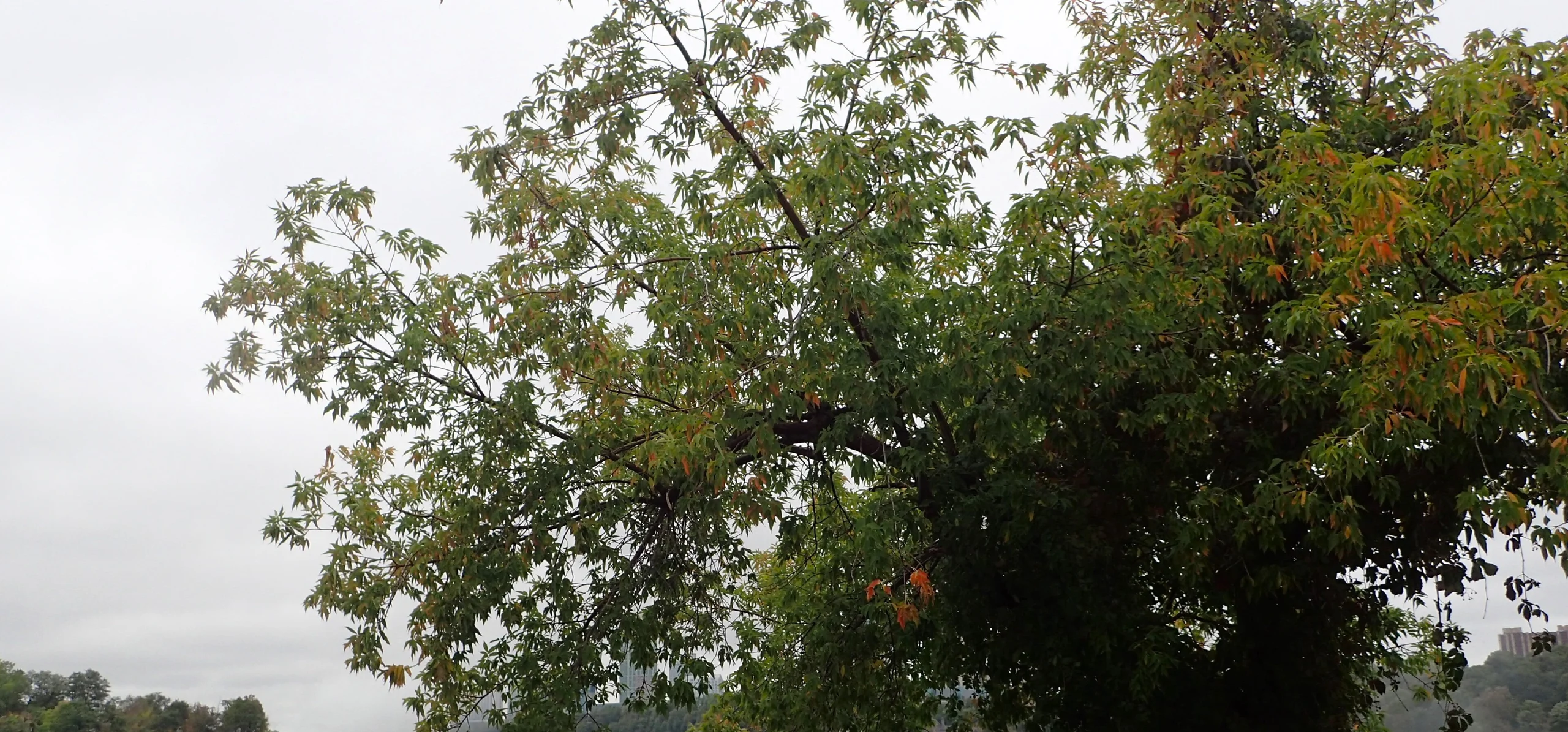
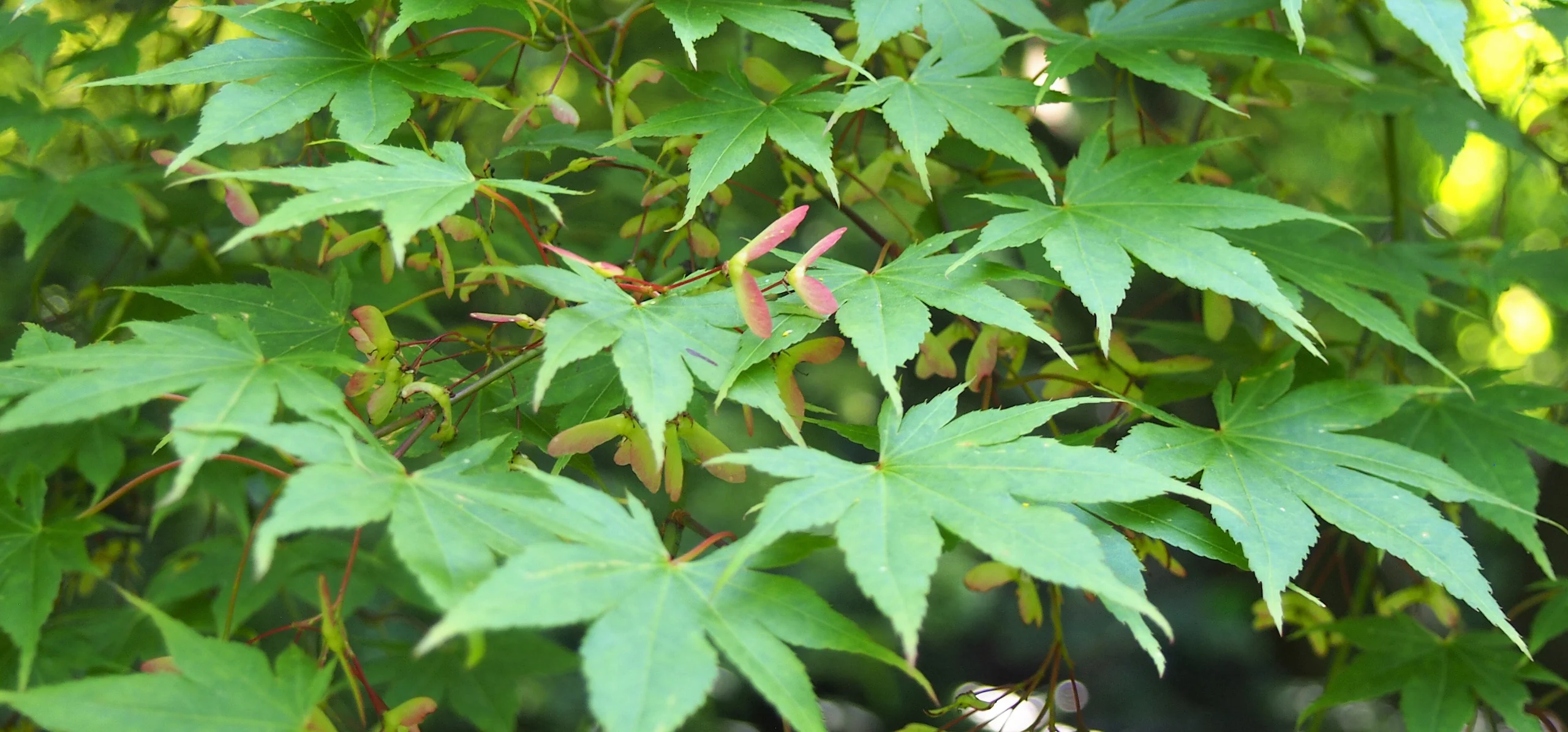
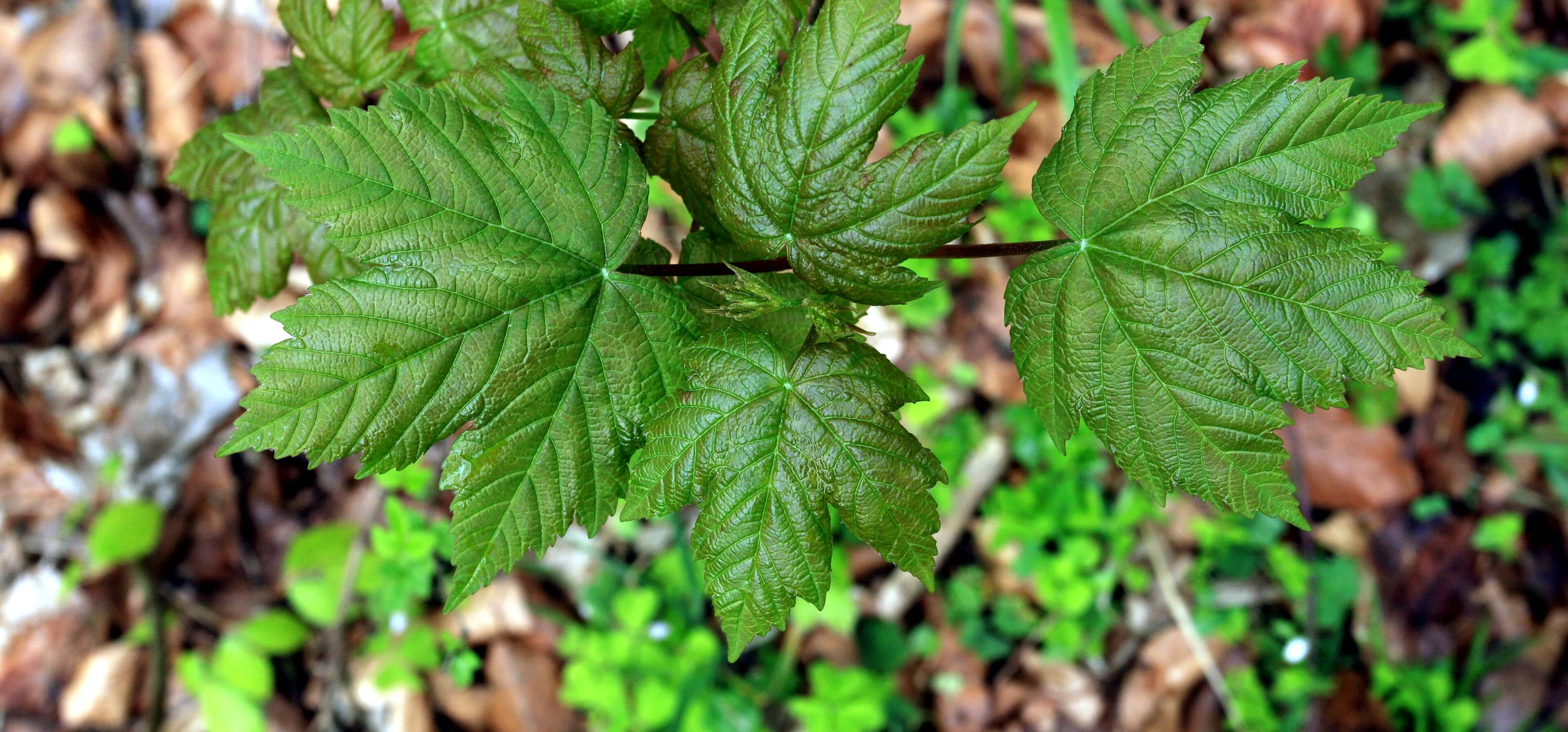
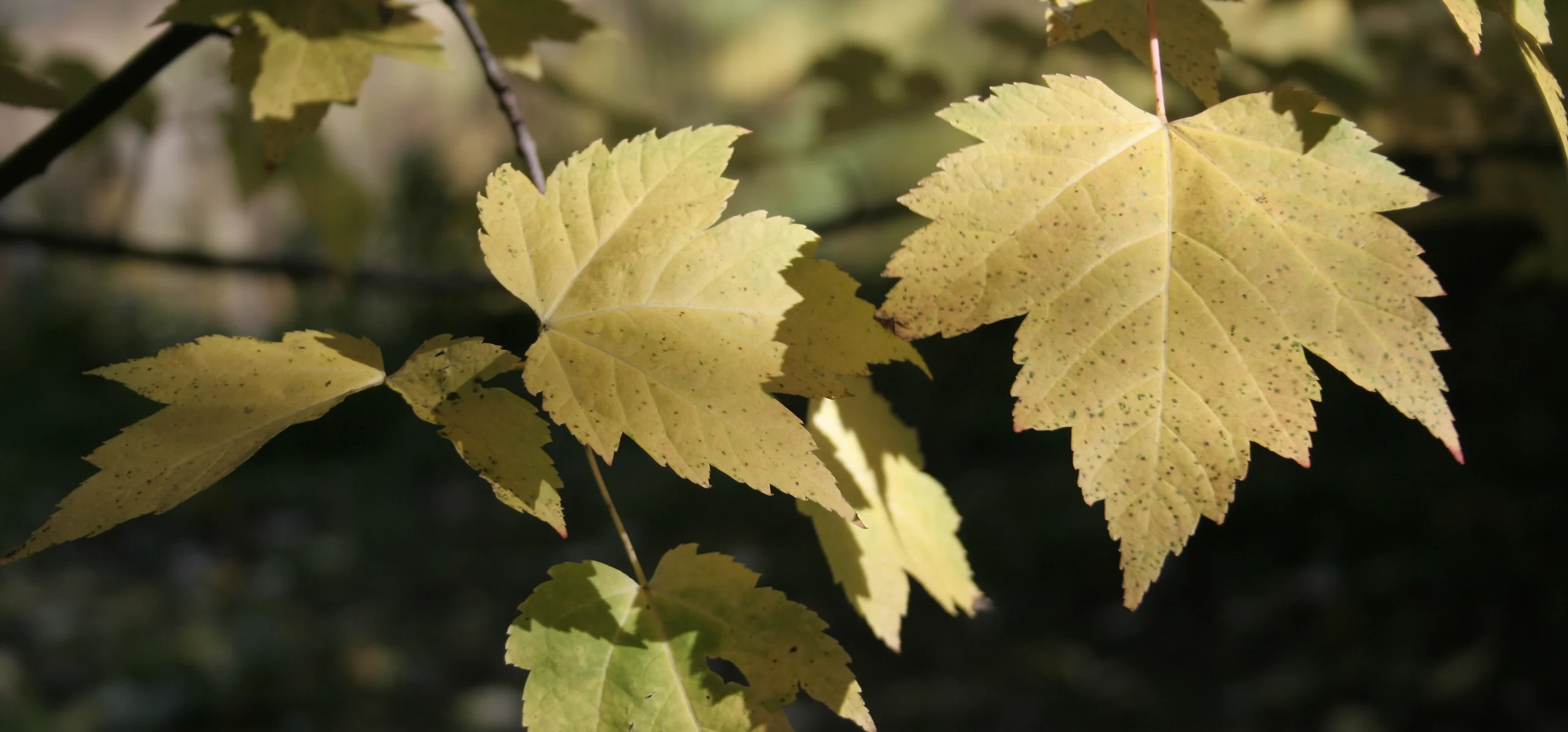
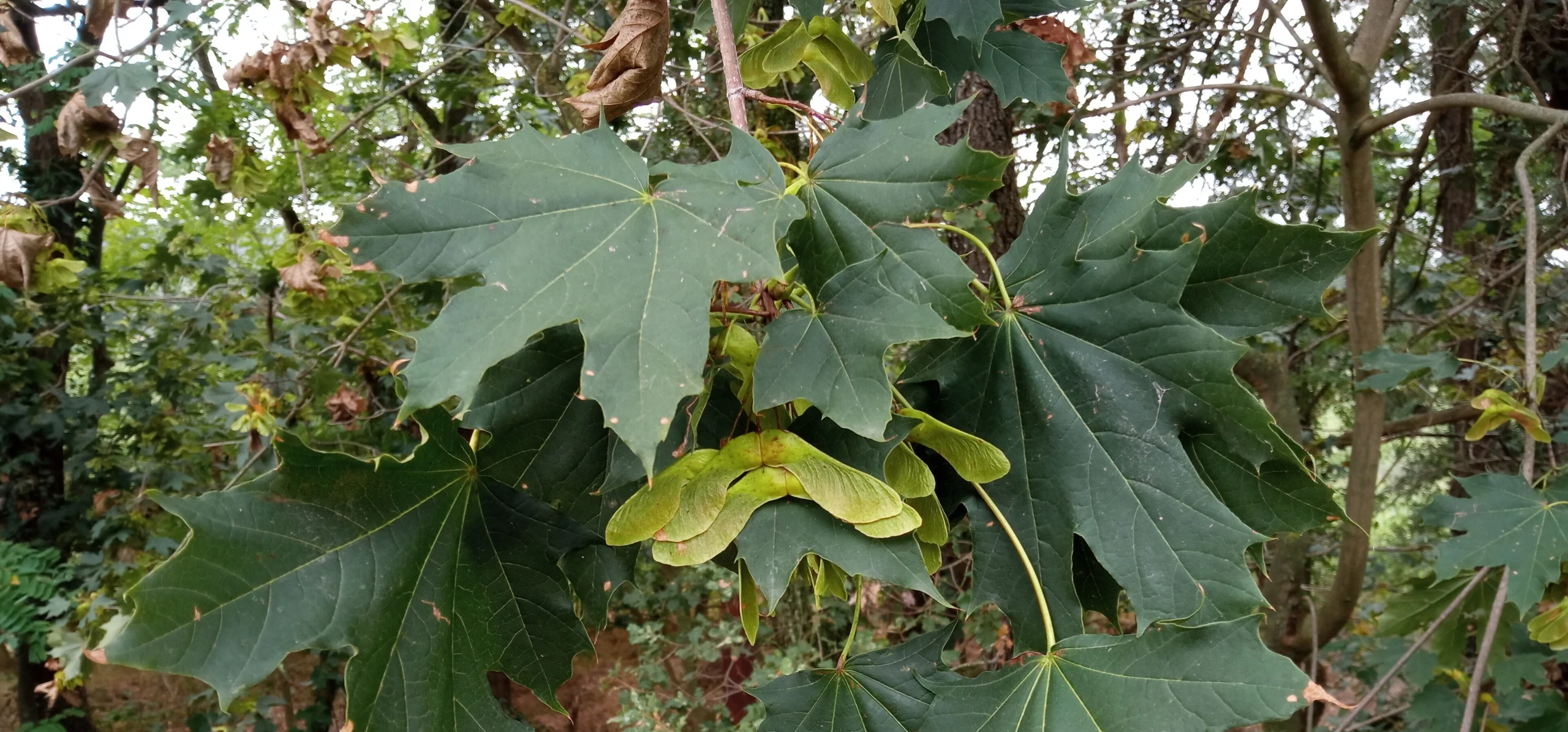
The surest field test is the sap. Break a leaf petiole away from a Norway maple twig and a bead of white, milky latex oozes from the wound within seconds, a trait no other common maple shares; a sugar maple's broken stalk runs clear. The leaves themselves are broad, slightly wider than they are long, with five to seven pointed lobes and good yellow autumn colour. In spring, clusters of long-stalked, yellow-green flowers open before or as the leaves expand, followed by paired winged seeds, or samaras, whose wings spread almost flat, close to 180 degrees apart, distinctly wider than the roughly 90-degree spread of a sugar maple's samara.
Origin, Range and Invasive Status
Kew's Plants of the World Online places the native range of Acer platanoides across Europe into Central Asia and Pakistan. It was brought to North America in the mid-1700s as an ornamental shade tree, then planted on a huge scale through the twentieth century, especially once American elms began falling to Dutch elm disease and cities needed a fast, tolerant replacement. That same vigour, combined with a shallow, dense root system and heavy shade, lets it outcompete tree seedlings in the understory of eastern hardwood forests. Several northeastern and upper Midwest states classify it as invasive, and Maryland regulates its sale; check local rules before planting one, and think twice about leaving a self-sown seedling to grow where it can seed into nearby woodland.
Choosing a Variety
The wild species is a big, plain green tree, but most Norway maples sold in nurseries are grafted cultivars chosen for a trait the seedling lacks. 'Crimson King' keeps its large, deep purplish-crimson leaves all season rather than fading to green or bronze, and tops out at a somewhat smaller 8 to 12 m, against more than 12 m for the species. Compact and columnar forms exist for narrower sites. A named cultivar is also the more honest choice where the plain species is discouraged or restricted, since it is bought and planted deliberately rather than arriving as an uncontrolled seedling.


Planting Site and Soil
Few shade trees ask so little of their soil. The RHS rates Norway maple for chalk, clay, loam or sand, acid, neutral or alkaline pH, and any aspect from full sun to partial shade, exposed or sheltered. NC State Extension notes it tolerates shallow, rocky ground as readily as ordinary garden loam, provided drainage is at least reasonable. The trade-off is size: the species reaches over 12 m tall with a spread to match, taking 20 to 50 years to fill out completely, so give it real distance from the house, the drive and any bed you want to keep plantable, since almost nothing thrives under its dense, shallow-rooted canopy.
Watering and Establishment
Water a newly planted tree regularly through its first one or two growing seasons while the root system spreads out from the original rootball. Once established, Norway maple is genuinely drought-tolerant and copes with the dry spells and reflected heat of a street or driveway planting better than most shade trees, which is exactly the trait that made it so popular as a city tree in the first place. A deep soak during any prolonged dry stretch in the tree's first few years does more good than frequent shallow watering later on.
Growth Rate and Root Habit
Growth is moderate to rapid, commonly adding more than 30 cm of height a year on a young, well-sited tree. That speed comes with a well-documented drawback: a dense network of shallow roots that outcompetes grass, groundcover and most perennials for water and light directly under the canopy. Rather than fighting the lawn under an established Norway maple, mulch the root zone out to the drip line and accept that the space beneath it will stay largely bare, which also keeps mower damage away from the shallow surface roots.
Pruning and Seasonal Care
Remove dead, damaged or crossing branches while the tree is fully dormant in late autumn or winter, when cuts are least likely to bleed heavily and fungal spores are scarcest. Formative pruning in the first few years, spacing main branches around a single leader, saves far more corrective work later than waiting until the tree is mature and branches are thick. Beyond that early shaping, a Norway maple needs very little routine pruning; resist the urge to cut hard, since large wounds on a mature tree heal slowly and become entry points for disease.
Pests, Diseases and Common Mistakes
Verticillium wilt is the disease to watch for: the RHS lists Acer among the genera most often affected, with yellowing and shrivelling lower leaves, sudden wilting in hot weather, and dark streaks in the wood under the bark when a stem is cut. Some infected trees decline within weeks, others limp along for years, and there is no reliable cure once it is confirmed, only supportive watering and feeding. Tar spot is far less serious: yellow blotches turn into raised, shiny black spots by late summer that look alarming but rarely damage a healthy tree, and raking up fallen leaves in autumn starves the fungus of the litter it overwinters on. The most common mistake is simply planting a Norway maple too close to a small bed or a foundation, then fighting its roots and shade for the next fifty years instead of giving it the room a full-sized shade tree actually needs.
Test your plant knowledge
Tap a card to flip it and reveal the answer.
Breaking a Norway maple leaf stalk off the twig releases a milky white sap. Tap to reveal ✓ True
Norway maple's winged seeds spread at a much wider angle than sugar maple's. Tap to reveal ✓ True
Norway maple needs acidic, consistently moist soil to grow well. Tap to reveal ✕ False
Norway maple is classified as invasive in parts of the northeastern United States. Tap to reveal ✓ True
The ASPCA lists Norway maple as toxic to cats and dogs. Tap to reveal ✕ False
Sources
References consulted for this guide
- GBIF Backbone Taxonomy: Acer platanoides L.gbif.org
- Plants of the World Online (Kew): Acer platanoides L.powo.science.kew.org
- RHS: Acer platanoidesrhs.org.uk
- NC State Extension Gardener Plant Toolbox: Acer platanoidesplants.ces.ncsu.edu
- University of Maryland Extension: Norway Mapleextension.umd.edu
- Reference entity : Wikipédiaen.wikipedia.org