Paper Flower
Bougainvillea glabra
Family · Nyctaginaceae
Bougainvillea glabra needs full sun, dry spells between waterings and a tight pot to bloom. Covers bracts vs flowers, pruning, thorns and winter protection.
Bougainvillea glabra
Plant profile
- WateringLittleWater every 7 days
- Light exposureFull sun
- Ideal temperature-1–38 °C
- Hardiness zoneUSDA 9–11
Growth
- Family
- Nyctaginaceae
- Life cycle
- Perennial
- Growth speed
- 7/10
- Mature size
- 100–400 cm
- Spread
- 100–300 cm
- Flowering
- Repeat flushes of bracts through the warm season, heaviest after a dry spell
- Propagation
- Cutting
- Layering
Dormancysemi-dormant and can drop leaves indoors over winter; evergreen in frost-free climates
Time to maturityflowers within the first year; fills a trellis or trained shape over several seasons
Soil & climate
- Soil types
- sand, loam
- Drought tolerance
- Yes
Light & Placement
- Origin
- Native to eastern and southern Brazil
- Where to place it
- brightest available window
- unheated sunroom or conservatory over winter
- south or west facing wall in full sun
- open sunny patio or trellis
- fast-draining potting mix, sized only slightly larger than the root ball
Safety
- Toxicity
- CatsSafe
- DogsSafe
- HorsesSafe
Data fromBougainvillea glabra Choisy, GBIF BackboPlants of the World Online (Kew): BougaiASPCA: Bougainvillea toxicity to pets anNC State Extension Gardener Plant ToolboClemson HGIC: Bougainvillea
Where it grows
World distribution
Paper Flower is native to a single country: Brazil.GBIF records 4,828 documented identifications across 144 countries, with the largest concentrations in Brazil, Spain, and Mexico.
- Brazil
Yellow to orange dots: concentration of documented identifications per country. Green countries: sourced native range. Source: GBIFNative range from POWO (Kew).
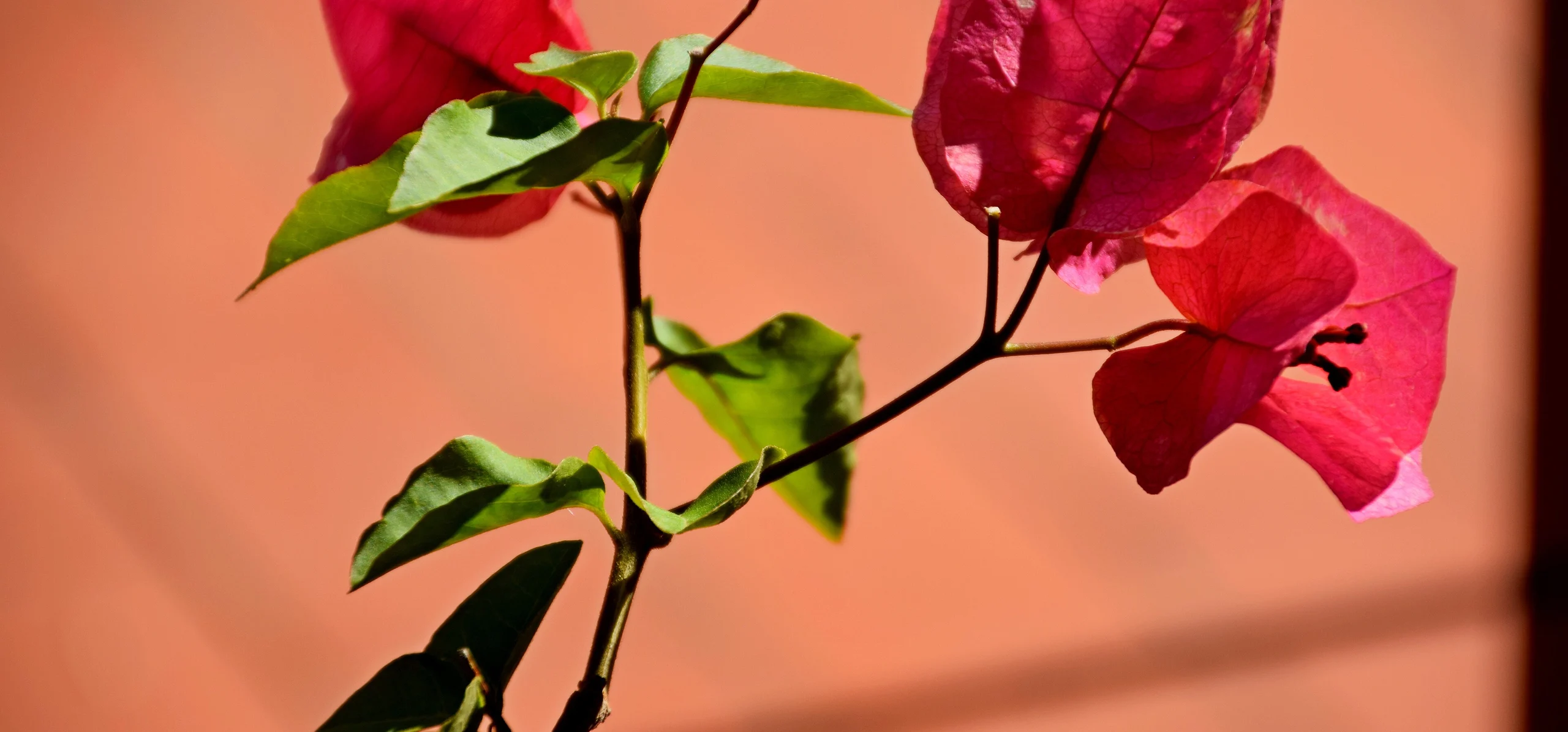
Those papery magenta, purple or white petals covering a bougainvillea are not petals at all, they are bracts, colored leaves wrapped around three tiny true flowers. Bougainvillea glabra, the paper flower, is the species behind most compact garden and container varieties sold today, easier to keep in a pot than the larger-growing Bougainvillea spectabilis. It rewards a gardener who under-waters and under-feeds it, and sulks under the opposite treatment: rich soil and constant moisture, both common instincts with a new plant, push it into leafy growth with few bracts.
Bracts, Not Flowers: What's Actually Blooming
Look closely at a cluster of color and you will find three small, tubular flowers, usually white or pale yellow, nested at the center of three papery bracts. The bracts do the work a flower normally does, drawing in pollinators, and they last for weeks because they are leaf tissue rather than delicate petals, which is why a spent bougainvillea display keeps its color long after the true flowers have dropped. Growers select bougainvillea for bract color and shape, not flower size, which is why the same plant can be sold as a shrub, a standard, a hanging basket, or trained flat against a wall.
A Genus from Brazil, Bred Worldwide
Bougainvillea glabra is native to eastern and southern Brazil, and most garden bougainvilleas, including the popular double-bracted and variegated forms, are hybrids or selections built on this species and its relative B. spectabilis. GBIF's accepted classification places it in Nyctaginaceae, the four o'clock family, alongside Mirabilis, which explains the similarly papery, colorful bract structure in both genera.
Choosing a Variety and a Pot
For containers, look for compact or dwarf-labeled bougainvillea rather than a vigorous climbing form, since B. glabra cultivars stay more manageable than B. spectabilis on a patio. Start in a pot only slightly larger than the nursery container. Bougainvillea flowers best when its roots are a little crowded, so resist the urge to size up every year the way you would with a tropical foliage plant; move up one pot size only when roots are circling the drainage holes.
Use a fast-draining mix, a standard potting soil cut with extra sand, bark or perlite. Waterlogged roots are the fastest way to lose a bougainvillea, and a heavy, moisture-retentive mix undoes the drought stress that triggers bloom in the first place.
Light and Placement
Full sun is not optional. Bougainvillea needs direct sun for most of the day to set bracts in any quantity; in part shade it will grow green and leafy but flower thinly or not at all. Outdoors, the sunniest wall or open patio spot is the right choice, ideally one that also holds some heat, a south or west-facing wall reflecting afternoon sun suits it well. Indoors or in a greenhouse over winter, put it in the brightest window you have and expect fewer bracts until it goes back outside in spring.


Watering: Why Stress Makes It Bloom
This is the habit that confuses new growers most: bougainvillea flowers hardest when it is mildly thirsty. Water deeply, then let the top several centimeters of the potting mix dry out before watering again. A plant kept constantly moist channels its energy into stems and leaves instead of bracts. The same logic applies to root space, a bougainvillea that is slightly pot-bound blooms more freely than one recently bumped into a much bigger container, because both drought and root restriction read to the plant as a cue to reproduce rather than simply grow.
Do not take this to the extreme of letting the plant wilt repeatedly. The goal is a dry-down cycle, not chronic drought, established plants tolerate real dry spells, but a newly potted cutting still needs consistent watering until its roots fill the container.
Pruning and Those Thorns
Bougainvillea blooms on new growth, so regular pruning after each flowering flush encourages the next one. Tip-prune to force side branches, which multiplies the number of shoot tips that can set bracts, and cut back hard in late winter or early spring on plants grown as a shrub or standard to keep the shape you want. Wear thick gloves and long sleeves for this job: the stems carry stiff, recurved thorns capable of tearing skin or clothing, and they hide well among the foliage. Keep pruned plants away from paths where people or pets brush past at eye or paw level.
Overwintering a Potted Plant in Cold Climates
Bougainvillea is reliably hardy outdoors only in USDA zones 9 to 11; growth is damaged as temperatures approach freezing, and a hard frost kills stems back to the ground or further. Anywhere colder, the plant has to spend winter in a pot that comes indoors before the first frost. Move it to your brightest window or an unheated but frost-free sunroom, cut back watering substantially since growth slows or stops, and expect some leaf drop, especially in a darker spot, this is normal and new leaves return once the plant goes back outside in spring. A cool room in the 10 to 15 C range with bright light is a better winter home than a warm, dim living room, which stretches the plant without letting it rest.
Common Mistakes and Pests
The most frequent complaint, a bougainvillea with plenty of green growth and almost no color, nearly always traces back to too much shade, too much water, or a pot sized up too soon. Overfeeding, particularly with a high-nitrogen fertilizer, produces the same leafy, bract-free result; a balanced or bloom-formulated feed at half the label rate through the growing season is plenty. Aphids and mealybugs occasionally cluster on new growth and bract tips, especially on plants overwintering indoors in still, dry air; a strong water spray or insecticidal soap usually clears light infestations before they spread.
Toxicity and Handling
The ASPCA lists bougainvillea as non-toxic to cats, dogs and horses, so an accidental nibble is not a poisoning emergency. The sap can still mildly irritate skin or the mouth and stomach on contact or if a pet chews a large amount of foliage, and the thorns remain the real hazard for children and animals moving through a planting. Site a thorny specimen away from a path pets or kids use regularly, and rinse any sap contact off skin as a routine precaution.
Test your plant knowledge
Tap a card to flip it and reveal the answer.
The colorful parts of a bougainvillea display are petals, not modified leaves. Tap to reveal ✕ False
Letting a potted bougainvillea dry out somewhat between waterings can encourage more bracts. Tap to reveal ✓ True
Bougainvillea stems are lined with sharp, recurved thorns. Tap to reveal ✓ True
A potted bougainvillea can safely stay outdoors through a hard freeze in USDA zone 7. Tap to reveal ✕ False
The ASPCA lists bougainvillea as toxic to cats, dogs and horses. Tap to reveal ✕ False
Sources
References consulted for this guide
- Bougainvillea glabra Choisy, GBIF Backbone Taxonomygbif.org
- Plants of the World Online (Kew): Bougainvillea glabra Choisypowo.science.kew.org
- ASPCA: Bougainvillea toxicity to pets and horsesaspca.org
- NC State Extension Gardener Plant Toolbox: Bougainvillea (Bougainvillea glabra)plants.ces.ncsu.edu
- Clemson HGIC: Bougainvilleahgic.clemson.edu
- Reference entity : Wikipédiaen.wikipedia.org