Canna Lily
Canna generalis
Family · Cannaceae
Canna × generalis is a hybrid group, not a wild species: cultivars run 60 cm to 2.5 m tall, and deadheading to the next side shoot keeps flower spikes coming.
Canna generalis
Plant profile
- WateringHighWater every 4 days
- Light exposurePartial sun
- Hardiness zoneUSDA 8–11
Growth
- Family
- Cannaceae
- Life cycle
- Perennial
- Growth speed
- 8/10
- Mature size
- 60–250 cm
- Spread
- 50–100 cm
- Flowering
- Red, orange, yellow, pink, coral or bicolor spikes from summer into autumn
- Propagation
- Seed
- Division
Dormancyno true dormancy where frost-free; rhizomes are lifted and kept dry-dormant over winter in colder zones
Time to maturityflowers within its first growing season; clumps reach full spread over about 2 to 5 years
Soil & climate
- Soil pH
- pH 5–8
- Soil types
- loam, clay, sand, chalk
- Drought tolerance
- Yes
Light & Placement
- Where to place it
- Full sun to partial shade border, sheltered from strong wind
- East-, south- or west-facing bed
- Large container at least 30 cm (12 in) wide with drainage, peat-free loam-based compost such as John Innes No. 3 plus a controlled-release fertiliser
OriginGarden hybrid group bred from Canna indica, C. glauca and other American species; no wild native range
Safety
- Toxicity
- CatsSafe
- DogsSafe
Invasive speciesnot flagged as invasive in the sources consulted; unlike wild Canna indica, which has naturalized in parts of Australia and the Pacific, the garden hybrids are grown and recommended across USDA zones 8 to 11 without invasive concerns noted
Data fromCanna ×generalis Jinnye, GBIF Backbone TCanna × generalis L.H.Bailey, Plants of Canna × generalis (canna lily), RHSToxic and Non-toxic Plants: Common GardeCanna x generalis (Garden Canna), NC Sta
Where it grows
World distribution
GBIF records 835 documented identifications across 29 countries, with the largest concentrations in Tanzania, Ethiopia, and Malawi.
Yellow to orange dots: concentration of documented identifications per country. Green countries: sourced native range. Source: GBIF.
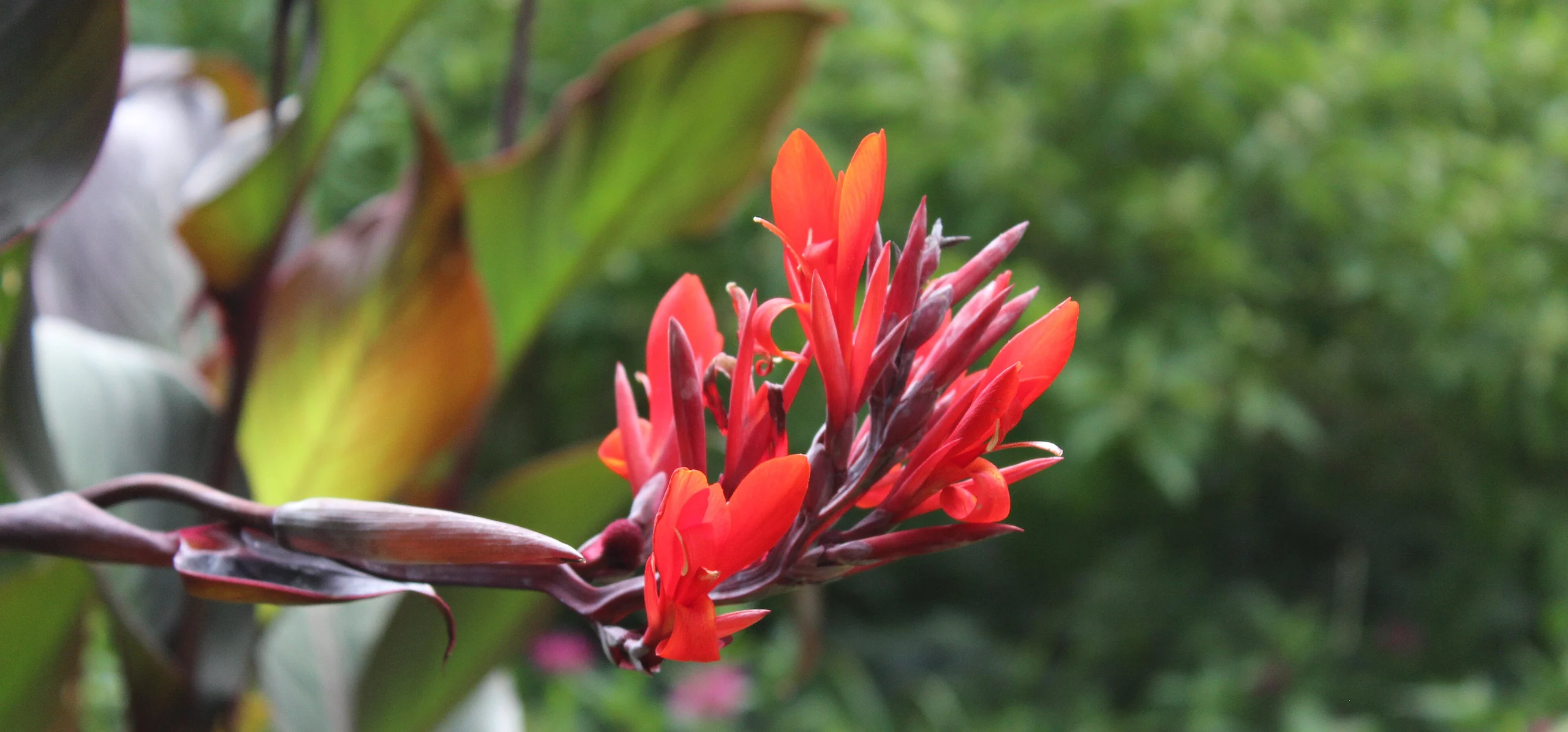
Canna × generalis is what almost every canna sold at a garden center actually is: not a wild species but a hybrid swarm, bred since the nineteenth century from Canna indica, Canna glauca and other American species for bigger flowers, a wider color range and, in many modern cultivars, striped or bronze foliage that none of the wild parents had. It grows fast from a thick, branching rhizome that pushes up broad paddle-shaped leaves and terminal spikes of red, orange, yellow, pink, coral or bicolor flowers through summer into autumn. Depending on the cultivar it stands anywhere from about 60 cm on a dwarf patio type to 2.5 m on an old-fashioned border giant, so the first real decision is not how to grow it but which size and leaf color to plant. The rest of this guide covers choosing a cultivar for the space available, planting and feeding it well, keeping the flower spikes coming, and the pests and diseases that actually turn up on this hybrid group.
Choosing a Cultivar: Dwarf Patio Types to Border Giants
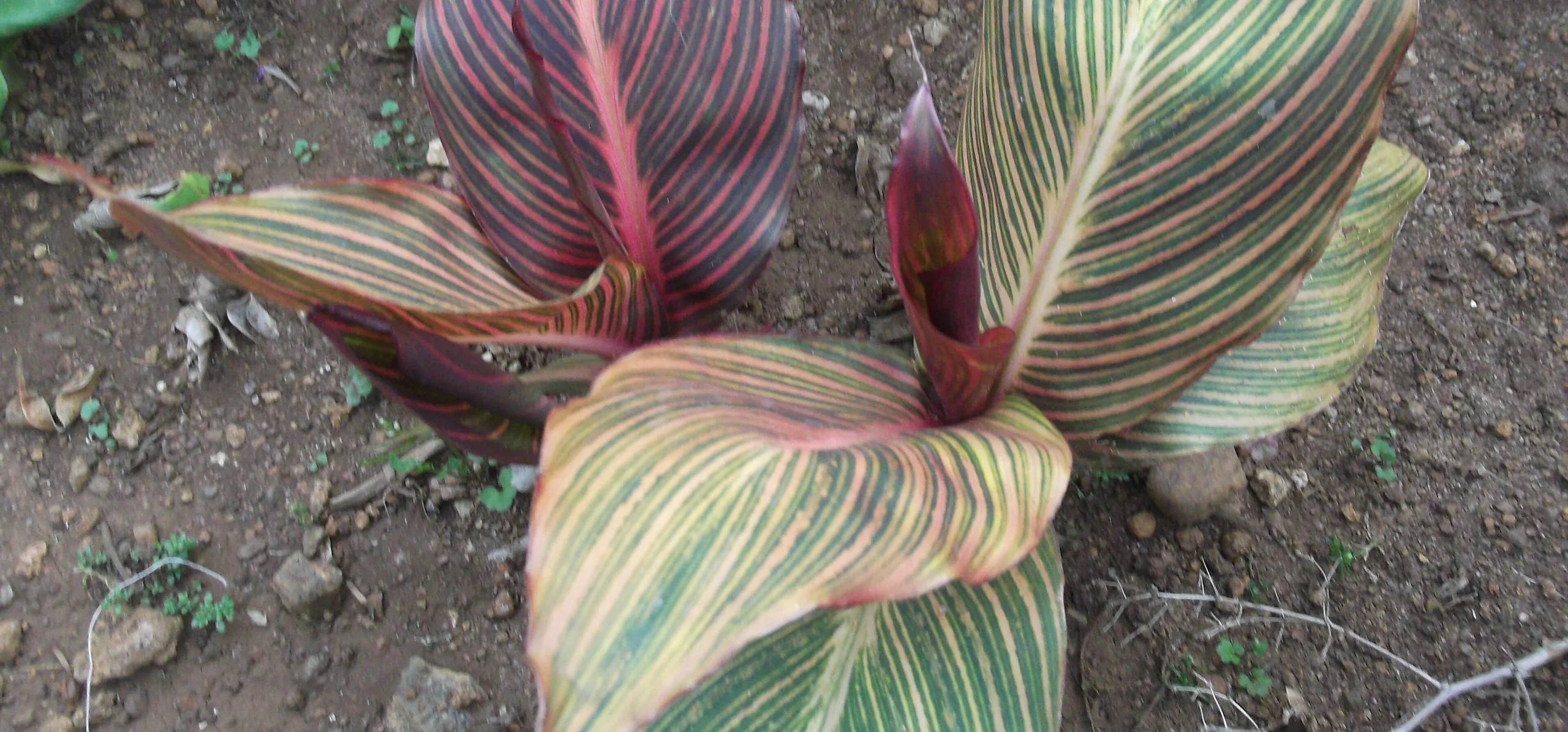
Kew's Plants of the World Online files Canna × generalis under the artificial hybrid Canna × hybrida, parentage C. glauca × C. indica × C. iridiflora, which is why there is no single "typical" plant here, only a spread of named cultivars. Compact patio series stay closer to 60 to 90 cm and flower early, while classic border cultivars reach 1.5 to 2.5 m and need room at the back of a bed. Leaf color varies just as much: plain mid-green is common, but bronze, purple and boldly striped or variegated forms, some with leaves 45 to 90 cm long, are grown as much for foliage as for flower. Flowers run 8 to 15 cm across in white, yellow, pink, red, orange, coral, salmon or two-tone combinations, opening as terminal spikes rather than single blooms.
Site, Light and Soil
Full sun brings the strongest flowering and the most compact habit, though the RHS notes that Canna × generalis also tolerates partial shade, where it tends to grow taller and leggier and flower a little later. An east-, south- or west-facing bed sheltered from strong wind suits it best, since the broad leaves shred in exposed, gusty sites. It is not fussy about soil type: it grows in chalk, clay, loam or sand as long as the ground stays moist but well drained and rich in organic matter, with a pH anywhere from acidic to neutral, roughly 5 to 8. Thin, fast-draining ground or waterlogged clay that never dries at all are the two conditions worth improving before planting.


Planting Depth, Spacing and Containers
Plant rhizome pieces once the soil has warmed in spring and frost risk has passed, setting them about 10 cm deep and spacing clumps roughly 75 cm apart in a border; dwarf cultivars can go closer. In containers, a peat-free, loam-based compost such as John Innes No. 3 in a pot at least 30 cm across, with a controlled-release fertilizer mixed in, gives the roots enough volume for a full season of growth. Division is the reliable way to multiply a named cultivar true to type: lift an established clump in spring and split it into sections that each carry at least one growing point, since seed-grown plants can vary from the parent.
Watering and Feeding Through the Growing Season
This is a heavy feeder and, while actively growing, a heavy drinker: water freely, and expect a container plant in a hot spell to need watering daily. A well-established clump in open ground copes with short dry spells better than it gets credit for, but new plantings and anything in a pot should never be allowed to dry out, since scorched, browning leaf edges and stalled growth are the first sign of drought stress. Feed with a potassium-rich liquid fertilizer every two to three weeks through the growing season; container plants exhaust a pot's worth of nutrients within weeks and need feeding more often than the same cultivar in open ground. Small, pale leaves and few flower spikes despite regular watering usually mean the plant is underfed, not thirsty.
Deadheading for a Longer Run of Flower Spikes
Each flower spike opens its blooms from the base upward over a couple of weeks, and once the top flowers fade the whole spike stops being productive unless it is cut back. The RHS recommends pruning the spent stem down to the next side shoot rather than leaving it to finish and set seed: that side shoot then develops into a fresh spike of its own, which is what keeps a well-tended clump flowering from midsummer into autumn instead of stopping after one flush. Skipping this step does not harm the plant, but a bed of canna left to deadhead itself will visibly slow down in bloom production by late summer compared with one that gets cut back regularly.
Rust, Leaf Rollers and Other Problems on This Hybrid Group
Canna rust shows up as raised, yellow-orange pustules on the underside of the leaf with matching tan spots above, often lining up parallel to the veins before the leaf dries and drops early; removing and binning affected leaves as soon as they appear, rather than composting them, is the main control, since no fungicide clears the fungus outright. Canna mosaic virus causes pale mottling between the veins and distorted new growth, and here the RHS is blunt: there is no cure, and an infected plant should be destroyed rather than kept or divided. The most visible insect damage comes from leaf-rolling caterpillars, which seal a new leaf shut with silk while it is still furled and feed inside the tube, and from Japanese beetles, which skeletonize leaves and chew ragged holes in open flowers; hand-picking, opening rolled leaves to remove the caterpillar, and a Bacillus thuringiensis spray for heavier infestations all work without broad-spectrum insecticide.
Lifting and Overwintering the Rhizome
Canna × generalis is reliably perennial outdoors in USDA zones 8a to 11b; the RHS rates it H3, hardy down to roughly minus 5 to 1 degrees Celsius in a sheltered, mild garden. In that mild range it can stay in the ground under a 15 cm layer of mulch for winter, but anywhere colder the rhizome has to be lifted or it rots in place. Wait until the first frost blackens the foliage, cut the stems to about 15 cm, lift the clump, and store it in trays of barely damp, peat-free compost or vermiculite in a cool, frost-free, dark space. Dwarf, container-grown cultivars are often simplest to bring indoors as a whole pot rather than lifting the rhizome, kept just barely watered until growth resumes in spring.
Pets and Invasiveness
The ASPCA lists Common Garden Canna, Canna generalis, as non-toxic to both dogs and cats, which makes it a safer choice around pets than the true lilies, Lilium, that share part of its common name. None of the sources consulted here flag the modern garden hybrids as invasive: unlike the wild species Canna indica, which has naturalized and turned locally invasive in parts of Australia and the Pacific, Canna × generalis is grown and recommended across USDA zones 8 to 11 as an ordinary, well-behaved border and container perennial.
Test your plant knowledge
Tap a card to flip it and reveal the answer.
Canna × generalis is a naturally occurring wild species rather than a group of garden hybrids. Tap to reveal ✕ False
The RHS recommends pruning a spent flower spike back to the next side shoot to encourage more blooms. Tap to reveal ✓ True
There is a fungicide that fully cures a canna infected with canna mosaic virus. Tap to reveal ✕ False
The ASPCA lists Common Garden Canna (Canna generalis) as toxic to cats and dogs. Tap to reveal ✕ False
Unlike wild Canna indica, the modern Canna × generalis hybrids are not flagged as invasive in the sources used for this guide. Tap to reveal ✓ True
Sources
References consulted for this guide
- Canna ×generalis Jinnye, GBIF Backbone Taxonomygbif.org
- Canna × generalis L.H.Bailey, Plants of the World Online (Kew)powo.science.kew.org
- Canna × generalis (canna lily), RHSrhs.org.uk
- Toxic and Non-toxic Plants: Common Garden Canna, ASPCAaspca.org
- Canna x generalis (Garden Canna), NC State Extension Gardener Plant Toolboxplants.ces.ncsu.edu
- Reference entity : Wikidatawikidata.org