Ti Plant
Cordyline fruticosa
Family · Asparagaceae
Cordyline fruticosa (Ti Plant) care: bright light for pink and red stripes, rainwater to stop brown tips, and never below 15 C. Varieties, pests and toxicity.
Cordyline fruticosa
Plant profile
- WateringHighWater every 6 days
- Light exposurePartial sun
- Ideal temperature15–32 °C
- Hardiness zoneUSDA 10–12
Growth
- Family
- Asparagaceae
- Life cycle
- Perennial
- Growth speed
- 5/10
- Mature size
- 270–460 cm
- Spread
- 90–240 cm
- Flowering
- Fragrant panicles, mainly on mature outdoor plants
- Propagation
- Cutting
- Division
DormancyGrowth slows in cool or low-light winter conditions
Time to maturitySeveral years to reach full outdoor size
Soil & climate
- Soil types
- Loam-based potting mix with added silt, Free-draining mix with perlite or coarse sand
- Saline soil
- Not tolerated
- Drought tolerance
- No
Light & Placement
- Origin
- Papuasia to the western Pacific
- Where to place it
- Within a metre of a bright south or west-facing window
- Full sun to light shade in frost-free, tropical or near-tropical gardens
- Pot with a drainage hole, sized up as the cane clump fills it
Safety
- Toxicity
- CatsToxic
- DogsToxic
Data fromCordyline fruticosa (L.) A.Chev., GBIF BCordyline fruticosa (L.) A.Chev., PlantsTi-Plant toxicity, ASPCA Animal Poison CCordyline fruticosa, NC State Extension Cordyline fruticosa (good-luck plant), R
Where it grows
World distribution
Ti Plant is native to 9 countries: Australia, Fiji, Guam, Marshall Islands, Micronesia, Papua New Guinea, Solomon Islands, and Vanuatu….GBIF records 6,221 documented identifications across 110 countries, with the largest concentrations in United States, Indonesia, and Papua New Guinea.
- Australia
- Fiji
- Guam
- Marshall Islands
- Micronesia
- Papua New Guinea
- Solomon Islands
- Vanuatu
- Wallis & Futuna
Yellow to orange dots: concentration of documented identifications per country. Green countries: sourced native range. Source: GBIFNative range from POWO (Kew).
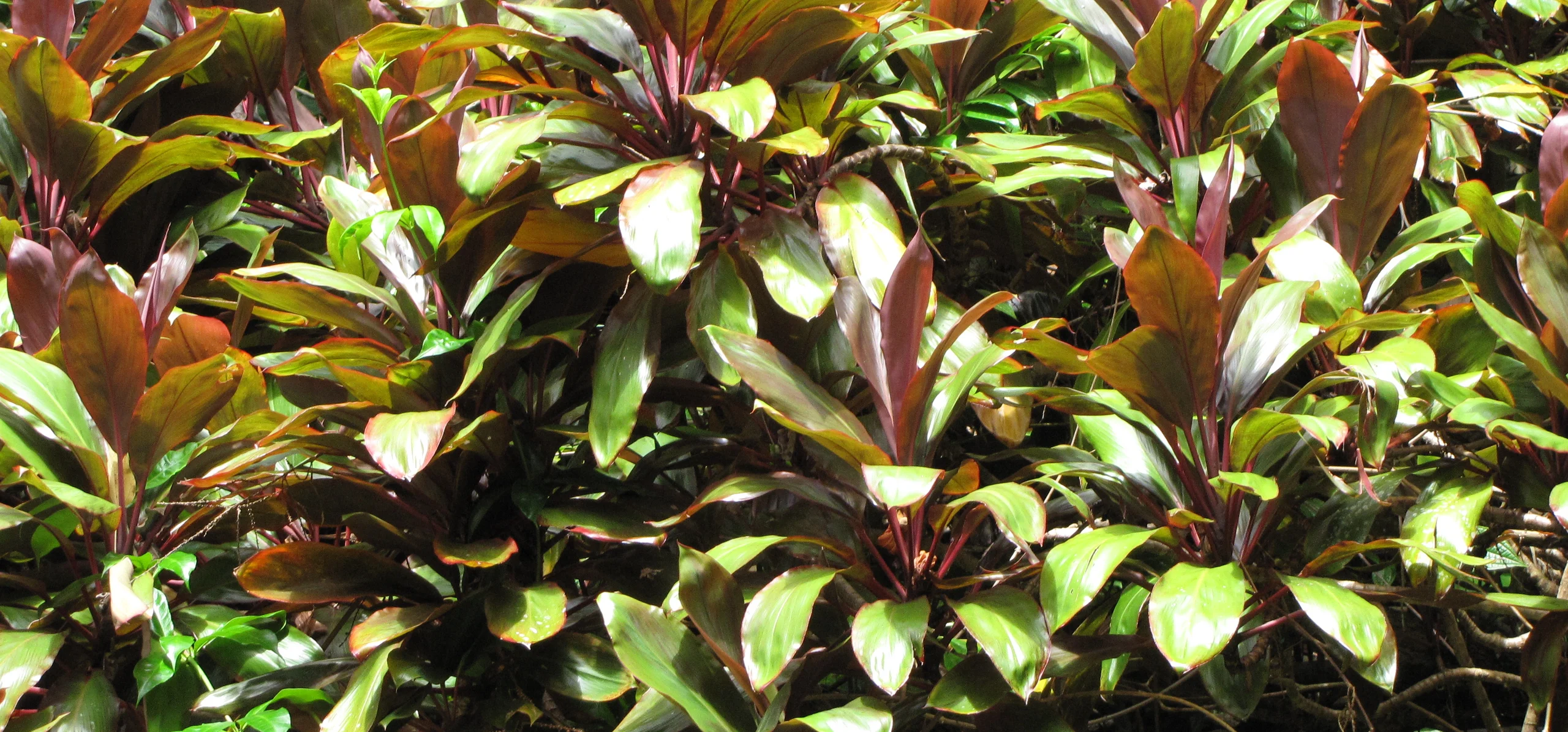
The plant sold as a Ti Plant, or as a bare stick called a "ti log," is not a palm despite the nickname cabbage palm: GBIF and Kew both place it in Asparagaceae, in the same order as asparagus, not among the true palms of Arecales. What sells it is the foliage, broad lance-shaped leaves striped pink, red and green on a cane that looks woody but is soft enough to cut with a kitchen knife. It wants three things a typical houseplant shelf does not offer: strong light to keep the colour saturated, warmth that never dips into single digits, and humidity closer to a bathroom than a hallway. Get those three right and it is an easy, fast-growing shrub; get them wrong and the leaves fade to plain green or blacken at the tips one by one.
From Pacific undergrowth to a stick in a plastic bag
Plants of the World Online places the native range of Cordyline fruticosa from Papuasia to the western Pacific, including New Guinea, the Solomon Islands, Fiji and Queensland. Long before it reached garden centres, Pacific voyagers carried it by canoe between islands for its leaves, used for thatching, food wrapping and skirts, which is why in Hawaii dried Ti leaves are still tied into the fringed hula skirt worn in traditional dance. The trade name "ti log" comes from how the plant is actually shipped: growers cut a leafless section of mature cane, seal the ends against rot, and pack it dry. Planted upright in moist, warm mix, dormant buds along the stem break within weeks into a tuft of fresh leaves, which is by far the cheapest way to start a specimen at home.
Choosing a variety: 'Red Sister' and the colour spectrum
The species itself is variable enough that growers have spent a century picking out named forms, and RHS records several, from the near-black leaves of 'New Guinea Black' to the cream, pink and green streaks of 'Tricolor'. 'Red Sister' is the form most often sold as a compact houseplant, its narrow leaves emerging hot pink and darkening toward maroon-red as they age, held on a cane that stays short enough for a windowsill for years. Cultivars leaning toward pink and red generally want the most light to hold their colour; the darker, near-solid forms tolerate a dimmer spot without fading as obviously.
Light: the brighter the spot, the redder the leaf
Indoors, put it within a metre of an unobstructed south or west-facing window; outdoors in frost-free climates it takes full sun to light shade, with the deepest colour on plants that get direct morning or evening sun. Move it to a dimmer spot and it will not die, but new leaves come in narrower and greener, and the plant stretches toward whatever light it can find. Direct midday sun through glass, magnified by the window, can still scorch a leaf that was grown in shade at the nursery, so increase light gradually over a couple of weeks rather than moving a shaded plant straight onto a bright sill.


Watering and humidity
Keep the mix evenly moist through spring and summer, watering again as soon as the top couple of centimetres dry out, then cut back in winter so the pot spends more time on the drier side while growth is slow. NC State Extension notes that this species genuinely needs high humidity to look its best, so a plant kept near a heating vent or in dry winter air will show crisped, papery leaf edges long before the roots are actually short of water; grouping pots together, standing the pot on a pebble tray, or running a small humidifier nearby all help. A saucer left full of standing water for days, on the other hand, is the more common way to lose one of these outright.
Temperature: a genuine tropical, not a forgiving one
Treat 15 C as the real minimum: below that the plant stalls, and a cold draught or an unheated porch overnight can mark the leaves with dark, water-soaked patches that never recover. NC State Extension lists visible damage starting around 10 C, so 15 C is the margin worth keeping rather than the point of no return, and the plant is at its best in the 18 to 32 C range it gets outdoors in its native range. It is hardy outdoors year-round only in USDA zones 10 to 12, the true tropics and near-tropics; everywhere else it is a container plant that summers outside and comes in before the first cool autumn night.
Brown tips: fluoride, not a disease
Like several of its Asparagaceae relatives, this species reacts to the fluoride and chlorine compounds added to most municipal tap water by depositing them at the leaf margins, leaving a dry, brown, papery edge that spreads inward and never turns green again. Rainwater or distilled water sidesteps the problem completely; leaving tap water out overnight does not, since that only lets chlorine gas escape and does nothing for fluoride. Overfeeding produces a very similar-looking scorch from salt build-up in the mix, so feed lightly, roughly monthly in the growing season, and flush the pot with plenty of water every few months to clear accumulated salts.
Soil, potting and rooting a cane cutting
A loam-based mix loosened with perlite or coarse sand, in a pot with a drainage hole, matches the well-drained but moisture-retentive loam and silt NC State Extension describes as its preferred soil. Repot a young plant yearly as it fills the pot; older, multi-cane clumps can go two or three years between repots. Beyond the imported ti log, home propagation works the same way: cut a section of firm, mature cane at least a few centimetres long, lay it on its side on damp mix or stand it upright with the bottom third buried, and keep it warm and humid until new shoots appear from the dormant nodes, usually within a month.
Pests, and toxicity to cats and dogs
Dry indoor air invites spider mites, seen first as a fine, dusty stippling on the upper leaf surface and later as webbing in the leaf axils, and mealybugs, which cluster as small white cottony tufts where the leaf meets the stem. Wipe leaves down periodically, isolate a newly bought plant for a couple of weeks before it joins the rest of the collection, and treat early infestations with insecticidal soap before they spread. Separately, the ASPCA lists the Ti-Plant as toxic to both cats and dogs, with saponins as the toxic principle; ingestion can cause vomiting sometimes tinged with blood, depression, loss of appetite and drooling, with dilated pupils reported in cats. Keep it out of reach of a pet that chews foliage.
Test your plant knowledge
Tap a card to flip it and reveal the answer.
The Ti Plant is a true palm. Tap to reveal ✕ False
Bright light keeps the pink and red leaf stripes more vivid. Tap to reveal ✓ True
Letting tap water sit out overnight removes the fluoride that causes brown leaf tips. Tap to reveal ✕ False
A leafless "ti log" can grow into a full plant. Tap to reveal ✓ True
It is safe to leave within reach of a cat or dog that chews plants. Tap to reveal ✕ False
Sources
References consulted for this guide
- Cordyline fruticosa (L.) A.Chev., GBIF Backbone Taxonomygbif.org
- Cordyline fruticosa (L.) A.Chev., Plants of the World Online (Kew)powo.science.kew.org
- Ti-Plant toxicity, ASPCA Animal Poison Controlaspca.org
- Cordyline fruticosa, NC State Extension Gardener Plant Toolboxplants.ces.ncsu.edu
- Cordyline fruticosa (good-luck plant), RHSrhs.org.uk
- Reference entity : Wikipédiaen.wikipedia.org