Dragon Tree
Dracaena marginata
Family · Asparagaceae
Dracaena marginata is sensitive to fluoride in tap water and grows just 6 to 20 feet over ten to twenty years; here is the light, water and soil it needs.
Dracaena marginata
Plant profile
- WateringModerateWater every 10 days
- Light exposureIndirect light
- Hardiness zoneUSDA 10–12
Growth
- Family
- Asparagaceae
- Life cycle
- Perennial
- Growth speed
- 3/10
- Mature size
- 180–610 cm
- Spread
- 90–305 cm
- Propagation
- Cutting
FloweringSmall, fragrant white tubular flowers in spring followed by yellow-orange berries; rare on indoor plants (NC State Extension)
Time to maturity10 to 20 years to reach ultimate height (RHS)
Soil & climate
- Soil types
- loam, silt
- Drought tolerance
- Yes
Light & Placement
- Where to place it
- A few metres back from an east- or south-facing window
- A west-facing window screened by a sheer curtain
- Sheltered bed in USDA zones 10a to 12b with a west-, south- or east-facing aspect (RHS; NC State Extension)
- Pot only slightly larger than the rootball, with drainage holes and a peat-free, loam-based mix (RHS)
OriginMadagascar and nearby islands in the Indian Ocean (NC State Extension); POWO records the native range as W. Indian Ocean
Safety
- Toxicity
- CatsToxic
- DogsToxic
- HorsesToxic
- HumansToxic
Data fromDracaena marginata Lem., GBIF Backbone TDracaena reflexa var. angustifolia BakerASPCA: Toxic and Non-Toxic Plants, MadagRHS: Dracaena marginata (v), Madagascar NC State Extension Gardener Plant Toolbo
Where it grows
World distribution
Dragon Tree is native to 6 countries: British Indian Ocean Territory, Comoros, Madagascar, Mauritius, Réunion, and Seychelles.GBIF records 37 documented identifications across 13 countries, with the largest concentrations in Brazil, United States, and Pakistan.
- British Indian Ocean Territory
- Comoros
- Madagascar
- Mauritius
- Réunion
- Seychelles
Yellow to orange dots: concentration of documented identifications per country. Green countries: sourced native range. Source: GBIFNative range from POWO (Kew).
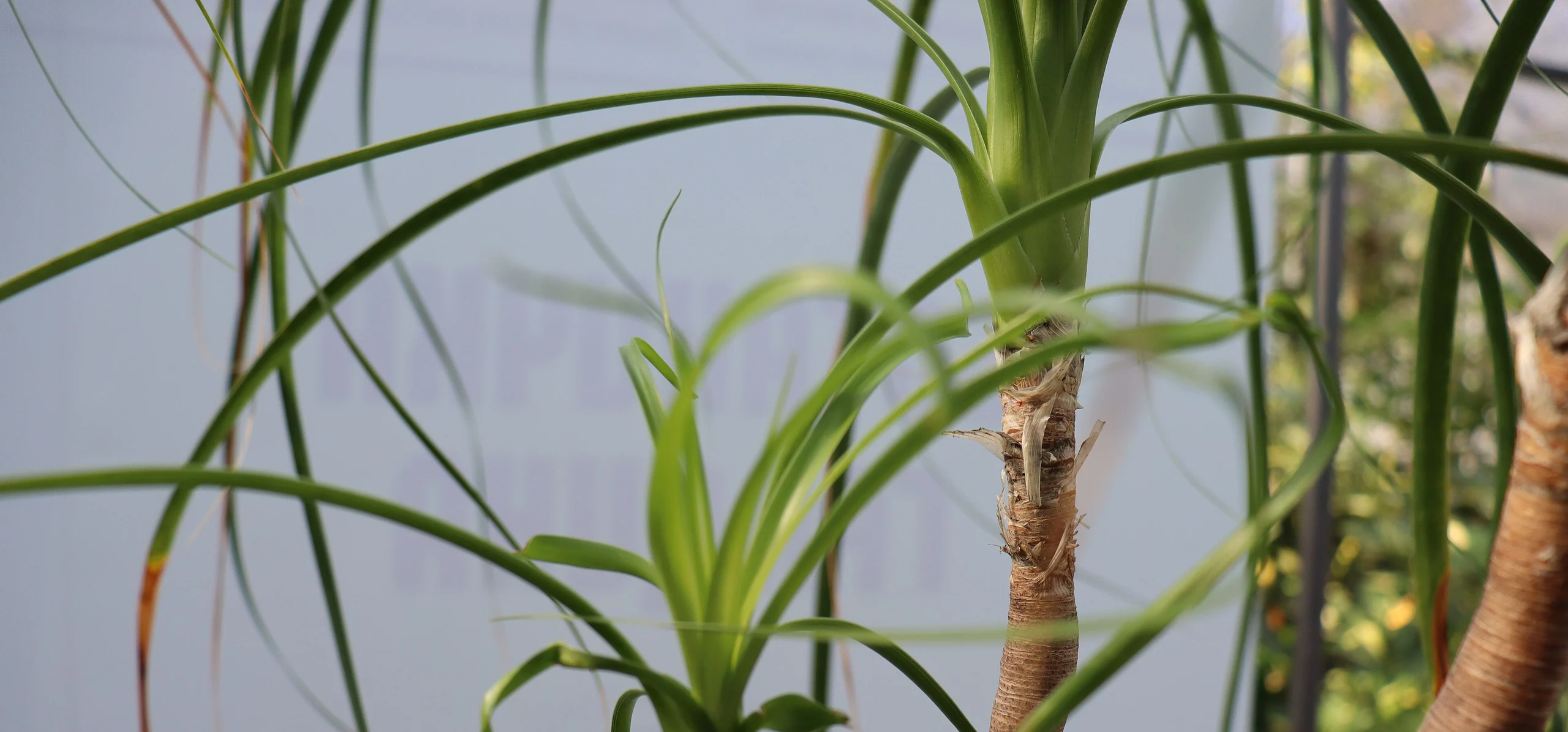
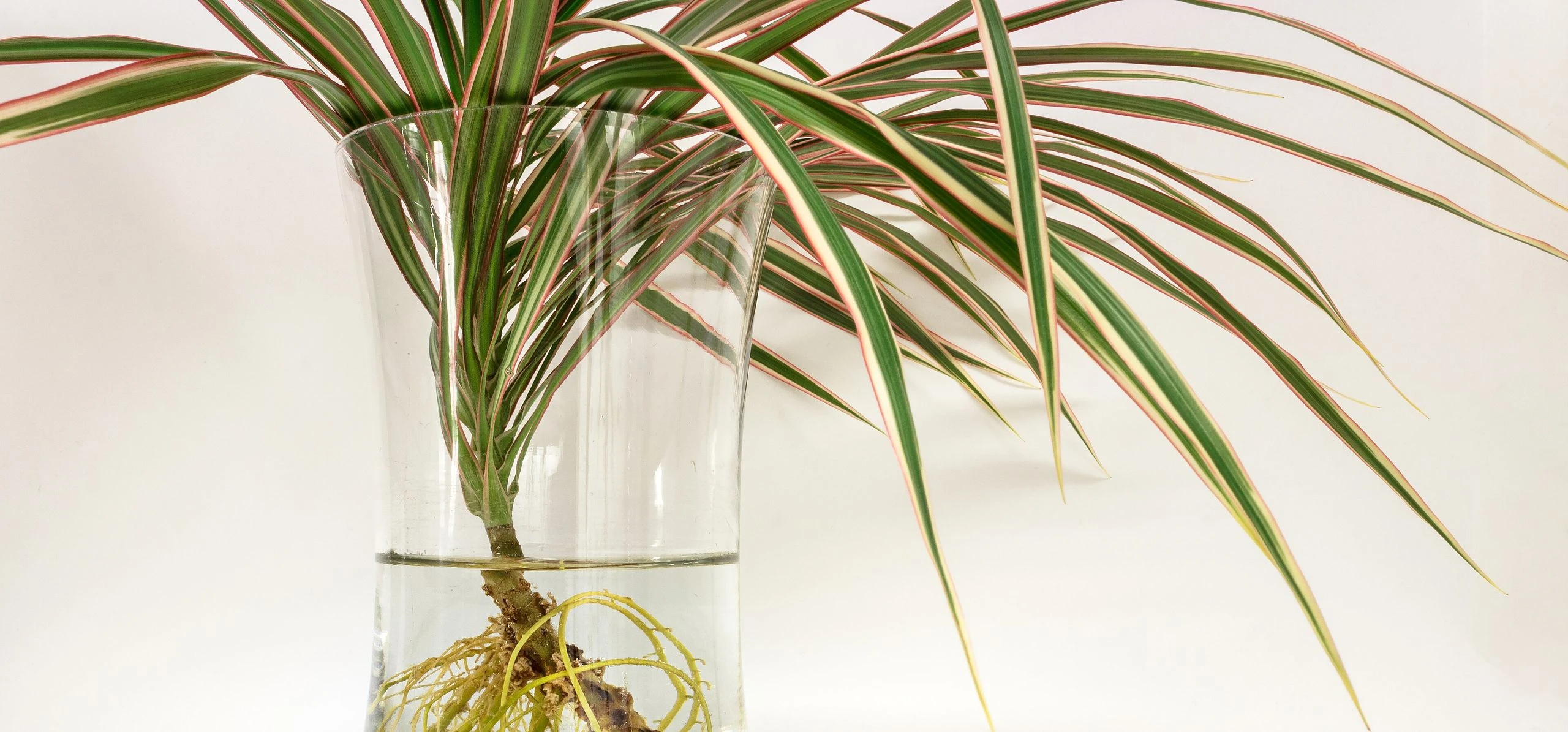
A slim, gray-stemmed houseplant topped with a spray of narrow leaves edged in red is almost always Dracaena marginata, the Madagascar dragon tree. GBIF's backbone taxonomy still treats Dracaena marginata Lem. as an accepted species in the family Asparagaceae, though Kew's Plants of the World Online sinks the older name Dracaena marginata Lam. into a synonym of a different plant entirely, a disagreement explained in the first section below. Whatever the label on the pot, this is a slow, drought-tolerant shrub from Madagascar and its neighbouring islands, and most of what goes wrong with it traces back to one thing: the water it is given.
A dragon tree with two competing botanical names
GBIF's backbone taxonomy lists Dracaena marginata Lem. as an accepted species in the family Asparagaceae, order Asparagales. Kew's Plants of the World Online disagrees: it treats the older name Dracaena marginata Lam., published in 1786, as a synonym of Dracaena reflexa var. angustifolia, whose accepted native range POWO records as "W. Indian Ocean." NC State Extension follows POWO's placement too, filing the plant under Dracaena reflexa var. angustifolia and noting it was "previously known as" Cordyline marginata, Dracaena marginata and Pleomele marginata. In the nursery trade and in this guide, the plant still goes by Dracaena marginata, since that is the name almost every grower, label and buyer actually uses, even as the two taxonomic databases sort out which name is correct.
Light: bright but protected from full sun
The RHS grows Dracaena marginata with a west-, south- or east-facing aspect, but is explicit that it needs "full light with some protection from hot, direct sunlight" in a sheltered position. NC State Extension describes its tolerance more conservatively: dappled sunlight or deep shade, with less than two hours of direct sun a day. Read together, the two agree on the shape of it: this plant wants bright, filtered light rather than a window pane baking its leaves at midday, and it copes with a dimmer spot at the cost of slower growth and a duller leaf edge. A few metres back from an east- or south-facing window, or a west-facing window screened by a sheer curtain, both work well indoors.
Watering, and why tap water causes brown tips
NC State Extension's instruction is to let the potting mix dry between waterings without letting it dry out severely, cutting back further whenever growth slows. The detail that matters most for this species specifically is fluoride: NC State Extension flags Dracaena marginata as sensitive to fluoride and recommends distilled or non-fluoridated water, which is the usual explanation for the brown, crisping leaf tips that show up on dragon trees watered straight from the tap for years. Distilled water, collected rainwater, or ordinary tap water left uncovered overnight so dissolved fluoride and chlorine can gas off all reduce the problem. A tip that has already browned will not turn green again, so trim it back to a clean point that follows the leaf's natural taper rather than removing the whole leaf.


Soil, pot size and repotting
NC State Extension calls for soil high in organic matter, loam or silt textured, on the acid side of neutral (below pH 6.0) up to neutral (6.0 to 8.0), with good drainage and only occasional dryness. The RHS is blunter about the mix itself: peat-free, loam-based compost that drains freely, the same recommendation it gives for growing the plant under glass anywhere frost is a risk. A pot only slightly larger than the current rootball is safer than a big jump in size, because Dracaena marginata is a slow grower and a pot holding far more soil than the roots can use stays wet for longer, inviting rot at the base of the stem.
Feeding and how slowly this plant actually grows
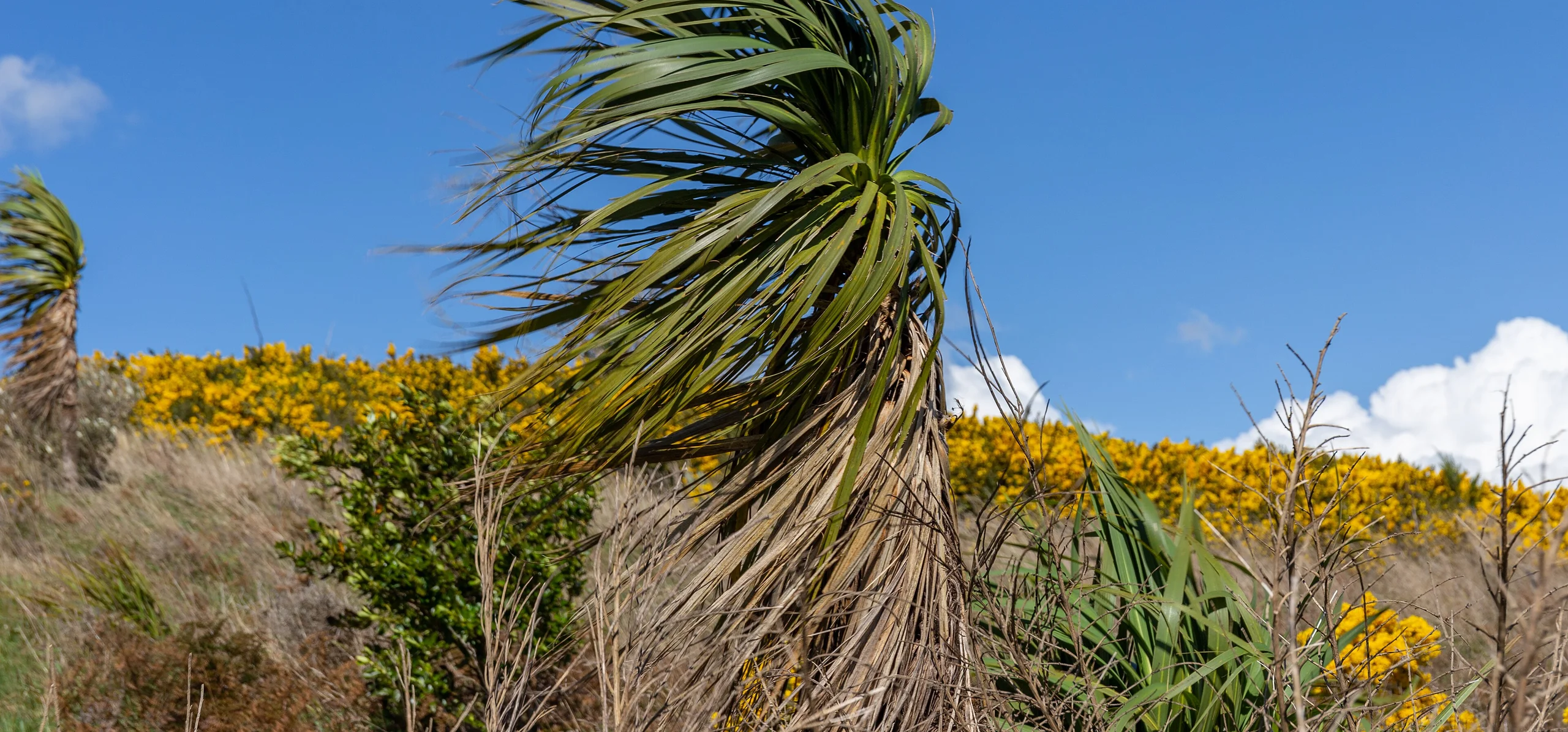
Both extension sources agree this is a slow grower with a correspondingly light appetite: NC State Extension records a slow growth rate and a low fertilizer requirement, recommending a controlled-release feed applied in spring, summer and fall rather than a regular liquid feed year-round. At maturity, the RHS puts Dracaena marginata at 2.5 to 4 metres tall and 1.5 to 2.5 metres wide, reached over ten to twenty years, while NC State Extension gives a wider working range of 6 to 20 feet (roughly 1.8 to 6 metres) tall and 3 to 10 feet (roughly 0.9 to 3 metres) wide, since a plant grown outdoors in a warm climate eventually gets far larger than one kept pruned in a pot indoors. Either way, nobody outgrows a room with this plant overnight.
Pruning, shaping and starting new plants from cuttings
The RHS's own pruning note is specific: weak stems may be shortened to 15cm (6in) in spring. NC State Extension explains what happens next: pruned stems "will usually grow 2 or more branches" just below the cut, which is how a single bare cane becomes the multi-headed, tufted silhouette sold in nurseries. NC State Extension's recommended propagation method is the stem cutting itself, the same piece removed from the top can be rooted to start an entirely new plant, which is also how growers produce the staggered-height canes often grouped together in one pot. Older, lower leaves fall away naturally with age, leaving the tan stem marked with diamond-shaped scars; that is normal ageing, not a problem to fix.
Pests, common problems and pet safety
NC State Extension lists banded greenhouse thrips, fern scale and longtailed mealybug as the insects most often found on this species, alongside mites and other chewing insects, plus a general susceptibility to leaf spot diseases. The RHS's own pest list for plants grown under glass adds glasshouse red spider mite. Check the undersides of the leaves and the leaf axils regularly, since all of these are easiest to treat while numbers are still low.
The ASPCA lists Dracaena marginata, under the common name Madagascar dragon tree, as toxic to dogs, cats and horses, with saponins as the toxic principle. Reported signs include vomiting (occasionally with blood), depression, loss of appetite, drooling and, in cats, dilated pupils. NC State Extension separately rates the plant's poison severity as low but confirms every part, flowers, fruit, leaves, roots, sap and stems, carries the toxin, and notes that humans who chew or ingest it can get mouth and stomach irritation, nausea, vomiting and diarrhea. Keep it out of reach of pets and small children, and rinse any sap off skin after pruning.
Test your plant knowledge
Tap a card to flip it and reveal the answer.
GBIF's backbone taxonomy accepts the name Dracaena marginata, even though Kew's POWO treats it as a synonym of a different plant. Tap to reveal ✓ True
Dracaena marginata thrives in full, unfiltered sun with no protection. Tap to reveal ✕ False
Fluoride in ordinary tap water is a common cause of brown leaf tips on this species. Tap to reveal ✓ True
The ASPCA lists Dracaena marginata as safe for cats, dogs and horses. Tap to reveal ✕ False
A stem that has been pruned typically branches into two or more new shoots below the cut. Tap to reveal ✓ True
Sources
References consulted for this guide
- Dracaena marginata Lem., GBIF Backbone Taxonomygbif.org
- Dracaena reflexa var. angustifolia Baker, Plants of the World Online, Kew Sciencepowo.science.kew.org
- ASPCA: Toxic and Non-Toxic Plants, Madagascar Dragon Treeaspca.org
- RHS: Dracaena marginata (v), Madagascar dragon treerhs.org.uk
- NC State Extension Gardener Plant Toolbox: Red-marginated Dracaena (Dracaena reflexa var. angustifolia)plants.ces.ncsu.edu
- Reference entity : Wikidatawikidata.org