Snake Plant
Dracaena trifasciata
Family · Asparagaceae
Dracaena trifasciata tolerates neglect but only one mistake kills it: overwatering. Here is the light, soil and watering this snake plant actually needs.
Dracaena trifasciata
Plant profile
- WateringVery littleWater every 21 days
- Light exposureIndirect light
- Ideal temperature15–24 °C
- Hardiness zoneUSDA 10–12
Growth
- Family
- Asparagaceae
- Life cycle
- Perennial
- Growth speed
- 4/10
- Mature size
- 100–150 cm
- Spread
- 10–50 cm
- Propagation
- Cutting
- Division
- Offsets
FloweringSmall, greenish white to cream, fragrant flowers in spring, rare indoors (NC State Extension)
DormancyGrowth slows sharply in winter; water minimally and keep away from cold drafts and radiators (RHS)
Time to maturityReaches its ultimate height in about 5 to 10 years (RHS)
Soil & climate
- Soil pH
- pH 6–8
- Soil types
- loam, sand, silt
- Drought tolerance
- Yes
Light & Placement
- Origin
- Native to southern Nigeria through west central tropical Africa to Tanzania (POWO)
- Where to place it
- A few feet back from an east or west facing window, in bright but filtered light (RHS)
- A low-light hallway or office corner it will tolerate, though it grows taller and lankier there (RHS)
- Full sun to partial shade in frost-free areas, USDA zones 10a to 12b (NC State Extension)
- A slightly snug pot with drainage holes; repot only once roots and leaves fill it completely (RHS)
Safety
- Toxicity
- CatsToxic
- DogsToxic
- HorsesToxic
- HumansToxic
Invasive speciesRated a High Invasion Risk in Florida's natural areas and not recommended for planting there (UF/IFAS Assessment)
Data fromDracaena trifasciata (Prain) Mabb., GBIFDracaena trifasciata (Prain) Mabb. | PlaASPCA: Toxic and Non-Toxic Plants, SnakeRHS Growing Guide: How to Grow SansevierRHS: Sansevieria trifasciata (mother-in-NC State Extension Gardener Plant Toolbo
Where it grows
World distribution
Snake Plant is native to 8 countries: Cameroon, Central African Republic, Congo - Brazzaville, Congo - Kinshasa, Equatorial Guinea, Gabon, Nigeria, and Tanzania.GBIF records 3,491 documented identifications across 125 countries, with the largest concentrations in Brazil, Australia, and United States.
- Cameroon
- Central African Republic
- Congo - Brazzaville
- Congo - Kinshasa
- Equatorial Guinea
- Gabon
- Nigeria
- Tanzania
Yellow to orange dots: concentration of documented identifications per country. Green countries: sourced native range. Source: GBIFNative range from POWO (Kew).
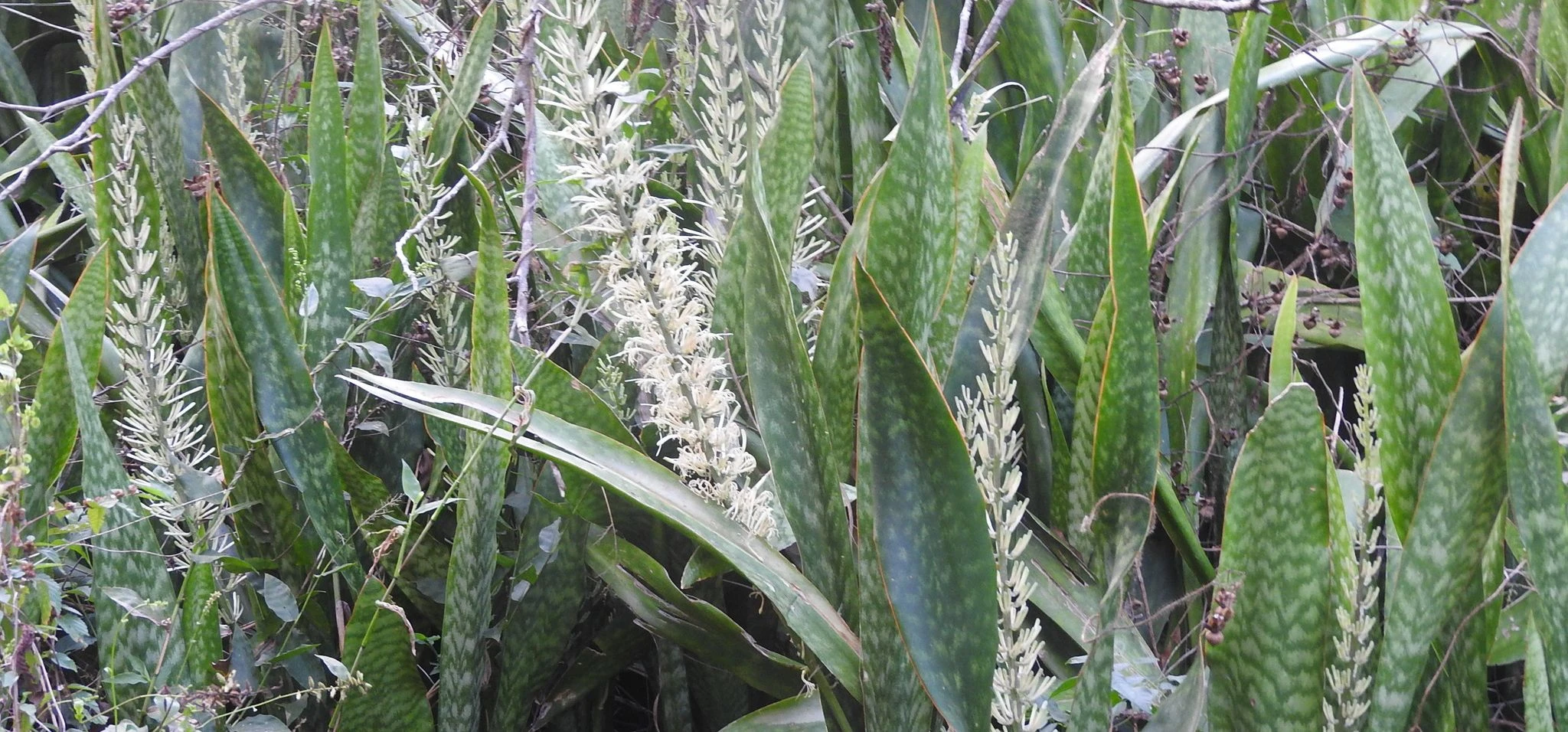
A stiff, sword-shaped leaf standing straight up out of the soil, banded in dark and pale green and often edged in yellow, with no visible stem at all, is almost certainly Dracaena trifasciata. GBIF records this as the accepted name, with the once-standard Sansevieria trifasciata now filed as a synonym after the whole genus was folded into Dracaena. It is native to a stretch of Africa that POWO records running from southern Nigeria across west central tropical Africa to Tanzania, savanna and dry woodland country that explains why a warm, dry living room suits it so well. The one habit worth learning before anything else: this plant is killed by water, almost never by neglect.
Where It Comes From, and Why the Name Changed
The plant most people still call Sansevieria trifasciata sits in the asparagus family, Asparagaceae, in the genus Dracaena, according to GBIF's backbone taxonomy. POWO lists two accepted infraspecific names within the species, subsp. trifasciata and subsp. sikawae, and records a synonym list built almost entirely from old Sansevieria names, including Sansevieria laurentii, the source of the popular yellow-edged 'Laurentii' cultivar. The reclassification followed genetic studies showing Sansevieria nested inside Dracaena, but garden centres and seed packets have been slow to catch up, so both names circulate for the same plant. POWO's native range, southern Nigeria to west central tropical Africa and Tanzania, is drier and more seasonal than the rainforest habitat many houseplants come from, which is the real reason this species shrugs off dry indoor air and irregular watering.
Light: From a Dim Corner to a Bright Windowsill
The RHS growing guide calls sansevierias "highly adaptable," noting they grow well in most locations around the home and tolerate both bright and low light. There is a trade-off worth knowing: the same guide notes that plants kept in shade tend to grow taller and lankier, while plants in brighter light stay shorter and more compact. The only real hazard is direct midday summer sun, which the RHS advises avoiding, since a plant used to indirect light can scorch if moved there abruptly. In practice that means almost any indoor spot works, and a position a few feet back from an east or west facing window, in bright but filtered light, gives the fullest, most compact growth.
Watering: The One Way to Kill It
Overwatering is, by a wide margin, the real threat to this plant. The RHS instructs watering only once the compost has dried out, checked by feeling the soil with a finger rather than by the calendar, and watering from above while avoiding the central rosette so water does not sit and rot the crown. In winter, growth slows sharply and the plant draws on water stored in its own leaves, so the RHS recommends minimal watering through the cold months. NC State Extension puts a number on that: in winter, water as little as once every one to two months. A leaf that has gone soft, yellow or mushy at the base is a rot symptom from too much water, not too little; a healthy plant left too dry simply looks a little duller and recovers within a day of its next watering.


Soil and Potting: Free-Draining and Better a Little Cramped
The RHS recommends a free-draining, peat-free cactus compost, or a mix of two parts peat-free loam-based compost to one part horticultural grit, while NC State Extension lists loam, sand and silt as suitable soil types with a neutral to alkaline pH of roughly 6.0 to 8.0 or higher. A pot with drainage holes is not optional: the RHS's own potting advice warns that an oversized pot holds excess moisture around the roots and encourages rot, so repotting should wait until roots and leaves have completely filled the current container, at which point the new pot should be only slightly larger. During the growing season from April to September, the RHS suggests a monthly liquid houseplant or cactus feed; nothing is needed once growth slows for winter.
Propagation: Division Keeps the Pattern, Leaf Cuttings Don't
There are three routes to a new plant, and they are not interchangeable if the variety is variegated. Offsets, the small rooted rosettes a mature plant produces at its base, can simply be separated and potted on their own. Larger clumps can be split by division, cutting through the rhizome so each section keeps its own leaves and roots. Leaf cuttings are the slowest method: the RHS describes slicing a mature leaf into roughly 5 cm sections, letting the cut edges callus, then inserting them halfway into damp cuttings compost, ideally with bottom heat around 18°C. The catch, stated directly in the RHS growing guide, is that cuttings taken from variegated cultivars like 'Laurentii' tend to produce plants that revert to plain green. Anyone who wants to keep a yellow-edged variety's markings needs to propagate by division or offsets, not by leaf cuttings.
Growing It Outdoors: A High Invasion Risk in Warm Climates
Indoors, this plant is almost impossible to place wrong. Outdoors, in genuinely warm climates, it is a different story: NC State Extension lists it as hardy only in USDA zones 10a to 12b, and the RHS rates it H1C, meaning it needs winter protection and a minimum of roughly 5 to 10°C to survive. Where it can survive outdoors year round, it can also spread further than intended. The University of Florida's IFAS Assessment rates Sansevieria trifasciata a High Invasion Risk and does not recommend planting it in Florida's landscapes, where it has already naturalized in counties including Miami-Dade, Lee and Collier. Anyone gardening in a frost-free climate should treat this as a plant for containers, not open ground.
Toxicity and Common Mistakes
The ASPCA lists this species as toxic to cats, dogs and horses, with saponins as the toxic principle and vomiting, diarrhea, drooling and, in cats, dilated pupils among the reported signs; NC State Extension adds that the sap itself can irritate skin on contact. Keep it away from pets that chew leaves and wear gloves when taking cuttings. The most common mistake is watering on a fixed schedule instead of checking the compost, which is how most snake plants actually die. The second is assuming a shaded corner is a life sentence: the plant will survive there, but the RHS's own note that shaded plants grow taller and less compact means a move to brighter, filtered light is worth trying before giving up on a leggy plant. The third is propagating a variegated favourite by leaf cuttings and being disappointed when the new plant grows in plain green instead of keeping its yellow edge.
Test your plant knowledge
Tap a card to flip it and reveal the answer.
Snake plants are more likely to die from too much water than too little. Tap to reveal ✓ True
Leaf cuttings from a variegated cultivar like 'Laurentii' keep its yellow leaf edges. Tap to reveal ✕ False
A snake plant kept in a shaded spot grows shorter and more compact than one in bright light. Tap to reveal ✕ False
Sansevieria trifasciata and Dracaena trifasciata are names for the same plant. Tap to reveal ✓ True
This plant is safe for cats, dogs and horses to chew on. Tap to reveal ✕ False
Sources
References consulted for this guide
- Dracaena trifasciata (Prain) Mabb., GBIF Backbone Taxonomygbif.org
- Dracaena trifasciata (Prain) Mabb. | Plants of the World Online, Kew Sciencepowo.science.kew.org
- ASPCA: Toxic and Non-Toxic Plants, Snake Plantaspca.org
- RHS Growing Guide: How to Grow Sansevieriarhs.org.uk
- RHS: Sansevieria trifasciata (mother-in-law's tongue)rhs.org.uk
- NC State Extension Gardener Plant Toolbox: Dracaena trifasciataplants.ces.ncsu.edu
- UF/IFAS Assessment: Sansevieria trifasciataassessment.ifas.ufl.edu
- Reference entity : Wikipédiaen.wikipedia.org