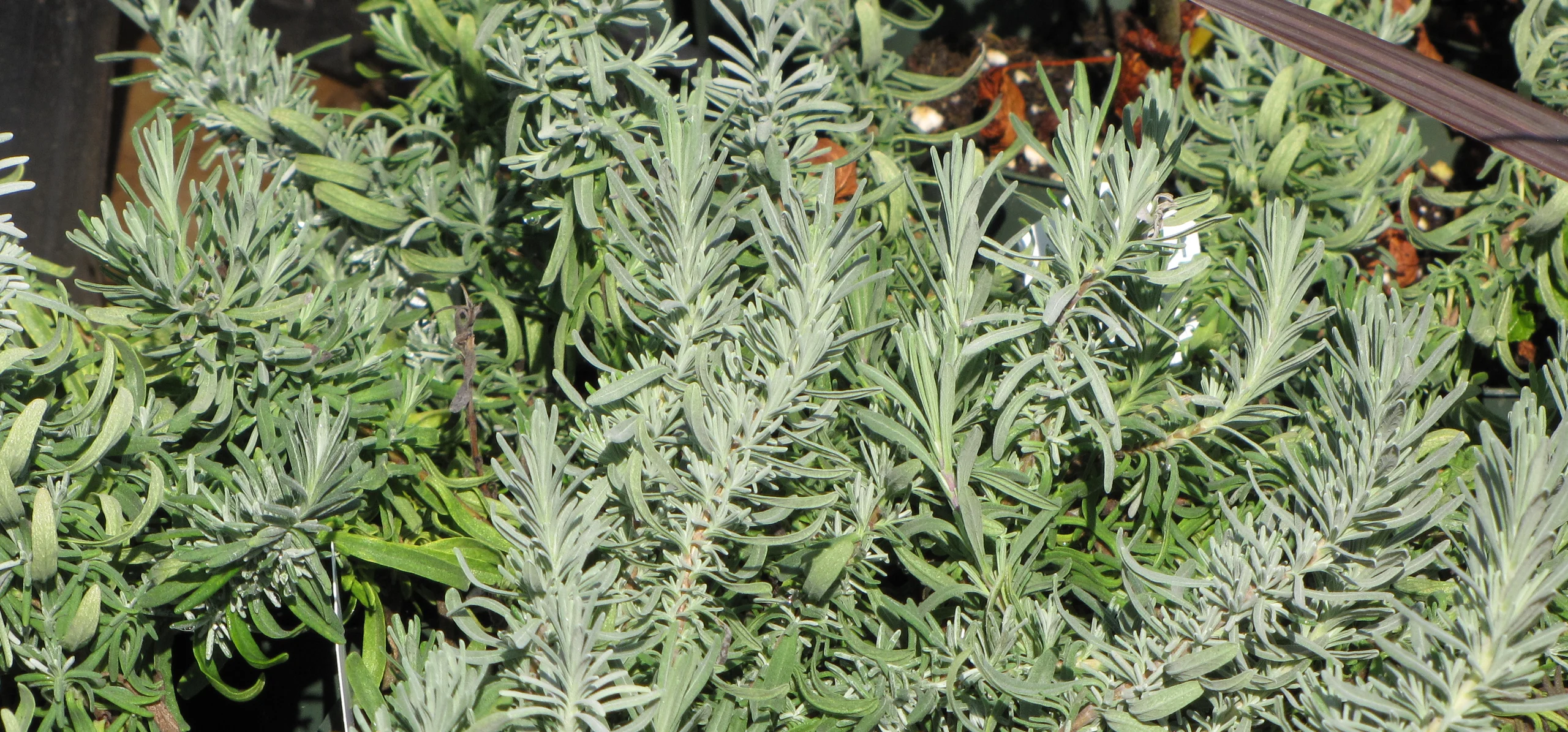
English Lavender
Lavandula angustifolia
Family · Lamiaceae
English lavender needs full sun, sharply drained alkaline soil, and an annual post-bloom pruning to avoid the woody, leggy growth that ends up killing it.
Lavandula angustifolia
Plant profile
- WateringLittleWater every 12 days
- Light exposureFull sun
- Hardiness zoneUSDA 5–10
Growth
- Family
- Lamiaceae
- Life cycle
- Perennial
- Growth speed
- 4/10
- Mature size
- 50–100 cm
- Spread
- 100–150 cm
- Flowering
- Mid to late summer, pale to deep purple spikes (RHS)
- Propagation
- Seed
- Cutting
DormancyEvergreen shrub with little to no winter dieback in mild climates (RHS)
Time to maturityReaches full size in 2 to 5 years (RHS); about 3 years per Utah State University Extension
Soil & climate
- Soil pH
- pH 6.5–7.5
- Soil types
- chalk, loam, sand
- Drought tolerance
- Yes
Light & Placement
- Where to place it
- South-, east- or west-facing bed away from standing water (RHS)
- Sunny gravel garden or raised bed with sharp drainage
- Sheltered spot against a light-colored, heat-reflecting wall
- Unglazed terracotta pot with drainage holes on a sunny, sheltered patio
OriginNative range NE. Spain to Italy across two subspecies (POWO); widely cultivated worldwide
Safety
- Toxicity
- CatsToxic
- DogsToxic
- HorsesToxic
Data fromLavandula angustifolia Mill., GBIF BackbLavandula angustifolia Mill. | Plants ofRHS: Lavandula angustifolia (English lavASPCA: Toxic and Non-Toxic Plants, LavenUtah State University Extension: How to
Where it grows
World distribution
English Lavender is native to 3 countries: France, Italy, and Spain.GBIF records 53,453 documented identifications across 69 countries, with the largest concentrations in France, Spain, and United Kingdom.
- France
- Italy
- Spain
Yellow to orange dots: concentration of documented identifications per country. Green countries: sourced native range. Source: GBIFNative range from POWO (Kew).
A Mediterranean Sub-shrub With Only Two Wild Ranges
A dense, silvery-green mound of narrow, needle-like leaves that releases a strong, resinous scent when brushed is almost certainly English lavender. GBIF records the accepted name as Lavandula angustifolia Mill., in the mint family Lamiaceae, order Lamiales. Kew's Plants of the World Online splits its wild range across two subspecies: subsp. pyrenaica in the Pyrenees and northeastern Spain, and subsp. angustifolia from southern France to Italy, together spanning NE. Spain to Italy. Despite the common name, it has never grown wild in England, every English lavender in a UK garden descends from Mediterranean stock cultivated since at least the Middle Ages. The RHS describes the genus as small, aromatic, evergreen shrubs, and that evergreen habit, paired with the tightest cold tolerance of any Lavandula species, is what makes L. angustifolia the one sold from mild coastal gardens to USDA zone 5 winters.
Full Sun and a Sheltered, South-Facing Aspect
The RHS rates Lavandula angustifolia for full sun with a south-, east- or west-facing aspect in a sheltered position, not an open, wind-scoured bed. Utah State University Extension is equally direct: the plant requires full sun and will not flower well, or for long, in shade. A wall or fence that reflects heat back onto the plant through the afternoon does more for flower quantity than fertiliser ever will. Morning shade from a nearby structure is tolerated, but all-day shade is not, plants stretch, flower sparsely, and become more prone to the fungal problems that come with damp, still air around the foliage.
Sandy, Alkaline Soil With Sharp Drainage
Utah State University Extension puts the ideal soil pH at 6.5 to 7.5, distinctly neutral to alkaline, and specifies dry, sandy, well-drained ground, working one inch of coarse compost four to eight inches deep at planting rather than enriching the soil. The RHS lists chalk, loam and sand as the soil types the species tolerates, across acid, neutral or alkaline pH, but is explicit that heavy, waterlogged ground is not tolerated. In clay soil, the fix is not amending the whole bed but raising it, a mounded or raised planting area drains in minutes instead of hours, which is often the difference between a lavender that survives its first wet winter and one that does not.


Watering Changes Completely Once the Plant Is Established
Utah State University Extension gives an unusually precise schedule: new plants need about one gallon of water per plant per week while roots establish, established plants need only around half a gallon every two weeks until flower buds form, then watering increases to once or twice a week through the flowering period itself. Outside of flowering, an established plant is, in the Extension's own words, very drought tolerant, and watering it more only buys slightly heavier bloom, not survival. The mistake runs almost entirely in one direction: underwatering rarely kills an established plant, but overwatering, especially in poorly drained soil, is the single most common way to lose it.
Pruning to Stop the Plant Going Woody
Left unpruned, Lavandula angustifolia turns into bare, woody stems topped with a thin fringe of leaves within a few seasons, and the RHS places the genus in pruning group 10, evergreen shrubs that need routine cutting back. Utah State University Extension's method is to shear the whole plant back to about half its size every year, right after flowering, to stimulate new growth and keep the habit bushy rather than leggy. The RHS adds two specific cautions: deadhead spent flower spikes as they fade, and never cut back into bare, leafless wood, since old wood on this species does not reliably resprout. Trimming in late summer, not during cold or wet autumn weather, protects the new growth that pruning stimulates from being caught by an early frost.
Propagating From Cuttings, Not From Seed
Utah State University Extension is specific that named lavender cultivars should come from vegetatively propagated nursery stock, cuttings, rather than seed, since seed-grown plants do not come true to the parent. Its method: take a cutting just below a leaf node, strip the lower leaves, dip the cut end in rooting hormone, and set it in warm, consistently moist soil, where roots typically form in 30 to 40 days. This is worth doing in quantity, since a border or hedge planted from a single rooted cutting produces uniform size, flower colour and bloom time in a way a mix of seed-grown plants never will.
Root Rot Is the Real Threat, Not Pests
Utah State University Extension names Phytophthora root rot, a soil-borne disease that thrives in wet, poorly drained ground, as the main disease risk for the species, and ties it directly back to overwatering rather than to any weakness in the plant itself. Insect and animal pressure is comparatively minor: grasshoppers and deer will browse the foliage, but the Extension notes this rarely kills an established plant. Its own list of common mistakes lines up with everything above: overwatering, planting in wet soil, over-fertilising, which the RHS notes produces soft, floppy growth at the expense of flowers, and poor weed control while the plant is still small enough for weeds to outcompete it.
Toxicity to Pets
The ASPCA lists Lavandula angustifolia as toxic to cats, dogs and horses, with linalool and linalyl acetate named as the toxic principles, the same aromatic compounds responsible for the plant's scent and its use in essential oil. The clinical signs the ASPCA records are nausea, vomiting (not seen in horses), and inappetence, consistent with a mild gastrointestinal irritant rather than a plant capable of serious poisoning. That is not a reason to avoid growing it where a pet has access, cats and dogs rarely chew the foliage given the intensity of the scent, but it does rule out treating cut stems or dried bundles as a safe chew toy or edible garnish for an animal.
Test your plant knowledge
Tap a card to flip it and reveal the answer.
Kew's Plants of the World Online places the native range of English lavender from NE. Spain to Italy. Tap to reveal ✓ True
An established lavender plant should be watered once or twice a week all season long. Tap to reveal ✕ False
Overwatering in poorly drained soil is the leading cause of death in established lavender. Tap to reveal ✓ True
Cuttings, not seed, are the recommended way to propagate named lavender cultivars true to type. Tap to reveal ✓ True
The ASPCA lists lavender as non-toxic to cats, dogs and horses. Tap to reveal ✕ False
Sources
References consulted for this guide
- Lavandula angustifolia Mill., GBIF Backbone Taxonomygbif.org
- Lavandula angustifolia Mill. | Plants of the World Online | Kew Sciencepowo.science.kew.org
- RHS: Lavandula angustifolia (English lavender)rhs.org.uk
- ASPCA: Toxic and Non-Toxic Plants, Lavenderaspca.org
- Utah State University Extension: How to Grow English Lavender in Your Gardenextension.usu.edu
- Reference entity : Wikipédiaen.wikipedia.org