French Lavender
Lavandula stoechas
Family · Lamiaceae
French lavender's rabbit-ear bracts open weeks before English lavender, but sharp drainage, a light post-bloom trim and winter shelter below -5°C keep it alive.
Lavandula stoechas
Plant profile
- WateringLittleWater every 12 days
- Light exposureFull sun
- Ideal temperature-10–-5 °C
- Hardiness zoneUSDA 8–9
Growth
- Family
- Lamiaceae
- Life cycle
- Perennial
- Growth speed
- 5/10
- Mature size
- 50–100 cm
- Spread
- 50–100 cm
- Flowering
- Mid-spring through late summer
- Propagation
- Seed
- Cutting
DormancyEvergreen; minimal winter dormancy
Time to maturity2 to 5 years
Soil & climate
- Soil types
- sand, chalk, loam, well-drained, gritty
- Drought tolerance
- Yes
Light & Placement
- Origin
- Mediterranean basin, from France to Türkiye
- Where to place it
- south-facing bed
- gravel garden
- raised bed
- terracotta pot with drainage holes; shelter below -5°C
Safety
- Toxicity
- CatsToxic
- DogsToxic
- HorsesToxic
Invasive speciesNaturalized, invasive in parts of Australia (CABI).
Data fromGBIF: Lavandula stoechas L.Plants of the World Online (Kew): LavandRHS: Lavandula stoechas subsp. stoechas NC State Extension Gardener Plant ToolboASPCA: Toxic and Non-Toxic Plants, Laven
Where it grows
World distribution
French Lavender is native to 12 countries: Algeria, Cyprus, France, Greece, Italy, Lebanon, Morocco, and Palestinian Territories….GBIF records 231,069 documented identifications across 47 countries, with the largest concentrations in Spain, France, and Portugal.
- Algeria
- Cyprus
- France
- Greece
- Italy
- Lebanon
- Morocco
- Palestinian Territories
- Portugal
- Spain
- Tunisia
- Türkiye
Yellow to orange dots: concentration of documented identifications per country. Green countries: sourced native range. Source: GBIFNative range from POWO (Kew).
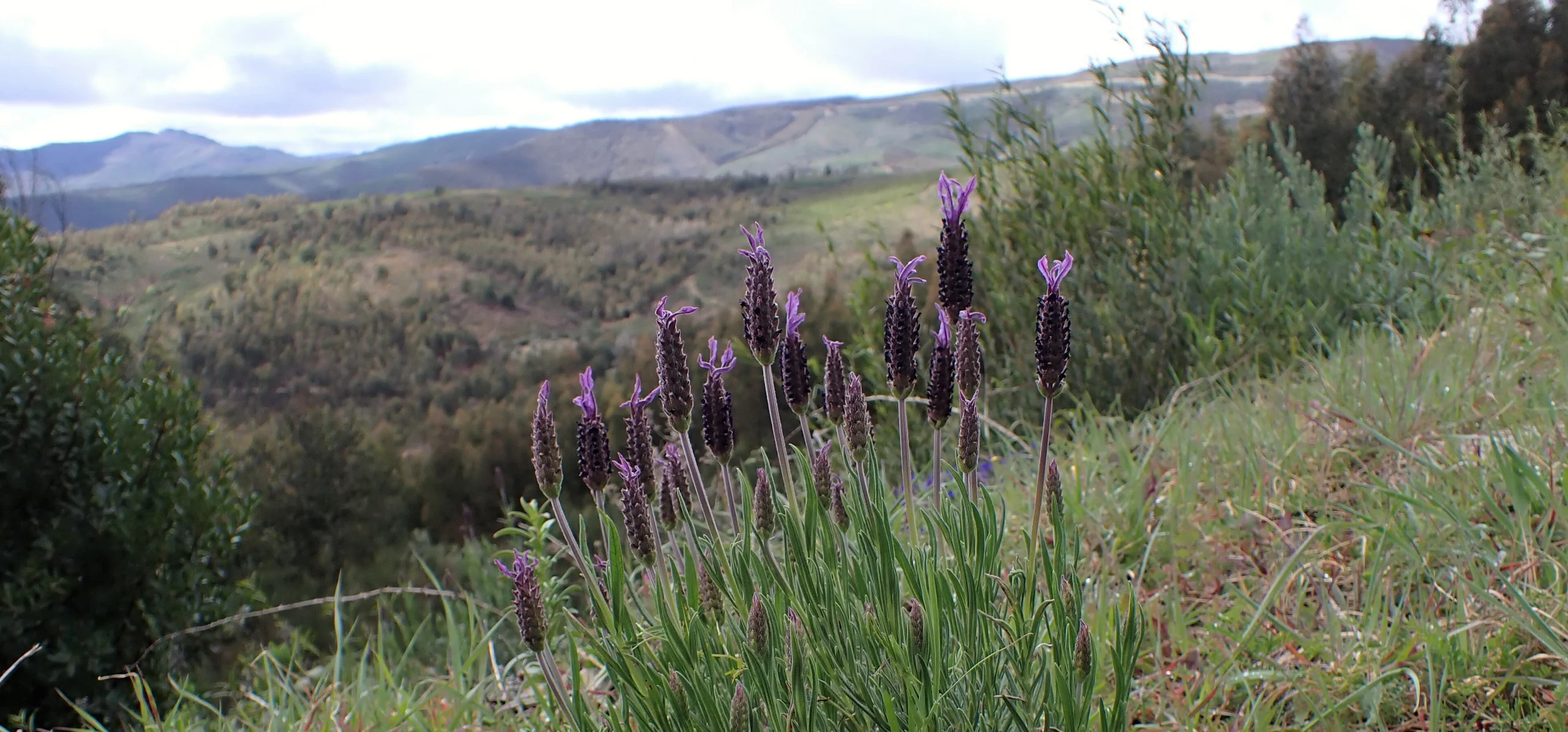
Lavandula stoechas is the lavender with the "rabbit ears": each dense, cone-shaped flower head is topped with a tuft of long purple bracts, sterile leaves with no flowers of their own, built to wave above the tiny true flowers packed underneath and draw pollinators in. It opens its first flush in mid-spring, weeks ahead of English lavender (Lavandula angustifolia), and keeps pushing new heads through summer if the spent ones are cut off. It is also the less hardy of the two: RHS rates it H4, tolerating winters down to roughly -10 to -5°C, so gardeners north of that line grow it in a pot they can move under cover rather than trust it to open ground. Full sun and sharp drainage matter here more than for most other lavenders, since this species rots in wet winter soil faster than it succumbs to cold.
The Rabbit-Ear Bracts, and How to Tell It From English Lavender
RHS describes the flower head as "short-stalked, dense, ovoid heads of tiny blackish-purple flowers surmounted by a tuft of purple bracts," and that silhouette, a squat cone with flags standing up from the top, is the fastest way to separate it from English lavender's slender, bract-free spikes. GBIF records French Lavender, Italian lavender and Spanish lavender as its English vernacular names, all describing the same plant grown under different regional traditions. The foliage is narrow and grey-green, evergreen through the year, and the scent is sharper and more camphorous than English lavender, which is why stoechas oil goes into cleaning products and pest deterrents more often than perfumery.
Native Range and Where It Has Naturalized
Plants of the World Online lists the native range as the Mediterranean basin: Algeria, the Balearic Islands, Corsica, Cyprus, the East Aegean Islands, France, Greece, Italy, Crete, Lebanon-Syria, Morocco, Palestine, Portugal, Sardinia, Sicily, Spain, Tunisia and Türkiye. NC State Extension narrows the everyday picture to dry, rocky, sun-baked slopes in France, Portugal and Spain, the same conditions a container or a raised bed should mimic. Grown well outside that range, it has jumped garden walls: CABI's compendium tracks it as a naturalized, invasive species in parts of Australia, where it spreads into pasture, roadsides and disturbed ground far from any Mediterranean coast.
Sun, Soil and Drainage
RHS lists chalk, loam and sand as suitable soils and rates the species tolerant of acid, neutral and alkaline pH alike, which makes drainage, not lime content, the detail that actually decides whether a plant lives or dies. NC State Extension is blunt about it: gritty, sandy or loamy well-drained soil in full sun, six or more hours of direct light a day, with root rot from poor drainage listed as a primary risk. In heavy clay or a low spot that stays damp, raise the bed or dig in coarse grit before planting rather than trying to compensate later; a lavender's roots that sit wet for a season rarely recover once they start to blacken.


Deadheading and the Light Trim After Each Flush
Cutting spent flower heads back to the first pair of healthy leaves as soon as they fade keeps the plant tidy and encourages the next flush rather than letting seed heads sit through summer. RHS places this species in pruning group 10, deadhead after flowering and give the whole plant a light shape-up once the last flush is done, trimming only into the current season's soft green growth. NC State Extension's warning matters more here than for most shrubs: these plants do not tolerate being cut back to the ground, and a hard cut into bare old wood can kill the plant outright rather than prompt fresh shoots the way roses or many other shrubs would respond.
Hardiness and Growing It in a Pot Through Winter
An H4 rating from RHS means reliable survival down to about -10 to -5°C outdoors in a sheltered, south- or west-facing spot, well short of the deep cold English lavender shrugs off. Anyone gardening colder than that grows French lavender in a terracotta or other free-draining pot, moved against a wall, into a cold frame or an unheated porch once temperatures threaten to drop below -5°C, and brought back out once the worst of winter has passed. Winter wet is the bigger threat of the two in marginal climates: a plant that would survive a dry cold snap outdoors often rots instead in a saucer of standing rainwater, so raise pots off the ground and skip the drip tray through the cold months.
Propagation and Renewing a Short-Lived Shrub
NC State Extension flags this as a short-lived specimen compared with other lavenders, woody and leggy at the base within a few years even with regular light trimming. RHS lists seed and semi-hardwood cuttings as the propagation routes, and cuttings are the more reliable of the two for named varieties, since seed-grown plants vary in bract size and flower colour. Taking a batch of cuttings from healthy new growth in late summer, before the plant starts to decline, keeps a supply of young replacements coming rather than leaving a gap in the border when an older plant finally gives out.
Pests and the Diseases That Follow Poor Drainage
NC State Extension calls this a largely pest- and disease-resistant plant, worth monitoring for aphids, spider mites, whiteflies and thrips rather than expecting a serious infestation. The real risk sits in the soil and the air around the plant: root rot from standing water, and leaf spot or powdery mildew in humid conditions with poor airflow, both symptoms of a plant that is too wet or too crowded rather than genuinely under pest attack. Spacing plants far enough apart for air to move between them does more to prevent both problems than any spray applied after the fact.
Toxic to Pets, Valuable to Bees
The ASPCA's toxic plant database lists lavender's toxic principles as linalool and linalyl acetate, causing nausea, vomiting and loss of appetite in dogs, cats and horses; the entry names Lavandula angustifolia specifically, but the same aromatic compounds are what give every lavender, French lavender included, its scent, so the same caution applies. A dog or cat that chews on a stem occasionally is unlikely to come to serious harm, but a pot kept somewhere out of easy reach is the simpler answer for a household with a chewing puppy or a curious cat. None of that caution extends to bees: the long bloom season and the strong nectar draw pollinators steadily from the first spring flush onward, and a row of French lavender in full sun on a warm afternoon is rarely without bumblebees working the flower heads.
Test your plant knowledge
Tap a card to flip it and reveal the answer.
French lavender (Lavandula stoechas) flowers earlier in spring than English lavender. Tap to reveal ✓ True
Lavandula stoechas tolerates colder winters than English lavender. Tap to reveal ✕ False
The purple "rabbit ears" on top of the flower head are sterile bracts, not petals. Tap to reveal ✓ True
This lavender tolerates heavy, poorly drained soil through winter without special preparation. Tap to reveal ✕ False
The ASPCA lists linalool and linalyl acetate as toxic principles in lavender, harmful to cats, dogs and horses. Tap to reveal ✓ True
Sources
References consulted for this guide
- GBIF: Lavandula stoechas L.gbif.org
- Plants of the World Online (Kew): Lavandula stoechas L.powo.science.kew.org
- RHS: Lavandula stoechas subsp. stoechas (French lavender)rhs.org.uk
- NC State Extension Gardener Plant Toolbox: Lavandula stoechas (Bract Lavender)plants.ces.ncsu.edu
- ASPCA: Toxic and Non-Toxic Plants, Lavenderaspca.org
- Reference entity : Wikipédiaen.wikipedia.org