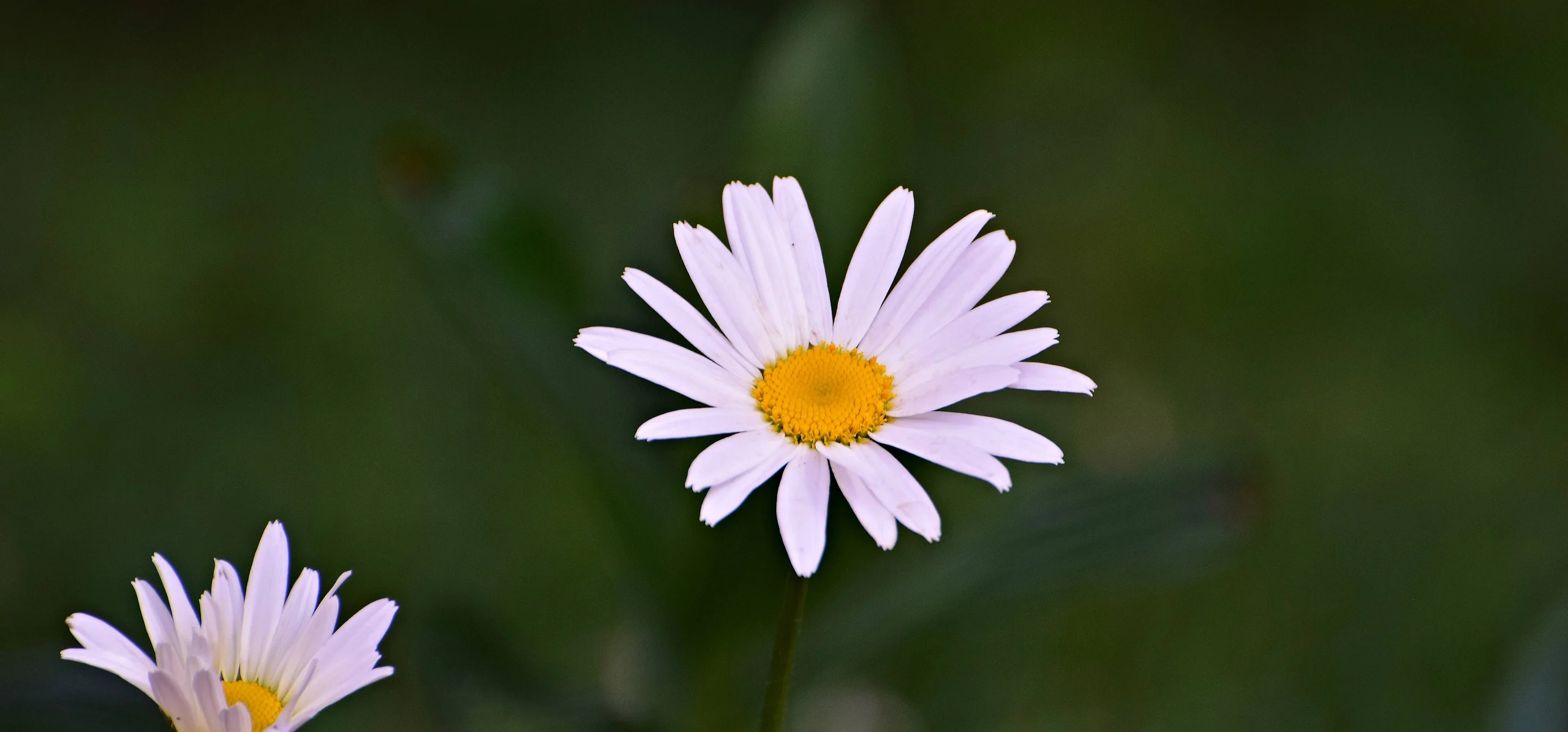
Shasta Daisy
Leucanthemum maximum
Family · Asteraceae
Leucanthemum maximum is the Pyrenean species behind the garden Shasta daisy hybrid: full sun, well-drained soil, staking, deadheading and dividing every 2-3.
Leucanthemum maximum
Plant profile
- WateringModerateWater every 6 days
- Light exposureFull sun
Growth
- Family
- Asteraceae
- Life cycle
- Perennial
- Growth speed
- 6/10
- Mature size
- 50–100 cm
- Spread
- 10–50 cm
- Flowering
- July to August, with repeat blooms if deadheaded
- Propagation
- Seed
- Division
Dormancydies back to a low basal rosette over winter, regrowing from the rootstock in spring
Time to maturitymatures into a full flowering clump in about 2 to 5 years
Soil & climate
- Soil types
- chalk, clay, loam, sand
- Drought tolerance
- No
Light & Placement
- Origin
- Northwestern Spain to the Pyrenees (POWO)
- Where to place it
- sunny herbaceous border
- cutting garden
- cottage garden bed
- large container with fertile, well-drained compost, sheltered from strong wind
Safety
- Toxicity
- CatsToxic
- DogsToxic
- HorsesToxic
Data fromLeucanthemum maximum (Ramond) DC., GBIF POWO: Leucanthemum maximum (Ramond) DC.RHS: Leucanthemum maximum (Ramond) DC.ASPCA Toxic and Non-toxic Plants: ChrysaClemson HGIC: Chrysanthemum Diseases and
Where it grows
World distribution
Shasta Daisy is native to 2 countries: France and Spain.GBIF records 3,357 documented identifications across 68 countries, with the largest concentrations in France, United States, and Spain.
- France
- Spain
Yellow to orange dots: concentration of documented identifications per country. Green countries: sourced native range. Source: GBIFNative range from POWO (Kew).
Leucanthemum maximum is the big, solitary white daisy from the Pyrenees and northwestern Spain that gardeners keep confusing with two closer relatives: the wild ox-eye daisy, Leucanthemum vulgare, and the garden hybrid sold almost everywhere as Shasta daisy, Leucanthemum x superbum. If a nursery tag or seed packet actually reads Leucanthemum maximum rather than x superbum, you have the wild species itself, a clump-forming perennial with flowerheads that can exceed 8 cm across. It wants the same basic conditions wherever it grows: full sun, soil that stays fertile and moist without ever sitting wet, and a clump that gets lifted and split every few years before the centre goes bare.
The Pyrenean Parent Behind the Garden Shasta Daisy
Plants of the World Online lists this species' native range as northwestern Spain to the Pyrenees, and it is exactly the plant Luther Burbank collected from that range and crossed with ox-eye daisy and other wild Leucanthemum-type daisies to breed the larger, longer-flowering hybrid he named Shasta daisy. That hybrid, Leucanthemum x superbum, is what fills most garden centre trays today, and it swapped this species' single large flowerhead for a denser, more floriferous clump bred purely for the border. GBIF records the accepted name as Leucanthemum maximum (Ramond) DC., with Chrysanthemum maximum Ramond among its older synonyms, a name still worth knowing since some plant databases, and the ASPCA's toxicity listing, file this species under Chrysanthemum rather than Leucanthemum. Set next to ox-eye daisy, the difference is as much in the roots as the flower: L. vulgare spreads by shallow rhizomes into a weedy meadow patch, while L. maximum builds a single, well-behaved clump.
Light, Soil and Siting to Avoid Crown Rot
The RHS lists this species as needing full sun and a sheltered spot, in soil that is moist but well-drained and moderately fertile, tolerant of chalk, clay, loam or sand and of acid, neutral or alkaline pH alike. The one condition it will not forgive is standing water: soil that stays wet through winter is the most common way to lose a clump to crown and root rot, so a border that puddles after rain needs grit worked into the planting hole or a raised bed rather than a direct attempt to grow this daisy at the low point of the garden. In a container, the same rule applies twice over: use a pot with a generous drainage hole and a free-draining mix, since a waterlogged root ball is far more dangerous over a wet winter than a dry one.

Watering Through the Season
This is not the drought-hardened plant that ox-eye daisy is on thin meadow soil. Newly planted crowns need regular water through their first spring and summer while roots establish, and even mature clumps benefit from a deep soak in any stretch of dry weather during flowering, when a check in growth shows up as smaller, fewer flowerheads rather than outright wilting. Once the top few centimetres of soil have dried out, water deeply and let it drain, rather than sprinkling little and often, which only encourages the shallow surface roots that struggle in the next dry spell.
Staking and Deadheading for a Longer Bloom
Height runs from about 50 to 100 cm according to the RHS, and the taller end of that range, especially on rich soil or in a sheltered bed where growth is soft, flops in summer rain or wind unless it is supported early. Push twiggy sticks or a link stake in around the emerging clump in mid-spring, well before the stems actually need it, since staking a daisy that has already leaned over never looks tidy. Flowering runs from July into August, and deadheading spent flowerheads as they fade, cutting back to the next bud or leaf, keeps the clump producing new buds for weeks longer than it would if seed heads were left to form.
Cutting Back and Dividing Every Few Years
Once flowering is properly finished in autumn, cut the whole clump's stems down to ground level, tidying the bed and removing overwintering sites for pests and leaf spot spores. The plant regrows from a low basal rosette the following spring. The RHS recommends dividing every two to three years to maintain vigour, lifting the clump in early spring or late autumn and replanting only the younger growth from the outer edge while discarding the woody, unproductive centre; left undivided for longer, flowering thins out and the clump loses shape. Because this is a true species rather than a named cultivar, seed sown in spring or early summer, bought or collected from your own plants, comes reasonably true to type and is a straightforward way to raise a new batch for a border or cutting patch, though division is the faster route to a flowering-size clump.
Pests and Diseases to Watch For
Aphids clustering on soft new growth and flower buds are the most frequent problem the RHS lists for this species, alongside chrysanthemum eelworm, a stem and leaf nematode that causes brown, wedge-shaped patches between the leaf veins and is best managed by removing and destroying affected foliage rather than by chemical treatment. Earwigs are a nuisance rather than a serious threat, but they feed at night and can rasp ragged holes into open petals, hiding by day in nearby debris or in an upturned, straw-stuffed pot left out as a trap. Leaf spot, caused by Septoria, Alternaria or Cercospora fungi that also trouble cultivated chrysanthemums, shows as small tan to dark brown spots, often ringed with purple, that spread fastest in prolonged wet, humid weather; picking off affected leaves and clearing fallen debris in autumn does more to control it than any fungicide.
Toxicity, Pollinators and Cutting for the Vase
The ASPCA lists Chrysanthemum, the genus this species was long classified under, as toxic to cats, dogs and horses, with pyrethrins and sesquiterpene lactones named as the toxic principles and vomiting, diarrhoea, hypersalivation, incoordination and skin irritation as the reported signs of ingestion or contact, so keep cut stems and fallen petals away from pets that chew on greenery. In the border, the flat, open flowerhead is an easy landing platform for bees and hoverflies through its summer flowering window. For cutting, take stems in the cool of morning once the yellow disc florets have just opened, and expect several days in the vase, which is exactly the trait Burbank was breeding for when he used this Pyrenean species to create the modern Shasta daisy.
Test your plant knowledge
Tap a card to flip it and reveal the answer.
Leucanthemum maximum, collected from the Pyrenees, is one of the wild species Luther Burbank crossed to breed the garden Shasta daisy. Tap to reveal ✓ True
According to Plants of the World Online, Leucanthemum maximum is native to northwestern Spain and the Pyrenees. Tap to reveal ✓ True
The ASPCA lists this species as toxic to cats, dogs and horses. Tap to reveal ✓ True
Leucanthemum maximum grows best in soil that stays permanently wet or waterlogged through winter. Tap to reveal ✕ False
The hybrid sold in nurseries as Shasta daisy, Leucanthemum x superbum, is simply another name for Leucanthemum maximum. Tap to reveal ✕ False
Sources
References consulted for this guide
- Leucanthemum maximum (Ramond) DC., GBIF Backbone Taxonomygbif.org
- POWO: Leucanthemum maximum (Ramond) DC.powo.science.kew.org
- RHS: Leucanthemum maximum (Ramond) DC.rhs.org.uk
- ASPCA Toxic and Non-toxic Plants: Chrysanthemumaspca.org
- Clemson HGIC: Chrysanthemum Diseases and Insect Pestshgic.clemson.edu
- Reference entity : Wikipédiaen.wikipedia.org