Wild Bergamot
Monarda fistulosa
Family · Lamiaceae
Wild bergamot handles dry, average soil in full sun better than scarlet bee balm. Covers spacing, mildew, division every 3 years, and its pollinator value.
Monarda fistulosa
Plant profile
- WateringLittleWater every 9 days
- Light exposureFull sun
- Hardiness zoneUSDA 3–9
Growth
- Family
- Lamiaceae
- Life cycle
- Perennial
- Growth speed
- 6/10
- Mature size
- 60–120 cm
- Spread
- 45–60 cm
- Flowering
- Mid to late summer, lavender-pink shaggy flower heads
- Propagation
- Seed
- Division
Dormancydies back to the ground after frost, resprouting from rhizomes in spring
Time to maturityreaches full flowering size in its second year
Soil & climate
- Soil pH
- pH 6–7.5
- Soil types
- loam, sand, clay-loam
- Drought tolerance
- Yes
Light & Placement
- Origin
- Widespread across Canada to northeastern Mexico, native through most of North America
- Where to place it
- prairie or meadow planting
- sunny mixed border
- pollinator garden
- roadside bank or slope
- large container with a free-draining mix, watered more often than in-ground plants
Safety
- Toxicity
- Not listed by the ASPCA as toxic or non-toxic to cats, dogs or horses
- Pet safe
- No
Invasive speciesspreads by rhizome into widening colonies in loose soil; not listed as invasive, but divide or edge the clump every few years to keep it from crowding neighbors
Data fromMonarda fistulosa L., GBIF Backbone TaxoPOWO: Monarda fistulosa L.Missouri Botanical Garden Plant Finder: ASPCA Toxic and Non-Toxic Plant List: Do
Where it grows
World distribution
Wild Bergamot is native to 3 countries: Canada, Mexico, and United States.GBIF records 67,753 documented identifications across 33 countries, with the largest concentrations in United States, Canada, and Sweden.
- Canada
- Mexico
- United States
Yellow to orange dots: concentration of documented identifications per country. Green countries: sourced native range. Source: GBIFNative range from POWO (Kew).
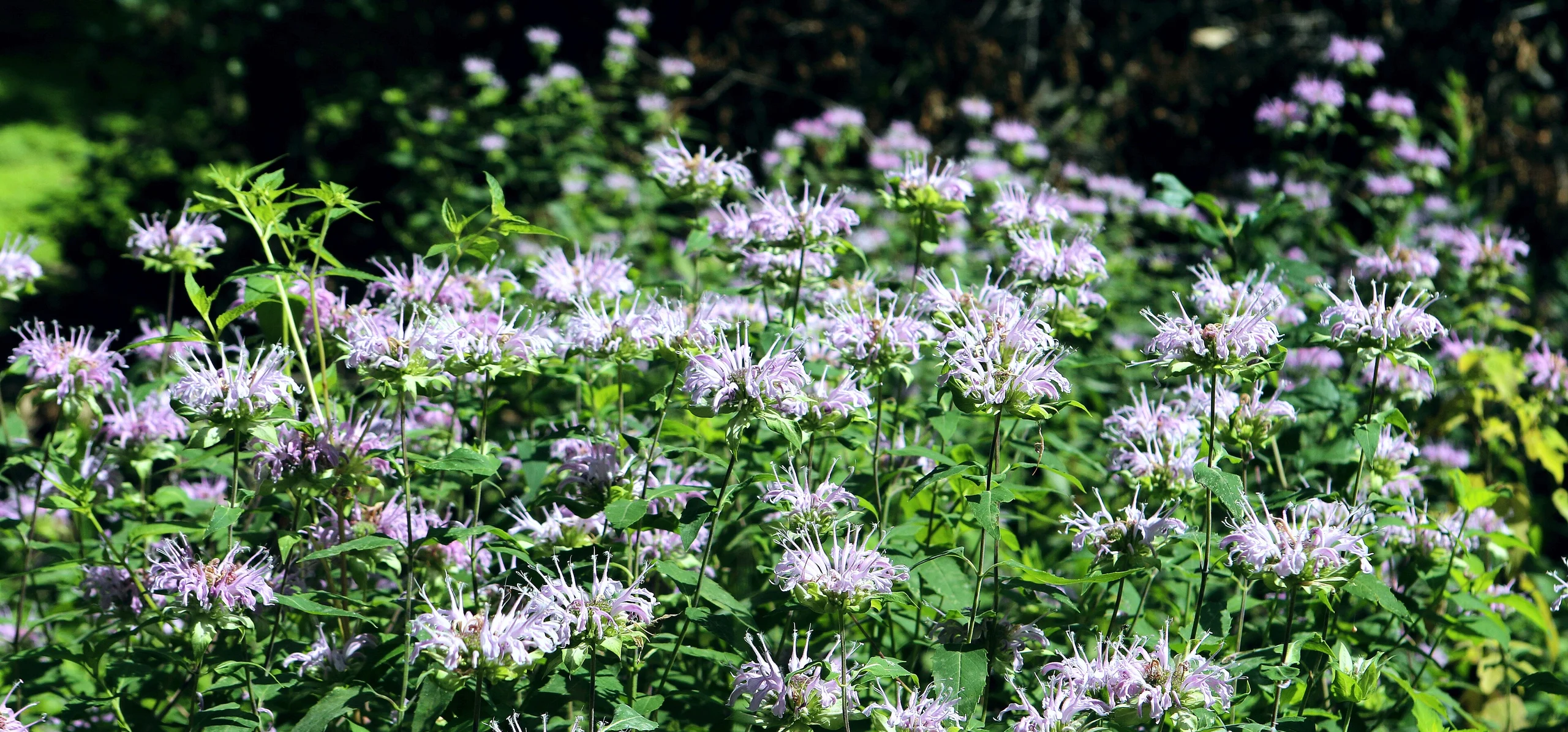
Wild bergamot, Monarda fistulosa, is the prairie cousin of the bee balm most gardeners know first, scarlet-flowered Monarda didyma. Where that species wants moist, part-shaded ground and sulks in a dry summer, wild bergamot grew up on open prairie and roadside banks and shrugs off average to dry soil in full sun. It sends up clumps of square, minty stems topped from midsummer with shaggy, tubular lavender-pink flower heads that draw long-tongued bees, hummingbird moths and butterflies from the moment they open. It spreads steadily by rhizome, so a single division becomes a patch within a few seasons, and its aromatic, oregano-scented leaves have a long history as a tea plant well before it became a garden staple.
Origin and How It Differs From Scarlet Bee Balm
GBIF accepts Monarda fistulosa L. as the current name, in the mint family Lamiaceae, and Plants of the World Online gives its native range as Canada to northeastern Mexico, essentially the width of the continent, where it grows on prairies, dry rocky woods, glade margins and roadsides. That breadth of range is unusual for a Monarda and explains why it is so much more forgiving than Monarda didyma: populations have adapted to lean, dry ground across a huge swath of North America, while scarlet bee balm stayed closer to its damp, part-shaded eastern woodland habitat. In the garden this single difference decides where each species belongs, wild bergamot for the sunny, dryish border or meadow, scarlet bee balm for a bed that stays reliably moist.
Site, Soil and Sun
Give it full sun, six hours or more, for the densest flowering and the sturdiest stems; in partial shade it still blooms but stretches and leans. Soil can be average to dry and only moderately fertile, loam or sandy ground both work, as long as drainage is decent. It is one of the few Monarda that genuinely tolerates a dry summer once established, which makes it a workable choice for a mixed border that only gets watered occasionally, not just a wildflower meadow.
Planting and Spacing for Airflow
Space new plants or divisions 45 to 60 cm apart. That gap looks generous the first year but fills in fast once the rhizomes get going, and it matters more than it seems: tight spacing traps humid, still air around the foliage and is the single biggest driver of powdery mildew later in the season. A slightly wider planting than feels necessary at installation is cheap insurance against having to thin a mildewed clump in August.


Watering
Water a new division weekly through its first season while roots establish. After that, established clumps handle dry spells on their own and need supplemental water only in prolonged drought or in a container, where the free-draining mix that keeps roots healthy also dries out fast. Letting the soil go bone dry repeatedly still stresses the plant and makes it more prone to mildew, so occasional deep watering in a hot, rainless stretch is worth the effort even on an otherwise drought-tolerant plant.
Powdery Mildew and Air Circulation
Wild bergamot gets less powdery mildew than scarlet bee balm, but it is not immune, and a humid, still summer can still coat the lower leaves in the characteristic white bloom. Good spacing, thinning a crowded clump, and avoiding overhead watering late in the day all reduce the risk. If mildew shows up, it is mostly cosmetic this late in the season, cut affected stems back after flowering rather than spraying, and the fresh growth the following spring is usually clean.
Spreading Clumps and Dividing Every Three Years
The plant spreads by shallow rhizomes, widening its clump a little more each year and, in loose soil, colonizing nearby ground on its own. Left alone for too long, the center of an old clump thins out and flowers less. Lift and divide every three years or so, in spring as new growth emerges, discarding the tired center and replanting vigorous rhizome sections from the outer edge. Division also keeps a spreading planting from crowding out slower neighbors in a mixed border.
Deadheading and Cutting Back
Deadhead spent flower heads through the bloom period to keep the display tidy and to prevent excessive self-seeding into an area where it is not wanted. Once flowering finishes for the season, cut the stems back to a few centimeters above the ground. This tidies the bed, removes foliage that has picked up mildew over the summer, and clears the way for the fresh basal growth that will carry the plant through winter dormancy.
Propagation From Seed
Sow seed outdoors in autumn and let winter cold do the stratification naturally, or cold-stratify seed in a refrigerator for several weeks before a spring sowing indoors. Germination is generally reliable once the cold requirement is met. Seedlings take a full season to bulk up before flowering well, so division is the faster route to a mature-looking clump, but seed is the better option for planting a large prairie or meadow area from scratch.
Pollinators and Traditional Uses
Few native perennials pull in the pollinator range that wild bergamot does: long-tongued bumblebees and other bees work the tubular flowers all day, hummingbird moths hover at them in the evening, and butterflies visit steadily through the bloom period, which makes it a mainstay of prairie and meadow plantings built for wildlife. The leaves carry the same aromatic oil, thymol, that gives thyme its scent, and dried or fresh leaves have long been steeped as a tea; Indigenous peoples of the plant's native range used it historically as a medicinal and culinary herb well before European settlers adopted the practice.
Toxicity to Pets
The ASPCA's toxic and non-toxic plant lists do not include Monarda fistulosa or wild bergamot by name, so no official toxic or non-toxic determination is on record for this species. As with most aromatic garden herbs, a pet that eats a large amount of foliage could get mild, transient stomach upset from the volume and oils, but there is no ASPCA-documented toxic compound specific to this plant.
Test your plant knowledge
Tap a card to flip it and reveal the answer.
Wild bergamot tolerates drier soil than scarlet bee balm (Monarda didyma). Tap to reveal ✓ True
Wild bergamot spreads mainly by underground rhizomes and can form a widening clump. Tap to reveal ✓ True
Powdery mildew never appears on Monarda fistulosa. Tap to reveal ✕ False
The crushed leaves of wild bergamot smell like oregano or thyme. Tap to reveal ✓ True
Cutting the plant back hard after flowering has no benefit. Tap to reveal ✕ False
Sources
References consulted for this guide
- Monarda fistulosa L., GBIF Backbone Taxonomygbif.org
- POWO: Monarda fistulosa L.powo.science.kew.org
- Missouri Botanical Garden Plant Finder: Monarda fistulosamissouribotanicalgarden.org
- ASPCA Toxic and Non-Toxic Plant List: Dogsaspca.org
- Reference entity : Wikipédiaen.wikipedia.org