
Care topic
Monstera Light Requirements: Find the Perfect Spot for Split Leaves
Monstera needs bright indirect light to grow large split leaves. Learn the best window orientation and what to do in low-light homes.
5 min read
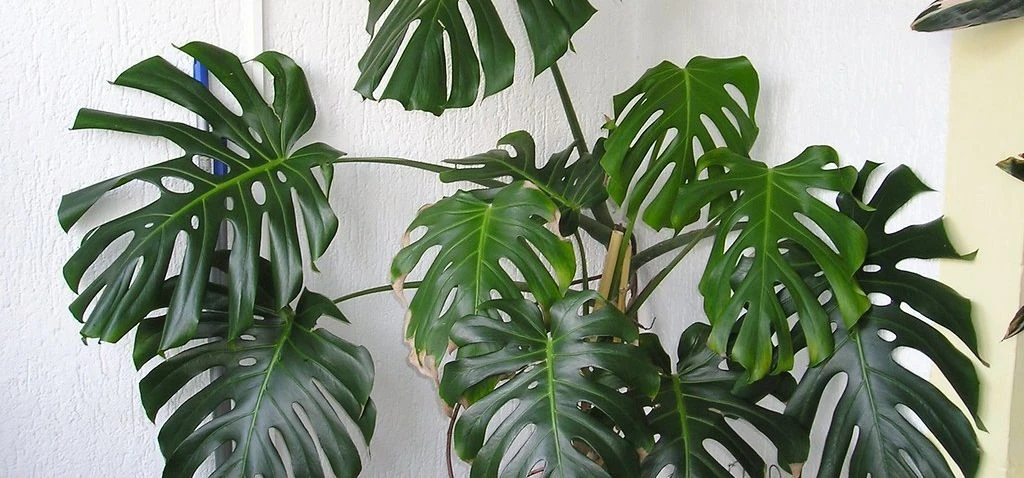
Types of light suitable for Monstera growth
Monstera deliciosa evolved as a climber under the dense canopy of the rainforests of southern Mexico and Central America, where it receives bright but mostly diffused light, rarely direct sun hitting the leaf surface. This background defines what "bright indirect light" means in practice: light that is intense enough to cast a clear shadow but never the direct beam of the sun falling across the leaf. An east-facing windowsill in the morning provides this naturally; the sun is at a low angle, soft, and doesn't reach the same intensity as midday light from a south-facing exposure.
Three light categories apply to Monstera. Bright indirect light (about 2,500 to 10,000 lux for 6+ hours) produces optimal growth: regular new leaves in the growing season, deep green colour, and full fenestration on mature leaves. Medium light (about 1,000 to 2,500 lux) is acceptable: the plant survives and grows slowly, producing leaves with reduced fenestration and paler colour. Strong unfiltered direct sun, far above these values, causes permanent scorch damage: brown patches that do not recover. Brief morning sun from an east-facing window at low-sun intensity is an exception and is well tolerated.
Signs of inadequate or excessive light
Too little light: new leaves arrive consistently smaller than previous ones, pale yellow-green rather than deep glossy green, with no splits or fenestration even on a plant over two years old (young plants naturally have entire leaves, whatever the light). The petioles extend abnormally long as the plant reaches toward the light source, a phenomenon called etiolation; leggy stems can later be pruned back. Older interior leaves yellow and drop as the plant sacrifices them to redirect limited energy to new growth. The plant may lean visibly toward the window.
Too much light: brown, bleached patches or crispy edges appear on leaves that were previously exposed to increased light. The damage is permanent: affected leaf tissue will not recover to green. This typically occurs when a plant is moved from a dim indoor position to a south-facing windowsill without a transition period. Just right: dark green leaves with clear fenestration, steady growth during the growing season, firm upright petioles, and a plant that keeps producing new leaves from March through September.
Best practices for positioning Monstera plants
East-facing windows are the closest indoor equivalent to Monstera's natural light environment: bright morning light that softens as the sun rises higher. West-facing windows work equally well, delivering bright afternoon light without the intensity of a south-facing exposure. For south-facing windows, place the plant 1 to 2 m back from the glass or use a sheer curtain to filter midday sun; this position can actually produce the fastest growth of any orientation if the direct sun is blocked. North-facing rooms provide the weakest light; the plant will survive but grow slowly and produce leaves with minimal fenestration; supplement with a grow light if possible. More light also means the soil dries faster, so adjust your watering whenever you move the plant to a brighter spot.
Rotate the plant 90° every four to six weeks to ensure even growth across all sides: Monstera grows asymmetrically toward its light source, and rotation prevents one-sided development that looks unbalanced and creates uneven stress on the moss pole or support. When moving a plant to a brighter position, transition it gradually over two weeks by initially placing it in moderate indirect light before exposing it to the full brightness of the new location. Sudden exposure to more light than the plant is acclimatised to causes bleaching even on plants that will eventually tolerate the position well.
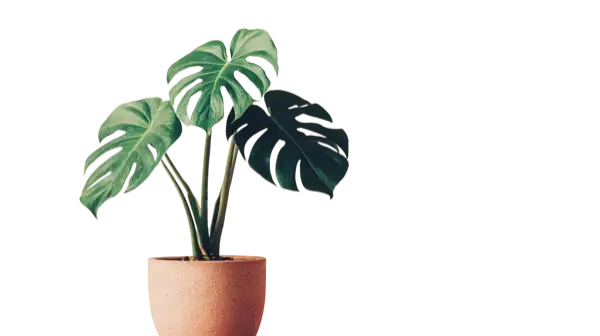
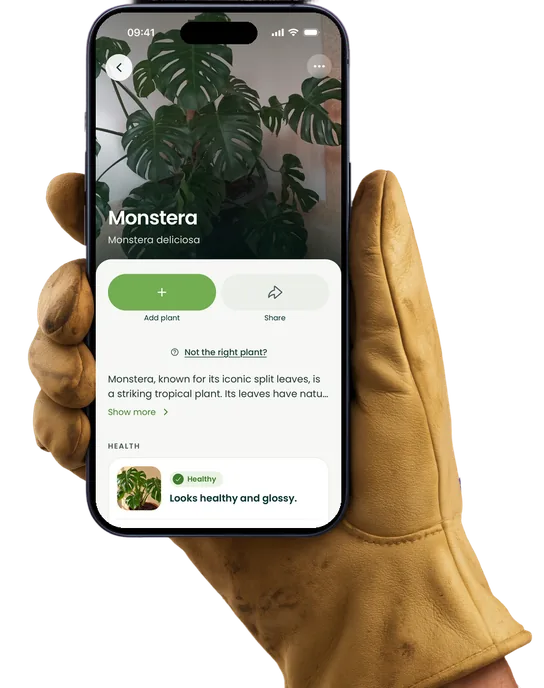
Light measurements (lux levels) for Monstera care
Measuring light removes the guesswork entirely. Free smartphone apps using the phone's camera as a light sensor provide readings accurate enough for plant care decisions; hold the phone at leaf level facing the light source for a reading in lux. Below about 1,000 lux: growth stalls. 1,000 to 2,500 lux: low but viable, slow growth, little fenestration. About 2,500 to 10,000 lux: optimal range for healthy growth and fenestration. Unfiltered direct summer sun, far above these values: scorch risk, use a sheer curtain.
If natural light stays below about 1,000 lux for most of the day, grow lights compensate effectively. An LED grow light positioned 30 to 50 cm above the plant's canopy and running 10 to 12 hours daily makes up for the shortfall. Both LED and fluorescent grow lights work; LEDs use less electricity and produce less heat. Fluorescent lights work for Monstera but need to be positioned closer (20 to 30 cm) to deliver equivalent intensity. The question from growers asking whether Monstera can thrive in fluorescent lighting has a direct answer: yes, with a quality T5 or LED tube at the distances described. For the rest of its routine, see our complete Monstera care guide.
Self-check
Your routine, health score
Five quick yes/no questions. Each "yes" earns a point.
Plan ahead
Seasonal tasks
What to do across the year, tick what you've already taken care of.
More care guides for monstera deliciosa
Other topics for the same plant.