Swiss Cheese Plant
Monstera deliciosa
Family · Araceae
Monstera deliciosa needs bright indirect light, soil that dries between waterings, and humidity above 50 percent to grow full, fenestrated leaves.
Monstera deliciosa
Plant profile
- WateringModerateWater every 9 days
- Light exposureIndirect light
- Ideal temperature16–29 °C
- Hardiness zoneUSDA 10–12
Growth
- Family
- Araceae
- Life cycle
- Perennial
- Growth speed
- 7/10
- Mature size
- 180–245 cm
- Flowering
- Rarely flowers or fruits indoors
- Propagation
- Cutting
- Layering
DormancyGrowth slows in low light and cooler winter months; water and feed less often
Time to maturityIndoors reaches 6 to 8 feet; fenestrated leaves develop over several years of maturity and bright light
Soil & climate
- Soil pH
- pH 6–8
- Drought tolerance
- No
Soil typesWell-draining, organic-matter-rich potting mix, Soilless mix amended with bark, charcoal or perlite
Light & Placement
- Origin
- Southern Mexico (Veracruz, Oaxaca, Chiapas) to Guatemala (POWO)
- Where to place it
- Near a bright window with filtered or indirect light (Penn State Extension)
- Away from cold drafts and heating or air-conditioning vents
- Shaded, frost-free garden bed in USDA zones 10a to 12b (NC State Extension)
- Sturdy pot with a moss pole or trellis for climbing support (Penn State Extension)
Safety
- Toxicity
- CatsToxic
- DogsToxic
- HumansToxic
Data fromMonstera deliciosa Liebm., GBIF BackboneMonstera deliciosa Liebm., Plants of theSwiss Cheese Plant, ASPCA Animal Poison Monstera as a Houseplant, Penn State ExtMonstera deliciosa, NC State Extension G
Where it grows
World distribution
Swiss Cheese Plant is native to 2 countries: Guatemala and Mexico.GBIF records 6,436 documented identifications across 99 countries, with the largest concentrations in Australia, United States, and Mexico.
- Guatemala
- Mexico
Yellow to orange dots: concentration of documented identifications per country. Green countries: sourced native range. Source: GBIFNative range from POWO (Kew).
A Climbing Aroid From Southern Mexico to Guatemala
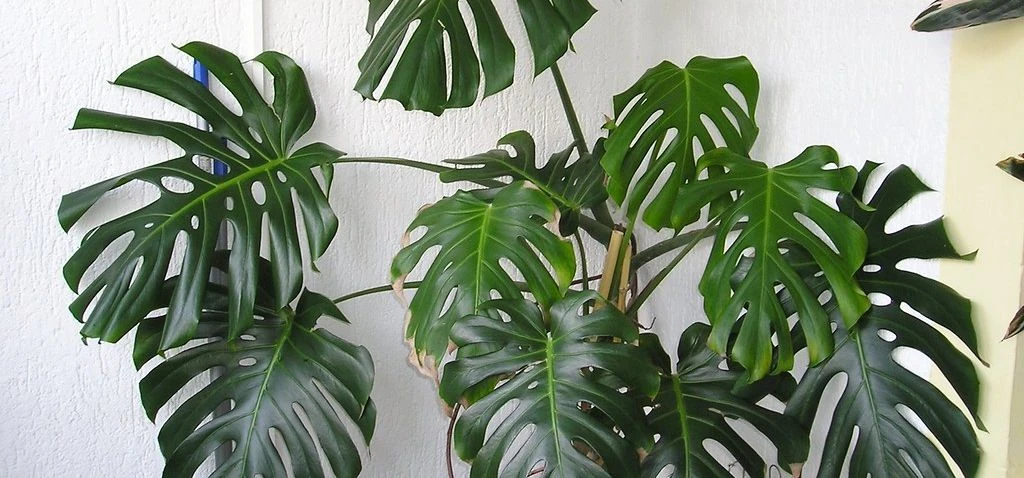
A houseplant with glossy, deeply lobed leaves punched through with oval holes is almost certainly Monstera deliciosa, the swiss cheese plant. GBIF records the accepted name as Monstera deliciosa Liebm., in the arum family Araceae alongside philodendrons and pothos, and the leaf perforations, known as fenestration, are its signature trait once it matures. POWO places the native range in southern Mexico, in the states of Veracruz, Oaxaca and Chiapas, south to Guatemala; NC State Extension describes the native and naturalized range more broadly as Mexico to Panama. In the wild it is a climbing liana that clings to trees with thick aerial roots and can reach 70 feet, while indoors NC State Extension and Penn State Extension both put its realistic ceiling at 6 to 8 feet.
The species name deliciosa refers to its edible fruit, according to NC State Extension, though the plant rarely flowers or fruits indoors and needs several years of maturity plus greenhouse-like warmth to do so at all.
Light and Placement
Penn State Extension recommends a spot near a sunny window where the plant gets bright light without direct sun; too little light and new growth turns leggy, stretching toward the nearest bright source instead of filling out. A position roughly a meter back from an east- or south-facing window, or right in front of a north- or west-facing one, usually supplies enough brightness without scorching the leaves. Rotate the pot every few weeks so growth does not lean permanently in one direction.
Watering: Check the Soil, Not the Calendar
Penn State Extension's method is straightforward: water thoroughly, then let the top 1 to 2 inches of soil dry out before watering again. Push a finger into the mix before refilling the can; skipping that check is how overwatering, and the root rot it causes, becomes the most common way a Monstera declines. The interval stretches in winter as light and temperature drop and growth slows, and shrinks in a bright, warm summer spot.


Soil, Potting Mix and pH
Penn State Extension calls for a well-draining, soilless potting mix rich in organic matter, at a neutral pH of 6.0 to 8.0, the same range NC State Extension gives for the species. Amending a purchased mix with chunks of bark, charcoal or perlite opens up the airflow this aroid's roots need and keeps the mix from compacting into the dense, slow-draining block that plain potting soil becomes after a few waterings. A pot with drainage holes is non-negotiable regardless of the mix used.
Humidity, Temperature and Feeding
Humidity above 50 percent is what Penn State Extension recommends, and a dry, heated room in winter is usually the first place it drops below that line; a nearby humidifier or grouping plants together raises it more reliably than misting the leaves. Temperature should stay between 60 and 85 degrees F, 16 to 29 degrees C, and the plant abhors cold drafts, so keep it away from single-glazed windows in winter and air-conditioning vents in summer. Feed with a balanced houseplant fertilizer every two weeks during the growing season and cut back to monthly through winter, per Penn State Extension.
Support and Fenestration as the Plant Matures
Thick aerial roots emerge from the stem as the plant grows; Penn State Extension recommends sturdy climbing support, a moss pole or trellis, since an indoor plant reaching 6 to 8 feet becomes top-heavy without one. Left to climb, a Monstera fills in its classic leaf holes gradually: young plants, and any plant kept in dim light, tend to produce solid, unsplit leaves, with fenestration becoming more pronounced as the plant ages and gets brighter conditions. Propagation follows the same aerial-root anatomy: Penn State Extension and NC State Extension both point to stem cuttings or air layering as the easiest methods, taking a cutting just below a node with at least one aerial root attached.
Pests, Common Mistakes and Toxicity to Pets
Penn State Extension lists scale, aphids, mealybugs, spider mites, thrips and fungus gnats as the pests to watch for, most of them treatable with insecticidal soap or a diluted neem oil spray applied to both sides of the leaves. The most common mistake is watering on a fixed schedule instead of checking the soil, which either drowns the roots or lets the plant dry out for too long between waterings; a close second is placing the pot in direct sun, which scorches the glossy leaves rather than encouraging more holes. The ASPCA lists the swiss cheese plant as toxic to cats and dogs, and Penn State Extension confirms every part of the plant is toxic to humans and pets if ingested, due to needle-like calcium oxalate crystals that cause intense burning of the mouth and throat. Keep it out of reach of pets and small children.
Test your plant knowledge
Tap a card to flip it and reveal the answer.
Monstera deliciosa's leaf holes, called fenestration, tend to become more pronounced as the plant matures and gets brighter light. Tap to reveal ✓ True
Penn State Extension recommends watering Monstera deliciosa on a fixed 7-day schedule all year round. Tap to reveal ✕ False
The ASPCA lists the swiss cheese plant as safe to keep around cats and dogs. Tap to reveal ✕ False
Penn State Extension recommends keeping humidity above 50 percent for Monstera deliciosa. Tap to reveal ✓ True
Stem cuttings and air layering are effective ways to propagate Monstera deliciosa. Tap to reveal ✓ True
Sources
References consulted for this guide
- Monstera deliciosa Liebm., GBIF Backbone Taxonomygbif.org
- Monstera deliciosa Liebm., Plants of the World Online (Kew)powo.science.kew.org
- Swiss Cheese Plant, ASPCA Animal Poison Controlaspca.org
- Monstera as a Houseplant, Penn State Extensionextension.psu.edu
- Monstera deliciosa, NC State Extension Gardener Plant Toolboxplants.ces.ncsu.edu
- Reference entity : Wikipédiaen.wikipedia.org