
Care topic
Dying Monstera: how to save it step by step
Drooping, yellowing or rotting Monstera? Learn to diagnose the cause and revive your plant with targeted steps.
4 min read
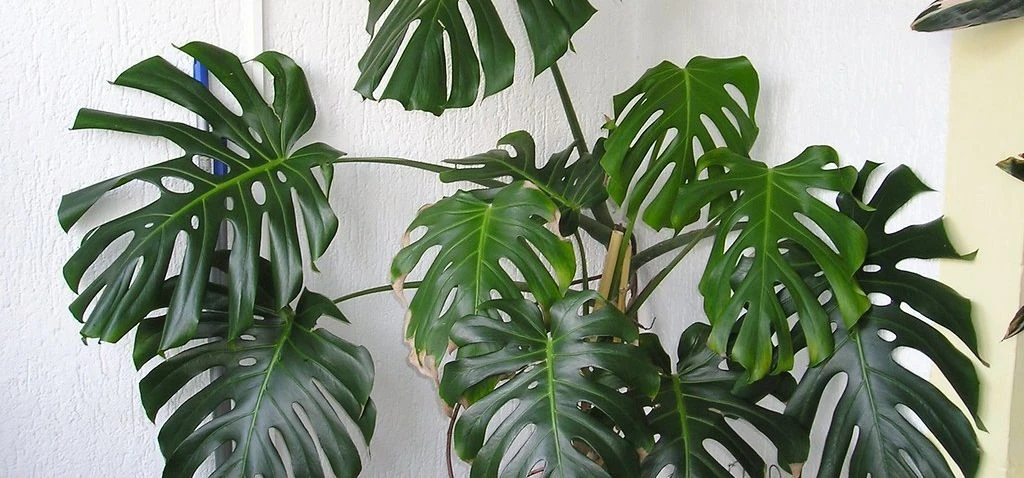
Signs of a dying Monstera and their meanings
A Monstera showing distress communicates the problem through specific, interpretable symptoms: the key is reading them correctly rather than applying generic remedies. Widespread yellowing of multiple leaves simultaneously, combined with soft or mushy stem bases and a sour smell from the potting mix, signals root rot from overwatering. A plant that wilts despite moist soil has the same root problem: rotted roots can no longer transport water upward. Crispy brown leaf edges and tips on otherwise green leaves point to low humidity or salt buildup in the soil. Pale, washed-out leaf colour across the whole plant indicates insufficient light. Leaves that arrive consistently smaller than previous ones, without fenestration on a plant over two years old, confirm light deficiency over the longer term.
Dropping leaves, where leaves yellow and fall in quick succession, indicates severe acute stress: sudden cold exposure, complete drought, repotting shock, or root system failure. A single yellow lower leaf on an otherwise vigorous plant is normal ageing and not a sign of distress. Stems going mushy at the soil line or just above it indicates rot at the root crown: the most serious situation, requiring immediate action. Prioritise diagnosis over treatment: applying more water to a drooping Monstera that is actually suffering from root rot will kill it faster.
Common causes of stress in Monstera plants
Root rot from overwatering is the most common reason a Monstera declines and fails to recover: it often progresses silently until a large proportion of the root system is compromised. Dramatic position changes, moving a plant from a bright location to a dark one, or vice versa without acclimatisation, cause significant stress as the plant has to restructure its leaf chemistry to match the new light environment, during which it looks stressed and may drop leaves. Cold exposure, even briefly to temperatures below 10 °C near a drafty window, causes permanent tissue damage to whatever leaves were exposed.
Inconsistent watering, cycling between bone-dry and saturated rather than maintaining the appropriate moisture level, stresses the root system continuously and weakens the plant's ability to regulate water uptake. Heat combined with low humidity, common near south-facing windows in summer, causes rapid water loss through the large leaves faster than the roots can replace it. Repotting at the wrong time (winter) or into a much larger pot introduces excess wet soil that the root system cannot manage.
Step-by-step guide for reviving a Monstera
Step 1: Diagnose accurately. Check soil moisture (soggy, dry, or appropriate?). Inspect roots by removing from the pot. Assess light level with a phone lux meter app. Review recent care: any changes in position, watering frequency, temperature, or fertilising? The diagnosis determines every subsequent step.
Step 2: Treat root rot if present. Remove the plant from its pot, rinse the root ball, and trim all brown or slimy roots back to healthy white tissue with sterile scissors. Dust cut surfaces with cinnamon powder (natural antifungal). Repot in fresh, well-draining aroid mix in a clean pot with drainage holes.
Step 3: Correct dehydration if present. Water the plant thoroughly until drainage runs freely, then soak the pot in a basin of room-temperature water for 30 minutes to ensure the entire root ball is hydrated. Drain completely before returning to its position.
Step 4: Stabilise conditions. Place in bright indirect light at 18-24 °C. Raise humidity to 50-60% with a nearby humidifier. Do not fertilise for four weeks. Resist moving the plant during recovery: consistency is more important than optimal conditions at this stage.
Step 5: Wait patiently. A stressed Monstera typically takes four to eight weeks to show new growth after the root cause of its distress is corrected. Do not over-interpret normal recovery symptoms, some leaf dropping after repotting is normal, and the plant will begin stabilising within two to three weeks even when new growth has not yet appeared.


Long-term care tips for healthy Monstera growth
Once a Monstera has recovered, the goal is preventing the same problem from recurring. Water by soil check rather than schedule: insert a finger 2-3 cm into the mix and water only when it feels dry. This simple habit eliminates both overwatering and underwatering as risks. Maintain bright indirect light by measuring with a phone app at least once to confirm adequacy. Feed monthly with balanced fertiliser at half-strength from March through September only. Inspect the plant every two weeks for early pest signs, particularly on leaf undersides and at stem nodes. Repot every two years in spring before the root system becomes severely compacted. These five habits together make a Monstera genuinely difficult to kill.
Self-check
Your routine, health score
Five quick yes/no questions. Each "yes" earns a point.
Plan ahead
Seasonal tasks
What to do across the year, tick what you've already taken care of.
More care guides for monstera deliciosa
Other topics for the same plant.