
Care topic
Pruning a Monstera Without Harming It: Where to Cut, When, and What to Do With Aerial Roots
When and where to cut a Monstera: the node rule, damaged leaves, aerial roots to keep or trim, and how to turn cuttings into new plants.
5 min read
Why prune a Monstera?
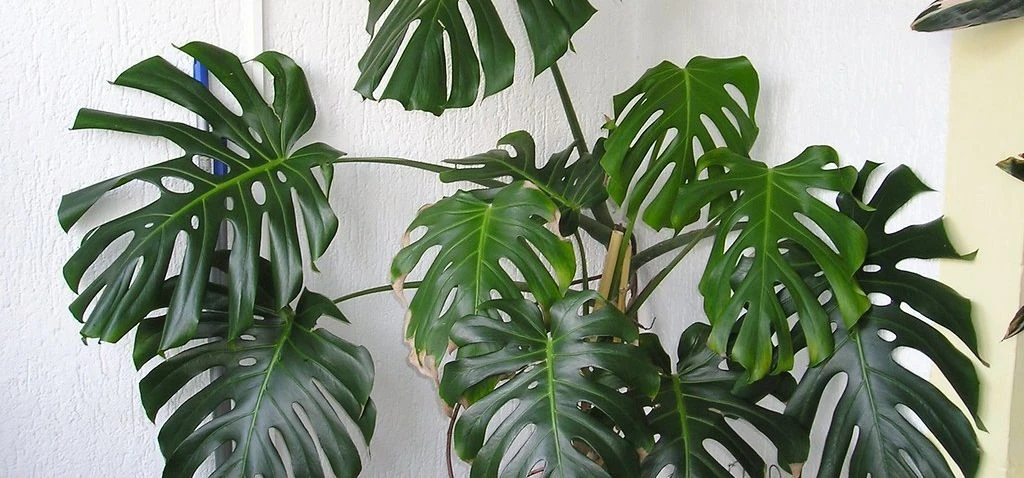
Indoors, Monstera deliciosa eventually sprawls, thins out at the base and sends up long, heavy stems that flop without support. Pruning does three jobs: it keeps the plant within the space you have, it removes damaged foliage, and it gives you stems for cuttings. Monstera tolerates cutting well, as long as you cut in the right place, with a clean tool, at the right time.
When to prune your Monstera
The best time is spring and early summer, when the plant is growing actively: wounds heal quickly and new shoots start fast. In autumn and winter, stick to removing dead or fully yellow leaves and leave bigger cuts until growth picks up again.
Tools and precautions before you cut
Use sharp pruning shears or scissors and disinfect them with alcohol before you start: a clean cut heals better, and a clean blade avoids passing diseases from one plant to another. Like all aroids, Monstera has calcium oxalate crystals in its sap, which irritate skin, eyes and mouth. Wear gloves, wash your hands afterwards and keep the cut pieces out of reach of children and pets, since the plant is toxic if eaten.
Where to cut: the node rule
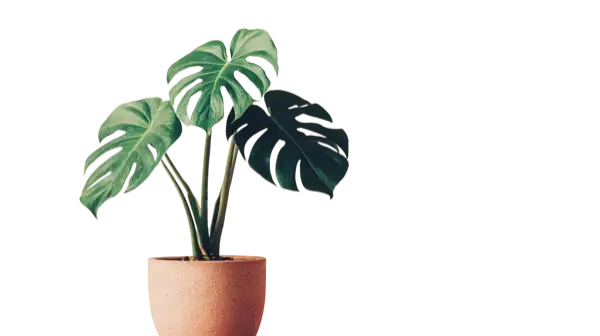
A Monstera stem is marked by nodes, small bumps where a leaf and often an aerial root emerge. That is where the buds that can restart growth are found. Always cut a few millimetres above a node: the remaining stem often produces one or two new shoots from the node below the cut, though it can take several weeks to see them. A cut in the middle of the space between nodes leaves a bit of stem with no bud, which dries out without regrowing.
- Yellow or dead leaf: follow the leaf stalk down to the stem and cut it at the base. The leaf will not turn green again and will not regrow in that spot.
- Partly damaged leaf: if most of the blade is still green, trim away the brown part following the leaf's natural outline and leave a thin brown edge rather than cutting into healthy tissue.
- Stem too long or lopsided: shorten it just above a node, at the height you want.
- Stretched stem, long gaps between nodes, small unsplit leaves: this points to too little light. Pruning will not fix it, so also move the plant closer to a bright window.
Do not remove more than a third of the foliage in one session: the plant needs its leaves to recover.
What to do with aerial roots
Aerial roots help Monstera cling to its support and absorb a little moisture from the air. Cutting them is neither necessary nor fatal, but it is better to handle them with care.
- Healthy, flexible root: keep it. Guide it toward a moss or coconut-fibre pole, or gently push it into the potting mix, where it will root.
- Dry, brown, brittle root: cut it at the base, it no longer does anything.
- Root that is really in the way: cut it with disinfected scissors as close to the stem as possible. The plant recovers, but it loses an anchoring point.
Do not cut the aerial root of a node you plan to propagate: that root is exactly what will give the cutting its roots.
Turn your cuttings into new plants
Any piece of stem with at least one node, ideally with an aerial root, can become a new plant. A single leaf with no node will not grow into a plant. Put the node in water in a bright spot without direct sun and change the water regularly. Roots usually show up within a few weeks. Pot the cutting in an airy mix once its roots are a few centimetres long.
Mistakes to avoid when pruning a Monstera
The first mistake is cutting without finding a node, or leaving a long stub with no bud: it dries out and can rot. The second is pruning a sick or struggling Monstera: if leaves are yellowing en masse or the soil smells bad, deal with the cause (watering, roots) before cutting. The third is cutting everything at once, or watering as before after a heavy prune even though the plant, with fewer leaves, uses less water.
Care after pruning
Blot the sap that beads up with a cloth, without touching it bare-handed. Keep the Monstera in bright, indirect light and wait until the top few centimetres of soil are dry before watering, since the plant has fewer leaves to feed. Resume your usual feeding during the growing season. For the rest of the care (light, water, soil), see the full Monstera guide.
Quick FAQ on pruning a Monstera
Will my Monstera grow back after pruning? Usually yes: the node below the cut often produces a new shoot after a few weeks, provided the plant gets enough light and you cut above a node.
Can you cut a Monstera's aerial roots? Yes, without harming the plant, but it is not necessary. Guide them toward a pole or the soil instead and only remove ones that are dry or truly in the way.
Can you cut the top off a Monstera that is too tall? Yes, just above a node. The cut piece, if it carries a node, can be put in water to form a new plant.
Does a cut leaf grow back? No: a removed leaf does not regrow as it was. New leaves only appear at the stem tip and at nodes that restart.
Self-check
Your routine, health score
Five quick yes/no questions. Each "yes" earns a point.
Plan ahead
Seasonal tasks
What to do across the year, tick what you've already taken care of.
More care guides for monstera deliciosa
Other topics for the same plant.