
Care topic
How to Water Monstera: The Finger Test Method That Actually Works
Water Monstera correctly: check soil depth, use the finger test and adjust by season. Avoid yellow leaves from overwatering.
4 min read
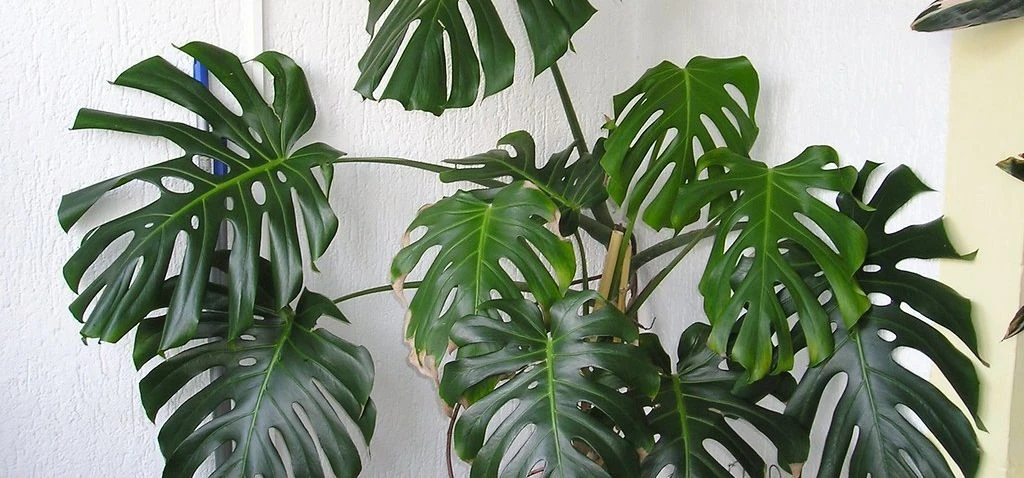
Watering needs specific to Monstera plants
Monstera deliciosa does not want a fixed watering schedule; it wants to be watered in response to what the soil is actually doing. The correct method: push a finger 2-3 cm into the potting mix before every watering. If it still feels moist at that depth, wait two or three days and check again. If it feels dry, water thoroughly until water drains freely from the bottom of the pot, then empty the saucer after 30 minutes. Roots sitting in standing water lose oxygen and can begin to rot quickly, so never allow the pot to sit in pooled drainage water.
In practice, this finger-test method typically means watering every 7-10 days in summer and every 14-21 days in winter. These are starting points, not rules: the actual interval depends on your pot size, soil composition, room temperature, and light levels. A Monstera in a south-facing room in July may need water every five days; the same plant in a north-facing room in January may need water every three weeks. The soil, not the calendar, is the reliable guide. Signs of overwatering: soil stays wet more than 10 days, lower leaves yellow, stems feel soft. Signs of underwatering: soil is bone dry, leaf edges brown and crispy, leaves lose firmness.
Light conditions and humidity requirements for optimal growth
Light and humidity directly influence how quickly Monstera soil dries and therefore how often the plant needs water. A plant in bright indirect light (1000-2500 lux for 6+ hours) transpires actively through its large leaves, drying the potting mix significantly faster than a plant in a dim corner. This is not a problem: active transpiration is a sign of a healthy, photosynthesising plant, but it means watering frequency must increase in summer and in brighter positions. Conversely, a Monstera in low light retains soil moisture much longer; watering the same plant at the same interval in both a bright and a dim location will overwater the one in low light.
Humidity above 50% reduces leaf water loss through transpiration, meaning the plant draws water from the root zone slightly more slowly in humid conditions. Raising room humidity with a humidifier near the plant is beneficial overall: it helps reduce brown leaf edges and supports the aerial roots that absorb moisture from ambient air. Avoid misting leaves directly as a humidity strategy: the moisture evaporates within minutes, providing negligible humidity benefit while leaving wet leaf surfaces that encourage fungal leaf spot.
Common pests and diseases related to watering
Watering practice directly determines the most serious disease risks facing Monstera. Overwatering creates the anaerobic soil conditions required by Pythium and Phytophthora, root rot pathogens that thrive in waterlogged soil. These organisms can be present in potting mix and mainly become dangerous when soil stays saturated for extended periods. Correct watering (allowing the top 2-3 cm to dry between sessions) greatly lowers the risk of root rot.
Persistently moist soil near the surface also creates ideal conditions for fungus gnat larvae (Bradysia spp.), which breed in wet topsoil and whose larvae feed on fine root hairs, weakening the plant's nutrient uptake. Allowing the surface centimetre of soil to dry between waterings removes much of this breeding ground. At the opposite extreme, a Monstera under water stress becomes more susceptible to spider mite infestation: drought-stressed plants are weaker and less able to resist pests. Proper watering, sitting between these two extremes, is an important preventive measure against many common Monstera health problems.
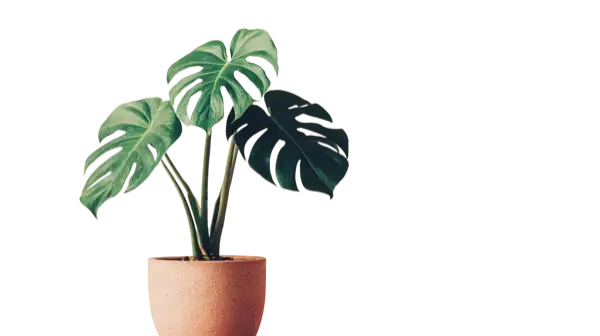

Repotting and soil recommendations
The potting mix is inseparable from watering practice: a dense, peat-heavy mix retains moisture far longer than a chunky aroid mix, meaning the correct watering interval for one mix will overwater a plant in the other. A good Monstera potting mix (approximately 40% standard potting soil, 30% perlite and 30% orchid bark) dries at a rate matched to the plant's natural moisture cycle. Perlite improves both drainage speed and air pore volume in the root zone; orchid bark provides physical structure and dries quickly at the chunk surfaces while holding some moisture in the core.
Terracotta pots dry faster than plastic or glazed ceramic due to their porous walls, which wick moisture out of the soil surface. This means a plant in terracotta needs more frequent watering than the same plant in plastic under identical conditions, but it also provides a natural buffer against overwatering mistakes. Whatever pot material you choose, a drainage hole is non-negotiable. Repot when the root ball has filled the pot to the point where water channels along the pot wall and drains before reaching the interior root mass. This condition is easy to identify and signals that even thorough watering is no longer hydrating the plant evenly.
How often to water your monstera deliciosa
Self-check
Your routine, health score
Five quick yes/no questions. Each "yes" earns a point.
Plan ahead
Seasonal tasks
What to do across the year, tick what you've already taken care of.
More care guides for monstera deliciosa
Other topics for the same plant.