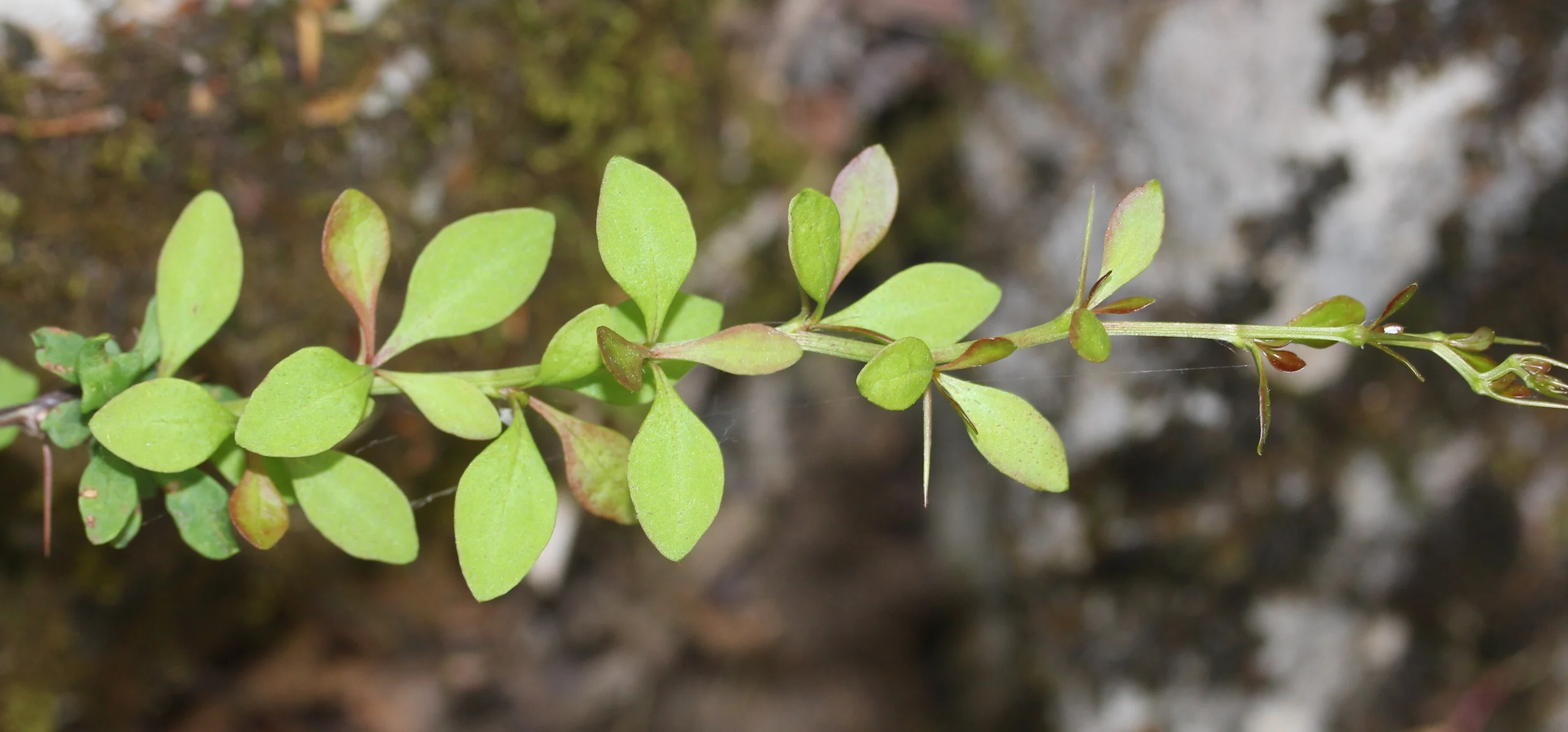
Heavenly Bamboo
Nandina domestica
Family · Berberidaceae
Nandina domestica is an evergreen shrub, not a bamboo, with cyanogenic berries toxic to pets and birds, and invasive spread in the US Southeast.
Nandina domestica
Plant profile
- WateringLittleWater every 9 days
- Light exposurePartial sun
- Hardiness zoneUSDA 6–9
Growth
- Family
- Berberidaceae
- Life cycle
- Perennial
- Growth speed
- 5/10
- Mature size
- 183–244 cm
- Spread
- 150–230 cm
- Propagation
- Seed
- Cutting
- Division
FloweringSmall white, six-petaled flowers in loose panicles in late spring, followed by red berries
Dormancyevergreen; foliage reddens and growth slows in cold weather
Time to maturityreaches full size over several years; spreads further over time via rhizomes
Soil & climate
- Soil pH
- pH 5.5–8.5
- Soil types
- clay, loam, sand
- Saline soil
- Partially tolerated
- Drought tolerance
- Yes
Light & Placement
- Origin
- Central and South China (POWO)
- Where to place it
- foundation planting or informal hedge in full sun to light shade
- dwarf cultivars as low border or mass planting
- woodland edge with some direct sun for best foliage color
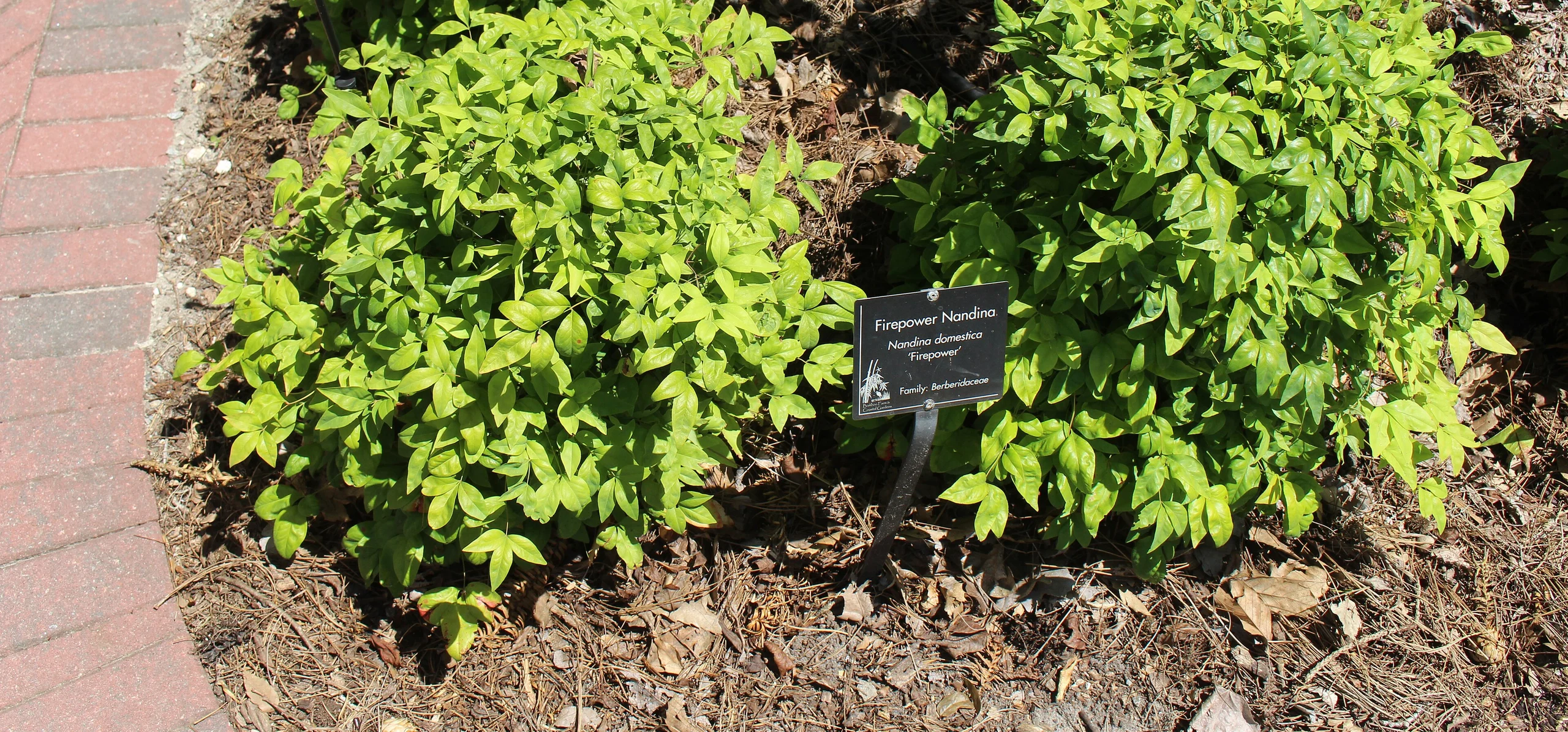
- dwarf cultivars such as 'Firepower' in a decorative container
- large pot on a patio, sheltered in the coldest end of its hardiness range
Safety
- Toxicity
- CatsToxic
- DogsToxic
- HorsesToxic
Invasive speciesNaturalized and considered invasive in parts of the US Southeast; plant sterile, low-fruiting cultivars such as 'Firepower' or 'Gulf Stream' instead of the seed-fertile straight species.
Data fromGBIF Backbone Taxonomy: Nandina domesticPlants of the World Online (Kew): NandinASPCA: Heavenly Bamboo toxicity to petsNorth Carolina Extension Gardener Plant Clemson HGIC: Nandina
Where it grows
World distribution
Heavenly Bamboo is native to a single country: China.GBIF records 39,411 documented identifications across 65 countries, with the largest concentrations in United States, Italy, and China.
- China
Yellow to orange dots: concentration of documented identifications per country. Green countries: sourced native range. Source: GBIFNative range from POWO (Kew).
Nandina domestica earns its "heavenly bamboo" name from its jointed, cane-like stems, not from any relation to true bamboo: it is a broadleaf evergreen shrub in the barberry family, grown for airy compound leaves that flush red or purple in cold weather and for sprays of red berries that persist from fall into winter. Those berries are also the plant's biggest liability. They contain cyanogenic glycosides that the ASPCA lists as toxic to cats, dogs and horses, and the same compounds have killed cedar waxwings and other birds that gorge on them in late winter. In much of the southeastern United States the seed-fertile straight species has also spread well beyond gardens, which is why most nurseries now sell sterile, low-fruiting cultivars such as 'Firepower' or 'Gulf Stream' instead. Knowing which kind is planted, and how to prune the canes, matters more with this shrub than with most evergreens.
Origin and Habitat
Plants of the World Online (Kew) places the native range of Nandina domestica in Central and South China, the range recorded in the World Checklist of Vascular Plants that GBIF's accepted taxonomy also follows. It has been cultivated across East Asia for centuries, long enough that some older references describe it loosely as native to "Japan and China"; POWO's mapping confines the wild range to China. From there it moved into American and European gardens as an ornamental and, in the mild, humid climate of the US Southeast, escaped cultivation. Clemson Cooperative Extension and the North Carolina Extension Gardener Plant Toolbox both record it as naturalized, and invasive in several states, spreading from bird-dispersed seed and from the rhizomes that let one planted shrub widen into a colony over the years.
Not a True Bamboo
The "bamboo" in both common names refers only to the look of the stems: slender, upright canes with leaves clustered near the top, reminiscent of true bamboo culms. Botanically the two could hardly be more different. True bamboos are grasses in the family Poaceae; Nandina domestica sits in Berberidaceae, the barberry family, in the order Ranunculales, alongside genera like Mahonia and Epimedium. Its leaves are two or three times compound, giving the plant a ferny, layered texture rather than blade-like grass foliage, and it flowers and fruits like an ordinary broadleaf shrub: small white, six-petaled flowers in loose panicles in late spring, followed by the red, two-seeded berries. The distinction matters in the yard, too: because it is not a running grass, it cannot be controlled the way bamboo is, by mowing new culms. An unwanted clump has to be dug out or cut back repeatedly to exhaust the rhizomes.
Choosing a Non-Invasive Cultivar
Cultivar choice is the single most consequential decision with this species. Clemson HGIC splits the cultivars into two groups: those that flower and fruit sparingly or not at all, and those, closer to the wild type, that set abundant berries with viable seed. 'Firepower', the compact, chartreuse-to-red dwarf most often sold at garden centers, is among the sterile, low-fruiting selections, along with 'Gulf Stream' and 'Blush Pink'. The straight species and older heirloom selections fruit far more heavily and are the ones responsible for the wild populations documented across the Southeast. Where Nandina domestica is listed as invasive, plant one of the non-fruiting dwarfs instead of the species; if an older, heavily-fruiting shrub is already on the property, cutting off the berry clusters before birds strip them in winter limits how far the seed travels.


Light, Soil and Watering
The North Carolina Extension Gardener Plant Toolbox rates Nandina domestica for full sun, partial shade or full shade, but the color that makes it worth growing, bronze-red new growth and richer winter foliage on many cultivars, develops best with several hours of direct sun; deep shade keeps the leaves a flatter green. It tolerates acid, neutral and alkaline soil and grows in clay, loam or sand according to Clemson HGIC, provided drainage is reasonable; NC State notes it wants good drainage or at least evenly moist soil, not standing water. Once established it is moderately drought-tolerant, per Clemson, and needs supplemental water mainly during extended dry spells; younger plants and anything in a container should be checked more often, since a pot dries out long before an in-ground shrub does.
Pruning: Staggered Renewal Cuts
Established clumps benefit from renewal pruning before new growth starts in spring, and the method is specific to cane-forming shrubs like this one. Clemson HGIC recommends cutting the canes back at varying heights rather than shearing the whole shrub level: some canes to a few inches from the ground, others to a third or half their height, each cut made just above a node. New shoots emerge from below every cut, and because the canes are staggered, the regrowth fills in at different heights instead of producing the flat, stubbly outline that comes from cutting everything level. For an old, leggy shrub, Clemson suggests spreading a full renovation over two or three years, removing a third of the oldest canes at ground level each time rather than cutting the whole plant back at once.
Toxicity: Berries, Cyanide and Wildlife
Every part of Nandina domestica contains cyanogenic glycosides, compounds that release cyanide when metabolized, and the ASPCA lists the species as toxic to cats, dogs and horses on that basis. The berries carry the same risk to wildlife: cedar waxwings, which can strip a shrub of fruit in a single feeding, are especially vulnerable, and documented die-offs, including dozens of waxwings found dead in southern Georgia after feeding on nandina berries, have been traced to the fruit. Green, unripe berries are the most cyanogenic; fully ripe red berries left on the plant for two months or more lose some of that toxicity, but by then birds have often already eaten them. Given the risk to pets and to overwintering birds, deadheading the berry clusters, or choosing a sterile cultivar that sets few or none, removes the hazard at the source instead of relying on animals to avoid it.
Pests and Common Mistakes
Nandina domestica is largely trouble-free: scale insects and, less often, aphids or mites turn up occasionally, but the North Carolina Extension Gardener Plant Toolbox does not flag any pest or disease as a routine problem for the species. The recurring mistakes are cultural rather than biological. Planting the seed-fertile straight species in a region where it is already invasive, instead of a sterile cultivar, is the most consequential; the second is shearing the whole clump flat with hedge trimmers, which produces a stubbly, unnatural outline instead of the layered cane structure that makes the plant attractive, and skips the staggered renewal cuts it actually responds to. The third is forgetting the berries: siting a heavily-fruiting shrub where pets graze, or leaving the fruit for winter birds to strip, both carry a real and documented cost.
Test your plant knowledge
Tap a card to flip it and reveal the answer.
Nandina domestica is a true bamboo. Tap to reveal ✕ False
Nandina berries have been linked to fatal poisoning in cedar waxwings and other fruit-eating birds. Tap to reveal ✓ True
All Nandina domestica cultivars sold today produce abundant, seed-fertile berries. Tap to reveal ✕ False
Plants of the World Online places the native range of Nandina domestica in Central and South China. Tap to reveal ✓ True
Renewal pruning means cutting every cane down to the same height in one pass. Tap to reveal ✕ False
Sources
References consulted for this guide
- GBIF Backbone Taxonomy: Nandina domestica Thunb.gbif.org
- Plants of the World Online (Kew): Nandina domestica Thunb.powo.science.kew.org
- ASPCA: Heavenly Bamboo toxicity to petsaspca.org
- North Carolina Extension Gardener Plant Toolbox: Nandina domesticaplants.ces.ncsu.edu
- Clemson HGIC: Nandinahgic.clemson.edu
- Reference entity : Wikidatawikidata.org