Red Frangipani
Plumeria rubra
Family · Apocynaceae
Plumeria rubra roots from a callused, dry cutting, wants full sun and heat, then rests leafless and almost dry all winter. Covers bloom failure and rust.
Plumeria rubra
Plant profile
- WateringLittleWater every 10 days
- Light exposureFull sun
- Ideal temperature4–35 °C
- Hardiness zoneUSDA 10–11
Growth
- Family
- Apocynaceae
- Life cycle
- Perennial
- Growth speed
- 5/10
- Mature size
- 150–760 cm
- Propagation
- Cutting
FloweringFragrant clusters from late spring to fall once mature, usually after a couple of years
Dormancyleafless winter dormancy in cool or dry conditions; can stay evergreen in constantly warm, humid climates
Time to maturitytypically flowers for the first time after about two years of growth from a rooted cutting
Soil & climate
- Soil types
- sand, loam
- Drought tolerance
- Yes
Light & Placement
- Origin
- Native to Mexico, Central America and Venezuela
- Where to place it
- brightest available window
- cool, bright sunroom or garage over winter
- south-facing wall in full sun
- open sunny patio
- fast-draining gritty mix, pot only slightly larger than the root ball
Safety
- Toxicity
- HumansToxic
Data fromPlumeria rubra L., GBIF Backbone TaxonomPlants of the World Online (Kew): PlumerMissouri Botanical Garden Plant Finder: UF/IFAS EDIS ENH650/ST491: Plumeria rubrUF/IFAS Extension Charlotte County: The
Where it grows
World distribution
Red Frangipani is native to 10 countries: Belize, Colombia, Costa Rica, El Salvador, Guatemala, Honduras, Mexico, and Nicaragua….GBIF records 11,901 documented identifications across 145 countries, with the largest concentrations in Mexico, India, and South Africa.
- Belize
- Colombia
- Costa Rica
- El Salvador
- Guatemala
- Honduras
- Mexico
- Nicaragua
- Panama
- Venezuela
Yellow to orange dots: concentration of documented identifications per country. Green countries: sourced native range. Source: GBIFNative range from POWO (Kew).
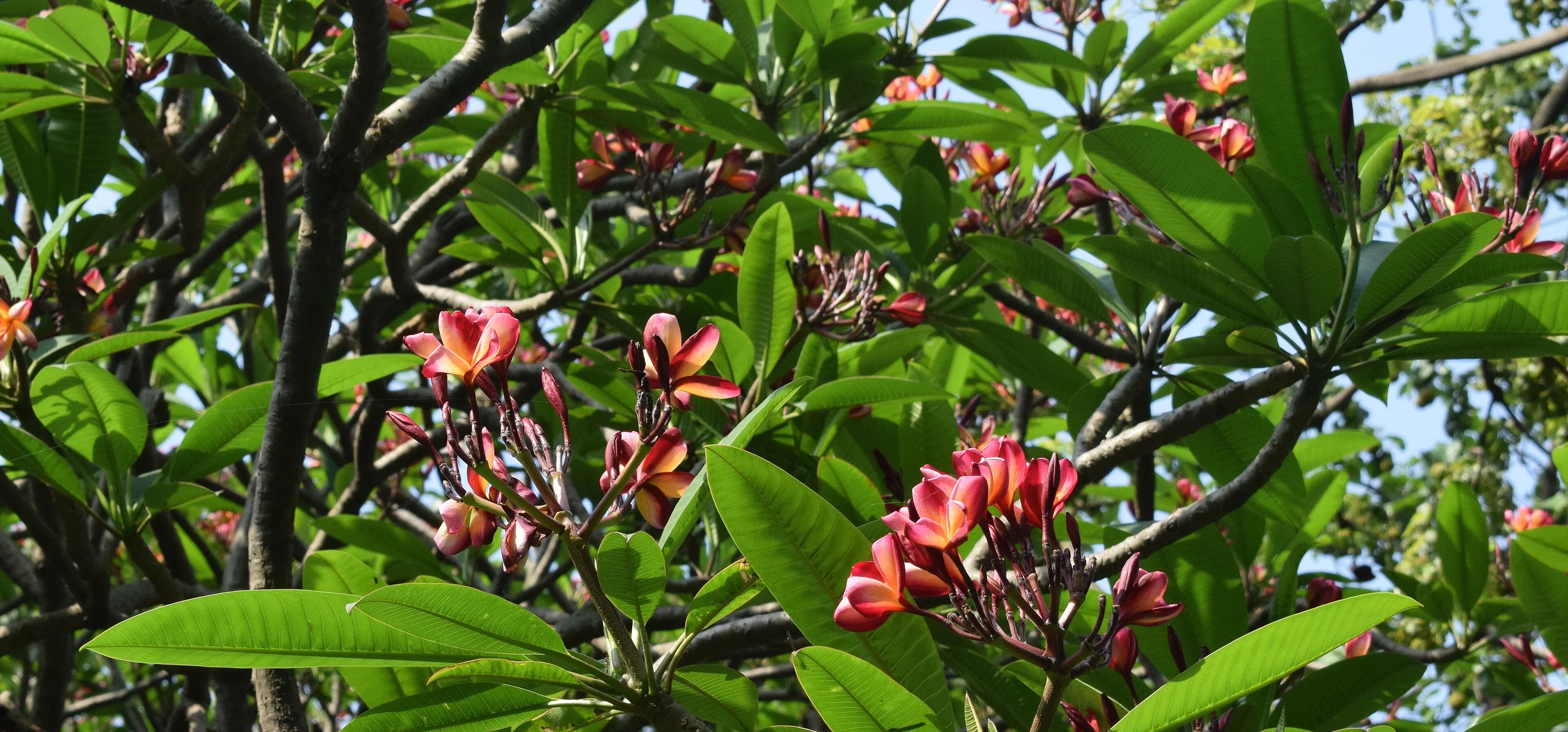
A leafless brown stick with a hard, callused cut end is exactly what a healthy Plumeria rubra cutting is supposed to look like, not a dying one. This frangipani, the species behind most of the fragrant pink, red and yellow flowers strung into Hawaiian leis, roots from a dry, unpotted stem rather than a fresh green cutting, and the most common early mistake is planting it too soon or watering it like a leafy houseplant. Treat it like a small, sun-loving succulent tree from the start and it settles in quickly.
Starting From a Bare Root Cutting
A cutting taken from an established plant needs to sit in a dry, shaded, ventilated spot for one to two weeks before it goes into soil, long enough for the cut surface to callus over. Planting a fresh, uncallused cut straight into wet mix is the single fastest way to rot it. Once callused, set the cutting a few centimeters deep in a gritty, fast-draining mix, sand or perlite cut with a little potting soil, and water it sparingly, just enough to keep the mix from turning bone dry. Hold off on regular watering until new leaves unfurl at the tip, the sign that roots have formed underneath; watering heavily before that point simply sits around a rootless stem.
Full Sun and Real Heat
Plumeria rubra flowers and grows on direct sun and warmth, not on shade. Give it the sunniest spot available, six or more hours of direct light a day, and expect thin growth with few or no flowers in anything less. It also wants real heat: growth is strongest in the warm, humid conditions of its native range, and cool, overcast weather slows it down even when light levels look adequate. A south-facing wall, an open patio or the sunniest corner of a greenhouse all suit it far better than a bright but cool windowsill.
Watering While It Is Actively Growing


Through spring and summer, once the plant is leafed out and rooted, water deeply and then let the top of the mix dry before watering again. A plumeria in active growth still wants a proper soak, this is not a cactus regime, but soil that stays wet between waterings invites root and stem rot faster than almost anything else affecting the plant. Reduce the frequency during stretches of cloudy or cool weather, when the plant is using less water, and increase it again once heat and sun return.
Soil and Potting
A loose, sandy or loamy mix that drains within seconds of a thorough watering is what this species needs in a container, the same fast-draining approach used for the original cutting carries through to the mature plant. A pot only slightly larger than the root ball keeps the mix from staying wet for days after watering; sizing up too early is a common way to trigger root problems in a plant that otherwise tolerates being pot-bound well.
The Leafless Winter Rest
As nights cool, a healthy Plumeria rubra sheds its leaves and stops growing, going fully dormant and bare-stemmed for the winter months. This is normal, not a sign of disease or neglect, and it mirrors the dry season the species experiences across its native range. During this rest, cut watering back sharply, dormant plants need very little moisture, just enough that the roots do not fully desiccate, and none of the regular feeding that supports active growth the rest of the year.
Overwintering Indoors in Cool Climates
Outside its warm native range, a potted plumeria has to come indoors before nights drop toward the mid-50s Fahrenheit, since the plant has essentially no frost tolerance and cold, wet roots are what kill it over winter, not the cold air alone. A cool, bright spot, an unheated sunroom or a bright garage kept above freezing, works better than a warm, dim living room, which can confuse the plant into breaking dormancy too early without enough light to support the new growth. Move it back outside gradually each spring once nights are reliably warm again, rather than putting a winter-rested plant straight into full sun.
Why It Will Not Flower
A plumeria that only grows leaves usually falls short on one of three things: light, age, or feed. Anything less than several hours of direct sun a day suppresses flowering even on an otherwise healthy plant. Age matters too, a cutting-grown plant typically needs a couple of years of growth before it flowers for the first time, so a young specimen that is otherwise thriving may simply not be mature enough yet. Feeding plays a role as well, a fertilizer heavy in nitrogen pushes leafy growth at the expense of flowers, while a bloom-formulated feed applied through the growing season supports flower production instead.
Rust, Sap and a Few Cultivars Worth Knowing
The most common disease on this species is a rust fungus that produces orange powdery pustules on the underside of the leaves, spread by splashing water rather than by air alone; picking off and disposing of infected leaves and avoiding overhead watering keeps light infestations from spreading. The milky white sap that oozes from any cut stem or leaf is a skin and eye irritant, not something to be ingested or handled bare-handed during pruning or propagation, gloves and care around the eyes are worth the minor inconvenience. Among named selections, 'Celadine', a fragrant yellow-flowered form with white-edged petals, is one of the most widely grown cultivars alongside the many pink, red and bicolor forms sold simply as seedling frangipani.
Test your plant knowledge
Tap a card to flip it and reveal the answer.
A plumeria cutting should be planted in wet soil immediately after it is cut. Tap to reveal ✕ False
A leafless, bare-stemmed plumeria in winter is normal and not necessarily dying. Tap to reveal ✓ True
Plumeria rubra flowers best in several hours of direct sun a day. Tap to reveal ✓ True
The milky sap of Plumeria rubra can irritate skin and eyes on contact. Tap to reveal ✓ True
A cutting-grown plumeria typically flowers within its first few months. Tap to reveal ✕ False
Sources
References consulted for this guide
- Plumeria rubra L., GBIF Backbone Taxonomygbif.org
- Plants of the World Online (Kew): Plumeria rubra L.powo.science.kew.org
- Missouri Botanical Garden Plant Finder: Plumeria rubramissouribotanicalgarden.org
- UF/IFAS EDIS ENH650/ST491: Plumeria rubra: Frangipaniedis.ifas.ufl.edu
- UF/IFAS Extension Charlotte County: The Other Plumeriablogs.ifas.ufl.edu
- Reference entity : Wikipédiaen.wikipedia.org