Kentucky Bluegrass
Poa pratensis
Family · Poaceae
Kentucky bluegrass forms dense, self-repairing turf from creeping rhizomes but germinates slowly and browns under summer drought without regular watering.
Poa pratensis
Plant profile
- WateringModerateWater every 3 days
- Light exposurePartial sun
- Hardiness zoneUSDA 3–7
Growth
- Family
- Poaceae
- Life cycle
- Perennial
- Growth speed
- 4/10
- Mature size
- 10–61 cm
- Flowering
- Open, branched seed panicles in late spring to early summer
- Propagation
- Seed
DormancyCool-season growth pattern: active in spring and fall, slows and can brown under hot, dry summer conditions (Penn State Extension notes growth is most limited where July temperatures exceed 75 degrees F)
Soil & climate
- Soil pH
- pH 6–7
- Soil types
- Fertile, well-drained, moist soil; pH 6.0-7.0 (Illinois Extension)
- Drought tolerance
- No
Light & Placement
- Where to place it
- full-sun to lightly shaded home lawn
- parks and sports turf
- erosion-control slope or roadside verge
OriginEurope, North Asia, and mountains of northwest Africa (NC State Extension); subarctic to temperate Northern Hemisphere and N. Mexico (POWO)
Safety
- Toxicity
- Not evaluated by the ASPCA; toxicity undetermined
- Pet safe
- No
Invasive speciesNC State Extension tags it 'weedy': its spreading rhizomes let it escape cultivated lawns and colonize adjoining beds and untended ground
Data fromGBIF: Poa pratensis L.Plants of the World Online (Kew): Poa prUniversity of Illinois Extension, HortAnPenn State Extension: Kentucky bluegrassNC State Extension Gardener Plant Toolbo
Where it grows
World distribution
Kentucky Bluegrass is native to 58 countries: Afghanistan, Albania, Austria, Belarus, Belgium, Bhutan, Bulgaria, and Canada….GBIF records 902,797 documented identifications across 115 countries, with the largest concentrations in United Kingdom, France, and Netherlands.
- Afghanistan
- Albania
- Austria
- Belarus
- Belgium
- Bhutan
- Bulgaria
- Canada
- China
- Croatia
- Cyprus
- Czechia
Show 46 more countriesShow fewer countries
- Denmark
- Estonia
- Faroe Islands
- Finland
- France
- Georgia
- Germany
- Greece
- Greenland
- Hungary
- Iceland
- India
- Indonesia
- Iran
- Iraq
- Ireland
- Italy
- Kazakhstan
- Kyrgyzstan
- Lebanon
- Mexico
- Mongolia
- Myanmar (Burma)
- Nepal
- Netherlands
- Norway
- Pakistan
- Papua New Guinea
- Philippines
- Poland
- Portugal
- Romania
- Russia
- South Korea
- Spain
- Svalbard & Jan Mayen
- Sweden
- Switzerland
- Tajikistan
- Türkiye
- Turkmenistan
- Ukraine
- United Kingdom
- United States
- Uzbekistan
- Yemen
Yellow to orange dots: concentration of documented identifications per country. Green countries: sourced native range. Source: GBIFNative range from POWO (Kew).
If you have just seeded a new lawn or inherited one that is already established, what you are growing is a cool-season, rhizomatous grass that spreads sideways underground and knits itself into a dense sod. Kentucky bluegrass, also called smooth meadow-grass, is native to Europe, North Asia and the mountains of northwest Africa, and it grows best where summers stay cool and moist rather than hot and dry. It is slow to get going from seed but, once rooted in, it is one of the few lawn grasses that can repair its own bare patches without you ever having to reseed.
What You Are Growing: Identity and Habit
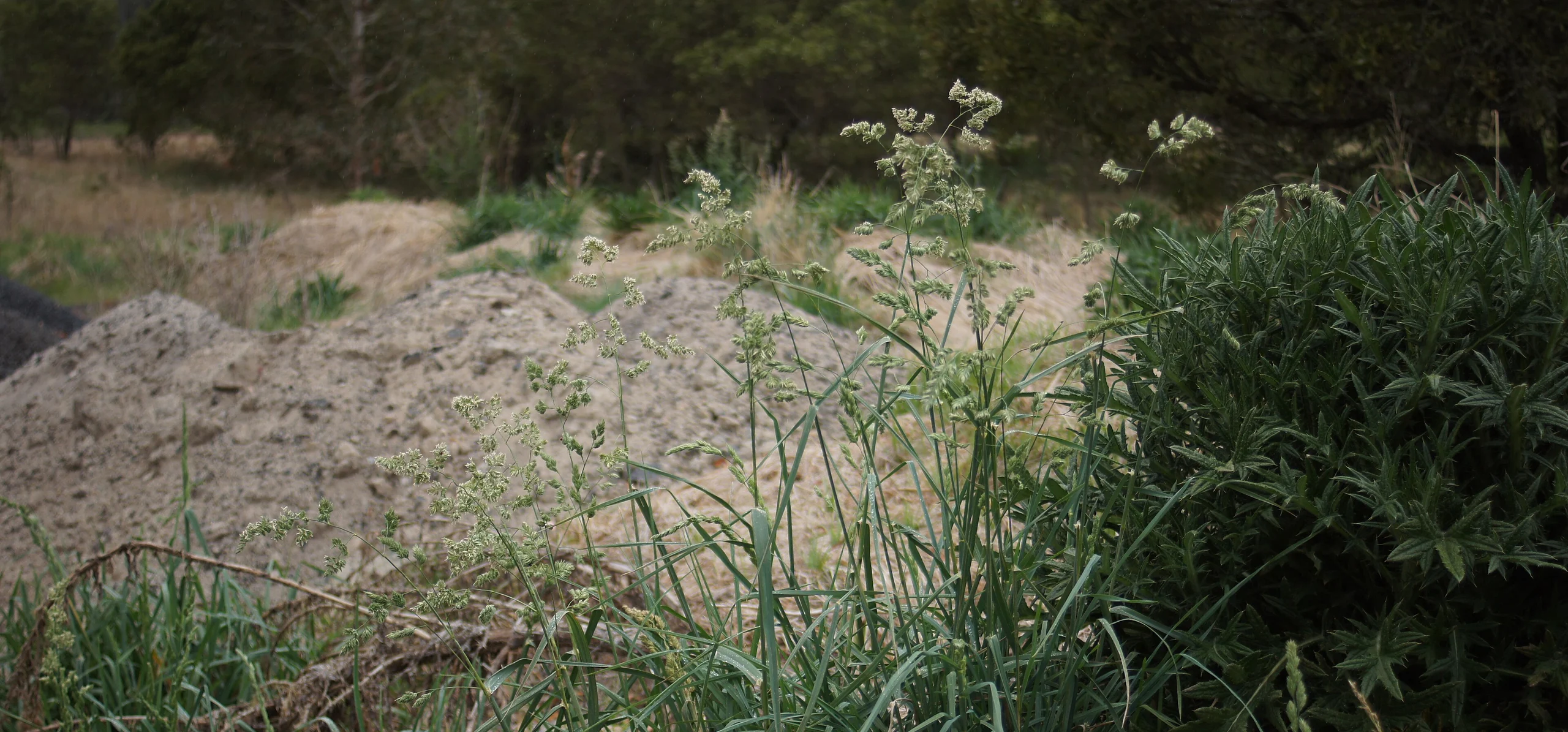
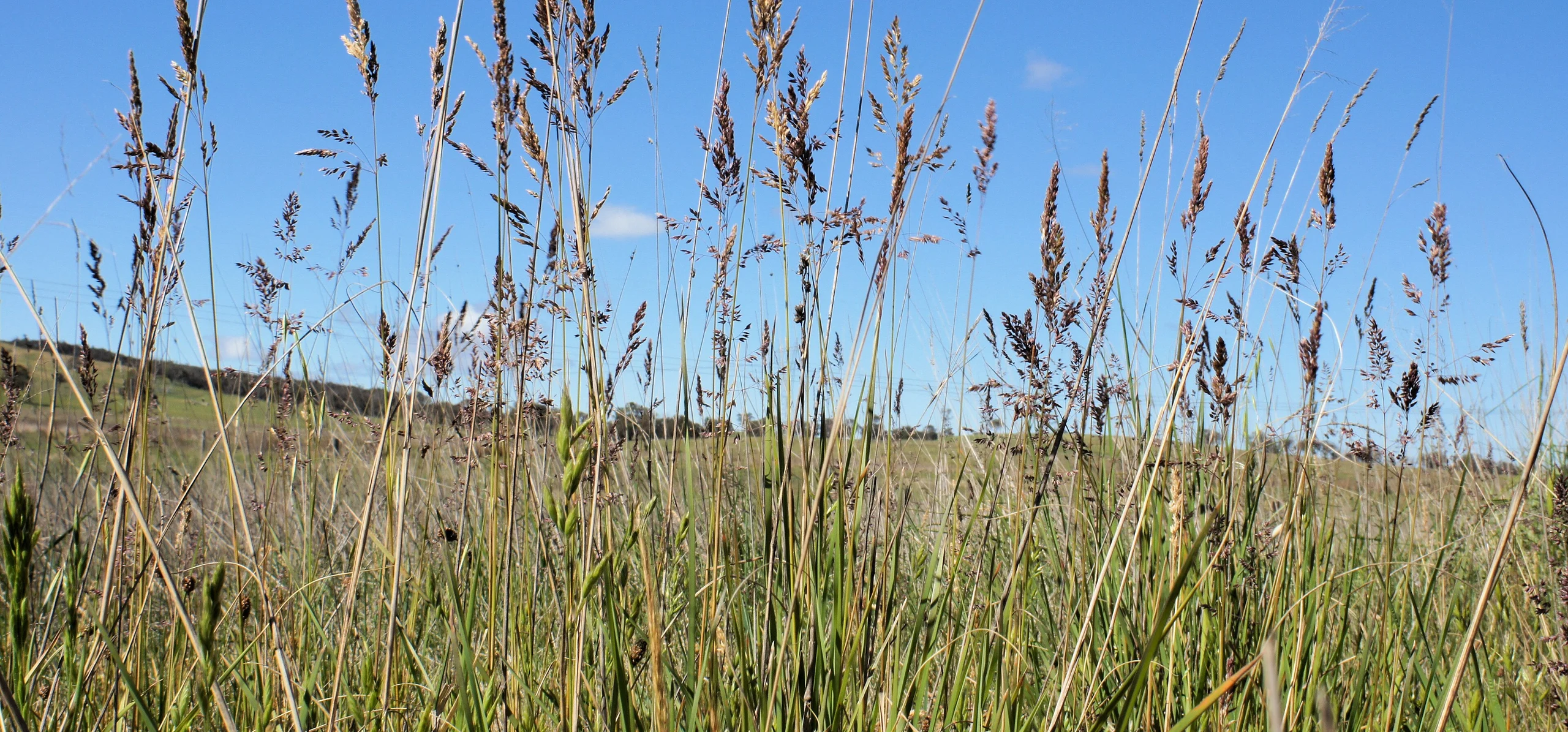
Poa pratensis produces green, linear leaf blades with a distinctive boat-shaped tip, a quick way to tell it apart from other lawn grasses when you are checking what is actually growing in a patchy yard. Left unmown, it reaches roughly 4 inches to 2 feet tall and, in late spring to early summer, sends up open, branched seed panicles above the foliage. In a maintained lawn none of that height shows, because the plant is kept mown far shorter, but the underground rhizome network that supports it is doing the same work regardless: spreading outward, filling gaps and forming the continuous sod that gives Kentucky bluegrass lawns their characteristic dense, springy feel underfoot.
Establishing a Lawn from Seed
Sow in late summer or early fall when soil is still warm but air temperatures are dropping, or in early spring as a second option. Expect germination to take around two weeks, slower than perennial ryegrass or tall fescue sown at the same time, and expect the seedlings to be weak for their first several weeks. Because of that slow start, Illinois Extension specifically warns against oversowing bluegrass seed into a thick, already-established stand of turf, the new seedlings simply cannot compete for light and moisture against mature grass. Keep the seedbed consistently moist, not waterlogged, until the young stand has been mowed two or three times.
Sun, Site and Soil pH
This is a full-sun grass at heart. NC State Extension rates it as needing direct sun for most of the day, though it will tolerate partial shade of roughly two to six hours if that is what a site offers, expect a thinner stand under trees rather than the dense cover you get in the open. Soil should be fertile and well drained; Illinois Extension puts the ideal pH between 6.0 and 7.0, slightly acidic to neutral. On heavier clay, work in compost before seeding rather than after, since bluegrass roots and rhizomes need the top several inches to breathe and drain freely.


Watering and Summer Dormancy
Give an established lawn about 1 to 1.5 inches of water a week through the growing season, delivered as one or two deep soakings rather than a daily sprinkle that only wets the surface. This is not a drought-tolerant species: Penn State Extension identifies hot, dry summer weather as the single most limiting factor for the crop, and a lawn left unwatered in a heat wave will fade from green to straw-brown within days. That browning is not necessarily death, cool-season grasses like this one can go dormant under moisture stress and green back up once temperatures drop and rain returns, but repeated drought cycles without recovery time will thin the stand permanently.
Mowing Height and Frequency
Illinois Extension lists 2 to 3 inches as the normal cutting height for home lawns; specialized dwarf cultivars clipped to an inch or less are built for golf and athletic turf, not the average yard, and mowing an ordinary bluegrass lawn that short stresses the plant and invites weeds into the gaps. Mow often enough that you are never removing more than the top third of the blade in a single pass, scalping a shaggy lawn back to two inches in one cut shocks the crown and slows regrowth. Leave the clippings on the lawn when they are short; they break down quickly and return nitrogen to the soil.
Feeding Through the Season
Illinois Extension recommends roughly 2 to 4 pounds of nitrogen per 1,000 square feet per growing season, split across applications rather than applied all at once. The heaviest feeding should land in early fall, when cooler air and still-warm soil push root and rhizome growth without forcing excessive top growth, with a lighter follow-up in spring. Skip or minimize feeding during peak summer heat, pushing new growth on a plant that is already fighting drought stress and disease pressure tends to do more harm than good.
Thatch, Rhizome Spread and Renovation
The same rhizome network that lets Kentucky bluegrass heal itself also builds up thatch, a dense mat of stems and roots between the soil and the green blades. Penn State Extension notes that turf-type varieties need periodic dethatching to stay productive; a thatch layer thicker than about half an inch blocks water and fertilizer from reaching the roots and gives fungal disease somewhere to hide. Core aerate compacted areas every one to two years and rake out excess thatch in early fall, right when the grass is actively rooting and best able to recover from the disturbance.
Pests, Diseases and Common Mistakes
NC State Extension flags this species as very prone to summer patch disease, along with necrotic ringspot, rusts, leaf spot, Fusarium patch and powdery mildew, most of these flare up under a combination of heat, humidity and thatch buildup, which is one more reason to keep the thatch layer thin. On the pest side, NC State lists bluegrass billbug, sod webworm and European crane fly as recurring problems, while Penn State Extension points to white grubs, the larvae of Japanese beetles, May beetles and related chafers, as the most damaging pest overall, since they feed directly on roots and rhizomes underground. The most common mistake with this grass is treating it like a drought-tolerant, low-input lawn: it rewards steady watering, moderate nitrogen and a mowing height of 2 to 3 inches far more than it rewards neglect. Its spreading rhizomes are also why NC State Extension tags it weedy outside a maintained lawn, in beds or untended ground nearby, the same trait that heals bare patches will just as readily colonize soil you did not intend it to cover.
Test your plant knowledge
Tap a card to flip it and reveal the answer.
Kentucky bluegrass spreads through underground rhizomes that let it repair bare or damaged patches on its own. Tap to reveal ✓ True
Kentucky bluegrass seed typically germinates within two or three days of sowing. Tap to reveal ✕ False
The soil pH range recommended for Kentucky bluegrass lawns is 6.0 to 7.0. Tap to reveal ✓ True
Established Kentucky bluegrass is highly drought tolerant and rarely needs irrigation in summer. Tap to reveal ✕ False
Home lawns of Kentucky bluegrass are generally mowed down to less than one inch. Tap to reveal ✕ False
Sources
References consulted for this guide
- GBIF: Poa pratensis L.gbif.org
- Plants of the World Online (Kew): Poa pratensis L.powo.science.kew.org
- University of Illinois Extension, HortAnswers: Kentucky bluegrass (Poa pratensis)web.extension.illinois.edu
- Penn State Extension: Kentucky bluegrassextension.psu.edu
- NC State Extension Gardener Plant Toolbox: Poa pratensisplants.ces.ncsu.edu
- Reference entity : Wikipédiaen.wikipedia.org