Kikuyu Grass
Cenchrus clandestinus
Family · Poaceae
Kikuyu grass forms a dense, fast-spreading lawn in full sun on warm soil, but its stolons and rhizomes escape beds fast without a deep edging strip.
Cenchrus clandestinus
Plant profile
- WateringModerateWater every 5 days
- Light exposurePartial sun
Growth
- Family
- Poaceae
- Life cycle
- Perennial
- Growth speed
- 9/10
- Mature size
- 2–46 cm
- Flowering
- Spikelets stay hidden in the leaf sheath; only white stigmas and anthers emerge
- Propagation
- Seed
- Cutting
Dormancybrowns off after hard frost inland, often stays green year-round in mild coastal climates
Time to maturityfills in as a lawn within one growing season
Soil & climate
- Soil types
- clay, loam, sand
- Saline soil
- Partially tolerated
- Drought tolerance
- Yes
Light & Placement
- Origin
- East Africa; POWO lists the native range as Eritrea to southern tropical Africa
- Where to place it
- full-sun lawns
- pastures and paddocks
- erosion-control banks and ditch sides
Safety
- Toxicity
- Not listed as toxic by the ASPCA; long grazed as cattle and sheep pasture
- Pet safe
- Yes
Invasive speciesan extremely aggressive perennial weed once it escapes turf or pasture, per UC Cooperative Extension; spreads by seed, rooting stem fragments and unchecked stolons and rhizomes
Data fromGBIF Backbone Taxonomy: Cenchrus clandesPOWO (Kew): Cenchrus clandestinus (HochsUC IPM: Kikuyugrass (Home and Landscape)UC IPM: Kikuyugrass Turf Species ProfileUSDA PLANTS Database: Pennisetum clandes
Where it grows
World distribution
Kikuyu Grass is native to 10 countries: Burundi, Congo - Kinshasa, Eritrea, Ethiopia, Kenya, Malawi, Rwanda, and Tanzania….GBIF records 29,486 documented identifications across 85 countries, with the largest concentrations in Australia, Colombia, and South Africa.
- Burundi
- Congo - Kinshasa
- Eritrea
- Ethiopia
- Kenya
- Malawi
- Rwanda
- Tanzania
- Uganda
- Zimbabwe
Yellow to orange dots: concentration of documented identifications per country. Green countries: sourced native range. Source: GBIFNative range from POWO (Kew).
A Grass That Hides Its Own Flowers
Cenchrus clandestinus, better known as Kikuyu grass, is a creeping perennial from the highland grasslands of East Africa. GBIF and Plants of the World Online both record its native range as Eritrea south through tropical Africa, and it takes its common name from the Kikuyu people of the central Kenyan highlands where early botanical collections were made. The species name is the more telling detail: clandestinus means hidden, and it describes a genuine quirk of the plant. Unlike most grasses, Kikuyu does not raise its flowers on an exposed seed head. The spikelets stay tucked inside the base of the leaf sheath, and only pale, thread-like stigmas and cream anthers push out to catch pollen on the wind. If a lawn everyone calls a grass never seems to flower, this is why: it flowers constantly, just out of sight.
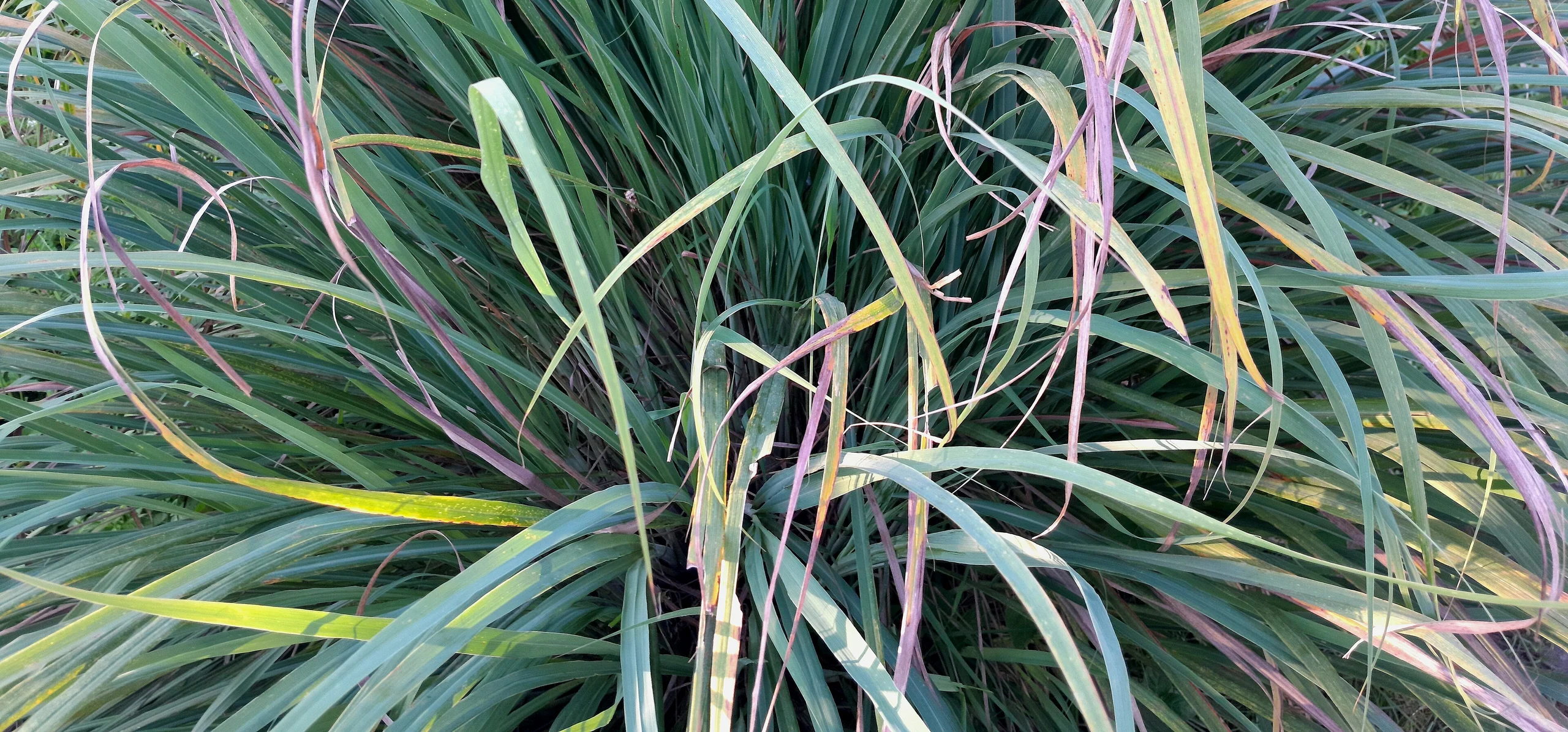
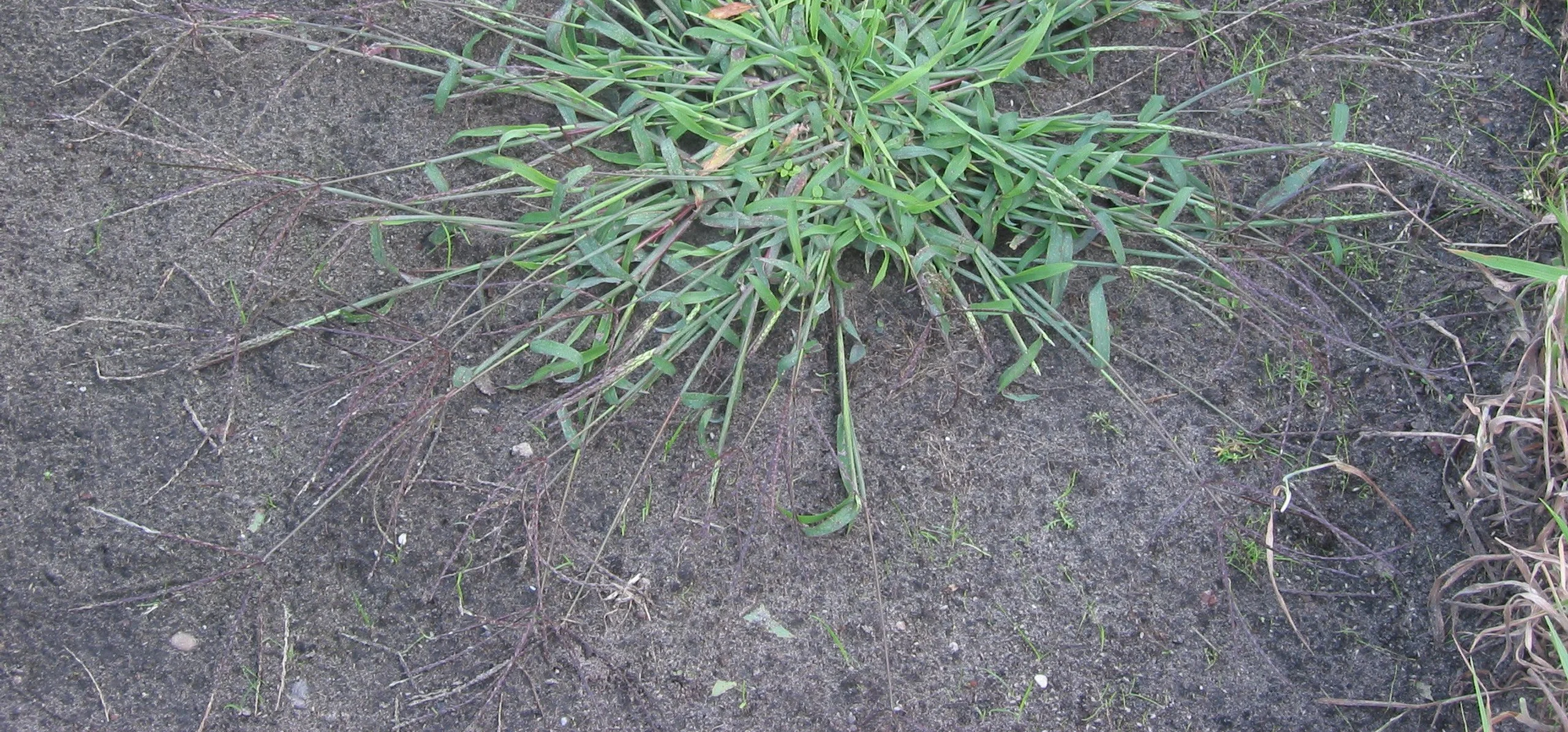
What you are actually looking at, underfoot, is a mat built from two spreading structures at once: fleshy above-ground stolons and underground rhizomes that run 1 to 4 inches (2.5 to 10 cm) deep. Both root wherever a node touches soil, which is how a single sprig becomes a lawn. Leaves are light green, 1 to 10 inches (2.5 to 25 cm) long, with a pointed tip and a flat blade about 1/8 to 1/4 inch (3 to 6 mm) wide. The giveaway for identification, especially next to bermudagrass, is the leaf collar: instead of a membranous ligule, Kikuyu carries a dense fringe of hairs across it.
Starting a Lawn or Pasture
Kikuyu is a warm-season grass and establishes fastest when soil is already warm, from spring into early autumn in most climates. It is planted from sprigs, stolons or sod rather than seed in most home gardens, since a few fragments of stem root at almost every node. Where seed is used, keep the top inch of soil consistently damp; germination and early establishment need frequent light watering until the young plants send down their own roots. Once rooted in, growth is fast by any lawn grass standard: shoots can extend more than an inch (2.5 cm) a day, and an unmanaged patch spreads outward by roughly 4 square feet (0.4 sq m) a month with nothing to slow it. That speed is the whole appeal for a quick lawn, and the whole problem for a border planted next to one.


Mowing Without Scalping It
Kikuyu tolerates genuinely low mowing, surviving cuts under 1/2 inch (1.3 cm) without dying back, which is unusual for a grass this vigorous. Left uncut, it reaches about 18 inches (46 cm) and flops into an untidy thatch. Most home lawns are kept between 1 and 3 inches (2.5 and 7.5 cm), mown often enough that no single pass removes more than a third of the blade. Cutting too hard, too infrequently, has the opposite effect of what you would expect from such a tough grass: it scalps, leaving pale, bare-looking patches where the thick stolon mat is exposed rather than covered. Frequent mowing has a side effect worth knowing about too, it stimulates flowering and seed set, one of the ways Kikuyu spreads beyond where it was planted.
Watering and Drought Recovery
Growth is lushest with regular moisture through the warm months; UC Cooperative Extension notes the species favors moist conditions for active growth. That said, an established stand is forgiving. Roots and rhizomes hold enough reserve that the turf can brown off in a dry spell and green back up within days of the first real rain or irrigation, rather than dying outright the way a shallow-rooted cool-season lawn would. New plantings are the exception: sprigs, stolons and seed all need consistent surface moisture for the first several weeks, until roots reach any depth.
Soil, Fertility and Sun
Kikuyu is not fussy about soil texture, it spreads through clay, loam and sand alike, and UC Cooperative Extension specifically notes it tolerates low fertility, unlike many turf grasses that thin out fast on poor ground. Heavy feeding is more likely to cause thatch and mowing headaches than to improve the lawn. It performs best in full sun but, unusually among warm-season lawn grasses, UC Extension also rates it as doing well under relatively shady conditions, a real advantage over bermudagrass planted under trees or against a building.
Winter Dormancy and Cold
Cold is Kikuyu's real limit. Active growth runs between about 60 and 90 degrees F (15 to 32 degrees C), and it tolerates heat up to 100 degrees F (38 degrees C) without complaint, but it has poor tolerance for cold and goes dormant at the first hard frost. In climates with real winters, inland lawns typically brown off in late November and stay dormant until February or March. Along mild coasts, or in frost-free climates generally, it often stays green through the year. There is no reliable way to push winter color the way overseeding does for some warm-season lawns; the plant simply waits out the cold.
Keeping It From Escaping the Lawn
The trait that makes Kikuyu an easy lawn also makes it, outside a mown boundary, a genuine problem. UC Cooperative Extension describes it as an extremely aggressive perennial weed once it escapes cultivation, forming thick mats that smother garden beds, choke out slower plants and create a tripping hazard in turf where it is not wanted. It was introduced to places like California around 1918 for erosion control on ditch banks, and moved from there into being a listed weed. It spreads three ways at once: seed, carried by wind and mowing equipment; live stem fragments, since almost any piece with a node roots where it lands; and stolons or rhizomes that simply grow under or around a physical edge that is not deep enough.
- Sink an edging strip at least 6 to 8 inches (15 to 20 cm) into the soil between a Kikuyu lawn and any border worth protecting.
- Dig out new patches while they are small. Once established, hand-pulling rarely lifts every fragment of stolon.
- Avoid tilling or rotary cultivation where Kikuyu is present, it chops rhizomes into fragments that each root separately and makes the infestation worse.
- Clean mowers and tools before moving between an infested area and clean ground.
Pests, Disease and Pet Safety
The main disease specific to this species is Kikuyu yellows, caused by the fungus Verrucalvus flavofaciens. It shows up as circular yellow patches, anywhere from about 4 inches to a yard (10 cm to 1 m) across, that expand outward while the center dies and never regrows. No fungicide is currently registered for it; a strong, complete fertilizer program can mask the symptoms but will not cure the underlying infection, and severely affected lawns are usually patched by digging out the dead centers and replanting. Aphids and armyworms occasionally build up on lush, over-fertilized turf but rarely need more than a strong hose-down to knock back. On the safety side, Kikuyu grass does not appear on the ASPCA's toxic or non-toxic plant lists for dogs, cats or horses, and it has been grazed as cattle and sheep pasture across warm climates for a century without being treated as a livestock hazard under normal conditions.
Test your plant knowledge
Tap a card to flip it and reveal the answer.
Kikuyu grass spreads by both above-ground stolons and underground rhizomes. Tap to reveal ✓ True
Cutting Kikuyu grass below half an inch will kill the turf. Tap to reveal ✕ False
Kikuyu grass only tolerates full sun and fails in any shade. Tap to reveal ✕ False
In frost-prone inland climates, Kikuyu lawns typically brown off and stay dormant from around late November into February or March. Tap to reveal ✓ True
The ASPCA lists Kikuyu grass as toxic to dogs and cats. Tap to reveal ✕ False
Sources
References consulted for this guide
- GBIF Backbone Taxonomy: Cenchrus clandestinusgbif.org
- POWO (Kew): Cenchrus clandestinus (Hochst. ex Chiov.) Morronepowo.science.kew.org
- UC IPM: Kikuyugrass (Home and Landscape)ipm.ucanr.edu
- UC IPM: Kikuyugrass Turf Species Profileipm.ucanr.edu
- USDA PLANTS Database: Pennisetum clandestinum (PECL2)plants.usda.gov
- Reference entity : Wikipédiaen.wikipedia.org