Blackthorn
Prunus spinosa
Family · Rosaceae
Blackthorn (Prunus spinosa) care: full sun, almost any soil, RHS H7 hardiness, hedge-laying timing, and picking sloes without eating the toxic kernels.
Prunus spinosa
Plant profile
- WateringModerateWater every 9 days
- Light exposureFull sun
Growth
- Family
- Rosaceae
- Life cycle
- Perennial
- Mature size
- 250–400 cm
- Spread
- 250–400 cm
- Propagation
- Seed
- Cutting
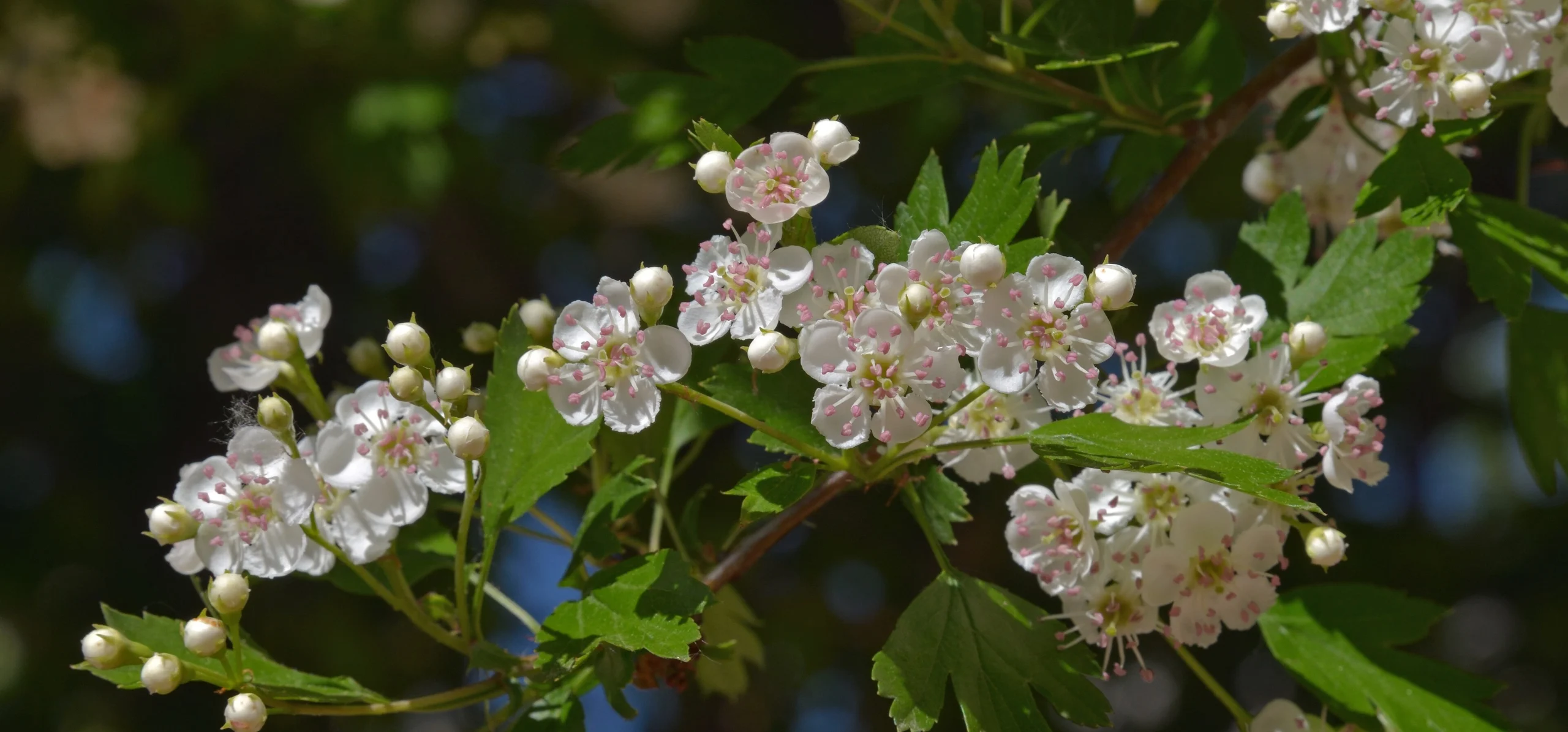
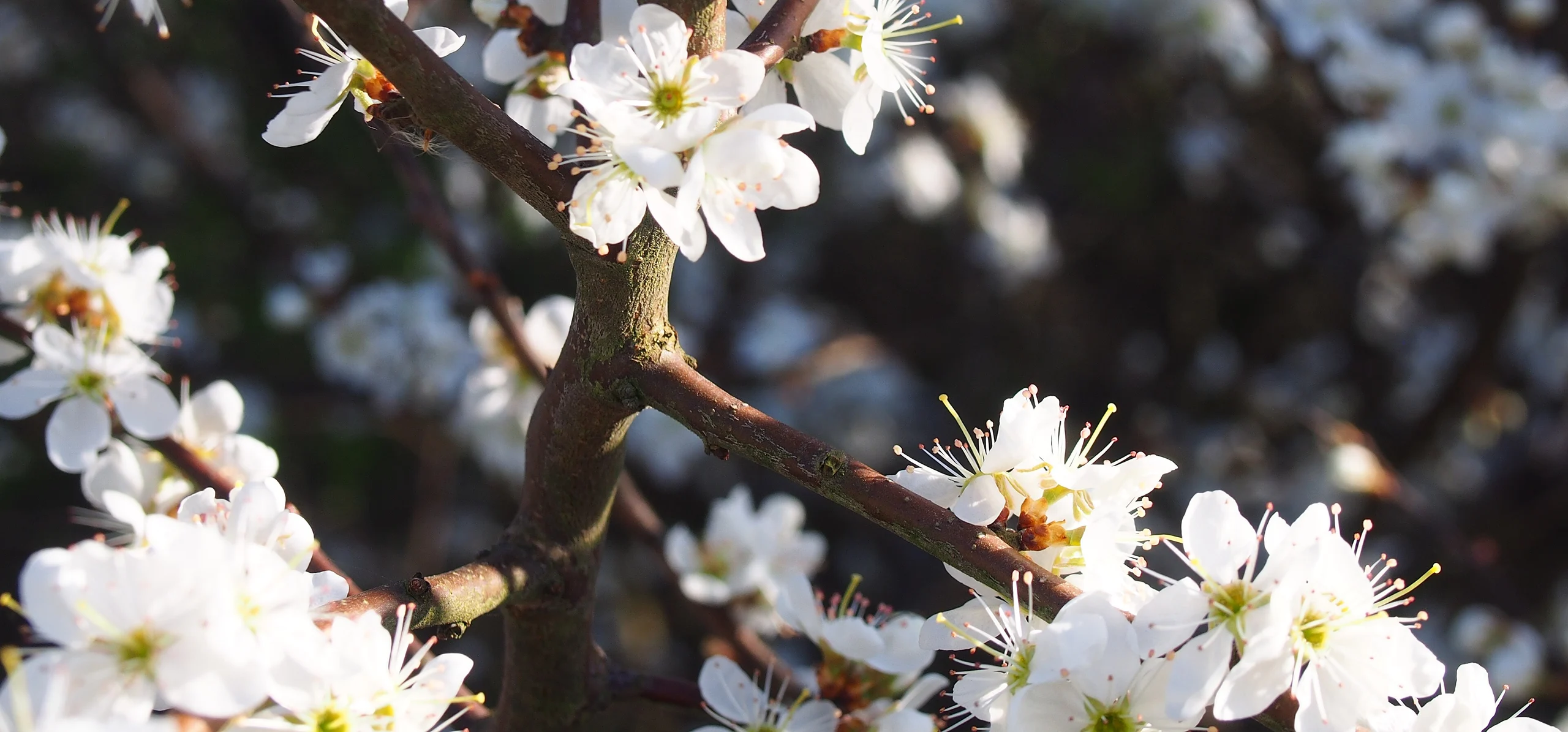
FloweringSmall white flowers on bare branches in early spring, followed by black-blue sloes in autumn (RHS)
Dormancydeciduous, leafless in winter
Time to maturity20 to 50 years to full ultimate size
Soil
- Soil types
- chalk, clay, loam, sand
Light & Placement
- Origin
- Europe to Central Asia and Iran, and northwest Africa (POWO)
- Where to place it
- mixed native hedge
- boundary or windbreak hedge
- wildlife hedgerow
- coastal garden
Safety
- Toxicity
- HumansToxic
Invasive speciesspreads by root suckers and can form dense thickets if left unmanaged
Data fromGBIF Backbone Taxonomy: Prunus spinosa LPlants of the World Online (Kew): PrunusRHS: Prunus spinosa (blackthorn)
Where it grows
World distribution
Blackthorn is native to 35 countries: Albania, Algeria, Austria, Belarus, Belgium, Bulgaria, Croatia, and Czechia….GBIF records 1,087,156 documented identifications across 82 countries, with the largest concentrations in France, United Kingdom, and Sweden.
- Albania
- Algeria
- Austria
- Belarus
- Belgium
- Bulgaria
- Croatia
- Czechia
- Denmark
- Estonia
- Finland
- France
Show 23 more countriesShow fewer countries
- Georgia
- Germany
- Greece
- Hungary
- Iran
- Ireland
- Italy
- Kazakhstan
- Lebanon
- Morocco
- Netherlands
- Norway
- Poland
- Portugal
- Romania
- Russia
- Spain
- Sweden
- Switzerland
- Tunisia
- Türkiye
- Ukraine
- United Kingdom
Yellow to orange dots: concentration of documented identifications per country. Green countries: sourced native range. Source: GBIFNative range from POWO (Kew).
A blackthorn (Prunus spinosa) that has self-seeded into a hedge line or arrived as a bare-root whip from a native hedging pack is not a fussy plant, but it rewards a bit of forethought. It wants full sun, tolerates almost any soil from heavy clay to thin chalk, and once established it needs little from you beyond an occasional prune. What it will not forgive is being planted somewhere too small: this is a suckering, thorny shrub that spreads outward on its own schedule, and the spines are sharp enough to draw blood through a thin glove.
Where Blackthorn Comes From
Plants of the World Online lists the native range of Prunus spinosa as Europe to Central Asia and Iran, with a further foothold in northwest Africa. GBIF's accepted name for the species is simply Prunus spinosa L., so unlike some garden plants there is no confusing rebrand to explain here: the botanical name on the label matches the name in the hedgerow. Blackthorn is one of the wild relatives behind the cultivated plums and damsons (Prunus domestica) grown for the table, though the fruit itself, the sloe, stays small, astringent and mostly useful for infusing rather than eating fresh.
Choosing and Planting
Most gardeners meet blackthorn as bundles of bare-root whips sold for native hedging rather than as a single container specimen, and it is usually planted while dormant and leafless rather than in full leaf. Set plants out in a double, staggered row if you want a stockproof hedge that will thicken with age; a single specimen left to its own devices will form a dense, twiggy small tree instead. Either way, give it room. The RHS lists an ultimate height and spread of 2.5 to 4 metres (8 to 13 ft), reached over 20 to 50 years, and root suckers will keep pushing the footprint outward well beyond that spread if you do not control them.


Light and Site
Blackthorn wants full sun and tolerates exposure well: the RHS rates it H7, its top hardiness rating, meaning it shrugs off temperatures colder than -20°C (-4°F) that would kill more tender shrubs outright. It accepts a north, south, east or west aspect and copes with both sheltered gardens and exposed, windswept sites, which is why it turns up so often in coastal plantings, wildlife hedges and cottage-garden boundaries as well as open countryside.
Soil and Watering
This is one of the least picky shrubs you can plant. The RHS lists chalk, clay, loam and sand as acceptable soil types, with a preference for moisture that still drains rather than sitting wet, and a pH range spanning acid through neutral to alkaline. Water a newly planted whip through its first one or two summers while the roots establish; after that, rainfall alone is normally enough, and blackthorn is not a plant that sulks through a dry spell.
Pruning and the Traditional Laid Hedge
Blackthorn takes well to hard pruning and to hedge-laying, the old technique of partially cutting through the stems and bending them over to weave a stock-proof barrier that regrows from the base. Because the RHS lists it as susceptible to silver leaf disease, which infects fresh wounds through damp air, prune only when the wood is dry, ideally in summer rather than through a wet winter. Leave the job too late into spring, though, and you cut off the flower buds before the bees, and the fruit that follows them, ever get a chance.
Flowers, Fruit and the Sloe Harvest
The small white, five-petalled flowers open on bare wood in early spring, studding the thorny branches before a single leaf appears, which is what makes a mature blackthorn hedge so visible from a distance for a couple of weeks each year. They are followed by the sloes: ovoid, bloomy black-blue fruits around 1.5 cm across that the RHS describes ripening through autumn. Foragers traditionally leave them on the branch until after the first frost, said to soften the harshest of the astringency, before picking them for sloe gin or jam. The fruit itself is the only part anyone eats; the stone inside stays in the bottle or the pot, not the mouth.
Pests, Diseases and Safety
Aphids and caterpillars are the routine pests, and bullfinches will strip flower buds in a hard winter when other food is scarce. The more serious risks are diseases: silver leaf and blossom wilt both affect blackthorn, and the RHS also flags it as a high-risk host for the bacterium Xylella fastidiosa, one more reason to buy hedging whips from a reputable, biosecurity-aware nursery rather than an unknown source. On safety, the RHS is explicit that the seed kernels are harmful if eaten and that pets, specifically dogs, rabbits and rodents, can also be harmed by eating parts of the plant, so keep animals away from fallen fruit and wear gloves when pruning or handling cuttings. The species is not currently listed by the ASPCA for cats, dogs or horses, but that RHS warning is reason enough for caution around any pet that chews. The thorns are the everyday hazard: a broken-off spine left under the skin can trigger a slow, stubborn inflammation, so clean and treat any puncture wound rather than shrugging it off.
Common mistakes
- Planting a single blackthorn against a small border and being surprised when suckers colonise the lawn a few years later.
- Pruning in wet winter weather, which is exactly when silver leaf infection takes hold.
- Picking sloes too early: unripe fruit is far more astringent than fruit left until after the first frost.
- Assuming the fruit and the stone are equally safe to eat; only the flesh is used, never the kernel.
Test your plant knowledge
Tap a card to flip it and reveal the answer.
Blackthorn is commonly grown as a traditional native hedge that can be laid (partially cut and woven). Tap to reveal ✓ True
The stone inside a sloe is just as safe to eat as the flesh around it. Tap to reveal ✕ False
Blackthorn only grows well in a narrow range of soil types and struggles on chalk or clay. Tap to reveal ✕ False
Blackthorn flowers best in full sun. Tap to reveal ✓ True
According to the RHS hardiness rating, blackthorn cannot survive hard frost and needs winter protection. Tap to reveal ✕ False
Sources
References consulted for this guide
- GBIF Backbone Taxonomy: Prunus spinosa L.gbif.org
- Plants of the World Online (Kew): Prunus spinosa L.powo.science.kew.org
- RHS: Prunus spinosa (blackthorn)rhs.org.uk
- Reference entity : Wikipédiaen.wikipedia.org