Guava
Psidium guajava
Family · Myrtaceae
Guava fruits within three to four years grafted, needs full sun and bagged fruit against fruit flies, and drops to the pot when winters get cold.
Psidium guajava
Plant profile
- WateringModerateWater every 5 days
- Light exposureFull sun
- Ideal temperature23–28 °C
Growth
- Family
- Myrtaceae
- Life cycle
- Perennial
- Growth speed
- 7/10
- Mature size
- 91–610 cm
- Propagation
- Seed
- Cutting
- Layering
- Grafting
FloweringWhite, many-stamened flowers in the leaf axils, followed by fruit within weeks that ripens yellow with pink or white flesh
DormancyEvergreen, no true winter dormancy
Time to maturityGrafted or air-layered plants fruit in 3-4 years; seedlings in 3-8 years
Soil & climate
- Soil pH
- pH 4.5–7
- Soil types
- sand, loam, rocky, muck
- Saline soil
- Partially tolerated
- Wind resistance
- 0–119 km/h
- Drought tolerance
- Yes
Light & Placement
- Where to place it
- Bright, frost-free porch or unheated greenhouse, for winter storage of a potted tree only
- Open, full-sun ground bed
- Sunny patio in a large pot
- Well-drained, sandy loam potting mix
OriginPOWO records the native range as a cultigen from Peru; long naturalized across the tropics and invasive on islands including Hawaii and the Galapagos
Safety
- Pet safe
- Yes
ToxicityNo dedicated ASPCA listing for cats, dogs or horses; ripe fruit is an ordinary edible food for people
Invasive speciesNaturalized and invasive on Hawaii, the Galapagos Islands and other tropical islands (CABI Compendium; CTAHR, University of Hawaii)
Data fromPsidium guajava L., GBIF Backbone TaxonoUF/IFAS Extension: Guava Growing in the UF/IFAS Gardening Solutions: GuavaCABI Compendium: Psidium guajava (guava)CTAHR, University of Hawaii at Manoa: We
Where it grows
World distribution
Guava is native to a single country: Peru.GBIF records 55,471 documented identifications across 168 countries, with the largest concentrations in India, Brazil, and Mexico.
- Peru
Yellow to orange dots: concentration of documented identifications per country. Green countries: sourced native range. Source: GBIFNative range from POWO (Kew).
A guava bought as a grafted whip or a rooted air-layer is not a decade-long project: grafted and air-layered stock typically starts fruiting three to four years after planting, and even a tree grown from seed usually settles into cropping within eight years. Psidium guajava also stays genuinely small, six meters at most left to its own devices and easily kept under three meters with pruning, which is why it works as well in a large pot on a patio as in open ground. The two things that catch new growers out are cold, which can kill a young tree outright, and fruit flies, which claim a crop before it even ripens if the fruit is left unprotected. Manage those two and guava is otherwise an easy, quick-cropping tree.
Recognizing the Tree, and How Soon It Fruits
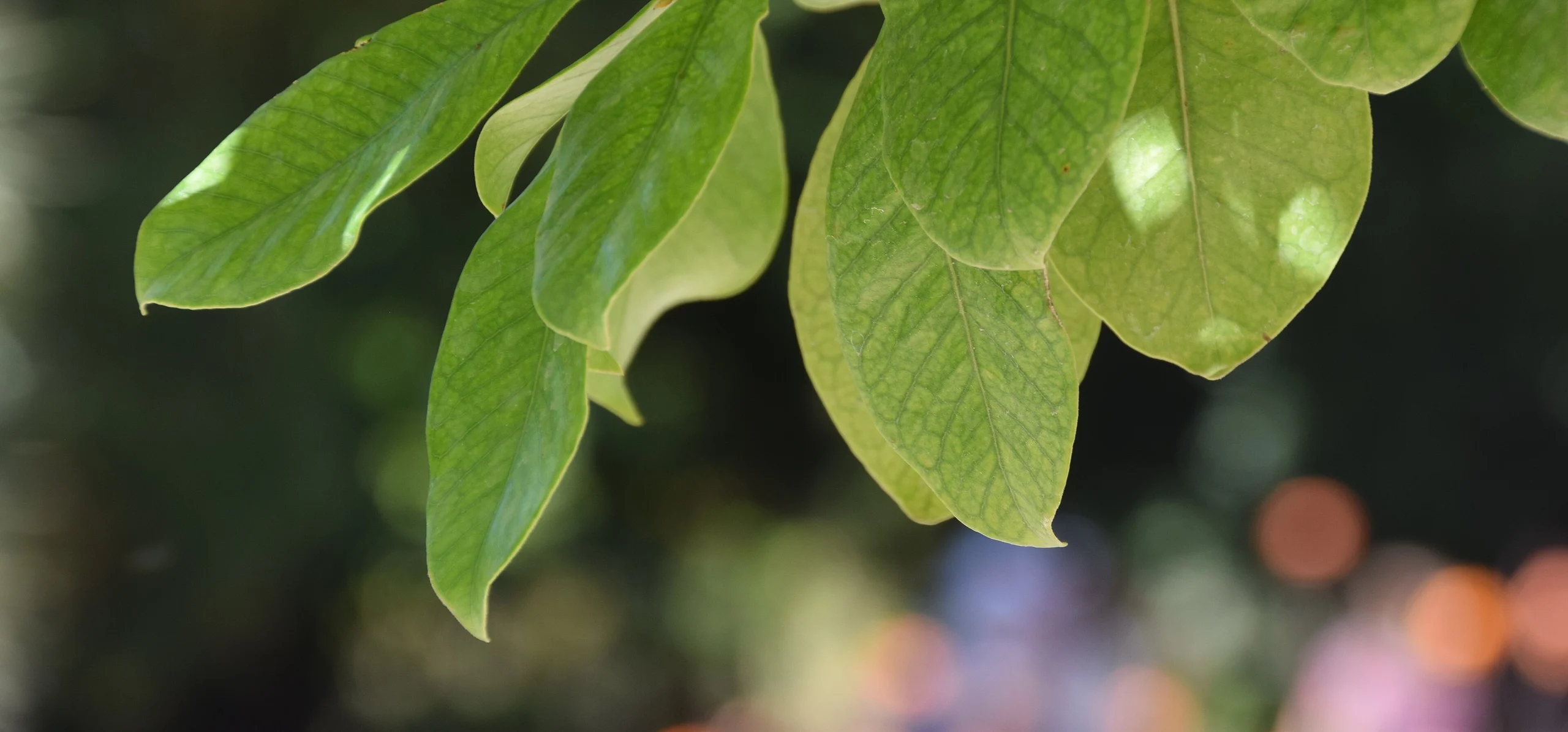
GBIF's accepted name for the species is Psidium guajava L., family Myrtaceae, with Guava and Guava Tree recorded as its common English names; older botanical names for the same plant include Myrtus guajava and Guaiava pyriformis, both now treated as synonyms. A young branched tree is easiest to identify by its bark, smooth and mottled, peeling away in patches, and by its stiff, opposite, aromatic leaves with strongly ridged veins on the underside. According to University of Florida IFAS Extension, seedling trees generally begin fruiting three to eight years after germination, while trees propagated by grafting or air layering (marcottage) fruit far sooner, typically within three to four years. Plants of the World Online records the species' native range as a cultigen from Peru, meaning its wild origin has been obscured by centuries of cultivation across tropical America before people carried it around the world.
Full Sun and Regular Water While It's Fruiting
IFAS Extension is unambiguous that guava should be planted in full sun; a tree crowded by other trees or structures grows poorly and sets little fruit. Water newly planted trees one to two times a week for the first couple of months to get the roots established, then shift to deeper, less frequent watering, paying particular attention during flowering and while the fruit is developing, since both stages are where drought stress cuts a crop short. Once established, guava copes with dry spells better than it copes with wet feet: IFAS notes the tree is moderately tolerant of saline soils and short periods of flooding, though growth and fruiting both drop off under either stress. In a pot, that means checking the compost rather than watering on a fixed schedule, since a container has far less buffering capacity than open ground.


Soil and Pruning for Shape and a Pickable Harvest
Guava is remarkably unfussy about soil texture. IFAS Extension lists it as well adapted to sand, loam, rock-based soils and muck, with an ideal pH of 4.5 to 7, though it still crops in alkaline soil up to about 8.5 given chelated iron to prevent the yellowing high pH otherwise causes. Pruning is less about shaping for looks than about keeping the harvest within reach and the tree wind firm: young trees are headed back to about one to two feet to force the low, lateral branching that later carries fruit, and bearing trees are then kept small, three to six feet, through continuous selective pruning and tipping, or allowed to grow into somewhat larger trees of six to twelve feet. IFAS notes that trees maintained at six to ten feet usually stay standing through hurricane force winds, as much an argument for restrained pruning as the convenience of picking fruit without a ladder.
Fruit Flies: Bagging the Crop
The single biggest threat to a home guava crop is not disease but fruit flies. The species is a documented host of the Caribbean fruit fly, and unprotected fruit is routinely infested before it even looks ripe. IFAS Extension recommends covering each developing fruit with a paper bag once it reaches about an inch in diameter, tying it loosely at the stem, and leaving it bagged until harvest; this single step prevents most fruit fly damage without spraying. Guava whitefly, red banded thrips, guava fruit moth and various scale insects are also worth watching for, but none threatens a crop the way an unbagged fruit fly does.
Growing in a Pot and Overwintering
Guava's comfortable growing range sits around 23 to 28 degrees Celsius; growth slows once temperatures drop below about 15.6 degrees Celsius, well before any frost. Cold becomes a genuine threat from there: IFAS Extension records young trees killed outright at 27 to 28 degrees Fahrenheit (about minus 3 to minus 2 Celsius), while established, mature wood withstands a brief dip to 25 to 26 degrees Fahrenheit (about minus 4 to minus 3 Celsius) before suffering stem and limb damage. Outside a warm subtropical or tropical climate, the practical answer is a large pot carried under cover, an unheated porch or bright frost-free room is enough, before the first hard frost and brought back out once the risk has passed. Even a tree cut back hard by cold is not necessarily lost: IFAS notes that air-layered cultivars can resprout from the base after freeze damage and return to fruiting within two to three years, so a damaged trunk is worth waiting on before writing the plant off.
An Invasive Tree on Hawaii, the Galapagos, and Beyond
The same qualities that make guava easy to grow, tolerant of poor soil, fast to fruit, and spread by any animal that eats the seed-filled fruit, have made it a serious invasive weed well outside its native range. The University of Hawaii's College of Tropical Agriculture and Human Resources records that guava was introduced to Hawaii in the early nineteenth century, naturalized before the century was out, and now occurs on every inhabited island, forming dense thickets in pastures and wetter forest that shade out the understory; the same publication calls it probably the most noxious weed of Hawaiian pastures because of how much ground it covers. Birds, livestock and feral animals spread the hard seeds after eating the fruit, and control has relied on grazing goats, which strip the bark, alongside herbicide treatments. CABI's invasive species compendium documents the same pattern of escape and spread on the Galapagos Islands and other tropical islands, where garden and orchard guava has jumped the fence into native vegetation. None of that is a reason to avoid a single tree in a pot or a fenced garden, but it explains why guava is not a species to plant loose near wild land in a warm climate.
Is Guava Safe for Pets and People?
For people, ripe guava is simply food, eaten fresh or made into jams and drinks across the tropics, and the University of Hawaii's own fact sheet notes it as a good source of vitamin C. The ASPCA's toxic and non-toxic plant database has no dedicated entry for Psidium guajava, so no cats, dogs or horses status can be cited either way from that source. The same fact sheet on guava as a Hawaiian pasture weed describes cattle, goats and sheep grazing the leaves and fruit without documented poisoning, a reasonable sign that a curious dog nosing a fallen fruit is not courting the trouble that comes from a genuinely toxic garden plant. The seeds are hard and numerous, though, so treat a large swallowed piece of fruit as a choking or blockage risk for a small pet rather than a poisoning one.
Test your plant knowledge
Tap a card to flip it and reveal the answer.
Grafted or air-layered guava trees typically begin fruiting three to four years after planting, well before most seed-grown trees. Tap to reveal ✓ True
Guava fails outright in alkaline soil above pH 7 and needs consistently acidic ground to crop. Tap to reveal ✕ False
Covering young guava fruit with a paper bag once it reaches about an inch across is a standard way to keep fruit flies out. Tap to reveal ✓ True
A light frost right at freezing, 0 Celsius, is enough to kill mature guava wood outright. Tap to reveal ✕ False
The ASPCA's plant database has a dedicated entry confirming guava (Psidium guajava) as toxic to cats and dogs. Tap to reveal ✕ False
Sources
References consulted for this guide
- Psidium guajava L., GBIF Backbone Taxonomygbif.org
- UF/IFAS Extension: Guava Growing in the Florida Home Landscape (HS4/MG045)ask.ifas.ufl.edu
- UF/IFAS Gardening Solutions: Guavagardeningsolutions.ifas.ufl.edu
- CABI Compendium: Psidium guajava (guava)cabi.org
- CTAHR, University of Hawaii at Manoa: Weeds of Hawaii's Pastures and Natural Areas, Guavawww3.ctahr.hawaii.edu
- Reference entity : Wikipédiaen.wikipedia.org