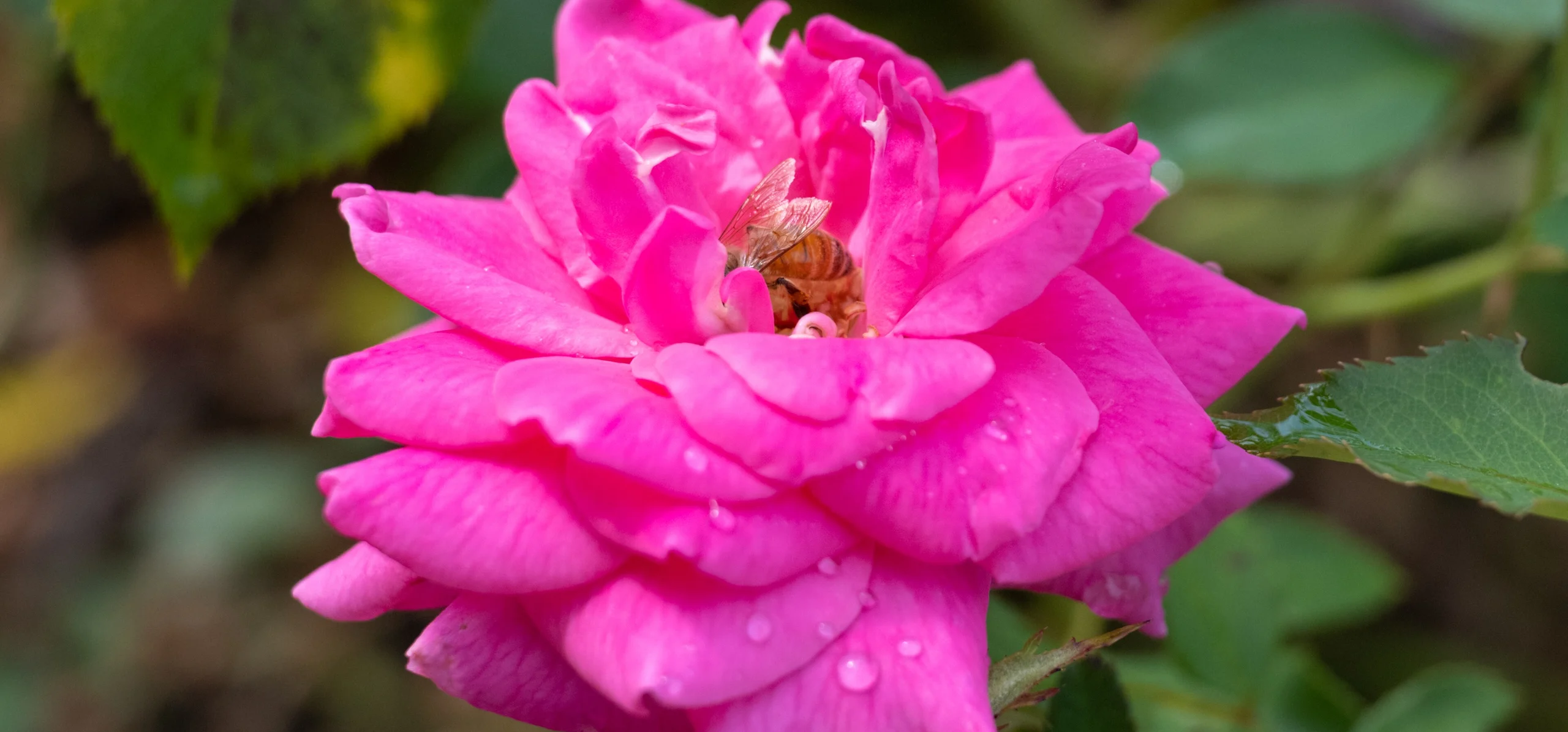
Hybrid Tea Rose
Rosa
Family · Rosaceae
Hybrid tea roses need a hard late-winter prune to an outward bud, floribundas a lighter one, plus twice-yearly feeding and control for black spot and mildew.
Rosa
Plant profile
- WateringModerateWater every 7 days
- Light exposureFull sun
Growth
- Family
- Rosaceae
- Life cycle
- Perennial
- Growth speed
- 6/10
- Mature size
- 50–150 cm
- Spread
- 50–100 cm
- Propagation
- Cutting
- Grafting
FloweringRepeat-flowering from late spring through autumn, unlike the single flush of most wild roses
Dormancydeciduous, dormant in winter
Time to maturityflowers in its first year, reaches full size by year 3
Soil & climate
- Soil types
- loam, clay
- Drought tolerance
- No
Light & Placement
- Where to place it
- open sunny border
- rose bed
- sheltered patio
- large container at least 40cm wide for patio and miniature types
OriginA hybrid group bred from wild species across the temperate and subtropical Northern Hemisphere (POWO, genus Rosa), not one wild origin
Safety
- Toxicity
- CatsSafe
- DogsSafe
- HorsesSafe
Data fromGBIF Backbone Taxonomy: Rosa L.Plants of the World Online (Kew): Rosa LRHS: Modern bush roses (Rosa)RHS: Rose Pruning, Floribunda and HybridRHS: Rose black spot, symptoms and contrASPCA: Toxic and Non-Toxic Plants, Rose
Where it grows
World distribution
GBIF records 2,708,801 documented identifications across 183 countries, with the largest concentrations in United Kingdom, France, and Sweden.
Yellow to orange dots: concentration of documented identifications per country. Green countries: sourced native range. Source: GBIF.
A hybrid tea or floribunda rose bought as a bare-root plant or in a pot is not one wild species, it is a cultivar out of many thousands bred over two centuries from repeated crosses between older garden roses and wild species such as Rosa chinensis and Rosa gallica. That breeding gave the group its defining trait: flowers that repeat through spring, summer and into autumn, rather than the single flush most wild roses produce. What a new plant needs first is straightforward: a full-sun spot, rich soil dug over with organic matter, and the graft union set at the right depth if it arrived bare-root over winter.
Why "Rosa Hybrida" Is Not a Real Species
The trade name Rosa hybrida shows up on plant labels and seed packets, but it has no standing in GBIF's backbone taxonomy: the accepted entry for the whole group is simply the genus Rosa L., because hybrid tea and floribunda roses are not one species with a fixed set of wild ancestors, they are a hybrid group assembled from dozens of parent species crossed and re-crossed by breeders since the first hybrid tea, 'La France', appeared in 1867. That is also what separates a hybrid tea from Rosa canina, the wild dog rose of European hedgerows: canina is a true species with one native range and a single flush of simple five-petalled flowers in June, while a hybrid tea is a manufactured plant, usually grafted onto a vigorous rootstock, bred specifically to keep flowering after that first flush ends.
Planting a Bare-Root Rose in Winter
Bare-root roses are lifted and sold dormant from late autumn to early spring, and that dormant window, while the ground is workable and not frozen or waterlogged, is the best time to plant one. Soak the roots for an hour or two before planting, dig a hole wide enough to spread them out without bending, and set the plant so the graft union, the swollen knuckle where the named variety meets its rootstock, sits at soil level; in a climate with hard winters, setting it an inch or two below the surface instead gives the union some insulation against frost that can otherwise kill the bud and leave only rootstock growth behind. Backfill in stages, firming as you go to remove air pockets, then water in thoroughly even though the plant looks leafless and inert.
Full Sun, Rich Soil and Twice-Yearly Feeding
Hybrid teas and floribundas want at least six hours of direct sun and soil dug over with well-rotted manure or compost before planting; poor light or thin soil shows up quickly as weak growth and fewer, smaller blooms. Feed twice a year rather than constantly: a granular rose fertiliser scattered around the base in spring as growth starts, then a second application once the first flush of flowers has faded, to push the plant into its next round of bloom. Follow each feed with a mulch of manure or garden compost a few centimetres deep, kept clear of the stems, which does as much for flowering as the fertiliser itself by holding moisture through summer.


The Late-Winter Prune: Hard for Hybrid Teas, Light for Floribundas
Prune in late winter while the plant is still dormant but buds are starting to swell, cutting just above an outward-facing bud so new growth opens the centre of the bush rather than crowding it. Hybrid teas take the harder cut: shorten the strongest shoots down to four to six buds, roughly 10 to 15cm from the base, which sounds drastic on an established bush but is what produces the long, strong stems these roses are grown for. Floribundas get a lighter hand, cut back to somewhere between two and four buds higher up the shoot, because their appeal is a mass of smaller flowers in clusters rather than a few large individual blooms, and cutting them as hard as a hybrid tea would remove the wood that carries that display.
Deadheading Through the Flowering Season
Once flowering starts, removing spent blooms keeps the plant working toward its next flush instead of ripening hips it does not need. On an established bush, cut the flowering stem back to the first five-leaflet leaf below the flower, leaving at least two five-leaflet leaves on the shoot, since cutting to a weaker three-leaflet leaf produces a thinner replacement stem; in the plant's first season, though, deadhead lightly to the uppermost three-leaflet leaf instead, because removing too much foliage from a young rose slows it down when it should be building roots. On hybrid teas specifically, snapping the faded flower head off by hand rather than cutting it with secateurs tends to bring the next flush on faster.
Black Spot, Powdery Mildew and Aphids
Black spot, purple-black blotches on the leaves that spread upward from the base of the plant and cause early leaf drop in wet summers, and powdery mildew, a white fungal coating on leaves and buds that thrives where roots are dry and air movement is poor, are the two fungal problems that define growing modern roses; older species roses like Rosa canina shrug both off, but teas, floribundas and patio types are consistently more susceptible. Decades of breeding have pushed hard against that weakness, and cultivars sold today as disease-resistant carry genuinely better resistance than older varieties, though gardeners should expect only a few years' respite before local disease strains catch up with any one resistant cultivar. Aphids, mostly the pink to green rose aphid Macrosiphum rosae, colonise soft new shoots from spring and build up fastest before their natural predators, ladybirds and hoverflies among them, become active in numbers; checking new growth regularly and squashing early colonies by hand usually heads off the sticky honeydew and sooty mould that heavy infestations bring.
Suckers From the Rootstock
Because most hybrid teas and floribundas are budded onto a vigorous rootstock rather than grown on their own roots, shoots sometimes appear from below the graft union or from roots running out sideways, and these are rootstock growth, not the named variety: the giveaway is foliage, thorns or flower colour that does not match the rest of the bush. Pull suckers away from where they emerge at the root rather than cutting them at soil level, since a cut stump tends to resprout with even more shoots than before; left unchecked, rootstock growth is vigorous enough to eventually outcompete and swamp the grafted variety entirely.
Toxicity and Thorn Injuries
The ASPCA lists rose, genus Rosa, as non-toxic to dogs, cats and horses, so a curious pet nibbling a leaf or petal is not a poisoning concern. The practical hazard around a hybrid tea is entirely mechanical: the curved thorns along every stem cause deep puncture wounds and scratches that are prone to infection, since rose thorns commonly carry soil-borne bacteria and fungal spores into the wound. Gloves and long sleeves for pruning and deadheading are worth the trouble, and any thorn scratch that reddens or swells over the following days is worth having a doctor look at rather than dismissing as a garden scratch.
Test your plant knowledge
Tap a card to flip it and reveal the answer.
Hybrid tea roses are pruned harder in late winter than floribundas, cutting the strongest shoots back to four to six buds from the base. Tap to reveal ✓ True
The trade name "Rosa hybrida" is an officially accepted botanical species recognised by GBIF. Tap to reveal ✕ False
Deadheading a mature hybrid tea rose is normally done by cutting back to the first three-leaflet leaf below the flower. Tap to reveal ✕ False
Shoots below the graft union with different leaves, thorns or flower colour from the rest of the bush are rootstock suckers, not the grafted variety. Tap to reveal ✓ True
The ASPCA lists rose (genus Rosa) as toxic to dogs and cats. Tap to reveal ✕ False
Sources
References consulted for this guide
- GBIF Backbone Taxonomy: Rosa L.gbif.org
- Plants of the World Online (Kew): Rosa L.powo.science.kew.org
- RHS: Modern bush roses (Rosa)rhs.org.uk
- RHS: Rose Pruning, Floribunda and Hybrid Tea Rosesrhs.org.uk
- RHS: Rose black spot, symptoms and controlrhs.org.uk
- ASPCA: Toxic and Non-Toxic Plants, Roseaspca.org
- Reference entity : Wikipédiaen.wikipedia.org