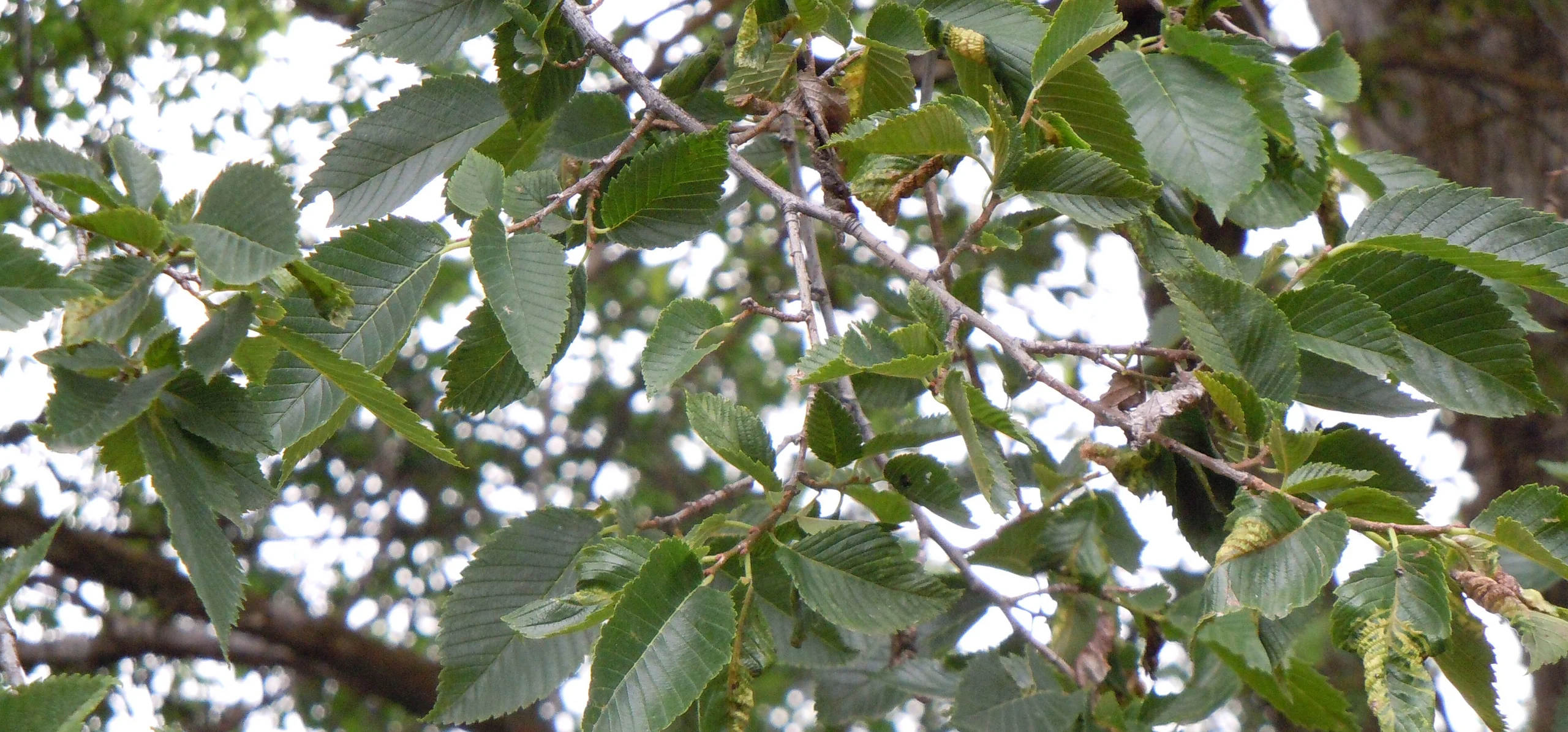
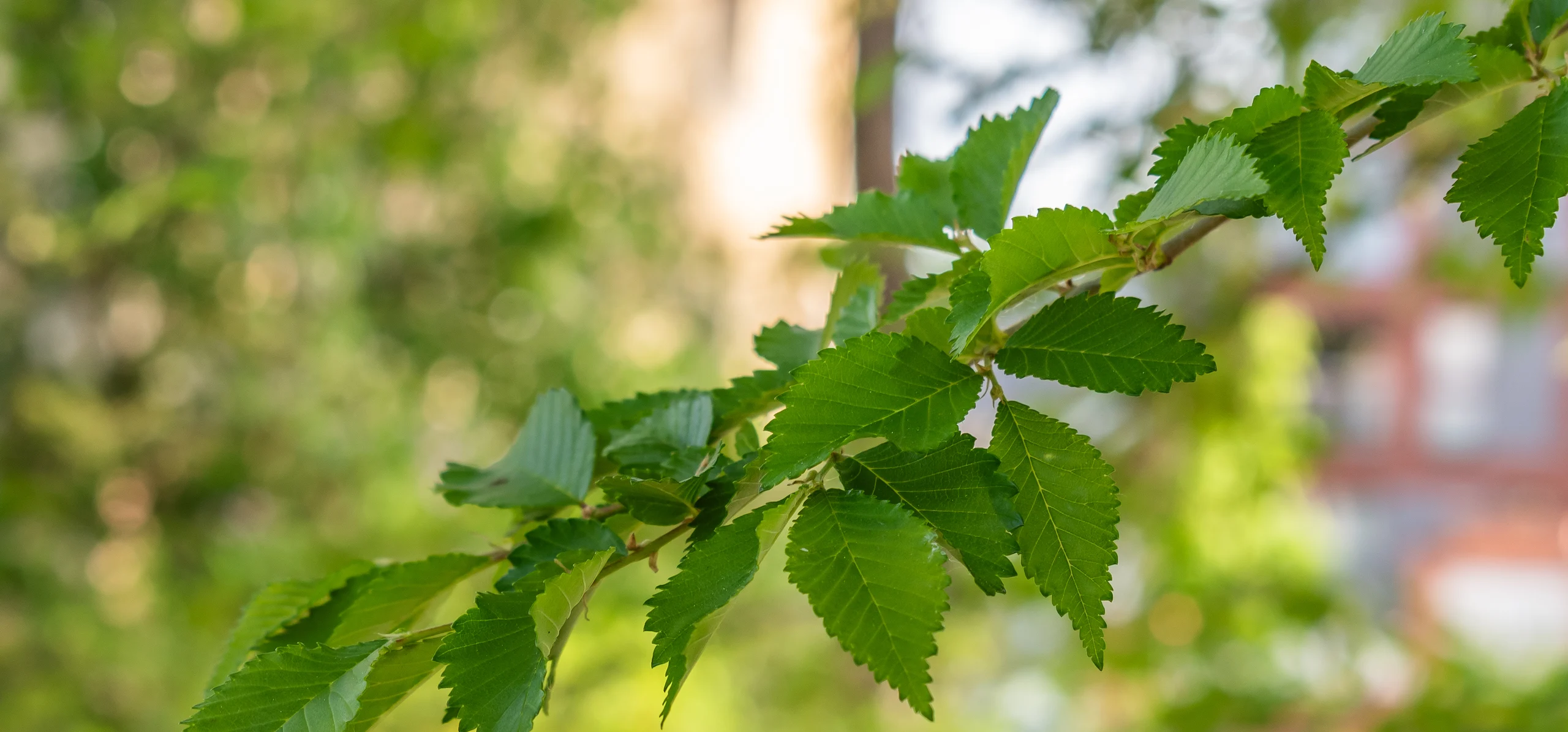
Siberian Elm
Ulmus pumila
Family · Ulmaceae
Siberian elm reaches 50 to 70 feet fast, tolerates drought and poor soil, but its brittle wood breaks easily and it self-seeds aggressively.
Ulmus pumila
Plant profile
- WateringLittleWater every 12 days
- Light exposureFull sun
- Hardiness zoneUSDA 4–9
Growth
- Family
- Ulmaceae
- Life cycle
- Perennial
- Growth speed
- 8/10
- Mature size
- 1500–2130 cm
- Spread
- 1070–1520 cm
- Propagation
- Seed
FloweringInconspicuous green to reddish flower clusters in spring, March to May, before the leaves
Dormancydeciduous, bare in winter with prominent shiny black buds
Soil & climate
- Soil types
- clay, loam, sand, shallow rocky soil
- Drought tolerance
- Yes
Light & Placement
- Origin
- Central Asia to S. Siberia and Korea (POWO)
- Where to place it
- Windbreak or shelterbelt row
- Large open yard or field edge, away from structures
- Disturbed or reclamation sites with poor soil
Safety
- Toxicity
- Not evaluated by the ASPCA; toxicity undetermined
- Pet safe
- No
Invasive speciesForms large colonies from wind-dispersed seed and is considered invasive in some US states (NC State Extension)
Data fromUlmus pumila L., GBIF Backbone TaxonomyUlmus pumila L., Plants of the World OnlUlmus pumila (Siberian Elm, Chinese Elm)Ulmus pumila L., USDA PLANTS DatabaseSiberian Elm, NDSU Extension
Where it grows
World distribution
Siberian Elm is native to 7 countries: China, Kazakhstan, Kyrgyzstan, Mongolia, Russia, South Korea, and Turkmenistan.GBIF records 21,645 documented identifications across 54 countries, with the largest concentrations in United States, Russia, and Canada.
- China
- Kazakhstan
- Kyrgyzstan
- Mongolia
- Russia
- South Korea
- Turkmenistan
Yellow to orange dots: concentration of documented identifications per country. Green countries: sourced native range. Source: GBIFNative range from POWO (Kew).
Ulmus pumila, the Siberian elm, is the fast, tough and famously unruly relative of the American and English elms. GBIF's Backbone Taxonomy accepts this name, and Kew's Plants of the World Online traces its native range to Central Asia, southern Siberia and Korea, though a century of shelterbelt planting has carried it across nearly every temperate region since. NC State Extension puts a mature specimen at 50 to 70 feet tall and 35 to 50 feet wide, reached at a rapid pace that made it a favorite windbreak tree before its weaknesses became clear. Anyone who has just planted one, or inherited one on a property, needs the trade-off up front: almost nothing kills this tree, but its wood breaks, it self-seeds aggressively, and it is not the shade tree most people picture when they hear elm.
A Tree That Outgrows Its Welcome
Size is the first planning decision, not an afterthought. NC State Extension lists a mature height of 50 to 70 feet with a 35 to 50 foot spread, reached within a few decades thanks to a rapid growth rate. That vase-shaped crown needs open ground: a driveway, a foundation or a septic line within 20 or 30 feet will eventually deal with roots and shade it was never built to handle politely. NDSU Extension is blunt that the species is no longer recommended for home landscapes despite its hardiness and speed, precisely because the traits that make it easy to establish also make it hard to live with once it matures. Along a field edge it still does the windbreak job well; as a single specimen near a house, it usually becomes the tree homeowners later pay to remove.
Where It Comes From, and Why It Spread
POWO's accepted range for Ulmus pumila is Central Asia to southern Siberia and Korea, a continental climate of cold winters and dry summers that explains the tree's tolerance for both extremes. It reached North America as nursery stock in the late 1800s and was pushed hard through the Dust Bowl era for shelterbelts, prized for growing fast on poor, dry ground where little else would take hold. NC State Extension now lists it as forming large colonies and considered invasive in some states, since a single tree floods the surrounding ground with wind-borne winged seeds every spring. It is also routinely confused with the true Chinese elm, Ulmus parvifolia, which flowers and sheds seed in autumn rather than spring and carries smoother, mottled bark; the two species are frequently mislabeled under the same common name at nurseries.
Soil and Planting: It Thrives Where Little Else Will
NC State Extension lists clay, loam, sand and even shallow rocky soil as acceptable, in good drainage or on occasionally dry ground, which is the whole reason this tree was planted across the prairies in the first place. Full sun is the only firm requirement; six or more hours of direct light keeps the crown dense rather than sparse and leaning. Plant bare-root or containerized stock in the dormant season, spring or fall, and skip the soil amendments other trees appreciate: enriching the hole encourages roots to circle rather than push into the native ground this tree is built to exploit. Because seedlings appear on their own wherever a samara lands on bare soil, most Siberian elms found on a property were never deliberately planted, and that volunteer growth is usually what needs managing.
Watering: Built for Drought, Not for Show
NDSU and NC State Extension both describe the species as very tolerant of drought and poor sites, so a newly planted tree needs regular water only through its first one or two growing seasons while roots establish beyond the original root ball. After that, supplemental watering is rarely necessary except in genuine extended drought, and overwatering on already-poor soil does more harm than good by encouraging the shallow surface roots that later lift paving and mowing strips. This is not a tree that rewards a feeding and watering routine the way a fruit tree or a border shrub does; its whole advantage is surviving on what a dry, continental steppe provides, and treating it like a pampered ornamental mostly just accelerates the weak growth behind its branch failures.
How often to water your Siberian Elm
The Brittle Wood Problem
The species' defining weakness is wood, not disease. NDSU Extension describes it plainly as having brittle wood subject to breakage, and NC State Extension lists weak branches and a messy habit among its core problems. Rapid growth produces wide, weak grain, so storms, ice and even ordinary wind regularly drop limbs, sometimes large ones, with little warning. Formative pruning in the first five to ten years, removing competing leaders and narrow, included-bark unions while branches are still small, does more to prevent later failures than any amount of corrective pruning on a mature tree. Once a Siberian elm is fully grown, treat ongoing limb loss as routine maintenance rather than an occasional storm cleanup, and keep parking, seating or structures out from under the canopy.
Elm Leaf Beetle and Other Insects
NC State Extension lists elm leaf beetle as the most consistent pest, with adults and larvae skeletonizing leaves through summer until a heavily fed-on canopy looks scorched and thin well before autumn. The same source adds borers, leaf miners, sawflies, mealybugs and scale, more insects than most other landscape trees attract. None of them typically kill an established specimen outright, but a beetle-stripped canopy in July is common enough that it should not be mistaken for disease or drought stress. Bark banding early in the season gives reasonable first-year control on a tree small enough to treat; on a mature specimen, most of this pressure simply gets tolerated.
Dutch Elm Disease Resistance, and Its Limits
Siberian elm's one genuine advantage over American and English elms is resistance, not immunity, to Dutch elm disease, and it has been used as breeding stock to pass that resistance into hybrid elm cultivars. Individual trees still vary: some wilt and die quickly, while others carry the fungus for years with minimal decline. NC State Extension also flags separate problems the species is genuinely susceptible to, including phloem necrosis, assorted wilts, rots and cankers, and bacterial wetwood, which streaks the bark with a dark, wet discoloration that is unsightly but not usually fatal on its own. Young bark is light gray-brown with irregular furrows; mature bark turns dark gray with shallow grooves and often carries wetwood streaking.
Why It Keeps Getting Removed
Most Siberian elm removals are not driven by one dramatic problem but by the accumulation of small ones: a limb down after every storm, a beetle-chewed canopy every July, seedlings coming up in every flower bed and gutter each spring, and roots finding their way into a sewer line or foundation over a decade or two. NDSU Extension's conclusion, that the species is no longer recommended for planting despite its speed and hardiness, reflects two generations of homeowners living with those trade-offs after the shelterbelt era ended. The common mistake is planting one deliberately for a quick screen without accounting for what a 60 foot, brittle-wooded, prolifically seeding tree becomes twenty years on. If one is already established, the more realistic plan is managing it in place: remove volunteer seedlings promptly, thin weak limbs while small, and keep gathering spaces out from under the mature canopy rather than expecting it to behave like a slower, tougher hardwood.


Test your plant knowledge
Tap a card to flip it and reveal the answer.
Siberian elm is highly resistant to Dutch elm disease and never dies from it. Tap to reveal ✕ False
Siberian elm tolerates drought and poor, rocky soil better than most landscape trees. Tap to reveal ✓ True
The tree's biggest structural weakness is brittle wood that breaks in storms and wind. Tap to reveal ✓ True
Because it grows so fast, Siberian elm rarely needs any pruning while young. Tap to reveal ✕ False
Chinese elm and Siberian elm are the same tree and differ only in their leaves. Tap to reveal ✕ False
Sources
References consulted for this guide
- Ulmus pumila L., GBIF Backbone Taxonomygbif.org
- Ulmus pumila L., Plants of the World Online (Kew)powo.science.kew.org
- Ulmus pumila (Siberian Elm, Chinese Elm), NC State Extension Gardener Plant Toolboxplants.ces.ncsu.edu
- Ulmus pumila L., USDA PLANTS Databaseplants.usda.gov
- Siberian Elm, NDSU Extensionndsu.edu
- Reference entity : Wikipédiaen.wikipedia.org