American Elm
Ulmus americana
Family · Ulmaceae
American elm tolerates USDA zones 3 to 9 and wet or dry soil, reaching 60 to 80 feet, but Dutch elm disease means the cultivar you choose matters most.
Ulmus americana
Plant profile
- WateringLittleWater every 10 days
- Light exposurePartial sun
- Hardiness zoneUSDA 3–9
Growth
- Family
- Ulmaceae
- Life cycle
- Perennial
- Growth speed
- 8/10
- Mature size
- 1800–2400 cm
- Spread
- 900–1800 cm
- Flowering
- Small greenish-red flowers before the leaves, late winter
- Propagation
- Seed
- Grafting
DormancyDormant, leafless in winter
Time to maturityFull vase-shaped crown over decades
Soil & climate
- Soil pH
- pH 6–8
- Soil types
- Clay, Loam, Sand, High organic matter
- Drought tolerance
- Yes
Light & Placement
- Origin
- Central and eastern Canada to northern Mexico
- Where to place it
- Open lawn with full sun
- Street tree with root space
- Low ground or streambank
- Large nursery container for a young sapling only
Safety
- Toxicity
- Not listed as toxic to pets
- Pet safe
- Yes
Data fromUlmus americana L., GBIF Backbone TaxonoUlmus americana L., Plants of the World Ulmus americana, NC State Extension GardUlmus americana, Missouri Botanical GardUlmus americana L., USDA PLANTS Database
Where it grows
World distribution
American Elm is native to 3 countries: Canada, Mexico, and United States.GBIF records 53,812 documented identifications across 25 countries, with the largest concentrations in United States, Canada, and Estonia.
- Canada
- Mexico
- United States
Yellow to orange dots: concentration of documented identifications per country. Green countries: sourced native range. Source: GBIFNative range from POWO (Kew).
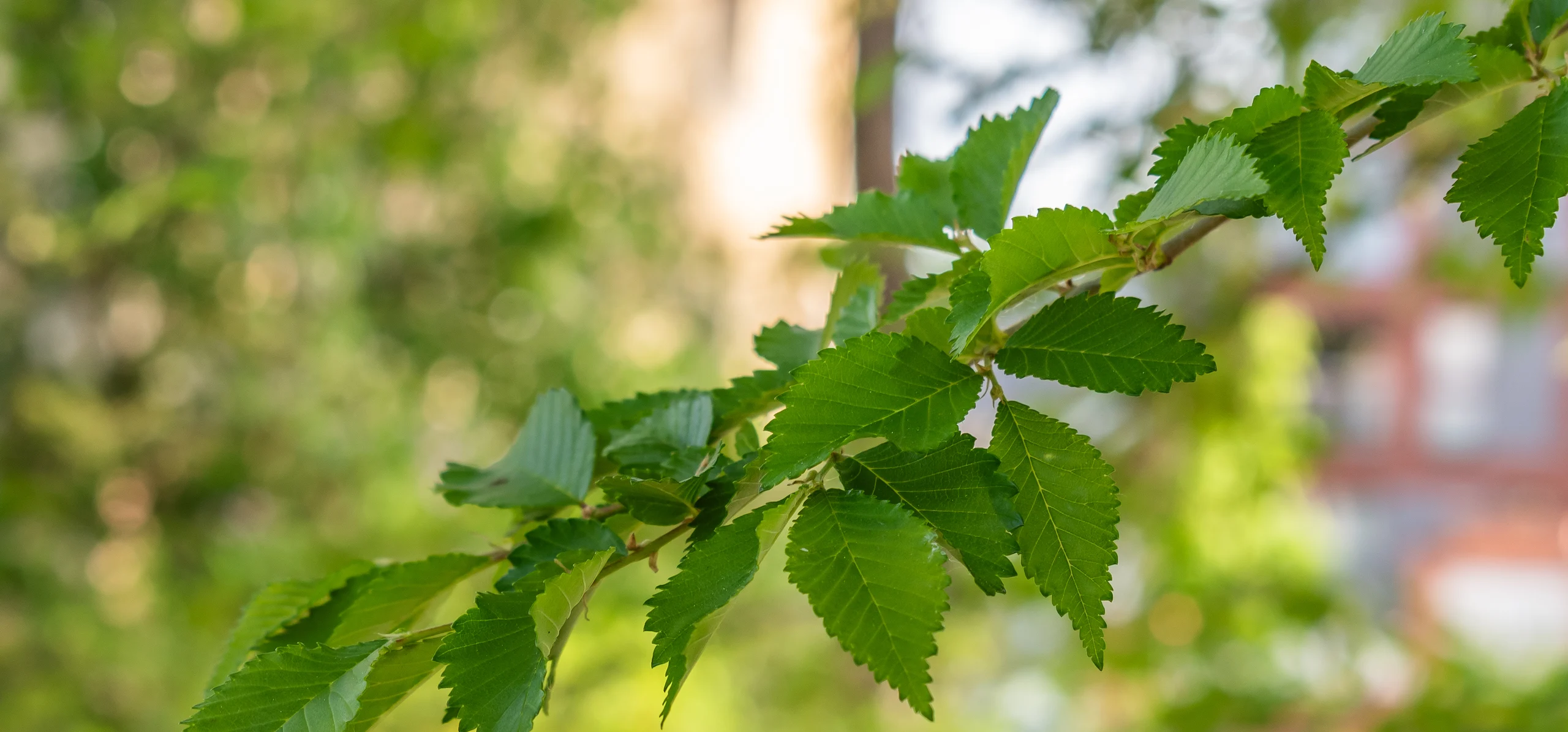
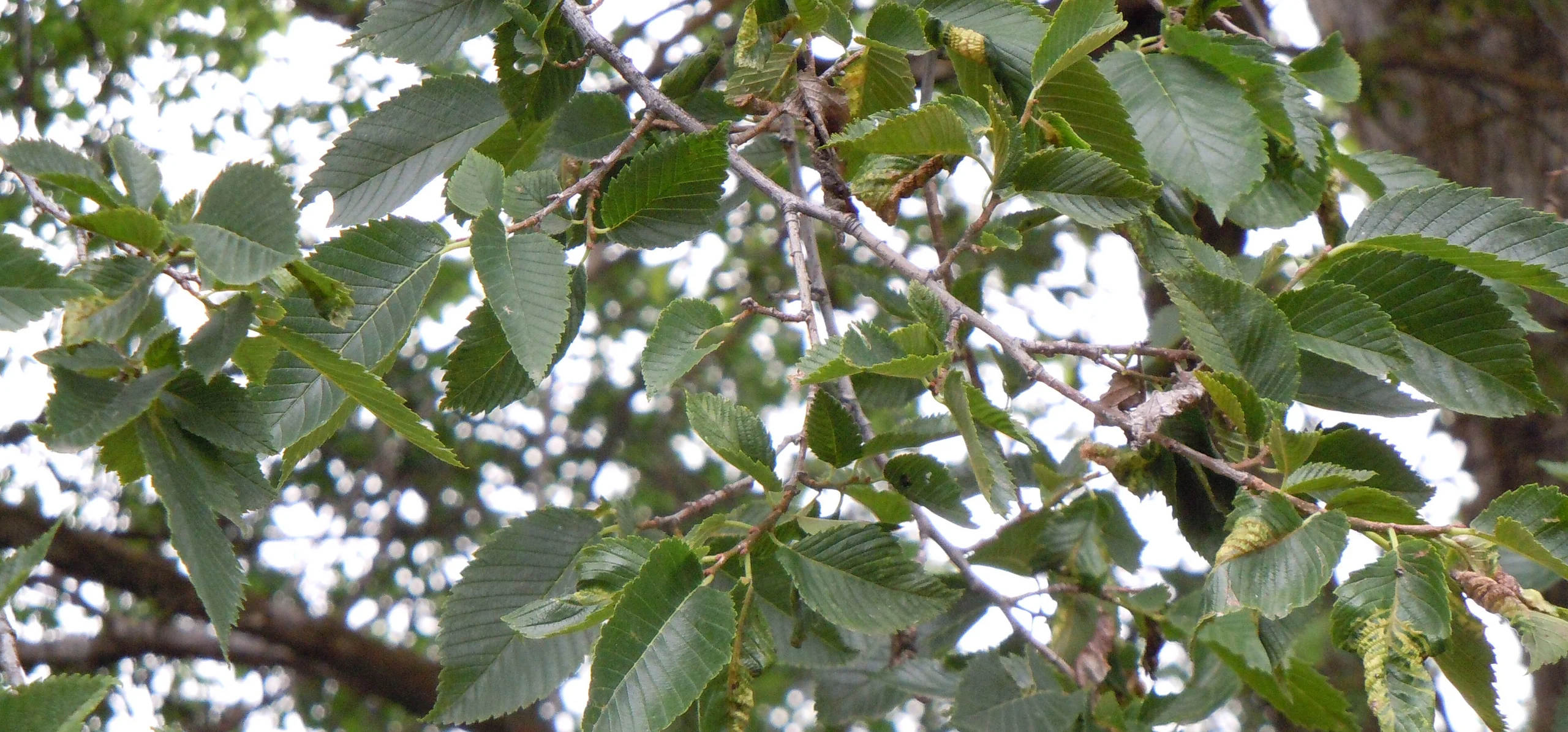
An American elm you've just planted or inherited is either the classic vase-shaped shade tree that once lined half the streets in the eastern United States, or a young seedling that came up on its own near a fence line or streambank. Either way, the tree in front of you is not the tree your grandparents knew: Dutch elm disease has killed most of the old giants since the 1930s, and what thrives now is a naturally isolated tree, a resistant cultivar, or a fast-growing volunteer that hasn't yet crossed paths with the beetle that spreads the fungus. Check the leaves before anything else: rough on top, unevenly based where the blade meets the stalk, sharply double-toothed at the edge. That lopsided leaf base is the fastest way to confirm you're looking at Ulmus americana and not a hackberry or hornbeam growing nearby.
Dutch Elm Disease: Why It Shapes Every Decision
Dutch elm disease is a fungal disease, caused mainly by Ophiostoma novo-ulmi, that spreads through the water-conducting tissue of the tree. It is carried between trees primarily by elm bark beetles, and occasionally through roots grafted underground between elms planted close together. An infected tree wilts from the tips inward, leaves turn a dull yellow-brown out of season, and once a large limb is affected the tree rarely recovers on its own. The disease arrived in North America in the 1930s and killed the majority of the continent's mature street and park elms within a few decades, which is why an American elm over a century old in an urban setting is now unusual rather than typical. None of this means you should avoid planting one. Watch for flagging, a single branch wilting while the rest of the canopy still looks healthy, between late spring and midsummer. If you spot it, prune the limb well below the wilted section and disinfect your tools before making another cut elsewhere.
Choosing a Resistant Cultivar
If you are planting rather than inheriting, skip the straight species and choose a cultivar selected for tolerance to Dutch elm disease. None is fully immune, but decades of field trials have shown consistently lower infection rates in a handful of named selections.
| Cultivar | Disease tolerance | Habit |
|---|---|---|
| 'Valley Forge' | High | Classic vase shape, fast growing |
| 'Princeton' | Good | Upright vase, widely planted as a street tree |
| 'Jefferson' | High | Compact vase, selected from a surviving Washington DC elm |
| Prairie Expedition | Good | Cold-hardy selection bred for northern climates |
A volunteer seedling that has come up on its own is a gamble: most share the species' general susceptibility, though a scattered few survive by chance rather than genetics. If a self-sown elm is already several years old and healthy, there is no strong reason to remove it. Trees standing alone or well spaced from other elms are also less likely to pass the disease to each other through root grafts than elms planted in a tight row.
Site, Soil and Planting
American elm is remarkably unfussy about where it grows, which is part of why it became the default street tree across the eastern half of the country. It adapts to clay, loam, sandy or high-organic soils and tolerates a neutral range of roughly pH 6.0 to 8.0, and unlike most large shade trees it copes with both occasionally wet, poorly drained ground and stretches of dry weather once established. Give it full sun for the fullest vase-shaped crown, though it also grows respectably in partial shade with two to six hours of direct sun. Mature trees reach 60 to 80 feet tall with a spread of 30 to 60 feet, so plant at least 25 to 30 feet from a house foundation, driveway or septic line. The fibrous, wide-spreading root system helps the tree survive transplanting, but it is a poor fit for a tight urban tree pit or a narrow parking strip.


Watering: Deep While Young, Then Mostly Hands Off
A newly planted elm needs consistent moisture through its first two growing seasons. A slow, deep soak once a week does more good than daily light watering, since it encourages roots to grow down and out rather than staying shallow near the surface. Once established, this species is genuinely drought and heat tolerant and rarely needs supplemental water outside of extended dry spells, one reason it still shows up as a street tree recommendation in hot, dry summers where more delicate species struggle. In a lawn setting, a 2 to 3 inch layer of mulch out to the drip line, kept a few inches clear of the trunk, does more for a young tree's water retention than any watering schedule.
Pruning and Structural Training
Prune a young elm to establish a single dominant leader and remove any branch that forms a narrow, V-shaped union with the trunk. Those weak crotches are the ones most likely to split under an ice load or a strong summer storm once the tree matures. Late winter, while the tree is still dormant and before beetles are active, is the safest pruning window: elm bark beetles are drawn to the scent of fresh wounds and to stressed or recently cut wood, so avoid pruning between April and July in regions where Dutch elm disease is present. Always disinfect pruning tools with a diluted bleach or alcohol solution between cuts on different trees. Established trees need little routine pruning beyond removing dead, crossing or storm-damaged limbs.
Pests Beyond the Beetle
Elm leaf beetles skeletonize foliage from midsummer onward, leaving leaves lacy and prematurely brown; a healthy, established tree tolerates moderate feeding without lasting harm. Lace bugs stipple the leaf surface with pale flecking, aphids cluster on new shoots and can coat lower leaves and anything parked beneath the tree with sticky honeydew, and leafminers tunnel visible pale blotches into the leaf tissue. None of these typically threatens a mature tree's health on its own. More serious are canker diseases and wetwood, also called slime flux, which show up as sunken, discolored bark or a foul-smelling wet patch weeping down the trunk, usually following mechanical injury or drought stress. Keep mower and string-trimmer damage away from the base of the trunk to reduce entry points for both.
Fall Color, Seeds and Wildlife Value
Small, inconspicuous greenish-red flowers open on bare branches in late winter before the leaves emerge, followed within weeks by flat, papery, single-seeded samaras that shower down in spring and can carpet a driveway or lawn for a week or two. Foliage turns a soft, clear yellow in autumn rather than the fiery reds of a maple, a quieter but still worthwhile display against a bare winter garden. The tree earns its keep ecologically: it is a larval host plant for painted lady, eastern comma, mourning cloak and question mark butterflies, and its seeds feed songbirds and small mammals through the lean weeks of early spring, before most other food sources have returned.
Test your plant knowledge
Tap a card to flip it and reveal the answer.
American elm can survive winters as cold as USDA hardiness zone 3. Tap to reveal ✓ True
Dutch elm disease is a fungus spread mainly by elm bark beetles. Tap to reveal ✓ True
American elm needs consistently acidic soil below pH 5.5 to thrive. Tap to reveal ✕ False
Every American elm planted today is highly susceptible to Dutch elm disease. Tap to reveal ✕ False
American elm tolerates both occasionally wet, poorly drained soil and dry spells once established. Tap to reveal ✓ True
Sources
References consulted for this guide
- Ulmus americana L., GBIF Backbone Taxonomygbif.org
- Ulmus americana L., Plants of the World Online (Kew)powo.science.kew.org
- Ulmus americana, NC State Extension Gardener Plant Toolboxplants.ces.ncsu.edu
- Ulmus americana, Missouri Botanical Garden Plant Findermissouribotanicalgarden.org
- Ulmus americana L., USDA PLANTS Databaseplants.usda.gov
- Reference entity : Wikipédiaen.wikipedia.org