ZZ Plant
Zamioculcas zamiifolia
Family · Araceae
Zamioculcas zamiifolia survives full shade and wants water only every week or two; here is what RHS, GBIF and Missouri Botanical Garden confirm about it.
Zamioculcas zamiifolia
Plant profile
- WateringLittleWater every 14 days
- Light exposurePartial shade
- Ideal temperature13–27 °C
- Hardiness zoneUSDA 9–10
Growth
- Family
- Araceae
- Life cycle
- Perennial
- Growth speed
- 2/10
- Mature size
- 50–100 cm
- Spread
- 50–100 cm
- Propagation
- Cutting
- Division
FloweringRare on mature plants indoors; a creamy white spadix wrapped in a green spathe when it occurs (Missouri Botanical Garden)
DormancyCan drop leaves and stop growth if kept too dry or too cold (RHS)
Time to maturityReaches its ultimate size in about 2 to 5 years (RHS)
Soil & climate
- Soil types
- loam, sand
- Drought tolerance
- Yes
Light & Placement
- Where to place it
- North- or east-facing room in bright, indirect light
- Windowless office lit by fluorescent tubes for several hours a day (UConn CAHNR)
- Shaded patio or porch, USDA zones 9 to 10 only (Missouri Botanical Garden)
- Morning sun with afternoon shade (Missouri Botanical Garden)
- Any pot with a drainage hole, filled with a well-drained loam or sand-based mix (RHS)
OriginKenya to KwaZulu-Natal, dry grassland and forest of eastern and southern Africa (POWO; Missouri Botanical Garden)
Safety
- Toxicity
- HumansToxic
Data fromZamioculcas zamiifolia (G.Lodd.) Engl., RHS: Zamioculcas zamiifolia (Zanzibar geMissouri Botanical Garden Plant Finder: UConn Home and Garden Education Center: University of Florida IFAS Gardening Sol
Where it grows
World distribution
ZZ Plant is native to 6 countries: Kenya, Malawi, Mozambique, South Africa, Tanzania, and Zimbabwe.GBIF records 349 documented identifications across 33 countries, with the largest concentrations in South Africa, Tanzania, and United States.
- Kenya
- Malawi
- Mozambique
- South Africa
- Tanzania
- Zimbabwe
Yellow to orange dots: concentration of documented identifications per country. Green countries: sourced native range. Source: GBIFNative range from POWO (Kew).
A Slow, Water-Storing Aroid From East and Southern Africa
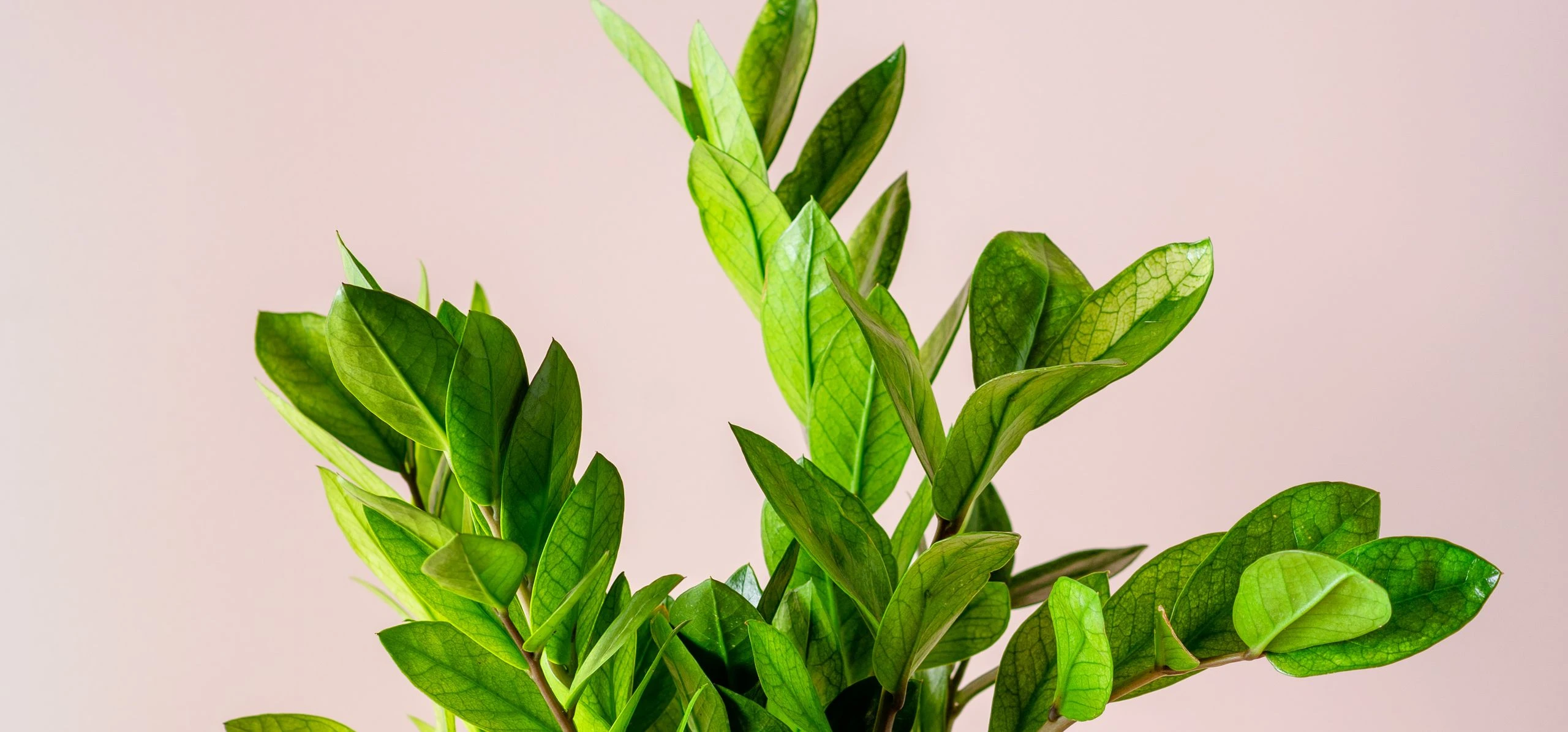
A cluster of thick, upright stems lined with pairs of glossy, dark green leaflets that barely change from one month to the next is almost certainly Zamioculcas zamiifolia, the plant nurseries sell as the ZZ plant or Zanzibar gem. GBIF records the accepted name as Zamioculcas zamiifolia (G.Lodd.) Engl., in the aroid family Araceae alongside philodendron, anthurium and elephant ear, and Missouri Botanical Garden notes the genus name borrows from the unrelated genus Zamia, since the leaflets resemble a cycad even though the plant is nothing of the sort. POWO lists its native range as Kenya to KwaZulu-Natal, and Missouri Botanical Garden describes the species as native to dry grassland and forest in eastern and southern tropical Africa, which explains the fat, water-storing rhizomes just under the soil: a reserve built for a climate with a long dry season, and the reason this plant tolerates the kind of neglect that kills most houseplants.
Light: From Full Shade to Bright Indirect
The RHS rates Zamioculcas zamiifolia for full shade or partial shade, and in practice that tolerance is what makes it a fixture of offices and hallways. University of Florida IFAS Gardening Solutions notes it grows best in bright, indirect light but will also "tolerate extremely low light levels that would challenge other plants," and UConn's Home and Garden Education Center adds that it can sit in a windowless office as long as it gets several hours of fluorescent light a day. The one setting to avoid is direct sun: UConn's fact sheet warns that direct sunlight scalds and yellows the glossy leaves. Away from a hot, south-facing window, almost any indoor spot works; brighter conditions simply mean faster, fuller growth rather than a requirement.
Watering: Why the Rhizomes Punish Generosity
Every source that covers this plant lands on the same point: water it sparingly. UConn's fact sheet says to water sparingly and "allow to dry slightly between waterings," while UF IFAS recommends moderate watering roughly every week or two and warns against letting the roots sit in water, since that is what causes the plant to rot. The reason is the rhizome: it already holds a reserve of water, so a ZZ plant left dry for an extra week barely notices, but soil that stays wet suffocates the rhizome and starts a rot that spreads upward into the stems. When in doubt, wait: check that the top few centimetres of soil have dried out fully before watering again, and let any pot with a saucer drain fully rather than sit in the run-off.


Soil, Potting and Feeding
The RHS lists loam and sand as suitable soil types, in a mix that stays well-drained and tolerates acid, neutral or alkaline pH alike; in practice a standard houseplant compost cut with extra perlite or coarse sand behaves the same way. Whatever pot is used, a drainage hole is not optional, since the rhizomes rot in standing water far more readily than the leaves show it. UConn's Home and Garden Education Center recommends fertilizing once or twice during the growing season with a balanced houseplant fertiliser diluted to half strength, or alternatively once every six months at full strength, and nothing at all once growth slows for the year.
Repotting and Propagation
Zamioculcas zamiifolia reaches its ultimate height of 0.5 to 1 metre over two to five years, according to the RHS, which is slow enough that repotting is rarely urgent; move up a pot size only once the rhizomes visibly crowd the container. Both the RHS and Missouri Botanical Garden describe propagation by leaf cuttings, pressing a single healthy leaflet into moist mix and waiting, since a new rhizome and shoot can take months to form. Missouri Botanical Garden also lists division as an option: splitting an established clump of rhizomes at repotting time into sections that each carry roots and at least one stem produces a usable new plant far faster than a single leaf cutting.
Common Problems: Yellowing Leaves and Rhizome Rot
Missouri Botanical Garden's own note on this species is unusually short: "no serious insect or disease problems." The one genuine failure mode is watering-related. UConn's fact sheet and UF IFAS both point to the same warning sign, soft, yellowing leaves paired with damp soil, which signals rhizome rot already underway rather than a nutrient problem. The fix is to stop watering, check the rhizome by easing the plant out of its pot, and cut away anything that has turned soft or dark before repotting into dry, fresh mix. Scattered yellowing of a single older leaf while the rest of the plant looks firm is normal ageing and needs no action.
Toxicity: What Is and Is Not Documented
The RHS lists Zamioculcas zamiifolia as harmful if eaten and a skin and eye irritant, advising gloves when handling cut stems, and UConn's fact sheet attributes this to calcium oxalate crystals, common across the aroid family, that are "extremely painful and damaging to soft tissues" if chewed. UF IFAS states plainly that all parts of the plant are toxic if ingested. What is missing is a dedicated ASPCA entry: the ASPCA's own alphabetical plant list for the letter Z carries only Zebra Haworthia, Zinnia and Zucchini Squash, with no page for ZZ plant or Zamioculcas, so nothing here should be read as an ASPCA-confirmed classification for cats, dogs or horses specifically. The practical takeaway holds regardless: keep it out of reach of children and pets, and wash hands after pruning or repotting.
Test your plant knowledge
Tap a card to flip it and reveal the answer.
A ZZ plant can grow in low light, though it grows fastest in bright, indirect light. Tap to reveal ✓ True
The ASPCA has published a dedicated entry classifying the ZZ plant as toxic to cats and dogs. Tap to reveal ✕ False
Standing water in the pot is the main cause of rhizome rot in a ZZ plant. Tap to reveal ✓ True
The plant can be propagated both from leaf cuttings and by dividing its rhizomes. Tap to reveal ✓ True
Zamioculcas zamiifolia is native to rainforests in Southeast Asia. Tap to reveal ✕ False
Sources
References consulted for this guide
- Zamioculcas zamiifolia (G.Lodd.) Engl., GBIF Backbone Taxonomygbif.org
- RHS: Zamioculcas zamiifolia (Zanzibar gem)rhs.org.uk
- Missouri Botanical Garden Plant Finder: Zamioculcas zamiifoliamissouribotanicalgarden.org
- UConn Home and Garden Education Center: ZZ Planthomegarden.cahnr.uconn.edu
- University of Florida IFAS Gardening Solutions: ZZ Plantgardeningsolutions.ifas.ufl.edu
- Reference entity : Wikipédiaen.wikipedia.org